惊魂暴跌夜:单日爆仓史上最高191亿美元,财富疯狂流动

Odaily星球日报Pubblicato 2025-10-13Pubblicato ultima volta 2025-10-13

原创 | Odaily 星球日报(@OdailyChina

作者 | 叮当(@XiaMiPP

凌晨 5 点,大盘血崩。

昨夜特朗普宣布要加征 100%关税,且是在现有关税基础上再叠加,这一消息如点燃的导火索,引爆市场,恐慌指数飙升。

美股三大股指均出现不同程度下跌。纳斯达克指数跌幅接近3.5%,标普500跌幅达到2.7%,道琼斯指数下跌1.9%。

加密市场方面,BTC 一度跌破 102000 美元,最低触及 101516 美元,24 小时跌幅达到 16%ETH 最低触及 3400 美元,24 小时跌幅达 22%SOL 跌破 150 美元,最低触及 141.3 美元,24 小时跌幅达 31.83%

主流币尚且如此,山寨更是惨不忍睹。其中 IP 1 小时内从 7.8 美元最低跌至 1 美元附近,跌幅达到 87%,目前暂时反弹至 4.8 美元;PUMP 则从 0.00488 美元最低跌至 0.000411 美元,目前回升至 0.00385 美元。

币安推出的质押理财产品 WBETH、BNSOL 也难逃魔爪。WBETH 最低跌至 430.65 美元,跌幅超 800%,BNSOL 从 213 美元最低跌至 34.9 美元,跌幅也超 500%。甚至稳定币都难逃一劫。USDE 一度触及 0.65 美元,脱锚幅度达到 54%,目前回升至 0.96 美元附近。

衍生品市场则是这场坍塌最直观的放大器。Coinglass 数据显示,过去 24 小时全球共有160万人被爆仓,爆仓总金额达到 191.3 亿美元,为史上最高单日清算金额。其中多单爆仓 166.79 亿美元,空单爆仓 24.54亿美元,最大单笔爆仓发生在 Hyperliquid - ETH-USDT,价值约 2.03 亿美元。
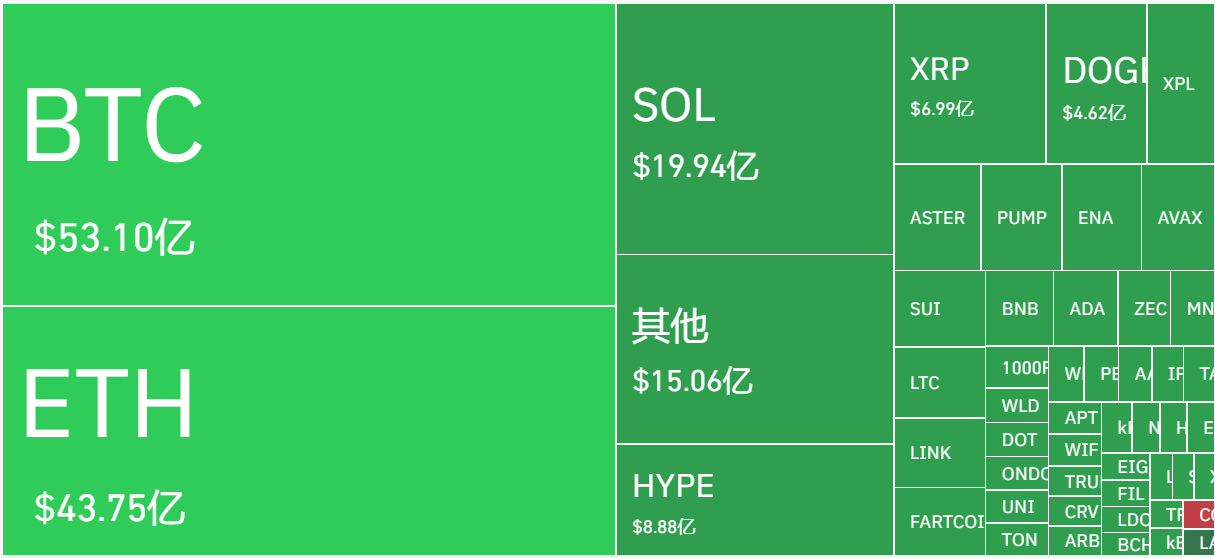
这一次,是对整个加密市场全方位、无差别的扫射

起初,大家都以为迎接的是一次正常的小回调。毕竟一周前,BTC 才刚刚突破 12.6 万美元创下历史新高。渣打银行在报告中上调预期至 13.5 万美元,摩根大通更乐观,直指 16.5 万美元。

谁都没料到,这样的高点竟成了深渊的起点。

神操作——明牌逃顶

即便在这种行情下,也不乏神级操作。

昨日,比特币巨鲸加仓做空 BTC 和 ETH,总仓位超过 11 亿美元。目前,链上数据显示,其仓位已经全部清空,从 Hyperliquild 平台提走 6000 万美金。据链上分析师 Lookonchain 称,该 OG 或与易理华旗下 Trend Research 存在关联。

事实上,易理华本人近几日确实多次在社交媒体上高调表达“看空”立场。
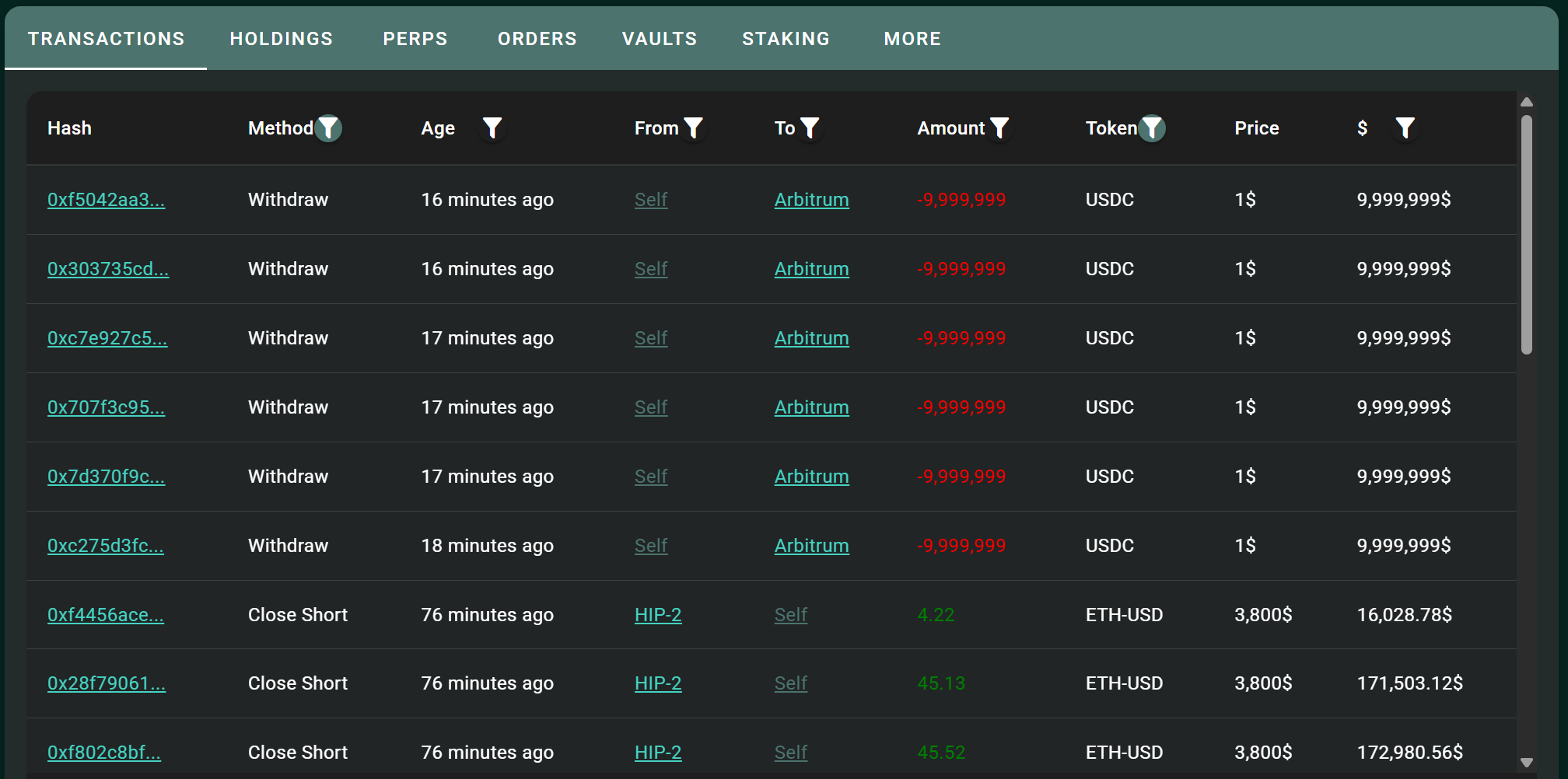
据链上分析师 Lookonchain 监测,自 10 月 3 日起,Trend Research 已陆续将 14.5 万枚 ETH 存入交易所,按当时价格计算价值约 6.54 亿美元。截至 10 月 5 日,其链上仅剩 7,163 枚 ETH。粗略估计该机构本轮在 ETH 上应该获利高达 3.03 亿美元

结语

只要 2 小时,就足以重写许多市场参与者的命运。

有人成为 191 亿美元爆仓潮中的一粒尘埃,有人却从大厦将倾中,稳稳接住了 6000 万的机会赏金。

大多数标的正从 2 小时前的针底向上修复,而也有些币种“借机”躺平,Odaily将第一时间持续跟进。

Letture associate

Upbit is Anxious: A Hasty Counterattack Aimed at Regaining Stablecoin Market Share

Title: Upbit's Rushed Counterattack to Reclaim Stablecoin Market Share Facing a dramatic shift in South Korea's stablecoin market, leading exchange Upbit launched a promotional campaign from July 26 to August 9, waiving the 0.05% trading fee for stablecoins paired with the Korean Won (KRW) and rapidly listing new stablecoins like RLUSD and USDG. This move is a direct response to its plummeting market share in this sector. Historically a duopoly with Bithumb, the market has been reshaped since October 2025 when Coinone permanently removed fees for USDC trading. By June 2026, Coinone led with 34.8% of stablecoin volume, followed by Bithumb (31.1%) and Upbit (30.1%). This contrasts sharply with the overall crypto market, where Upbit commands 60%. The data shows stablecoin demand is highly sensitive to fees, as users primarily buy them to transfer capital overseas for derivatives trading or forex arbitrage. South Korean exchanges have seen a net outflow of stablecoins for 18 consecutive months, totaling approximately 14.9 trillion KRW, underscoring their role as a cross-border capital conduit. Upbit's limited-time promotion initially boosted its daily stablecoin volume by 162%, but the surge was almost entirely in USDT (98.1% of volume). The newly listed stablecoins saw negligible, fleeting interest. Furthermore, the promotional effect quickly waned in the second week, with volume dropping 33% on weekdays. A concurrent weakening of the KRW also contributed to the trading spike, independent of the fee waiver. The analysis suggests that once the promotion ends, Upbit is unlikely to retain its temporary gains unless it matches Coinone's permanent zero-fee policy, forcing a choice between market share and fee revenue. Upbit's strategic push may be less about immediate profit and more about preparing for future regulatory shifts. With South Korea's *Digital Asset Basic Act* on the horizon, which will regulate KRW-backed stablecoins, and following Dunamu's (Upbit's parent) integration into Naver Financial to build a payment ecosystem, securing a dominant position in the dollar stablecoin distribution channel holds long-term strategic value. However, potential regulatory conflicts could prevent Upbit from listing a future Naver-issued KRW stablecoin, making the current fight for dollar stablecoin flow even more critical.

marsbit5 h fa

Upbit is Anxious: A Hasty Counterattack Aimed at Regaining Stablecoin Market Share

marsbit5 h fa

Michael Saylor Compares Bitcoin and Gold!

Michael Saylor, founder of MicroStrategy, argues that Bitcoin fundamentally changes how wealth is stored and transferred by transforming digital scarcity into economic value. He describes Bitcoin as the first digital monetary network, combining computers, digital networks, and cryptography. It digitizes monetary assets, allowing their supply to be controlled by public protocols rather than institutions, thus converting economic value into information transmissible over global networks. Comparing Bitcoin to gold, Saylor states that while increasing Bitcoin's supply is harder, its integration with software and transfer is easier. He highlights Bitcoin's proof-of-work mechanism, which ties it to the physical world by consuming real energy to secure the ledger, making past transactions immutable. This creates a shared security system involving miners, energy companies, and investors. Saylor suggests "digital monetary energy" is a more accurate term than "digital gold." He emphasizes that the Bitcoin network is an adaptive ecosystem of miners, nodes, developers, and users. Its core design is intentionally simple, focused on maintaining a secure ledger for scarce digital assets, with complex functionalities built in higher-layer applications. This architecture allows Bitcoin to serve as a foundation for transmitting value and fostering innovation in payments and financial services. Saylor notes Bitcoin's deeper impact lies in creating digital sovereignty, where private keys give individuals permissionless control over their economic power, with ownership verified mathematically, not by institutions. He concludes that while gold's physical scarcity makes it money, Bitcoin's digital scarcity does the same, characterizing Bitcoin as the monetary energy of the digital age.

cryptonews.ru6 h fa

Michael Saylor Compares Bitcoin and Gold!

cryptonews.ru6 h fa

Trading

Spot
活动图片