特朗普贸易战再起,币股双跌背后的宏观因素分析

深潮Pubblicato 2025-10-10Pubblicato ultima volta 2025-10-11

关税=股市/加密货币暴跌,但今天远远不止。

作者:Spicy Rich

编译:深潮TechFlow

为什么今天股市和加密货币暴跌?——比特币、道琼斯指数、标普500指数和纳斯达克指数暴跌。

自 4 月以来最惨烈的一天。

以下是导致当前市场剧痛的主要原因。

主要触发点

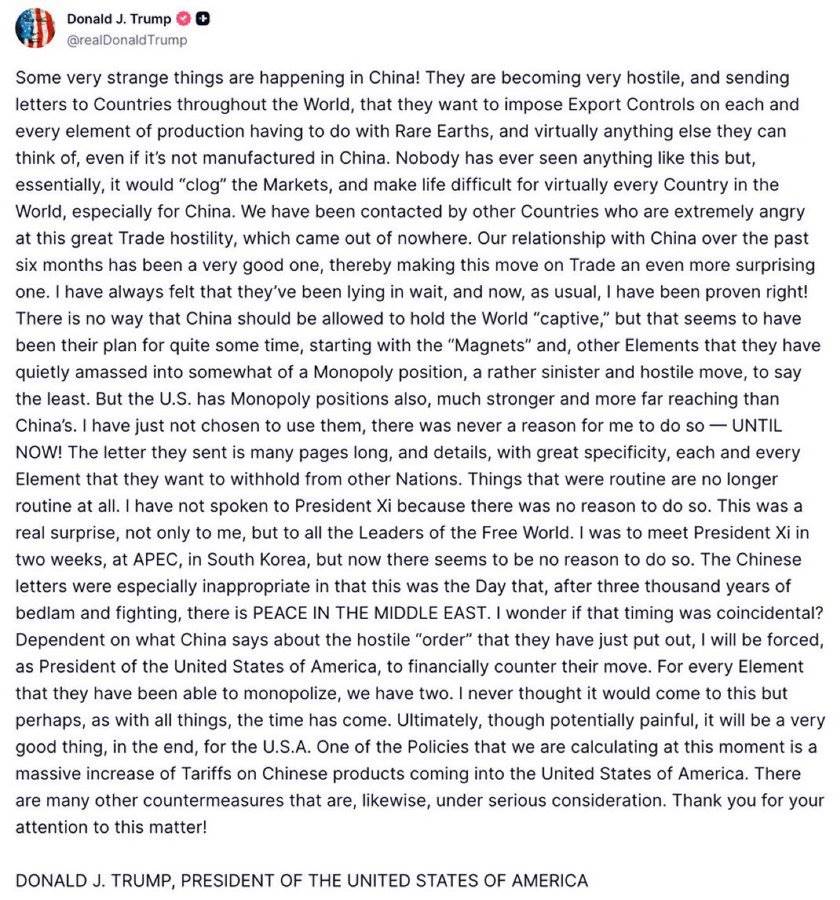
美国总统特朗普在社交平台 Truth Social 上发文,提到可能对来自中国的商品征收“大规模”的新关税。

首先,我以为这一切已经结束了。

我们都知道,关税=股市/加密货币暴跌。

但很不幸,这一切并未结束。

关税就像是对进口商品的额外税收,这会让美国消费者购买商品时的成本变得更高。

特朗普表示,这些关税可能高达60%,甚至某些商品高达100%。他还提到可能会取消与中国国家主席习近平的会晤。

这一消息吓坏了投资者,因为这听起来像是美中之间又一场重大贸易战的开端。
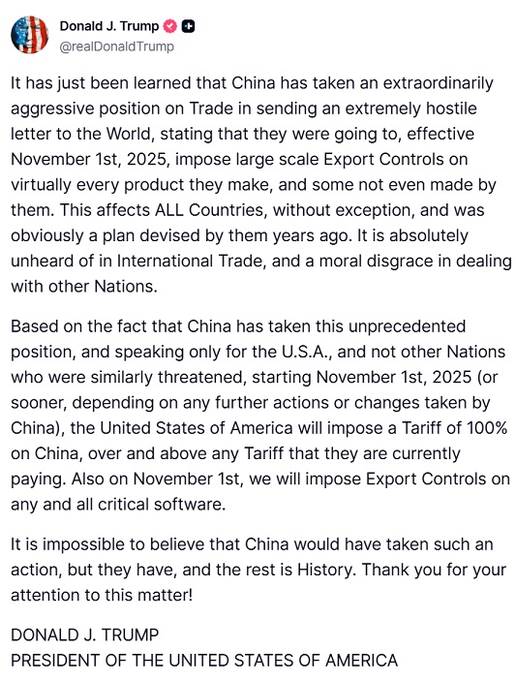
特朗普为什么会这么说?

这是对中国采取行动的一种回应。

中国出台了新规,限制稀土矿物的出口——这些稀土矿物是制造技术产品(如电脑芯片、电动车电池,甚至武器)等重要材料。

此外,中国自10月14日起实施对停靠其港口的美国船只征收费用,对美国公司高通(Qualcomm)展开了反垄断调查,并停止购买美国大豆。

这些举措让美国公司担心它们所需的供应链可能受到影响。

许多美国科技公司依赖中国的零部件来生产手机、电脑和电动车等产品。

如果稀土矿物变得难以获取,生产将放缓,成本上升,创新也会受到打击。

这让投资者对未来的利润感到担忧,因此纷纷抛售这些行业的股票。

更广泛的经济影响

关税可能引发通货膨胀——因为企业会将额外成本转嫁给消费者,导致商品价格上涨。

如果贸易萎缩,企业减少招聘或投资,经济增长可能会放缓。

在最坏的情况下,如果局势升级,可能会导致经济衰退。
另一个影响因素

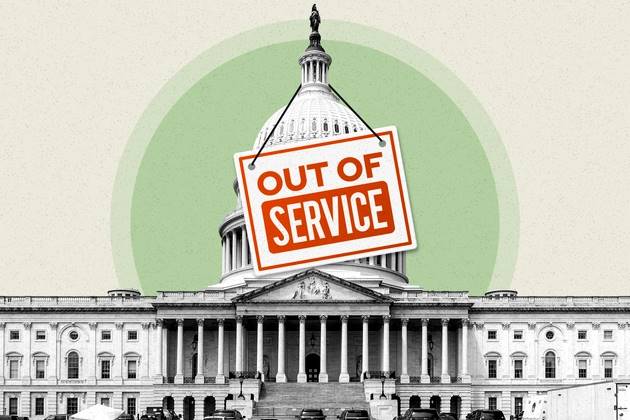
美国政府停摆已经进入第10天,这也增加了不确定性。

在没有资金的情况下,关键服务被迫暂停,重要的经济数据(如就业报告)也会延迟发布。

这使投资者和美联储难以做出明智决策,进一步加剧了整体担忧。
为什么此次下跌格外剧烈

交易机制在其中发挥了作用。

当坏消息传来时,自动化交易系统和大型投资者会迅速开始抛售。

这触发了“止损单”(stop-loss orders)——一种用于限制亏损的自动卖单——从而引发连锁反应,放大了市场的下跌。

空头交易增加,算法触发止损单,期权到期进一步加剧了跌势。

科技股的集中持仓快速解除——这是一种典型的动量逆转,发生在大选后市场高涨之后。
接下来会怎么样?

这可能是领导人会谈前的谈判策略。

如果问题得到解决,市场可能会反弹。

但如果紧张局势持续,预计市场将持续波动,成本上升将影响每个人,并对全球经济增长带来压力。
Letture associate

Upbit is Anxious: A Hasty Counterattack Aimed at Regaining Stablecoin Market Share

Title: Upbit's Rushed Counterattack to Reclaim Stablecoin Market Share Facing a dramatic shift in South Korea's stablecoin market, leading exchange Upbit launched a promotional campaign from July 26 to August 9, waiving the 0.05% trading fee for stablecoins paired with the Korean Won (KRW) and rapidly listing new stablecoins like RLUSD and USDG. This move is a direct response to its plummeting market share in this sector. Historically a duopoly with Bithumb, the market has been reshaped since October 2025 when Coinone permanently removed fees for USDC trading. By June 2026, Coinone led with 34.8% of stablecoin volume, followed by Bithumb (31.1%) and Upbit (30.1%). This contrasts sharply with the overall crypto market, where Upbit commands 60%. The data shows stablecoin demand is highly sensitive to fees, as users primarily buy them to transfer capital overseas for derivatives trading or forex arbitrage. South Korean exchanges have seen a net outflow of stablecoins for 18 consecutive months, totaling approximately 14.9 trillion KRW, underscoring their role as a cross-border capital conduit. Upbit's limited-time promotion initially boosted its daily stablecoin volume by 162%, but the surge was almost entirely in USDT (98.1% of volume). The newly listed stablecoins saw negligible, fleeting interest. Furthermore, the promotional effect quickly waned in the second week, with volume dropping 33% on weekdays. A concurrent weakening of the KRW also contributed to the trading spike, independent of the fee waiver. The analysis suggests that once the promotion ends, Upbit is unlikely to retain its temporary gains unless it matches Coinone's permanent zero-fee policy, forcing a choice between market share and fee revenue. Upbit's strategic push may be less about immediate profit and more about preparing for future regulatory shifts. With South Korea's *Digital Asset Basic Act* on the horizon, which will regulate KRW-backed stablecoins, and following Dunamu's (Upbit's parent) integration into Naver Financial to build a payment ecosystem, securing a dominant position in the dollar stablecoin distribution channel holds long-term strategic value. However, potential regulatory conflicts could prevent Upbit from listing a future Naver-issued KRW stablecoin, making the current fight for dollar stablecoin flow even more critical.

marsbit6 h fa

Upbit is Anxious: A Hasty Counterattack Aimed at Regaining Stablecoin Market Share

marsbit6 h fa

Trading

Spot
活动图片