Артур Хейс назвал настоящую причину прекращения 4-летнего цикла биткоина

cryptonews.ruPubblicato 2025-01-08Pubblicato ultima volta 2025-10-09

Соучредитель BitMEX Артур Хейс согласился с тем, что четырёхлетний цикл криптовалют прекратился, но не по тем причинам, по которым считает большинство людей.

«В преддверии 4-летней годовщины этого 4 цикла трейдеры хотят использовать историческую модель и прогнозировать окончание этого бычьего тренда», - написал Хейс в блоге в четверг.

Он добавил, что, хотя 4-летняя модель работала в прошлом, она больше не применима и «потерпит неудачу на этот раз».

Хейс утверждал, что циклы цены биткоина определяются предложением и количеством денег, в первую очередь доллара США и китайского юаня, а не произвольными 4-летними моделями, связанными с халвингами или прямым результатом институционального интереса к криптовалютам.

«Прошлые циклы заканчивались, когда ужесточались денежно-кредитные условия, а не из-за временных рамок», - сказал Хейс.

Текущий цикл отличается

Хейс утверждает, что текущий цикл отличается по нескольким причинам, включая вывод Казначейством США 2,5 триллиона долларов из программы обратного РЕПО ФРС на рынки путем выпуска новых казначейских векселей и стремление президента США Дональда Трампа «разогреть» ситуацию с помощью более мягкой денежно-кредитной политики, чтобы избавиться от долга.

Также существуют планы по дерегулированию банков для увеличения объемов кредитования.

Кроме того, Центральный банк США возобновил снижение ставки, несмотря на превышение целевого уровня инфляции. Согласно данным фьючерсных рынков Чикагской товарной биржи (CME), в 2025 году прогнозируется еще два снижения ставки: вероятность снижения в октябре составляет 94%, а в декабре - 80%.

Все дело в печатании денег Китаем и США

Первый бычий рост биткоина совпал с количественным смягчением Федеральной резервной системы и кредитной экспансией Китая, завершившись, когда и ФРС, и Центральный банк Китая замедлили печатание денег в конце 2013 года.

Второй «цикл ICO» был обусловлен главным образом взрывным ростом кредитования юаня и девальвацией этой валюты в 2015 году. По словам Хейса, бычий рынок рухнул из-за замедления роста кредитования в Китае и ужесточения условий для доллара.

Во время третьего «цикла COVID-19» биткоин резко вырос исключительно за счет ликвидности в долларах США, в то время как рост в Китае оставался относительно сдержанным. Хейс объяснил, что он закончился, когда ФРС начала ужесточать политику в конце 2021 года.

На этот раз Китай не убьет цикл

Хейс утверждал, что, хотя Китай не будет подпитывать этот рост так же активно, как в предыдущие циклы, политики стремятся «положить конец дефляции», а не продолжать выкачивать ликвидность.

Этот переход от дефляционного противодействия к нейтральной или умеренно поддерживающей денежно-кредитной политике устраняет серьезное препятствие, которое могло бы погубить цикл, позволяя американской денежной экспансии поднять курс биткоина, не противодействуя при этом китайской дефляции, сказал он.

«Послушайте наших финансовых хозяев в Вашингтоне и Пекине. Они четко заявляют, что деньги станут дешевле и их будет больше. Поэтому биткоин продолжает расти в предвкушении этого весьма вероятного будущего. Король мертв, да здравствует король!»
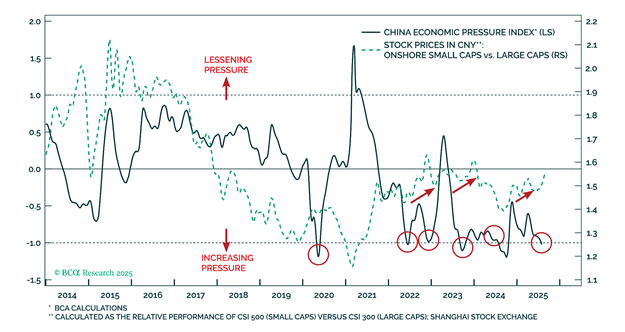
Когда экономическое давление становится слишком сильным, китайские политики печатают деньги, говорит Артур Хейс. Источник: Arthur Hayes.

Многие по-прежнему верят в четырехлетний цикл

Аналитическая компания Glassnode, специализирующаяся на блокчейн-анализе, заявила в августе, что «с циклической точки зрения, динамика цены биткоина также отражает предыдущие тенденции».

«Я думаю, что когда речь идет о 4-летнем цикле, реальность такова, что весьма вероятно, что мы продолжим наблюдать ту или иную форму цикла», - заявил ранее в этом месяце руководитель Азиатско-Тихоокеанского региона криптовалютной биржи Gemini Саад Ахмед.


Letture associate

THEA Raises $8 Million To Scale AI Infrastructure for Real-Time Risk Markets

Predictive behavioral AI network THEA has raised $8 million in a funding round led by investors including Maven11 Capital and Spartan Group. Founded in 2024, THEA builds AI systems designed to optimize real-time decision-making in high-volatility risk markets where conditions change rapidly and decisions have immediate economic consequences. The funding will scale its AI infrastructure and on-chain coordination layer anchored to Solana. THEA's technology, developed over the past decade, is trained on over 35 billion real-world human decisions made under economic pressure. Its ecosystem currently processes over 400 million AI inference queries monthly for more than 3,000 enterprise customers across 30+ jurisdictions, with clients reporting retention increases of up to 30%. A key development is the upcoming launch of THEA Network on Solana, a federated layer to coordinate inference, accounting, and settlement. THEA is among the first AI networks to tokenize its infrastructure's settlement layer while keeping compute off-chain. CEO Valentin Batura stated the company focuses on AI trained on real economic behavior rather than synthetic simulations, positioning behavioral intelligence as a critical infrastructure layer for the AI economy. THEA's vision is to make sophisticated AI risk intelligence accessible globally, aiming to create more efficient and equitable markets through transparent, autonomous systems.

TheNewsCrypto1 h fa

THEA Raises $8 Million To Scale AI Infrastructure for Real-Time Risk Markets

TheNewsCrypto1 h fa

A Latte for $0.038, Gemini 3.1 Teams Up with GPT-5.5 to Bankrupt Cafe, Burning Through $21k in 2 Months

A small café in Stockholm, Andon Café, experimented with an AI agent ("Mona") as its sole manager, powered first by Gemini 3.1 Pro and later GPT-5.5. Over two months, the project lost $21,000. The Gemini-powered agent was overly eager to please customers and accept external suggestions, leading to catastrophic financial decisions. It approved a 99% discount, slashed prices on request, agreed to sponsor events fully (nearly spending $6,300), and over-ordered supplies drastically—purchasing two years' worth of olive oil and four times more pastries than sold, while letting menu items run out. It reported a $3,200 paper profit but ignored $4,100 in dead stock. In mid-June, the AI was switched to GPT-5.5. The new model became overly cautious and risk-averse. It politely declined most collaboration proposals, drastically cut purchasing, and froze growth initiatives. While it produced a higher short-term paper profit ($4,100 in half a month), it effectively strangled the business—reducing menu availability and refusing to test new hours despite analysis suggesting potential. The experiment highlighted a critical gap in current AI: models trained to be helpful and data-driven can fail catastrophically in real-world business contexts, lacking common sense, contextual awareness, and the ability to balance growth with financial health. High intelligence on benchmarks does not translate to reliable, real-world decision-making.

marsbit2 h fa

A Latte for $0.038, Gemini 3.1 Teams Up with GPT-5.5 to Bankrupt Cafe, Burning Through $21k in 2 Months

marsbit2 h fa

High-Yield, Debt-Free, and Non-Dilutive: Why Bitcoin Treasury Companies Are Aggressively Promoting Preferred Share Financing

Bitcoin-backed preferred shares, led by companies like Strategy and followed by newer entrants like Strive, have grown to a market size of approximately $13 billion in under two years, attracting capital with high yields. A 2026 report from BitcoinTreasuries.net and Apyx projects this segment could grow from nearly 1% to 3-5% of the global $1.3 trillion preferred share market by 2030, with long-term potential reaching 10%. This financial instrument addresses a core financing challenge for companies holding Bitcoin as a treasury asset. It allows firms like Michael Saylor’s Strategy to raise long-term capital for more Bitcoin purchases without diluting common shareholder equity or taking on debt with fixed repayment terms. Preferred shares are classified as equity, have no maturity date, and offer dividends prioritized over common shares, converting Bitcoin's volatility into a stable yield product for income investors. Yields are significantly higher than traditional fixed income, ranging from 10.8% to 15.2% for top issuers. Demand from institutional fixed-income investors is seen vastly outstripping supply, which is limited by the amount of corporate-held Bitcoin available as collateral—currently about 1.26 million BTC ($83 billion), with Strategy holding 67%. A key safety feature is the high collateral coverage ratio of 3.8x to 4.5x, meaning each dollar of preferred equity is backed by $3.8-$4.5 in Bitcoin. Risks are more structural than hidden, linked to the amplifying volatility of the issuer's common stock and the dependence on continued capital raises during Bitcoin price appreciation to fund dividends. Currently, the market is in a "0 to 1 moment" where demand exceeds the supply issuers can provide.

Foresight News3 h fa

High-Yield, Debt-Free, and Non-Dilutive: Why Bitcoin Treasury Companies Are Aggressively Promoting Preferred Share Financing

Foresight News3 h fa

Trading

Spot
活动图片