Blockchain Earnings Take A Dip — 16% Drop In Just 1 Month: Report

bitcoinistPubblicato 2025-10-05Pubblicato ultima volta 2025-10-06

Introduzione

Tron pulled ahead of rivals in blockchain earnings last year, generating $3.6 billion, a figure that highlights how stablecoin activity...

Trusted Editorial content, reviewed by leading industry experts and seasoned editors. Ad Disclosure

Tron pulled ahead of rivals in blockchain earnings last year, generating $3.6 billion, a figure that highlights how stablecoin activity can outweigh sheer market value when it comes to network income. According to Token Terminal, that tally places Tron well above larger rivals on pure revenue terms.

Tron Tops Revenue Charts

Tron’s lead stems largely from stablecoin settlements, with reports showing about 51% of circulating Tether USDT has been issued on the Tron network.

Ethereum, by comparison, recorded roughly $1 billion in revenue over the same period, even as ETH’s market cap was around $540 billion — more than 16x the TRX market cap, which sits just north of $32 billion. The gap between market value and on-chain revenue is stark.

Total crypto market cap currently at $4.14 trillion. Chart: TradingView

Revenues Down In September: VanEck

Network revenues across blockchains fell 16% month-over-month in September, according to a VanEck report. Traders had fewer reasons to pay for priority processing because markets calmed, and that drop in activity hit fee income.
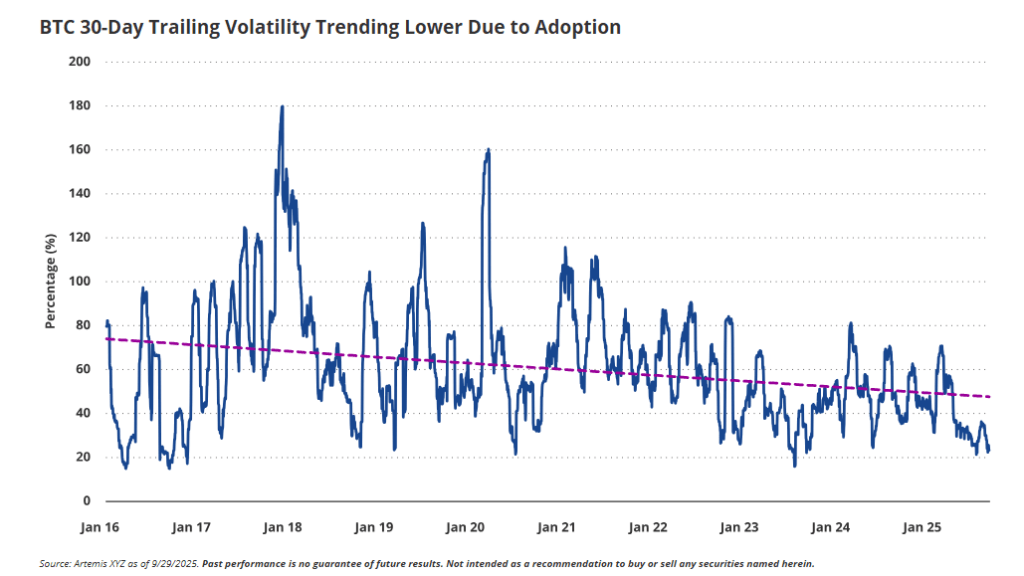
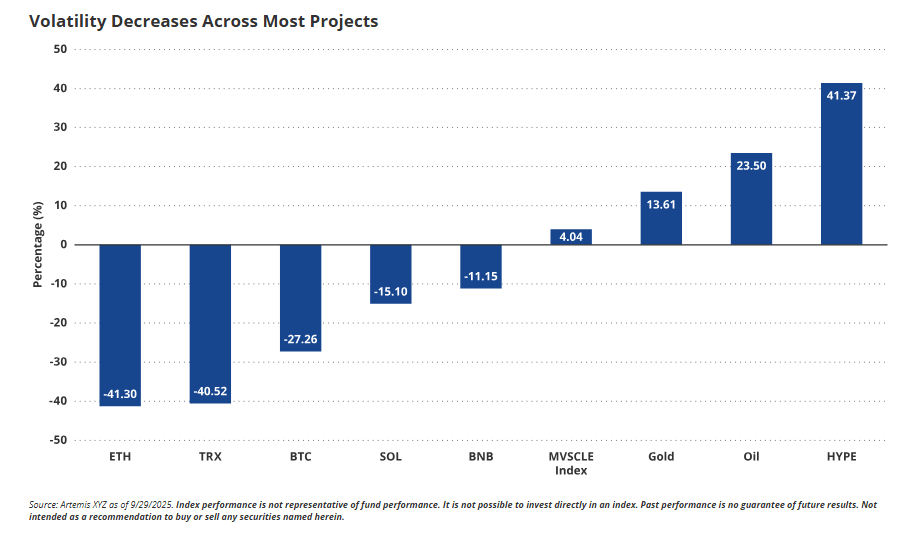
Volatility measures fell sharply: Ether volatility dropped 40%, SOL slid 16%, and Bitcoin volatility fell 26% in that month. Lower price swings mean fewer quick trades and fewer high-fee transactions.

Fees Fell As Volatility Cooled

Ethereum network revenue declined by 6% in September. Solana’s receipts slipped by 11%. Tron’s fees plunged 37%, but that figure was driven partly by a governance change: a proposal reduced gas charges by over 50% in August, and those lower costs showed up in September’s numbers. In short, both market quiet and policy moves combined to trim what users paid to move assets on chain.
Stablecoins And Settlement Activity Mattered More Than Hype

The stablecoin market also continued to grow, with data from RWA.XYZ showing the total stablecoin market cap crossed $290 billion in October 2025.

That expanding pool of tokenized dollar balances tends to favor blockchains with cheap, fast transfers. For Tron, heavy stablecoin issuance has translated into steady transaction volumes and a different kind of economic engine than networks that rely more on DeFi or speculative trading.

Stablecoins Drive Transaction Flows

Stablecoins let value move across borders with near-instant settlement and low fees. They trade round the clock and do not require a bank account, which helps explain why on-chain volumes can diverge from pure token market caps.

Reports have disclosed that this utility-based demand is a major reason Tron outpaced others in revenue, even if its native token remains far smaller by market value.

Featured image from Unsplash, chart from TradingView

Editorial Process for bitcoinist is centered on delivering thoroughly researched, accurate, and unbiased content. We uphold strict sourcing standards, and each page undergoes diligent review by our team of top technology experts and seasoned editors. This process ensures the integrity, relevance, and value of our content for our readers.

Christian, a journalist and editor with leadership roles in Philippine and Canadian media, is fueled by his love for writing and cryptocurrency. Off-screen, he's a cook and cinephile who's constantly intrigued by the size of the universe.

Letture associate

STRC Breaks Below $95: Why Does It Continue to Depeg? Is There Default Risk?

"STRC Falls Below $95: Why the Persistent Depegging and Is There Default Risk?" The article discusses the recent decline in the price of STRC, a perpetual preferred stock issued by Strategy (MSTR) designed to trade around a $100 par value. As of publication, STRC traded at $94.65, raising market concerns. STRC is described as a high-yield cash flow product, offering an 11.50% annual dividend paid monthly. Its "preferred" status grants it priority over common stock for dividends and in liquidation. Key reasons cited for the price depegging include: 1. **Bitcoin's Price Drop:** MSTR's assets are heavily tied to Bitcoin (BTC), which fell over 21% from its recent high, pressuring all Strategy-related products. 2. **Competitive Pressure:** Rival Strive Asset Management's similar product, SATA, offers daily dividends and has maintained its $100 par value with a ~13% yield. In response, Strategy has proposed changing STRC's dividend frequency from monthly to bi-weekly, pending shareholder vote. 3. **Technical Selling:** A break below $100 may have triggered algorithmic selling and stop-losses, exacerbating the decline. Regarding default risk, the analysis suggests it is currently low. Strategy founder Michael Saylor confirmed the June 2026 dividend rate remains at 11.50% with no cuts or suspensions. The company's massive reserve of 843,706 BTC provides a significant backstop for its obligations. Industry opinions are mixed. Some analysts view the BTC holdings as reliable support for dividends, while critics like Peter Schiff warn of potential dividend cuts leading to price crashes and lawsuits. Others highlight inflation risk and the company's ability to reduce dividends without a formal default. In summary, STRC's drop is attributed to BTC volatility, competition, and technical factors. While immediate default risk appears contained, the product faces challenges from market conditions and competitive dynamics.

marsbit1 h fa

STRC Breaks Below $95: Why Does It Continue to Depeg? Is There Default Risk?

marsbit1 h fa

AI Trading Cools, South Korean Stocks Plunge 1.8%, Spot Gold Rises 1%, Bitcoin Dives

A sell-off in AI-related stocks, triggered by Broadcom's disappointing earnings forecast, sent shockwaves through global markets. South Korea's KOSPI led Asia's decline, plunging 1.8% as the risks from concentrated chip stock gains and surging leveraged investments came to the fore. The tech-heavy Nasdaq 100 futures fell 0.5% following Broadcom's 14% after-hours plunge, which signaled a slower-than-expected transition to AI clients. This pullback extended Wall Street's weakness, halting the S&P 500's nine-day rally amid hawkish Fed signals and renewed Middle East tensions. South Korean authorities convened an emergency meeting, pledging "immediate measures" against market volatility and warning of record-high stock margin debt. The adjustment rippled across assets: Bitcoin fell to around $64,000, its lowest since February, while safe-haven gold rose 1% on bargain hunting. Oil prices dipped on Middle East ceasefire news. Market analysts noted the sell-off was driven by profit-taking after massive gains, particularly in chip stocks like Samsung and SK Hynix, which now dominate the KOSPI. Wall Street banks are divided on Korea's outlook, with Goldman Sachs raising its target while Citigroup and others warn of overvaluation and a potential bubble. Bridgewater's Ray Dalio noted that great technological shifts often create bubbles. Meanwhile, Fed officials' hints at potential future rate hikes added to the cautious mood ahead of key U.S. jobs data.

华尔街日报2 h fa

AI Trading Cools, South Korean Stocks Plunge 1.8%, Spot Gold Rises 1%, Bitcoin Dives

华尔街日报2 h fa

Trading

Spot
Futures
活动图片