AI Trading Cools, South Korean Stocks Plunge 1.8%, Spot Gold Rises 1%, Bitcoin Dives

华尔街日报Pubblicato 2026-06-04Pubblicato ultima volta 2026-06-04

Introduzione

A sell-off in AI-related stocks, triggered by Broadcom's disappointing earnings forecast, sent shockwaves through global markets. South Korea's KOSPI led Asia's decline, plunging 1.8% as the risks from concentrated chip stock gains and surging leveraged investments came to the fore. The tech-heavy Nasdaq 100 futures fell 0.5% following Broadcom's 14% after-hours plunge, which signaled a slower-than-expected transition to AI clients. This pullback extended Wall Street's weakness, halting the S&P 500's nine-day rally amid hawkish Fed signals and renewed Middle East tensions. South Korean authorities convened an emergency meeting, pledging "immediate measures" against market volatility and warning of record-high stock margin debt. The adjustment rippled across assets: Bitcoin fell to around $64,000, its lowest since February, while safe-haven gold rose 1% on bargain hunting. Oil prices dipped on Middle East ceasefire news. Market analysts noted the sell-off was driven by profit-taking after massive gains, particularly in chip stocks like Samsung and SK Hynix, which now dominate the KOSPI. Wall Street banks are divided on Korea's outlook, with Goldman Sachs raising its target while Citigroup and others warn of overvaluation and a potential bubble. Bridgewater's Ray Dalio noted that great technological shifts often create bubbles. Meanwhile, Fed officials' hints at potential future rate hikes added to the cautious mood ahead of key U.S. jobs data.

Broadcom's disappointing earnings outlook triggered a rapid cooling of the global artificial intelligence (AI) trade. South Korea's KOSPI led the decline in the Asia-Pacific market on Thursday, abruptly pushing the accumulated bubble risks from highly concentrated chip stocks and rapidly expanding leveraged funds to the forefront.

Nasdaq 100 index futures slipped 0.5%, after Broadcom plunged 14% in after-hours trading. Its latest earnings outlook fell far short of investor expectations and signaled a slower-than-expected transition progress towards AI customers. UBS Group's AI Winners Basket Index fell 1.4% on Wednesday, ending a four-day winning streak. The Asian decline extended Wall Street's weak performance on Wednesday—the S&P 500's nine-day rally came to a halt, pressured by a combination of hawkish signals from Fed officials and renewed U.S.-Iran tensions, further suppressing risk appetite.

According to a Wall Street Journal article, South Korean Finance Minister Koo Yun-cheol held a joint meeting with central bank governor Shin Hyun-song, Financial Services Commission chairman Lee Eog-weon, and Financial Supervisory Service governor Lee Chan-jin. They pledged to take "immediate measures" if necessary to respond to sharp volatility in the foreign exchange market. At the same time, officials warned about stock margin loan balances hitting a nearly 20-year high, highlighting authorities' high concern for market stability.

This adjustment affected global assets: Bitcoin slid to around $64,000, its lowest level since February this year; gold rose about 1% as bargain-hunting buying flowed in; Brent crude oil ended a three-day rally on news of an Israel-Lebanon ceasefire agreement, falling about 1% to around $97 per barrel; European stocks were mixed, with investors cautiously awaiting Friday's U.S. non-farm payrolls data.

  • European stocks opened mixed, with the Euro Stoxx 50 up 0.13%, the UK's FTSE 100 down 0.12%, France's CAC 40 up 0.10%, and Germany's DAX up 0.20%.
  • Japan's Nikkei 225 closed down 1.4% at 67,470.69 points. The Topix index closed down 1.1% at 3,951.85 points. South Korea's KOSPI closed down 1.8% at 8,639.41 points.
  • The U.S. Dollar Spot Index was little changed.
  • The yen rose 0.1% to 159.86 per dollar.
  • The yield on the 10-year U.S. Treasury note fell two basis points to 4.48%.
  • The yield on the 10-year Japanese government bond rose 3 basis points to 2.670%.
  • WTI crude oil fell 0.8% to $95.27 per barrel.
  • Spot gold rose 1% to $4,479.64 per ounce.
  • Bitcoin fell 0.9% to $64,312.09.

Nasdaq 100 index futures slipped 0.5%, after Broadcom plunged 14% in after-hours trading, as its latest earnings outlook fell short of investor expectations. Broadcom also signaled that its transition towards AI customers was progressing slower than expected, though the direction is correct, it faces excessively high market expectations. UBS Group's AI Winners Basket Index fell 1.4% on Wednesday, ending a four-day winning streak.
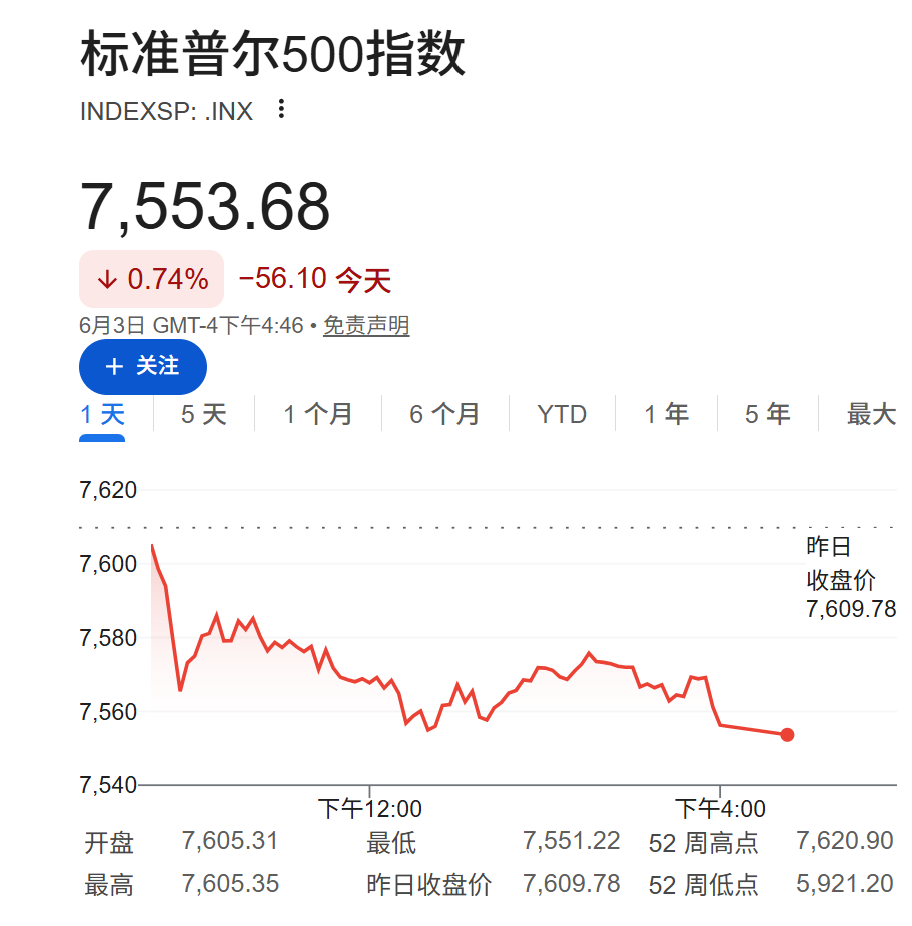
The Asian decline extended Wall Street's weak performance on Wednesday—the S&P 500's nine-day rally ended abruptly, as renewed U.S.-Iran conflict weighed on market risk sentiment. European stocks also faced downward pressure, with Bitcoin sliding to around $64,000, its lowest level since February this year. News of an Israel-Lebanon ceasefire agreement brought some local relief, leading Brent crude oil to end its three-day rally and fall about 1% to around $97 per barrel; gold rose 0.6% to around $4,460 per ounce as bargain-hunting buying flowed in.

Billy Leung, an investment strategist at Global X Management, said, "Chip stocks had rallied sharply before the earnings reports were released. Investors holding significant paper gains don't need much reason to take profits."

South Korea's KOSPI opened with a dive on Thursday, becoming one of the worst-performing major indices in the Asia-Pacific region. Although the KOSPI is still up over 100% year-to-date and has gained over 200% since June 2025, ranking first among major global stock indices, the nearly 2% drop on the day still drew high-level attention from authorities.
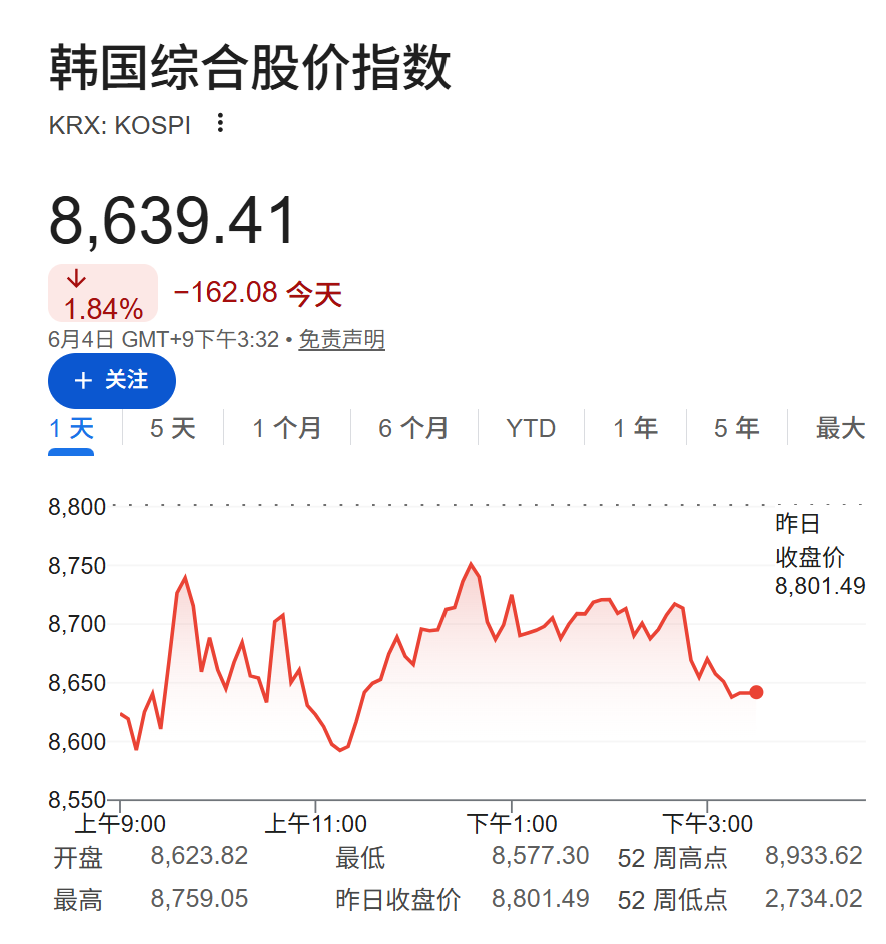
According to Yonhap News Agency, Koo Yun-cheol stated after the meeting that the government is maintaining high vigilance to prevent external uncertainties from turning into widespread market panic. "(The government) will take immediate measures if necessary to respond to excessive market volatility," he added. Attending officials believe the recent market volatility is closely related to the ongoing conflict in the Middle East and continuous net selling by foreign investors in the stock market. South Korea's Ministry of Finance stated in a declaration, "The recent rapid rise in the Korean stock market has led to temporary rebalancing by foreign investors, with profit-taking activities intensifying market volatility."

While officials emphasized the robustness of South Korea's economic fundamentals—May exports surged 53.2% year-on-year, and the total stock market capitalization has risen to the sixth largest globally—they also warned that the rise in stock margin loan scale could pose potential risks to the economy and will closely monitor related developments to protect investor interests.

The stellar performance of the KOSPI masks severe divergence among its components. Among the 835 constituent stocks, only 373 have risen this year, less than half; Samsung Electronics and SK Hynix have surged about 200% and 250% year-to-date, respectively, each with market capitalization exceeding $1 trillion, together accounting for over 40% of the KOSPI's weighting, while the remaining over 800 stocks contribute less than 30% to the index's gain.

Accompanying the highly concentrated rally is a sharp expansion of leveraged speculative funds. Data from South Korea's Financial Supervisory Service shows that as of Q1 2026, the margin loan balance at the top ten securities firms has approached 36 trillion won, nearly doubling from a year ago, hitting a nearly 20-year high; investors aged 50 and above account for as high as 62.3% of this, with the loan balance for the over-60 group surging from about 3 trillion won to over 8 trillion won within a year. In Q1 2026, the number of new securities accounts opened by individuals under 18 in South Korea increased nearly tenfold compared to the same period last year.

Data from the Korea Exchange shows that the total number of circuit breaker triggers in the main board market this year has risen to the highest level since the 2008 financial crisis—a total of 20 "sidecar" program trading suspension orders have been issued this year, only 6 less than the 26 issued in all of 2008. According to the rules, program trading is suspended for 5 minutes when the KOSPI 200 futures index fluctuates by 5% or more for at least 1 minute.

Faced with the KOSPI's rapid rise, major Wall Street institutions have shown clear divergence in their stances. Goldman Sachs raised its KOSPI target from 9,000 points to 12,000 points, stating in a report that the rally in AI chipmaker stocks may continue, but warning that correction risks are rising; strategists including Timothy Moe, the bank's chief Asia-Pacific equity strategist, wrote in the report, "We prefer North Asia, where earnings growth is the strongest."

Citi warned that South Korean stock valuations are at high levels among major global markets, coupled with institutional risks in labor relations, which could dampen long-term foreign investment allocation interest. It believes the current rally is more driven by short-term sentiment. The global chief investment officer at Standard Chartered Bank pointed out that going long on South Korea has become a "highly crowded trade" and has downgraded the semiconductor sector from "overweight" to "neutral," believing a short-term correction is entirely reasonable.

Billionaire and Bridgewater Associates founder Ray Dalio said in a Bloomberg TV interview on Wednesday, "All great technological transformations create bubbles." Rob Marshall Lee, emerging markets investor and founding partner & chief investment officer at Cusana Capital, was more blunt: "The Korean market is a huge bubble." He pointed out that most Korean companies have extremely low return on equity, and the AI era will not bring fundamental change; he warned that when the cycle reverses, the profit margins of related companies could plummet from 70% to negative. "Short-term, I wouldn't short; but looking five years out, you'd likely lose a lot of money," he said.

Hawkish remarks from Fed officials simultaneously cooled market sentiment. Dallas Fed President Lorie Logan said policymakers may need to raise interest rates later this year to bring inflation back to target; New York Fed President John Williams told Yahoo Finance that the interest rate outlook remains uncertain.

According to Bloomberg, recent data showed U.S. companies added the most new jobs since January 2025, indicating hiring momentum remains strong despite rising energy costs. If Friday's non-farm payrolls data confirms this, market expectations for Fed rate hikes will strengthen further. The yield on the 10-year U.S. Treasury note fell slightly by 2 basis points to 4.48% on Thursday, after rising significantly earlier due to high oil prices and labor market resilience. Investors on Thursday will also receive the weekly initial jobless claims data to further gauge the direction of the job market.

Fawad Razaqzada, an analyst at Forex.com, said, "If U.S. economic data continues to positively exceed expectations, investors may express a more hawkish Fed expectation by betting on a stronger U.S. dollar, especially against low-yield or zero-yield assets like the yen and gold." Meanwhile, according to Bloomberg citing informed sources, Bank of Japan officials are considering raising the benchmark interest rate by 25 basis points this month and assessing the possibility of further hikes within the year, driving the yen to strengthen against the dollar on Thursday.


Domande pertinenti

QWhat was the immediate trigger for the global AI trade cooling and the subsequent market sell-off?

AThe immediate trigger was Broadcom's disappointing earnings outlook, which fell significantly below investor expectations and signaled a slower-than-anticipated transition to AI customers. This caused its stock to plunge 14% in after-hours trading and triggered a broader sell-off in AI and chip-related stocks.

QWhy did the South Korean KOSPI index fall significantly, and what specific market risks did this highlight?

AThe KOSPI fell 1.8% due to the global tech/AI sell-off and domestic factors. It highlighted the risks of a highly concentrated and leveraged market bubble. Specifically, the index's performance was driven almost entirely by massive gains in two chip giants (Samsung and SK Hynix), while over 800 other components contributed little. Concurrently, margin loan balances hit a near 20-year high, indicating speculative, debt-fueled investment, particularly among older retail investors.

QHow did the market movements described affect major global assets like gold, oil, and Bitcoin?

AThe risk-off sentiment led to a flight to safety, boosting gold, which rose 1%. Oil (Brent crude) fell about 1% on news of an Israel-Lebanon ceasefire. Bitcoin, often viewed as a risk asset, dropped to around $64,000, its lowest level since February, as speculative capital fled.

QWhat were the contrasting views of major Wall Street institutions (e.g., Goldman Sachs, Citigroup) on the South Korean market rally?

AThere was significant divergence. Goldman Sachs was optimistic, raising its KOSPI target to 12,000 and believing the AI chip rally could continue, albeit with rising correction risks. In contrast, Citigroup warned that high valuations and structural labor risks could deter long-term foreign investment, viewing the rally as driven by short-term sentiment.

QWhat key factors are currently influencing U.S. monetary policy expectations and currency markets according to the article?

ATwo main factors are at play: 1) Strong U.S. economic data, especially a resilient labor market (e.g., strong private payrolls), which could compel the Federal Reserve to maintain or even consider future rate hikes, as hinted by officials like Lorie Logan. 2) High energy prices putting upward pressure on inflation. This is strengthening expectations for a hawkish Fed, which could support the U.S. dollar, particularly against low-yield currencies like the Japanese Yen.

Letture associate

Where the AI Bubble Really Is: Which Layer of Players Are Naked

AI Bubble: Where It Really Is and Who's Swimming Naked This analysis dissects the AI industry not as a single entity but as a five-layer pyramid, arguing that bubbles are concentrated in specific tiers, not uniformly distributed. **Key Distinction from the 2000 Dot-com Bubble:** Unlike 2000, where companies had stock prices before revenue, today's leading AI players have massive, contract-backed revenue driving their valuations. Core infrastructure demand is real, with every GPU running at full capacity for paying customers. **The Five-Layer Pyramid & Bubble Assessment:** * **L0 (Fab/Manufacturing) & Top L4 (Leading AI Apps): NO BUBBLE.** Companies like TSMC, NVIDIA, major cloud providers (Microsoft, Google, Meta, Amazon), and top AI labs have real revenues and orders. Supply is tightly constrained by TSMC's disciplined capacity control and physical limits like power/land for data centers, preventing a supply glut. * **L1 (Memory): BATTLEGROUND.** Sky-high HBM margins could signal a new structural cycle or a classic "boom before bust." The oligopoly of three major players may enforce supply discipline, making this a high-stakes bet. * **L2 (Interconnect/Optical Modules): BUBBLE TERRITORY.** Companies like Lumentum and AAOI have seen stock surges (4-10x) far outpacing revenue growth. This hardware segment has lower physical barriers to expansion than fabs, allowing speculation. It mirrors the 2000 bubble's epicenter—optics. * **L3 (Infrastructure/"GPU Landlords"): VULNERABLE.** GPU leasing companies profit from the current compute shortage but own no long-term moat. Their business model relies on a temporary bottleneck that will ease as big tech expands and new tech (e.g., potential space-based data centers) emerges. * **L4 Long Tail (VC-backed Startups): STRONG BUBBLE SIGNALS.** VC funding concentration in AI is twice that of the 1999 peak. Many startups with little revenue use the valuation logic of successful giants to justify their own, creating high risk of a "valuation crunch" when funding dries up. **Critical Risks to Monitor:** 1. **GPU Depreciation & Accounting:** Companies extending the assumed useful life of GPUs artificially boost profits. The true economic life depends on future generational leaps from NVIDIA. 2. **"GPU Credit" & Off-Balance-Sheet Leverage:** Emerging structures where shell companies borrow to buy GPUs and lease them out (with chipmakers sometimes investing) move debt off major balance sheets. This echoes the "vendor financing" of 2000 and the securitization risks of 2008, though currently small-scale. 3. **TSMC Abandoning Caution:** If the primary supply bottleneck (TSMC's conservative capacity planning) breaks, runaway supply could trigger a bust. 4. **Algorithmic Efficiency Breakthrough:** A major leap in software efficiency could drastically reduce the need for raw compute hardware, undermining the investment thesis. **Conclusion:** The AI boom is expensive and has frothy areas, but its core is underpinned by real demand and physical supply constraints. The bubble risk is layered: most present in optical components, GPU leasing, and the long-tail startup ecosystem, while the foundational chip manufacturing and leading application layers remain relatively solid—for now.

marsbit13 min fa

Where the AI Bubble Really Is: Which Layer of Players Are Naked

marsbit13 min fa

Standing in the Light: A Comprehensive Guide to the Optical Module and CPO Supply Chain

"Standing in the Light: Understanding the Optical Module and CPO Industry Chain" This article analyzes the critical role of optical communication technology, specifically optical modules and Co-Packaged Optics (CPO), as the "nervous system" for modern AI data centers. With exponential growth in AI computational demands (e.g., NVIDIA's Vera Rubin architecture), traditional electrical interconnects using copper cables face severe bottlenecks in bandwidth, power consumption, and signal integrity over distance. The core function of an optical module is to act as a "translator," converting electrical signals from chips into optical signals for transmission over fiber (and vice-versa). Key internal components include lasers, modulators, photodetectors, drivers, and DSP chips. The industry is currently transitioning from 800G to 1.6T modules. However, the future lies in CPO. This next-generation technology integrates the optical engine directly with the switch ASIC/XPU on the same package substrate, drastically reducing power consumption (by ~3.5x according to NVIDIA), overcoming bandwidth density limits, and minimizing signal attenuation compared to traditional pluggable modules. Key challenges for CPO include advanced packaging capacity (dominated by TSMC), thermal management, repairability, and standardization. The article details the broader technology landscape, including Near-Packaged Optics (NPO, a pragmatic intermediate step), Linear-drive Pluggable Optics (LPO), Optical I/O (OIO for chip-level integration), and Optical Circuit Switches (OCS). A comprehensive CPO industry chain is mapped, highlighting shifting power dynamics: * **Architecture Definers:** NVIDIA, Broadcom, and Marvell now hold greater influence. * **Advanced Packaging & Manufacturing:** TSMC is central; Fabrinet is a key EMS player. * **Lasers ("The Heart"):** A strategic bottleneck. EML lasers are led by Lumentum and Coherent (both receiving major NVIDIA investments). CW lasers, favored for CPO/silicon photonics, see strong Chinese players like Source Photonics and Sicoya. * **Silicon Photonics Chips:** The mainstream path for CPO engines, with key players like Broadcom, Intel, Marvell, and China's Accelink. * **Fiber Connectivity Components:** A major new, high-growth market created by CPO, including Fiber Array Units (FAU), Polarization-Maintaining Fiber (PMF), and MPO connectors. Companies like Tianfu Communication and US Conec are leaders. * **Fiber & Cable:** Experiencing a super-cycle (e.g., Corning, Yangtze Optical Fiber). * **PCB/Substrates:** Requiring advanced materials (e.g., Shengyi Tech). * **DSP & SerDes:** Functions are integrated into switch ASICs in the CPO era (e.g., Broadcom, Astera Labs). * **Optical Module Makers:** Transitioning from standalone module suppliers to providers of optical engines and NPO/LPO solutions while riding the current pluggable boom (e.g., Zhongji Innolight, Eoptolink). The investment timeline is segmented: Short-term (2026-2027) features the "last feast" for pluggable modules and CPO's initial rollout. Medium-term (2027-2029) will see CPO expand and NPO peak. Long-term (2029-2032+) involves CPO/OIO penetration into intra-rack scaling. In conclusion, optical interconnects are fundamental to AI infrastructure. The competitive landscape sees US firms leading in architecture and high-end chips, TSMC in advanced packaging, and Chinese firms holding strong positions in modules, connectivity components, CW lasers, and fiber/cable. The future belongs to companies that can navigate the technological shift from "selling shovels" (modules) to "building highways" (CPO/OIO infrastructure).

marsbit23 min fa

Standing in the Light: A Comprehensive Guide to the Optical Module and CPO Supply Chain

marsbit23 min fa

Trading

Spot
Futures

Articoli Popolari

Cosa è BITCOIN

Comprendere HarryPotterObamaSonic10Inu (ERC-20) e la sua posizione nel mondo delle criptovalute Negli ultimi anni, il mercato delle criptovalute ha assistito a un aumento della popolarità delle meme coin, catturando l'interesse non solo dei trader, ma anche di coloro che cercano coinvolgimento comunitario e valore di intrattenimento. Tra questi token unici c'è HarryPotterObamaSonic10Inu (ERC-20), un progetto intrigante che mescola riferimenti culturali nel tessuto delle criptovalute. Questo articolo esplora gli aspetti chiave di HarryPotterObamaSonic10Inu, analizzando i suoi meccanismi, l'etica guidata dalla comunità e il suo coinvolgimento con il panorama crittografico più ampio. Che cos'è HarryPotterObamaSonic10Inu (ERC-20)? Come suggerisce il suo nome, HarryPotterObamaSonic10Inu è una meme coin costruita sulla blockchain di Ethereum, classificata secondo lo standard ERC-20. A differenza delle criptovalute tradizionali che possono enfatizzare l'utilità pratica o il potenziale investimento, questo token prospera grazie al valore di intrattenimento e alla forza della sua comunità. Il progetto mira a creare un ambiente in cui gli utenti coinvolti possono riunirsi, condividere idee e partecipare ad attività ispirate a diversi fenomeni culturali. Una caratteristica notevole di HarryPotterObamaSonic10Inu è la zero tassa sulle transazioni. Questo elemento allettante tende a incoraggiare il trading e il coinvolgimento della comunità, privo di costi aggiuntivi che possono scoraggiare i trader di piccole dimensioni. L'offerta totale della moneta è fissata a un miliardo di token, un numero che segna la sua intenzione di mantenere una circolazione sostanziale all'interno della comunità. Creatore di HarryPotterObamaSonic10Inu (ERC-20) Le origini di HarryPotterObamaSonic10Inu sono avvolte in un certo mistero; i dettagli sul creatore rimangono sconosciuti. Lo sviluppo di questo token non presenta un team identificabile o un piano esplicito, cosa non rara nel settore delle meme coin. Invece, il progetto è emerso organicamente, con il suo progresso fortemente dipendente dall'entusiasmo e dalla partecipazione della sua comunità. Investitori di HarryPotterObamaSonic10Inu (ERC-20) Per quanto riguarda investimenti esterni e finanziamenti, HarryPotterObamaSonic10Inu rimane ambiguo. Il token non elenca alcuna fondazione di investimento conosciuta o un sostegno organizzativo significativo. Invece, la linfa vitale del progetto è la sua comunità di base, che informa la sua crescita e sostenibilità attraverso azioni collettive e coinvolgimento nello spazio crittografico. Come funziona HarryPotterObamaSonic10Inu (ERC-20)? In quanto meme coin, HarryPotterObamaSonic10Inu opera principalmente al di fuori delle strutture tradizionali che governano spesso il valore degli asset. Ci sono diversi aspetti distintivi che definiscono il funzionamento del progetto: Transazioni senza tasse: Senza costi fiscali sulle transazioni, gli utenti possono comprare e vendere liberamente il token senza preoccuparsi di costi nascosti. Coinvolgimento della comunità: Il progetto prospera sull'interazione della comunità, sfruttando le piattaforme social per creare entusiasmo e facilitare il coinvolgimento. Discussioni, condivisione di contenuti e coinvolgimento sono elementi cruciali che aiutano ad espandere la sua portata e a favorire la lealtà tra i sostenitori. Nessuna utilità pratica: Va notato che HarryPotterObamaSonic10Inu non offre un'utilità concreta all'interno dell'ecosistema finanziario. Piuttosto, è classificato come un token principalmente per attività di intrattenimento e comunitarie. Riferimento culturale: Il token incorpora astutamente elementi della cultura pop per attirare interesse, collegandosi a appassionati di meme e seguaci delle criptovalute. HarryPotterObamaSonic10Inu esemplifica come le meme coin operino in modo diverso rispetto ai progetti di criptovalute più tradizionali, entrando nel mercato come costrutti sociali innovativi piuttosto che come asset utilitari. Cronologia di HarryPotterObamaSonic10Inu (ERC-20) La storia di HarryPotterObamaSonic10Inu è segnata da diversi traguardi notevoli: Creazione: Il token è emerso da un meme virale, catturando l'immaginazione di molti appassionati di criptovalute. Le date di creazione specifiche non sono disponibili, sottolineando la sua crescita organica. Inserimento negli scambi: HarryPotterObamaSonic10Inu ha fatto il suo ingresso in vari scambi, consentendo un accesso e un trading più facili da parte della comunità. Iniziative di coinvolgimento della comunità: Attività in corso volte a migliorare l'interazione della comunità, comprese gare, campagne sui social media e generazione di contenuti da parte di fan e sostenitori. Piani di espansione futura: La tabella di marcia del progetto include il lancio di una collezione NFT, merchandising e un sito di eCommerce relativo ai suoi temi culturali, coinvolgendo ulteriormente la comunità e cercando di aggiungere più dimensioni al suo ecosistema. Punti chiave su HarryPotterObamaSonic10Inu (ERC-20) Natura guidata dalla comunità: Il progetto dà priorità al contributo collettivo e alla creatività, garantendo che il coinvolgimento degli utenti sia al centro del suo sviluppo. Classificazione come meme coin: Rappresenta l'epitome delle criptovalute basate sull'intrattenimento, distinguendosi dai veicoli d'investimento tradizionali. Nessuna affiliazione diretta con Bitcoin: Nonostante la somiglianza nel nome del ticker, HarryPotterObamaSonic10Inu è distintivo e non ha alcuna relazione con Bitcoin o altre criptovalute consolidate. Focus sulla collaborazione: HarryPotterObamaSonic10Inu è progettato per creare uno spazio per la collaborazione e la condivisione di storie tra i suoi detentori, fornendo un canale per la creatività e il legame comunitario. Prospettive future: L'ambizione di espandersi oltre il suo presupposto iniziale verso NFT e merchandising delinea un percorso per il progetto per potenzialmente entrare in strade più mainstream all'interno della cultura digitale. Poiché le meme coin continuano a catturare l'immaginazione della comunità crittografica, HarryPotterObamaSonic10Inu (ERC-20) si distingue per i suoi legami culturali e il suo approccio centrato sulla comunità. Anche se potrebbe non adattarsi al modello tipico di un token orientato all'utilità, la sua essenza risiede nella gioia e nella camaraderia coltivate tra i suoi sostenitori, evidenziando la natura in evoluzione delle criptovalute in un'epoca sempre più digitale. Con la continuazione dello sviluppo del progetto, sarà importante osservare come le dinamiche della comunità influenzano la sua traiettoria nel panorama in continuo cambiamento della tecnologia blockchain.

1.6k Totale visualizzazioniPubblicato il 2024.04.01Aggiornato il 2024.12.03

Cosa è BITCOIN

Come comprare BTC

Benvenuto in HTX.com! Abbiamo reso l'acquisto di Bitcoin (BTC) semplice e conveniente. Segui la nostra guida passo passo per intraprendere il tuo viaggio nel mondo delle criptovalute.Step 1: Crea il tuo Account HTXUsa la tua email o numero di telefono per registrarti il tuo account gratuito su HTX. Vivi un'esperienza facile e sblocca tutte le funzionalità,Crea il mio accountStep 2: Vai in Acquista crypto e seleziona il tuo metodo di pagamentoCarta di credito/debito: utilizza la tua Visa o Mastercard per acquistare immediatamente BitcoinBTC.Bilancio: Usa i fondi dal bilancio del tuo account HTX per fare trading senza problemi.Terze parti: abbiamo aggiunto metodi di pagamento molto utilizzati come Google Pay e Apple Pay per maggiore comodità.P2P: Fai trading direttamente con altri utenti HTX.Over-the-Counter (OTC): Offriamo servizi su misura e tassi di cambio competitivi per i trader.Step 3: Conserva Bitcoin (BTC)Dopo aver acquistato Bitcoin (BTC), conserva nel tuo account HTX. In alternativa, puoi inviare tramite trasferimento blockchain o scambiare per altre criptovalute.Step 4: Scambia Bitcoin (BTC)Scambia facilmente Bitcoin (BTC) nel mercato spot di HTX. Accedi al tuo account, seleziona la tua coppia di trading, esegui le tue operazioni e monitora in tempo reale. Offriamo un'esperienza user-friendly sia per chi ha appena iniziato che per i trader più esperti.

4.0k Totale visualizzazioniPubblicato il 2024.12.12Aggiornato il 2026.06.02

Come comprare BTC

Cosa è $BITCOIN

ORO DIGITALE ($BITCOIN): Un'Analisi Completa Introduzione all'ORO DIGITALE ($BITCOIN) L'ORO DIGITALE ($BITCOIN) è un progetto basato su blockchain che opera sulla rete Solana, con l'obiettivo di combinare le caratteristiche dei metalli preziosi tradizionali con l'innovazione delle tecnologie decentralizzate. Sebbene condivida un nome con Bitcoin, spesso definito “oro digitale” a causa della sua percezione come riserva di valore, l'ORO DIGITALE è un token separato progettato per creare un ecosistema unico all'interno del panorama Web3. Il suo obiettivo è posizionarsi come un asset digitale alternativo valido, anche se i dettagli riguardanti le sue applicazioni e funzionalità sono ancora in fase di sviluppo. Cos'è l'ORO DIGITALE ($BITCOIN)? L'ORO DIGITALE ($BITCOIN) è un token di criptovaluta esplicitamente progettato per l'uso sulla blockchain di Solana. A differenza di Bitcoin, che fornisce un ruolo di stoccaggio di valore ampiamente riconosciuto, questo token sembra concentrarsi su applicazioni e caratteristiche più ampie. Aspetti notevoli includono: Infrastruttura Blockchain: Il token è costruito sulla blockchain di Solana, nota per la sua capacità di gestire transazioni ad alta velocità e a basso costo. Dinamiche di Offerta: L'ORO DIGITALE ha un'offerta massima fissata a 100 quadrilioni di token (100P $BITCOIN), sebbene i dettagli riguardanti la sua offerta circolante siano attualmente non divulgati. Utilità: Sebbene le funzionalità precise non siano esplicitamente delineate, ci sono indicazioni che il token potrebbe essere utilizzato per varie applicazioni, potenzialmente coinvolgendo applicazioni decentralizzate (dApp) o strategie di tokenizzazione degli asset. Chi è il Creatore dell'ORO DIGITALE ($BITCOIN)? Attualmente, l'identità dei creatori e del team di sviluppo dietro l'ORO DIGITALE ($BITCOIN) rimane sconosciuta. Questa situazione è tipica tra molti progetti innovativi nel settore blockchain, in particolare quelli allineati con la finanza decentralizzata e i fenomeni delle meme coin. Sebbene tale anonimato possa favorire una cultura guidata dalla comunità, intensifica le preoccupazioni riguardo alla governance e alla responsabilità. Chi sono gli Investitori dell'ORO DIGITALE ($BITCOIN)? Le informazioni disponibili indicano che l'ORO DIGITALE ($BITCOIN) non ha alcun sostenitore istituzionale noto o investimenti di venture capital prominenti. Il progetto sembra operare su un modello peer-to-peer incentrato sul supporto e sull'adozione della comunità piuttosto che su percorsi di finanziamento tradizionali. La sua attività e liquidità si trovano principalmente su exchange decentralizzati (DEX), come PumpSwap, piuttosto che su piattaforme di trading centralizzate consolidate, evidenziando ulteriormente il suo approccio di base. Come Funziona l'ORO DIGITALE ($BITCOIN) Le meccaniche operative dell'ORO DIGITALE ($BITCOIN) possono essere elaborate in base al suo design blockchain e alle caratteristiche della rete: Meccanismo di Consenso: Sfruttando il proof-of-history (PoH) unico di Solana combinato con un modello di proof-of-stake (PoS), il progetto garantisce una validazione efficiente delle transazioni contribuendo all'alta performance della rete. Tokenomics: Sebbene meccanismi deflazionistici specifici non siano stati dettagliati ampiamente, l'ampia offerta massima di token implica che potrebbe soddisfare microtransazioni o casi d'uso di nicchia che devono ancora essere definiti. Interoperabilità: Esiste il potenziale per l'integrazione con l'ecosistema più ampio di Solana, inclusi vari piattaforme di finanza decentralizzata (DeFi). Tuttavia, i dettagli riguardanti integrazioni specifiche rimangono non specificati. Cronologia degli Eventi Chiave Ecco una cronologia che evidenzia traguardi significativi riguardanti l'ORO DIGITALE ($BITCOIN): 2023: Il dispiegamento iniziale del token avviene sulla blockchain di Solana, contrassegnato dal suo indirizzo di contratto. 2024: L'ORO DIGITALE guadagna visibilità poiché diventa disponibile per il trading su exchange decentralizzati come PumpSwap, consentendo agli utenti di scambiarlo contro SOL. 2025: Il progetto assiste a un'attività di trading sporadica e a un potenziale interesse per impegni guidati dalla comunità, sebbene non siano state documentate partnership significative o avanzamenti tecnici fino ad ora. Analisi Critica Punti di Forza Scalabilità: L'infrastruttura sottostante di Solana supporta alti volumi di transazioni, il che potrebbe migliorare l'utilità di $BITCOIN in vari scenari di transazione. Accessibilità: Il potenziale basso prezzo di trading per token potrebbe attrarre investitori al dettaglio, facilitando una partecipazione più ampia grazie a opportunità di proprietà frazionata. Rischi Mancanza di Trasparenza: L'assenza di sostenitori, sviluppatori o di un processo di audit pubblicamente noti potrebbe generare scetticismo riguardo alla sostenibilità e all'affidabilità del progetto. Volatilità del Mercato: L'attività di trading è fortemente dipendente dal comportamento speculativo, il che può comportare una significativa volatilità dei prezzi e incertezze per gli investitori. Conclusione L'ORO DIGITALE ($BITCOIN) emerge come un progetto intrigante ma ambiguo all'interno dell'evolvente ecosistema di Solana. Sebbene tenti di sfruttare la narrativa dell'“oro digitale”, la sua partenza dal ruolo consolidato di Bitcoin come riserva di valore sottolinea la necessità di una chiara differenziazione della sua utilità e struttura di governance. L'accettazione e l'adozione future dipenderanno probabilmente dall'affrontare l'attuale opacità e dalla definizione più esplicita delle sue strategie operative ed economiche. Nota: Questo rapporto comprende informazioni sintetizzate disponibili a ottobre 2023, e potrebbero essersi verificati sviluppi oltre il periodo di ricerca.

99 Totale visualizzazioniPubblicato il 2025.05.13Aggiornato il 2025.05.13

Cosa è $BITCOIN

Discussioni

Benvenuto nella Community HTX. Qui puoi rimanere informato sugli ultimi sviluppi della piattaforma e accedere ad approfondimenti esperti sul mercato. Le opinioni degli utenti sul prezzo di BTC BTC sono presentate come di seguito.

活动图片













