Pump.fun直播功能上线:是创作者经济新范式还是收割套路重演?

比推Pubblicato 2025-09-16Pubblicato ultima volta 2025-09-16

撰文:伞

原标题:CCM新范式?Pump.fun直播外衣下的收割旧套路


近期Pump.fun的直播功能上线,将这个一度被大众认为已经结束的最大Meme发射平台的热度再次推高。

与之一同起飞的还有$Pump代币的价格,宣布回购叠加创新功能上线让$PUMP价格从八月底的0.003美元左右迅速飙升至当前的0.0085美元,短短半个月内涨幅达到283%,市值突破30亿美元。
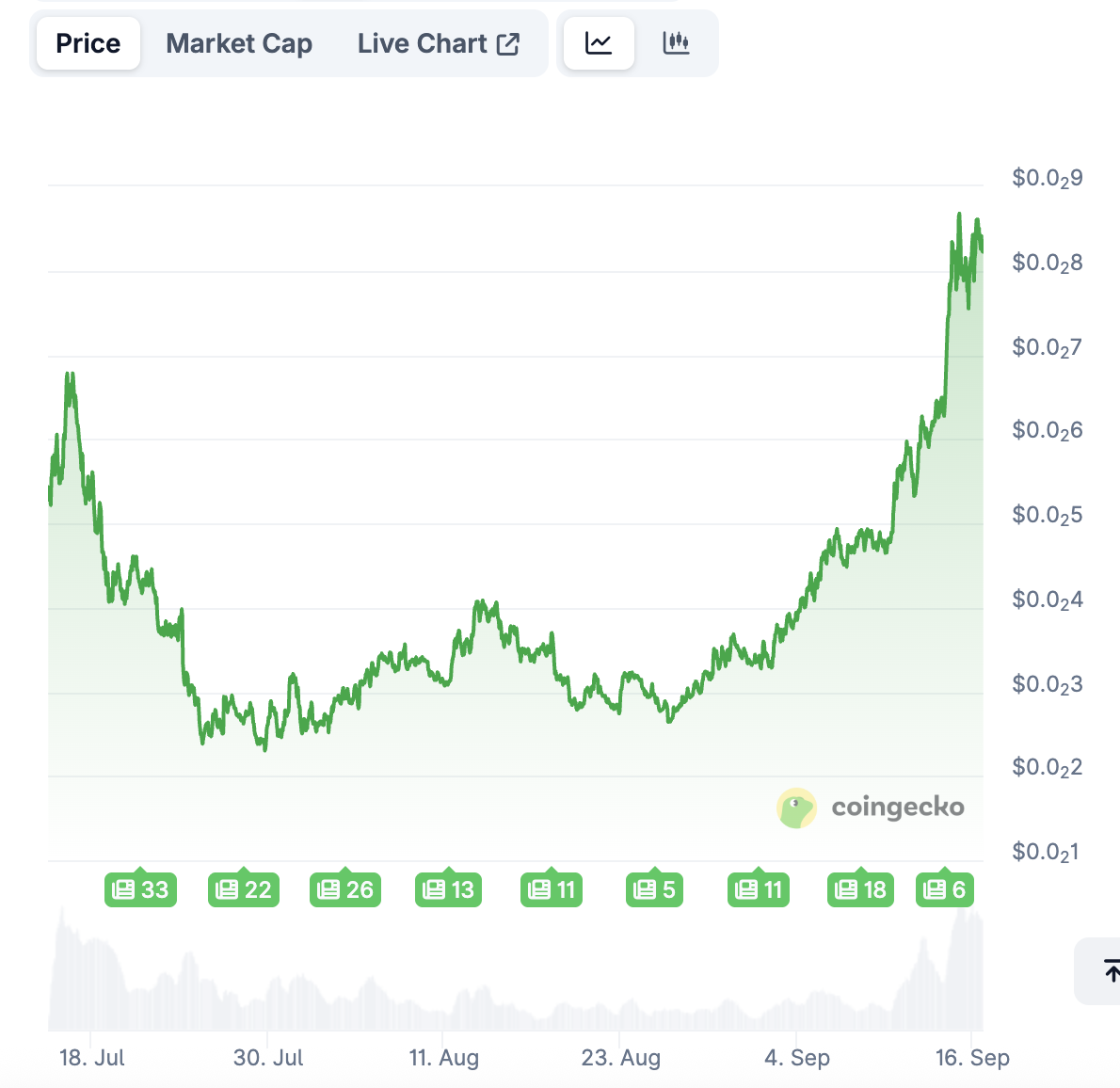
另一方面,自从直播功能上线后,Pump.fun创作者每日分成超过200万美元,单周创作者收入破纪录达1550万美元。

市场中也有不少用户将Pump.fun这次直播功能上线视为CCM(creators capital market )的新范式,称这次更新是加密领域技术创新的突破。

表面上看这是一场皆大欢喜的场面,新功能上线带来大量散户造富神话,币价和平台收入随之上升。粉丝通过投资而非送礼物的形式支持自己喜欢的主播,但是这一切背后似乎隐藏着一个更加复杂和令人不安的现实。

明星代币案例

BUN COIN

BunnyFuFuu是一位前英雄联盟职业电竞选手,在接触Pump.Fun之前,其就已经依靠职业电竞选手的身份在X和Youtube上分别拥有超过21万和150万粉丝。
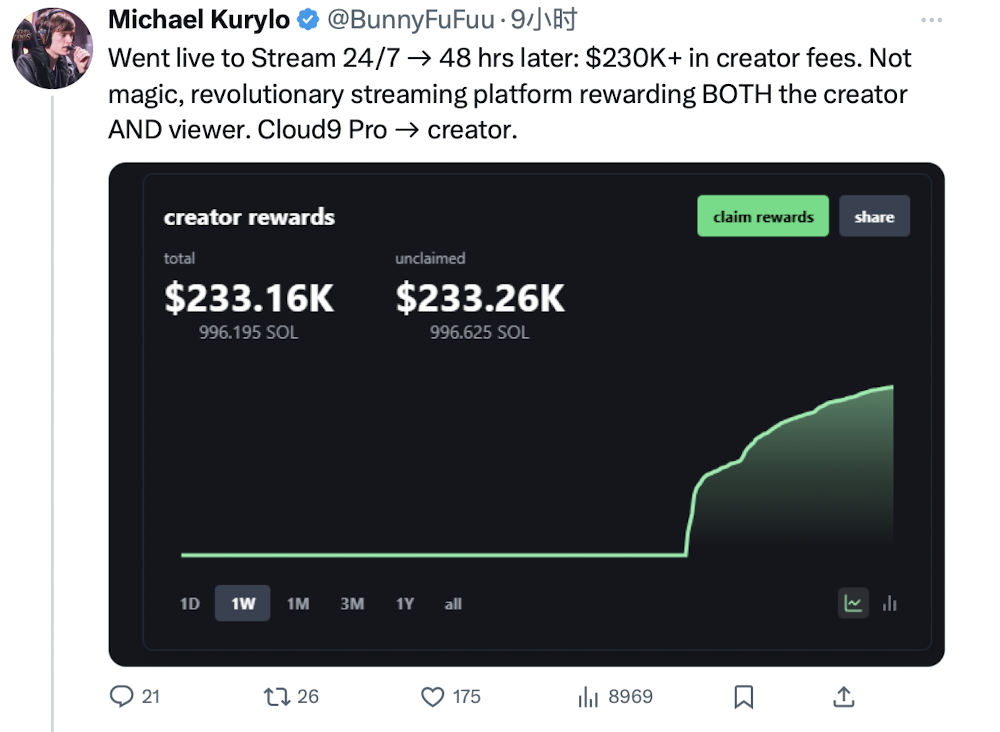
9月14日,BunnyFuFuu在直播中发行自己的代币BUN COIN,并且后续两天内在X上不断为自己的代币喊单,而如此努力的build也让BUN COIN从一众直播代币中脱颖而出。

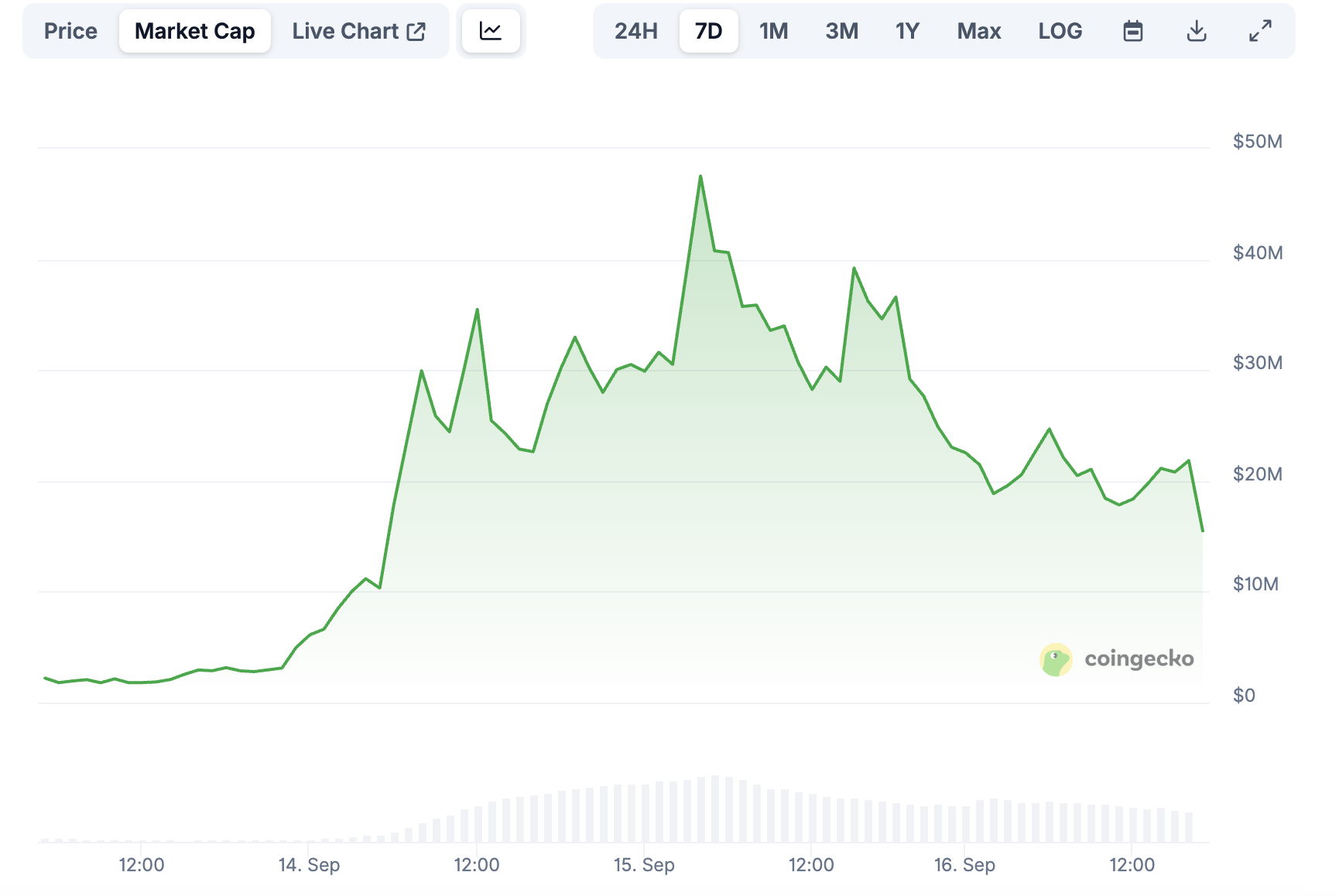
BUN COIN的初始市值仅为30万美元,预售阶段获得150万美元资金,在上市后的48小时内达到1000万美元市值峰值,最高涨幅超3000%,不过今日BUN COIN代币价格一路下跌至当前160万美元,当日跌幅超50%。

代币CA:HQDTzNa4nQVetoG6aCbSLX9kcH7tSv2j2sTV67Etpump
KIND

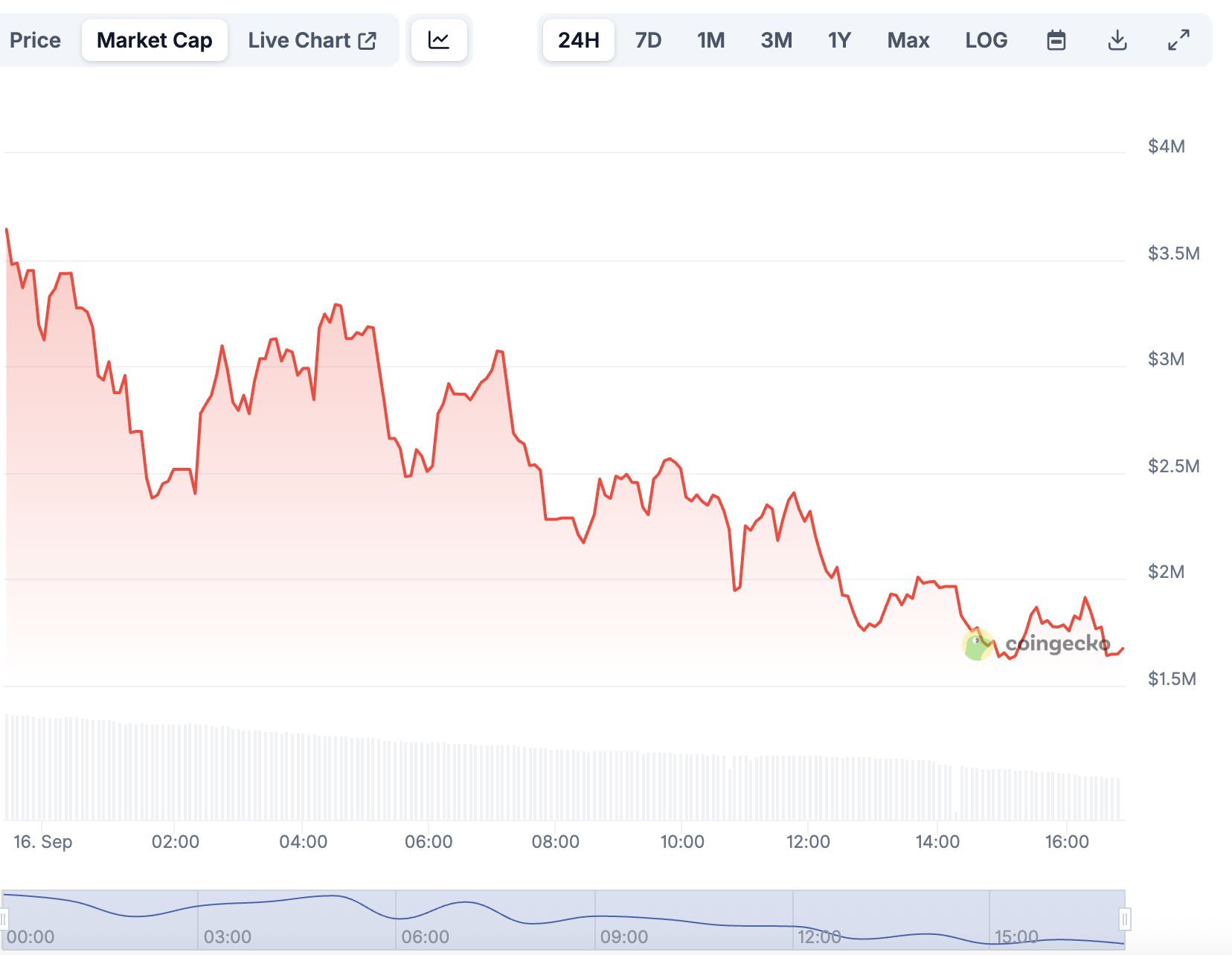
KIND代币的本意为“传播善意”,创作者通过慈善主题直播的形式进行推广,号称用户每买入1美元将捐赠0.1美元给需要帮助的小主播。

如此正面的叙事引起了广泛的关注,9月7日上市以来,KIND在今日凌晨达到最高市值5500万美元,彼时24小时涨幅超20倍,24小时内交易额接近3200万美元,不过其当前市值也迎来了大幅度回调至1800万美元。

代币CA:V5cCiSixPLAiEDX2zZquT5VuLm4prr5t35PWmjNpump
BAGWORK

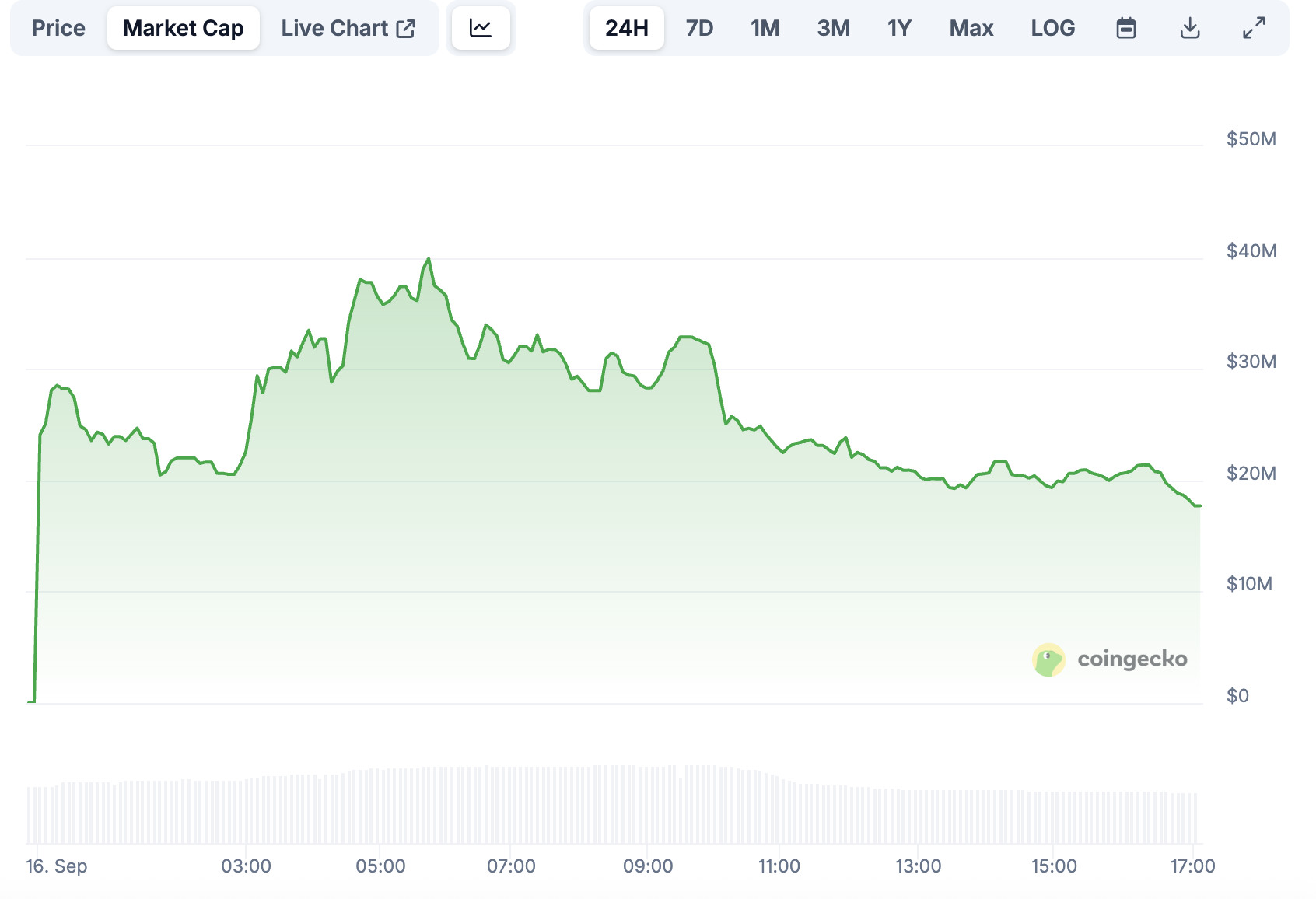
相比于BUN COIN的明星带货和KIND的正面叙事,BAGWORK的叙事是更加带有“整活儿”意味的,Bagwork源自拳击领域专业术语,意为在沙袋上进行专业训练,BAGWORK受此启发,呼吁大家为自己的加密资产奋斗。

同时BAGWORK也是当前Pump.fun直播板块内影响力与传播最广泛的直播代币,毫无疑问,BAGWORK团队是会整活儿的。

直播首日,BAGWORK团队成员冲进某体育场进行直播并在直播过程中被捕;次日,他们在某健身网红的健身房中偷该网红的帽子被其当场抓住并被扇耳光;这两天,又有一位BAGWORK团队成员试图从圣莫尼卡码头跳下被警察拦住。BAGWORK团队承诺将在接下来的两周内每天上演一个新活儿来推动代币让更多人关注。

这一系列看似疯狂的举动确实推动了BAGWORK代币的上涨,9月13日BAGWORK代币的市值仅为300万美元,在48小时的“疯狂直播”后,该代币市值一度逼近一亿美元,当前回落至1500万美元。

代币CA:7Pnqg1S6MYrL6AP1ZXcToTHfdBbTB77ze6Y33qBBpump
直播功能为Pump.fun带来了什么?

在传统互联网直播行业中,主播通过直播打游戏、表演才艺等方式吸引粉丝打赏送礼物的方式获利,而粉丝为主播送礼物完全是消费行为,而非期待获得资金回报的投资行为。

而在Pump.fun的直播中,粉丝对主播的打赏变成了购买代币,并在主播整足够精彩的“活儿”吸引更多人买入后进行获利了结,再去寻找下一位值得投资的主播。这一过程中,粉丝的身份似乎变成了传统的MCN机构,在每位主播身上投入资金和资源,通过主播爆火后的商业价值变现来获利。

而更加关键的是,在这种模式下,主播想要获利的最佳策略往往是在代币价格推高后择机出售代币套现,这就让粉丝和主播之间的关系变得非常“拧巴”,一面想让主播带来更精彩的节目效果让更多人上车,另一面想清空手中的代币使用粉丝“支持”自己的付出变成亏损。

而事实上,以上笔者举的三个知名案例的代币走势已经是无数直播代币中表现最好的几个了,更多的则是在主播热度下降或者下播后迅速归零,这样的剧本熟悉么?没错,在直播功能上线前的Pump.fun内的市场同样如此,根据Solidus Labs对700万个Pump.fun代币分析报告显示,其中接近99%的代币最终会走向归零,直播功能上线后这一比例也并没有得到改善,成功的明星案例仍然只是统计学上的极端个例。

那么直播功能究竟为Pump.fun带来了什么?当前来看似乎只是换了一种传播媒介而已。

市场的分化观点

围绕Pump.fun直播功能的市场争议也反映了一些问题。

拥护者主要聚焦在技术创新和创作者赋能层面。他们认为这种模式消除了传统平台的中间商剥削,让还未名声大噪且有潜力的新人创作者可以在一早就获得几乎等同于Twich顶级创作者才能享有的收入机会。

并且在当下注意力经济的时代中,直播视频所产生的营销能力远强于文字媒介,Pump.fun本身就是注意力经济产物,而直播功能只不过是之前版本的迭代升级。

批评声音则更关注结构性缺陷和内容风险。根据大部分代币走势可以看出,这些直播代币几乎只在主播直播期间上涨,直播结束后急速下跌,很多社区用户质疑其长期价值创造能力。

在内容监管上,虽然Pump.fun已经限制了部分违规内容,但当前平台内仍能看到不少血腥、暴力、色情等直播内容通过满足用户猎奇心理而推升代币价格。

泡沫繁荣下的冷静思考

从投资的角度看,Pump.fun直播功能上线后确实涌现了非常多的获利机会,只要你关注的主播足够“有活儿”并且你比别人更早发现了这样的“宝藏主播”,那么很轻松就可以获利。

但从另一个视角看,当我们剥离掉Web3创新和创作者经济的华丽外衣,Pump.fun的直播模式暴露出来了一个更加本质的问题:如何在激励创作者的同时保护普通参与者的利益。

现有的数据表明,直播模式是不可持续的,99%的代币走向归零,更有99%的的参与者已亏损离场,而创作者和平台确定稳定获利。

这样的模式我们很难将其成为一个健康的生态系统,它更像是一个包装精美的财富再分配游戏,只不过用技术创新的叙事掩盖传统零和博弈的本质。

真正的问题不在于直播发币这一创新形式本身,而在于激励机制的根本性缺陷。当创作者的收益与社区的长期利益完全脱钩,当平台的盈利建立在参与者的普遍亏损之上时,这种模式注定只能是昙花一现的投机狂欢。

我们无法得知Pump.fun直播能否延续当前的热度不断涌现“爆款代币”,但我们可以确认的是对这些爆款直播间的投资都具有相当高的风险,希望各位投资者可以DYOR,注意风险控制。


Twitter:https://twitter.com/BitpushNewsCN

比推 TG 交流群:https://t.me/BitPushCommunity

比推 TG 订阅: https://t.me/bitpush

说明: 比推所有文章只代表作者观点,不构成投资建议

Letture associate

The Richest Fed Chair in 112 Years Is Here: Kevin Warsh Is Rewriting the Rules

Kevin Warsh, with a personal fortune exceeding $130 million, became the 112nd and wealthiest Chair of the U.S. Federal Reserve on May 22nd. A former Wall Street investment banker and key figure during the 2008 financial crisis, Warsh lacks a traditional academic background for a central banker but brings deep market experience. He proposes an unconventional policy approach of simultaneously reducing the Fed's balance sheet ("quantitative tightening") while cutting interest rates, arguing that a smaller balance sheet would allow for more effective rate policy. His ascent marks a potential regime change at the Fed. Warsh aims to reform the institution's decision-making processes, tighten communication discipline among officials, and reduce reliance on forward guidance like the "dot plot." This shift responds to the Fed's current dilemma: fiscal policy is expanding the government's balance sheet through deficits, while monetary policy's ability to shrink its own $6.7 trillion balance sheet is severely constrained, creating pressure on long-term interest rates. Analysts expect Warsh's tenure to sustain high volatility in the U.S. Treasury market due to persistent supply pressures. Furthermore, his leadership coincides with a gradual, structural erosion of dollar dominance, evidenced by its declining share in global reserves and cracks in the petrodollar system, with increased use of alternatives like the Chinese yuan in oil trade. For investors, this environment underscores the importance of portfolio diversification, including assets like gold and Chinese sovereign bonds, amid a fluctuating dollar credit anchor.

链捕手5 min fa

The Richest Fed Chair in 112 Years Is Here: Kevin Warsh Is Rewriting the Rules

链捕手5 min fa

τ Scaling: Huawei's New Growth Engine Designed for the Post-Moore Era

**Tau Scaling: Huawei's New Growth Engine for the Post-Moore Era** For 60 years, progress in semiconductors was driven by Moore's Law – making transistors smaller, denser, and cheaper. This path has now stalled due to plummeting returns below 7nm, astronomical lithography costs, and rising per-transistor expenses. After six years and testing 381 production chips, Huawei’s semiconductor team proposes a fundamental shift: **stop competing on size, start competing on time**. This is the core of their "τ (Tau) Scaling" theory. It treats *time* as the key optimization metric, compressing characteristic delays (τ) across all levels – from transistor switching (picoseconds) to data center tasks (seconds), spanning 12 orders of magnitude. **What is τ Scaling?** It holistically minimizes delay/time constants (τ) across four layers: transistors (switching speed), circuits (signal delay), chips (compute/memory access), and systems (end-to-end communication). The goal is to align optimization from process and circuit design to architecture and systems using this unified metric. **Mobile Application: LogicFolding** Without advancing the process node, this technique vertically stacks chips using ultra-precision hybrid bonding, distributing critical paths across layers ("stacking floors"). Results include a 55% transistor density increase, 41% better energy efficiency, over 40% higher SRAM frequency, and a roadmap targeting 4GHz by 2029. **AI Data Center Application: Full-Link Latency Compression** With 80% of AI cluster energy and 70% cost spent on data movement, the focus is slashing communication time. Key innovations include: 1. **Unified Bus:** Cuts multi-layer protocols, reducing remote access latency from microseconds to ~100 nanoseconds – 500x faster. 2. **Hi-ONE Optical Interconnect:** Replaces copper with fiber, enabling 8Tb/s per module and scaling distances from 1m to 100m for 10,000-chip clusters. 3. **3D Folding:** Solves the "interface bottleneck" of 2.5D packaging by vertically integrating memory, power, and optical I/O alongside compute, predicting over 100x integration density gain by 2035. **Re-fusion of Logic and Memory** The AI era, where data movement is more critical than computation, demands tight 3D integration of logic and memory, shifting industry influence towards memory and advanced packaging. **Remaining Challenges** include adapting EDA tools for 3D design, optimizing wafer-to-wafer process variation and vertical interconnect losses, and establishing new energy efficiency and benchmarking standards. **Conclusion:** The era of scaling physical dimensions is over. The era of scaling time has begun. By leveraging 3D stacking, system architecture, and interconnect optimization—rather than solely chasing advanced lithography—performance and efficiency can continue to advance. This is poised to be the semiconductor industry's core roadmap for the next decade.

marsbit43 min fa

τ Scaling: Huawei's New Growth Engine Designed for the Post-Moore Era

marsbit43 min fa

NodeStrategy: The First Ordinals DAT Project, Bringing the Strategy Treasury Narrative to NFTs

**Summary: The Fundamental Flaws of NodeStrategy, the 'First Ordinals DAT'** NodeStrategy presents itself as the first Ordinals Digital Asset Treasury (DAT) on Bitcoin. Its model mirrors MicroStrategy's treasury narrative but for NFTs, specifically targeting the NodeMonkes collection (not officially affiliated). The project's core mechanism is a four-step flywheel: a 10% fee on all trades (90% to treasury, 10% to radFi/Bound marketplace) is used to buy NodeMonkes. These NFTs are then listed for sale on Satflow, with 100% of the sale proceeds used to buy back and burn the project's token, NODESTRAT, aiming to create a perpetual value cycle. However, the design contains critical, self-defeating flaws: 1. **Platform Lock-In:** As a Bitcoin Rune, NODESTRAT lacks smart contract functionality and cannot natively enforce the 10% fee. The fee can only be collected on the radFi/Bound marketplace itself. This makes the entire flywheel dependent on a single platform. If liquidity moves elsewhere, fee revenue drops to zero, halting the mechanism. 2. **Self-Suffocating Economics:** The 10% fee acts both as the flywheel's fuel and a major drag on demand. A buy/sell roundtrip incurs a 20% cost, creating a massive hurdle for traders. This strangles the very trading volume needed to generate fees. 3. **Ineffective Value Support:** The flywheel is starved. Low daily volume (~$9K) generates minimal fees for NFT purchases. The NFT "ladder" sales are slow and unpredictable (only 39 total sold), meaning buybacks are infrequent. While 30.77% of the supply has been burned, this supply reduction cannot lift price without corresponding demand, which is suppressed by the high transaction tax. 4. **Meaningless NAV:** The Net Asset Value (NAV), currently at a 0.46x discount to market cap, is merely a marketing figure. There is no redemption mechanism for token holders to claim the underlying NodeMonkes assets. Price is set by market liquidity flows, not by this theoretical backing. In essence, NodeStrategy's design forces its revenue source (trading fees) to simultaneously cripple the demand and liquidity required for its own success, trapping the project in a stagnant state.

marsbit49 min fa

NodeStrategy: The First Ordinals DAT Project, Bringing the Strategy Treasury Narrative to NFTs

marsbit49 min fa

Agentic Design Patterns: A Book That Made Me Re-Understand "What Is an Agent, Really?"

"Agentic Design Patterns" is a 2025 book by Antonio Gullí, a Google engineering director, which offers a systematic framework for AI Agent development through 21 design patterns. A core contribution is the "Four Levels of Agency": Level 0 (bare LLMs) are not true agents. Level 1 agents actively decide when and how to use tools. Level 2 agents engage in strategic planning, context engineering (curating and filtering information), and self-reflection. Level 3 involves multi-agent collaboration with defined communication topologies. The book introduces **Context Engineering** as a superset of prompt engineering, managing four layers of information for the agent: system prompts, external data, implicit context (user history, environment), and feedback loops for automated optimization. A key pattern is **Reflection (Producer-Critic)**, where two distinct agents with different prompts collaborate iteratively—one produces output, the other critiques it—until quality is satisfactory or a max iteration limit is reached. For **Memory**, a three-layer model is proposed: Session (ephemeral conversation context), State (temporary task data), and Memory (persistent, long-term storage). Regarding **Multi-Agent Systems**, the book advises against unnecessary complexity, recommending simple topologies like Supervisor or Peer-to-Peer based on task needs. It emphasizes perfecting a single Level 2 agent before moving to multi-agent setups. The author concludes with three actionable takeaways: 1) Add a Critic agent to existing workflows, 2) Practice Context Engineering beyond simple prompts, and 3) Avoid premature multi-agent complexity; first master a robust single agent. The book provides a practical map, codifying common challenges like reflection, memory, and coordination into reusable patterns, saving developers from reinventing foundational solutions.

链捕手1 h fa

Agentic Design Patterns: A Book That Made Me Re-Understand "What Is an Agent, Really?"

链捕手1 h fa

Trading

Spot
Futures

Articoli Popolari

Come comprare FUN

Benvenuto in HTX.com! Abbiamo reso l'acquisto di FUNTOKEN (FUN) semplice e conveniente. Segui la nostra guida passo passo per intraprendere il tuo viaggio nel mondo delle criptovalute.Step 1: Crea il tuo Account HTXUsa la tua email o numero di telefono per registrarti il tuo account gratuito su HTX. Vivi un'esperienza facile e sblocca tutte le funzionalità,Crea il mio accountStep 2: Vai in Acquista crypto e seleziona il tuo metodo di pagamentoCarta di credito/debito: utilizza la tua Visa o Mastercard per acquistare immediatamente FUNTOKENFUN.Bilancio: Usa i fondi dal bilancio del tuo account HTX per fare trading senza problemi.Terze parti: abbiamo aggiunto metodi di pagamento molto utilizzati come Google Pay e Apple Pay per maggiore comodità.P2P: Fai trading direttamente con altri utenti HTX.Over-the-Counter (OTC): Offriamo servizi su misura e tassi di cambio competitivi per i trader.Step 3: Conserva FUNTOKEN (FUN)Dopo aver acquistato FUNTOKEN (FUN), conserva nel tuo account HTX. In alternativa, puoi inviare tramite trasferimento blockchain o scambiare per altre criptovalute.Step 4: Scambia FUNTOKEN (FUN)Scambia facilmente FUNTOKEN (FUN) nel mercato spot di HTX. Accedi al tuo account, seleziona la tua coppia di trading, esegui le tue operazioni e monitora in tempo reale. Offriamo un'esperienza user-friendly sia per chi ha appena iniziato che per i trader più esperti.

183 Totale visualizzazioniPubblicato il 2025.06.25Aggiornato il 2025.06.25

Come comprare FUN

Discussioni

Benvenuto nella Community HTX. Qui puoi rimanere informato sugli ultimi sviluppi della piattaforma e accedere ad approfondimenti esperti sul mercato. Le opinioni degli utenti sul prezzo di FUN FUN sono presentate come di seguito.

活动图片