ЦБ назвал биткоин наименее доходным активом в августе. Как это посчитали

RBK-cryptoPubblicato 2025-09-05Pubblicato ultima volta 2025-09-05

Банк России счел биткоин наименее прибыльным активом в августе, но ведущая криптовалюта остается лидером по прибыли за 12 месяцев

Банк России включил биткоин (BTC) в новый выпуск «Обзора рисков финансовых рынков» в сравнительную таблицу доходности активов при вложениях в рублях. В список вошли инструменты российского рынка, а также золото, гособлигации США и другие активы.
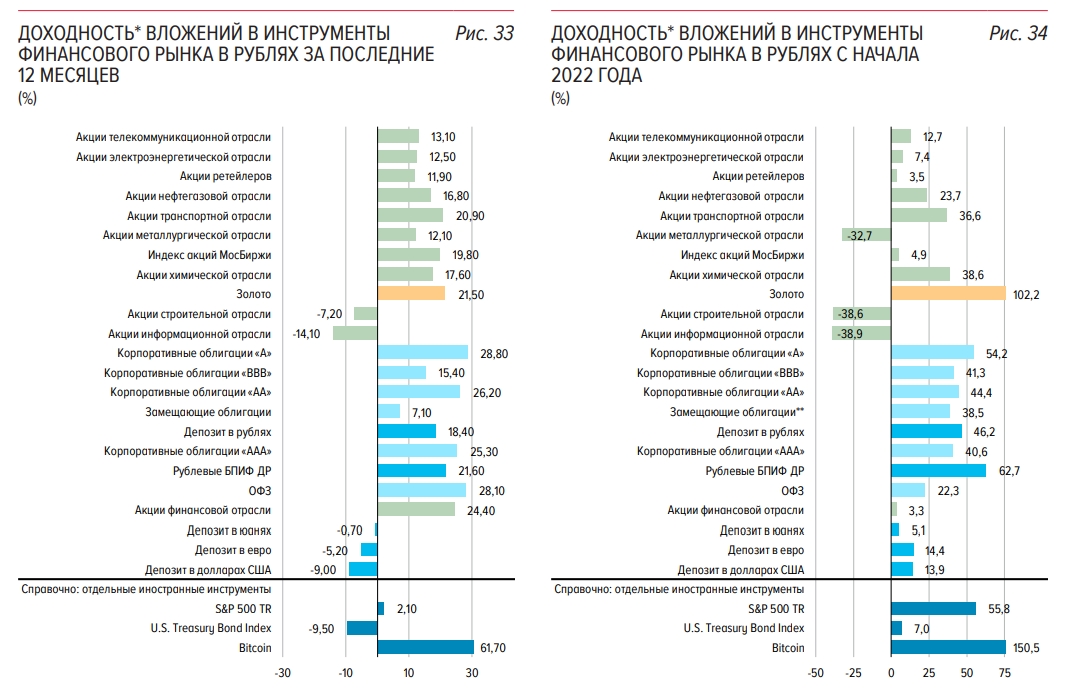
Доходность вложений в инструменты российского финансового рынка. Источник: Банк России

По расчетам регулятора, биткоин при вложениях в рублях показал наибольшую доходность за последние 12 месяцев (61,7%) и с начала 2022 года (150,5%). Однако в августе он оказался наименее прибыльным из всех представленных активов при расчете в рублях (минус 8,2%). С начала 2025 года его доходность также остается отрицательной (минус 7,8%).
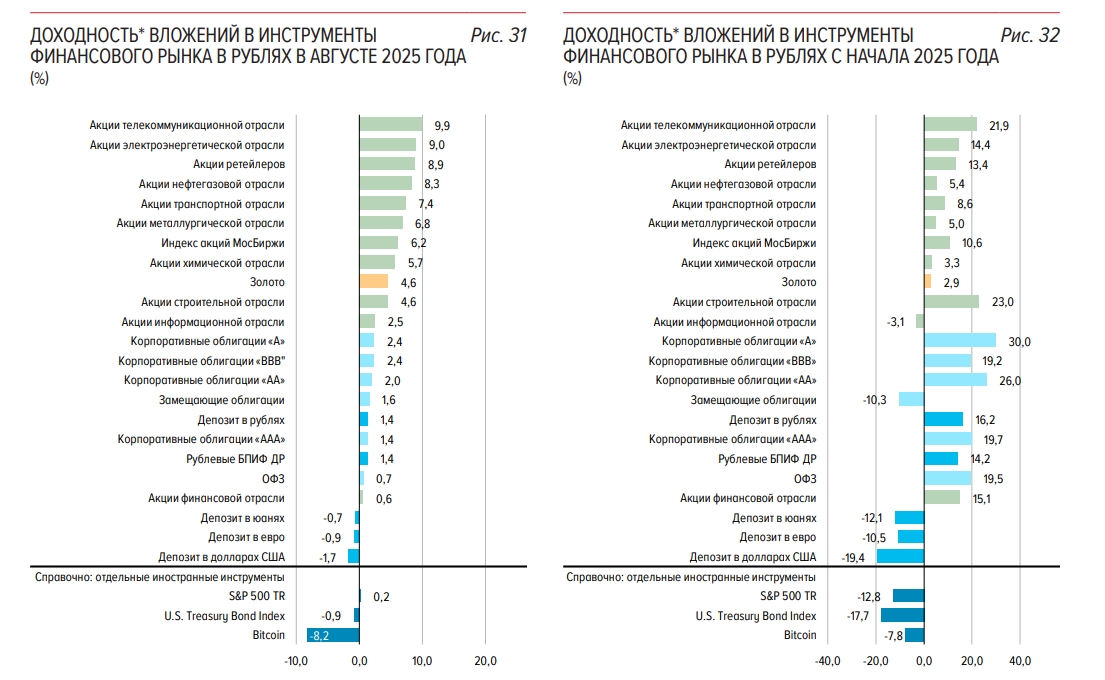
Доходность вложений в инструменты российского финансового рынка. Источник: Банк России

В августе курс биткоина по отношению к доллару США обновил исторический максимум на уровне $124,5 тыс., однако в ряде национальных валют, включая евро, швейцарский франк и российский рубль, рекорд так и не был превышен. В паре к рублю цена BTC по-прежнему почти на 20% ниже пика — около 9,12 млн руб. против 11,1 млн руб. в декабре 2024 года.

«Вы празднуете падение доллара». В чем подвох рекорда биткоина

Банк России впервые включил данные по биткоину в «Обзор рисков финансовых рынков» за апрель 2025 года. В предыдущих отчетах, опубликованных на сайте ЦБ, данных по биткоину не было.

Телеграм-канал «РБК-Крипто» — подпишитесь и будьте в курсе самых главных и актуальных новостей о криптовалюте.

Присоединяйтесь к форуму «РБК-Крипто» в Telegram для обсуждения новостей и тенденций криптомира.

Источниками ЦБ для оценки служат данные Московской биржи, Росстата, ресурсов Cbonds и Investing.com, а также собственные расчеты Банка России. Доходность инструментов в отчете рассчитана исходя из полной фактической рублевой доходности за указанные периоды.

В отчете также приводятся некоторые данные по рынку цифровых финансовых активов (ЦФА). По данным регулятора, с начала года ЦФА стали доступнее для неквалифицированных инвесторов. В январе доля таких выпусков (без учета закрытых) составляла 66%, а августе — 96%.

«Сбер» представит бессрочный ЦФА на корзину из биткоина и Ethereum

Криптопроект Трампов заблокировал токены Джастина Сана. Что случилось

Кусты, чердаки и подсобки. Где в России находят нелегальные майнинг-фермы

Letture associate

IPO Imminent, OpenAI Faces Major Personnel Upheaval

OpenAI, preparing for a potential IPO, is experiencing significant leadership turmoil. In mid-August 2026, longtime "GPU geek" Scott Gray quietly left, and within three days, Chief Operating Officer Brad Lightcap (8-year veteran) and Chief Revenue Officer Denise Dresser (8-month tenure) departed. This follows a broader exodus of at least 10 senior executives in 2026, including heads of product, safety, and ethics. Analysts view this as a strategic "surgery" to transform from a research lab into a sales-driven enterprise company before going public. Revenue now tilts toward enterprise clients, surpassing consumer income sooner than expected, with annualized revenue reaching $40 billion. The new CRO, Dali Rajic, is a veteran enterprise sales leader. Concurrently, OpenAI has disbanded independent safety teams like "Preparedness," which assessed catastrophic risks, integrating their functions into core research. Critics warn this removes dedicated "brakes" on AI development. The leadership vacuum raises questions about who is the clear second-in-command after former apps CEO Fidji Simo moved to an advisory role. Co-founder Greg Brockman appears to be consolidating power. As OpenAI races against rival Anthropic ($47B annualized revenue), it faces the dual challenge of commercial execution while managing the departure of foundational technical talent and ensuring responsible AI development remains a priority.

marsbit1 h fa

IPO Imminent, OpenAI Faces Major Personnel Upheaval

marsbit1 h fa

AI Can 'Have Moods Too'! New Research from USTC: Confusion and Anxiety Make AI Work Better

The article discusses research from the University of Science and Technology of China and Oxford, revealing that allowing AI to recognize and act upon simulated "internal emotions" can significantly improve its performance. The study demonstrates a coherent pairing between specific emotional states in AI agents and their subsequent skill choices. For instance, an agent feeling curious and desirous will search for products, while one feeling confused and tense will rephrase queries. This mirrors human decision-making influenced by emotions. Statistical validation showed a 76.5% semantic consistency in these pairings. Crucially, the research challenges the traditional view of AI errors as flaws to be eliminated. It found that "bad" emotions like confusion, tension, or frustration serve as useful metacognitive signals, indicating a mismatch between the current strategy and the environment. By responding to these signals, AI can proactively adjust before a failure occurs. This is particularly effective in complex tasks prone to failure. For example, in tasks like "heating an item" and "picking up two items," success rates surged from 9.6% to 56.9% and 4.4% to 31.3%, respectively, when using the emotion-driven skill selection method (EMOTION2SKILL). The AI's "nervous" state about a closed microwave, for instance, prompted it to check and open it first, preventing failure. The article also mentions related work from Tianjin University, which embeds emotional prediction into world models (Large Emotional World Model, LEWM), significantly improving prediction accuracy in human-centric environments. Removing emotional data was found to degrade performance even in unrelated logical reasoning tasks. These studies build on earlier findings, like those from Anthropic, that identifiable emotional representations exist within large language models (LLMs). The focus is shifting from philosophical debate about AI emotion to practically harnessing these internal states as functional signals to enhance AI robustness and capability.

marsbit1 h fa

AI Can 'Have Moods Too'! New Research from USTC: Confusion and Anxiety Make AI Work Better

marsbit1 h fa

Trading

Spot
活动图片