Какой эффект на криптовалюты окажет уменьшение ключевой ставки?

cryptonews.ruPubblicato 2025-04-23Pubblicato ultima volta 2025-08-24

После выступления председателя Федеральной резервной системы США Джерома Пауэлла, состоявшегося 22 августа, повысилась вероятность снижения ключевой ставки в Америке, и это событие может повлиять на рынок криптовалют.

Среди экспертов бытует два противоположных мнения относительно последствий уменьшения ключевой ставки. Трейдер, известный под псевдонимом Ash Crypto, оказался среди сторонников бычьего ралли:

В четвёртом квартале этого года федеральное правительство США запустит печатный станок. В совокупности с двумя вероятными снижениями ключевой ставки это вызовет приток капитала в размере нескольких триллионов долларов на крипторынок. Мы находимся на пороге фазы параболического роста курса альткоинов, во время которой они подорожают в 10-50 раз.

Глава исследовательского департамента компании 10x Research Маркус Тилен придерживается иной точки зрения и полагает, что снижение ставки, наоборот, приведёт к падению стоимости виртуальных валют на фоне опасений по поводу рецессии экономики. В этом случае на приток инвестиций сможет рассчитывать разве что биткоин, считающийся цифровым золотом.

Работники аналитической фирмы Santiment тоже не спешат радоваться новости о возможном уменьшении ключевой ставки. По их мнению, эйфория, вызванная этим сообщением, скорее всего, достигла пика и скоро пойдёт на спад. Поэтому бычьим настроениям трейдеров может настать конец. Кроме того, рост курса акций, спровоцированный выступлением Пауэлла, способен сместить фокус внимания с цифровых активов на дорожающие ценные бумаги американских предприятий.
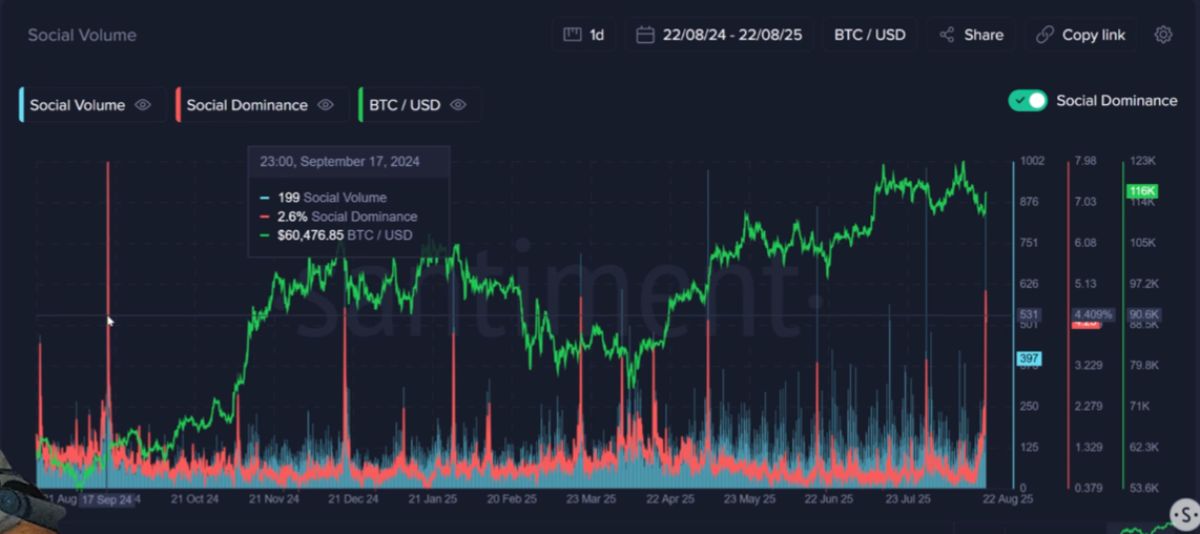
rate-cut-us-discussions-count

Количество обсуждений денежно-кредитной политики властей США (синяя диаграмма)

Учитывая эти факторы, имеет смысл готовиться к началу медвежьего тренда, который должен наступить на рынке криптовалют осенью, если верить теории циклов. Нисходящая тенденция давно назрела, потому что уровень капитализации цифровых активов растёт с января 2023-го, подвергаясь лишь непродолжительным коррекциям.

Letture associate

During the World Cup, USDT becomes the preferred chip for illegal gambling? Beware of three typical scams

During the 2026 FIFA World Cup, USDT has become the preferred payment method for illegal online gambling due to its price stability, anonymity, and fast cross-border transfers. This article analyzes how USDT facilitates this activity and outlines three major scams targeting users. **Why USDT is the "Chip of Choice"**: It solves bettors' anxiety over crypto volatility, enables instant cross-border transfers without traditional banking, and shows significant abnormal transaction spikes during major events. **The Fund Flow**: Gambling platforms use a complex laundering chain involving multi-layer address hopping, cross-chain transfers (e.g., Polygon to Tron), mixers like Tornado Cash, and final cash-out via exchanges. **Three Typical Scams**: 1. **"USDT Betting Evades Regulation"**: Fake platforms promising anonymous, high-odds betting but manipulating outcomes. 2. **Fake Sportsbooks**: High-quality replica sites that allow small initial withdrawals to build trust before freezing accounts with larger funds. 3. **"Insider Tips / Guaranteed Wins"**: Schemes selling fabricated "AI predictions" or "fixed match" models to exploit information anxiety. **Identifying Suspicious Addresses**: Key chain-based indicators include a "fast-in, fast-out" transaction pattern, clustered addresses with consistent behavior, uniform Gas fee patterns, and frequent cross-chain jumps. **User Protection Advice**: * Avoid any project promoting "USDT betting," "Web3 predictions," or "anonymous high returns." * Be skeptical of promises like "guaranteed wins" or "insider models." * Do not trust platforms just because they allow small withdrawals—this is a common trust-building tactic. * If scammed, preserve all evidence: transaction hashes, wallet addresses, chat logs, and platform URLs. **Conclusion**: USDT provides unprecedented liquidity for illicit activities. The most effective protection for users is complete non-participation in any form of online crypto gambling.

marsbit7 min fa

During the World Cup, USDT becomes the preferred chip for illegal gambling? Beware of three typical scams

marsbit7 min fa

Zoomex X Space Recap With Djibril Cissé and the World Cup Trading Panel

Zoomex hosted a World Cup-themed X Space with Champions League winner Djibril Cissé and four crypto traders, discussing pressure management, analysis, and philosophy, and launching a charity pledge. Cissé emphasized embracing pressure in critical moments, drawing from his experience taking a penalty in a Champions League final. The traders agreed that managing stress comes from systematic preparation and clear risk parameters before executing a trade. The conversation explored parallels between football and trading. Cissé highlighted pace as his key weapon, but stressed that output (goals) matters more than tools. The traders debated timing versus speed of execution, concluding that timing is paramount and relative to one's timeframe. Discussing resilience, Cissé shared his mindset after major injuries: focusing on recovery and finding the positive. Similarly, traders emphasized learning from losses rather than avoiding them. Cissé declined to speculate on alternate histories, like France's 2006 World Cup run without his injury, stating one must work only with reality—a principle directly applicable to trading. In a lighter segment, traders mapped cryptocurrencies to national teams (e.g., Bitcoin to Brazil/France). The core lesson was that high performers, in both fields, thrive on uncertainty by relying on tested systems and focusing solely on actionable information. The session was part of Zoomex's World Cup Impact Pledge, which includes charity donations tied to guest predictions.

TheNewsCrypto15 min fa

Zoomex X Space Recap With Djibril Cissé and the World Cup Trading Panel

TheNewsCrypto15 min fa

Fed Turns Hawkish, Wall Street Capitulates, Citi Stands as 'Last Holdout': Insists on Resuming Rate Cuts in October

Amid a surprisingly hawkish shift from the Fed and most of Wall Street capitulating on rate cut expectations, Citigroup stands as a notable outlier, holding firm to its forecast for monetary easing to restart this October. Following the June FOMC meeting, where the "dovish bias" was removed and the dot plot shifted dramatically, markets priced in nearly 37bps of tightening for 2026. Major banks like Deutsche Bank and Goldman Sachs revised their calls, predicting rate hikes as soon as September. Citigroup, however, maintains a baseline scenario for a 25bps rate cut in October, followed by two more cuts in December and January 2027. Its counter-consensus view rests on three key arguments: 1) Plunging oil prices are eliminating a major inflation upside risk. 2) Rising initial jobless claims are mirroring seasonal weakening patterns seen in 2024-2025, signaling a labor market cool-down. 3) The strong core PCE is an "outlier," heavily influenced by AI-related prices and equity market gains rather than broad consumer price pressures, with other inflation metrics showing more moderation. While Wall Street largely "surrenders" to the hawkish Fed narrative, with Deutsche Bank forecasting two hikes and Goldman Sachs warning of potential back-to-back moves, Citigroup remains the "last holdout," betting that disinflationary forces will pave the way for cuts before year-end.

marsbit16 min fa

Fed Turns Hawkish, Wall Street Capitulates, Citi Stands as 'Last Holdout': Insists on Resuming Rate Cuts in October

marsbit16 min fa

Open Systems Will Ultimately Prevail: Why Ethereum Is the Next Linux?

The article "Open Systems Will Ultimately Prevail: Why Ethereum Is the Next Linux?" argues that Ethereum, like Linux before it, will triumph over closed, proprietary systems in finance due to its open, permissionless, and credibly neutral nature. It draws a historical parallel: just as the open internet defeated corporate private networks and Linux outcompeted proprietary Unix systems, open financial infrastructure like Ethereum will surpass private blockchains. The core advantage lies in the "bazaar" development model (as described in Eric Raymond's "The Cathedral and the Bazaar"), where decentralized, permissionless innovation by a global community of developers outpaces the controlled "cathedral" approach of centralized entities. This model fosters rapid innovation, as seen with Ethereum standards like ERC-20 and applications like Uniswap, which were built without needing permission. Ethereum's key, irreplicable strength is its credible neutrality: transparent, equally applicable, immutable rules that allow anyone to participate. This ensures sovereign independence, meaning no single entity (company, government) can control or change its core rules—a critical feature for global financial infrastructure. In contrast, private blockchains and consortium chains (like SWIFT or various bank-led projects) suffer from platform risk, central control, and an inability to attract broad developer ecosystems, leading to frequent failures. The article notes that major institutions (e.g., BlackRock, JPMorgan, Coinbase, Robinhood) are already building on Ethereum or its Layer 2 networks, recognizing its security, developer ecosystem, and network effects. While critics argue finance requires accountable, controlled systems, the response is that compliance (KYC, regulations) can be built at the application layer on top of a neutral settlement layer like Ethereum, just as secure commerce was built on the open internet via HTTPS. Ultimately, the thesis is that attempting to build walled-garden, proprietary financial networks is a flawed strategy that stifles innovation. The winning approach is to build applications on top of open, credibly neutral infrastructure like Ethereum, which is poised to become the foundational settlement layer for global finance.

Foresight News27 min fa

Open Systems Will Ultimately Prevail: Why Ethereum Is the Next Linux?

Foresight News27 min fa

Trading

Spot
Futures
活动图片