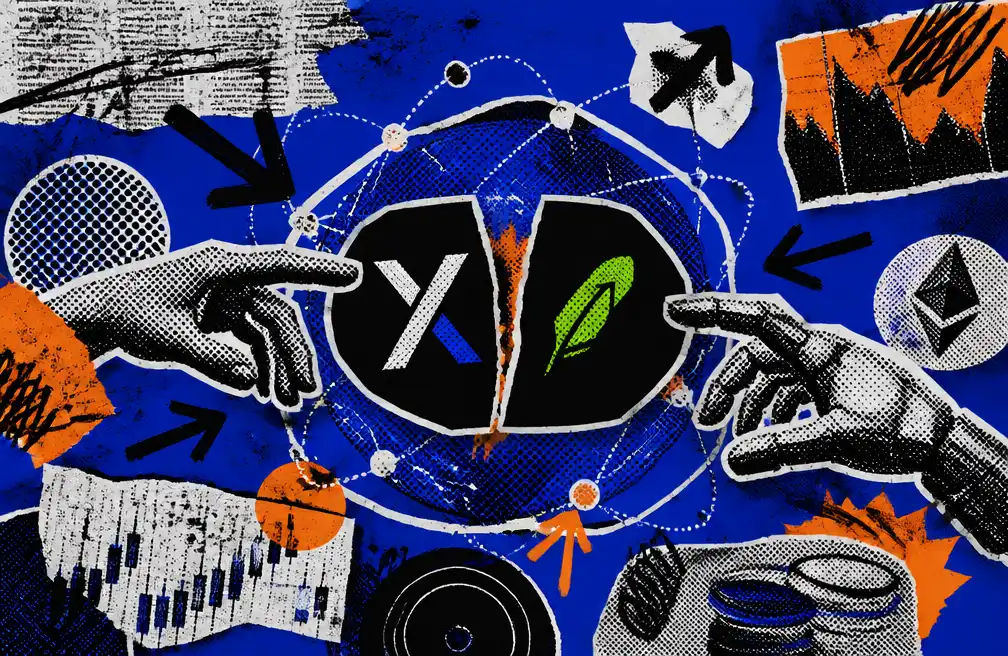
India Cannot Afford to Miss Crypto Fintech Revolution as it Did With Dot Com Boom

ccn.comPubblicato 2025-08-07Pubblicato ultima volta 2025-08-16

Key Takeaways

  • India’s hardline stance on crypto risks missing the next big tech boom.
  • The country sat out the dot-com and internet revolutions in the early 2000s.
  • A thriving domestic crypto community is pushing for change, but progress remains slow.

India—home to 1.4 billion people and trillions in economic potential—is standing at the edge of another technological breakthrough: the global crypto and fintech revolution.

But instead of leading the charge, the world’s most populous democracy remains stuck in a holding pattern.

Despite having one of the largest and most active crypto user bases in the world, India’s government continues to treat the industry with skepticism—offering heavy taxes but no legal clarity.

Top Crypto Tax Software
Sponsored
Disclosure
We sometimes use affiliate links in our content, when clicking on those we might receive a commission at no extra cost to you. By using this website you agree to our terms and conditions and privacy policy.

Lessons From the Dot-Com Era

This isn’t the first time India has hesitated in the face of a global tech shift.

In the early 2000s, it largely dismissed the dot-com and internet boom as a fad.

The result? A generation of innovation passed it by, forcing India’s vast talent pool into service industries catering to foreign markets rather than building global technology leaders at home.

That hesitation sparked a persistent brain drain.

Top engineers from India’s leading universities continue to leave for better opportunities abroad.

Now, the pattern is repeating itself in crypto: leading Indian blockchain companies are relocating to Dubai and Singapore to escape high taxes and regulatory uncertainty.

Heavy Taxes, Light Assurances

Despite years of promises, India has yet to table a comprehensive crypto bill in parliament.

The first nationwide policy discussions began after the Reserve Bank of India’s controversial banking ban on crypto in 2018—later overturned by the Supreme Court.

The court urged the government to develop a regulatory framework.

Instead, lawmakers moved quickly on just one front: taxation. In 2022, a 30% tax on crypto gains was introduced. Since then, the government has collected significant revenue:

  • FY 2022–23: ₹269.09 crore ($32 million).
  • FY 2023–24: ₹437.43 crore ($52 million).
  • FY 2024–25: ₹29,208 crore ($130 million).

Many in the industry saw this as tacit recognition that crypto was not illegal. But hopes faded as no regulatory clarity followed.

Indian Crypto Scams, Hacks, and Silence

The absence of clear rules has turned India’s crypto landscape into a high-risk environment.

Fraudulent schemes and hacks thrive in the regulatory vacuum.

The most glaring example came in the $230 million WazirX hack, which left customer funds in limbo.

WazirX later moved to Singapore for restructuring, while Indian authorities refused to intervene—despite repeated appeals from the community.

The Crypto World Moves Ahead From India

Globally, governments are moving toward clearer crypto rules.

The U.S. under Donald Trump is positioning itself as a leader in crypto adoption, while allies like South Korea, Japan, Pakistan, Hong Kong, Vietnam, the European Union, and the UK are rolling out comprehensive regulations.

India’s Parliament Finance Panel has signaled interest in studying Virtual Digital Assets (VDAs) in 2024–25, raising hopes for a shift toward a more progressive policy.

If change doesn’t come soon, India risks replaying the dot-com era mistake—missing the innovation wave and settling for the role of service provider to the global crypto economy.

Was this Article helpful? Yes No

Crypto di tendenza

Letture associate

Bitwise Chief Investment Officer: STRC Plunge is a Bottom Signal, Bull Market to Start in Autumn

Bitwise CIO: STRC's Plunge Signals Market Bottom, Bull Run Likely This Fall Bitwise CIO Matt Hougan analyzes the recent sharp decline of Strategy's perpetual preferred shares (STRC) and its implications for the bitcoin market. STRC, a product designed for stable, high-yield income, fell dramatically from its $100 target to $75 amid concerns about Strategy's ability to maintain dividends as bitcoin prices dropped. While Strategy's overall balance sheet remains strong, with ample assets to cover liabilities, market panic stemmed from its right to suspend STRC dividends. In response, Strategy introduced a new framework, committing to sell bitcoin as needed to fund dividends and allowing STRC to float freely, abandoning the $100 peg mechanism. This shift marks a change in Strategy's role from a consistent net buyer to a more dynamic participant in the bitcoin market. Hougan views the STRC volatility and related sell-off in MicroStrategy (MSTR) stock as classic late-cycle behavior, where mismatched leverage is being purged from the system. He draws parallels to the GBTC premium unwind after the 2021 bull market. This necessary deleveraging, he argues, is a precursor to finding a market bottom. Key bottoming signals to watch include MSTR trading at a discount to its net asset value (NAV), crypto fear & greed indices hitting extreme lows, and sustained negative bitcoin funding rates. Hougan concludes that as excess leverage is cleared, the market is nearing its bottom, setting the stage for a new bull cycle to begin in the autumn. The next major wave of buyers, he believes, will be institutional investors like banks, asset managers, and pension funds.

marsbit19 min fa

Bitwise Chief Investment Officer: STRC Plunge is a Bottom Signal, Bull Market to Start in Autumn

marsbit19 min fa

The Largest Upgrade Since The Merge? How Glamsterdam Will Affect Ethereum?

Ethereum's next major upgrade, Glamsterdam (combining consensus layer "Gloas" and execution layer "Amsterdam"), is scheduled for late 2026 and considered the most significant overhaul since The Merge. It aims to fundamentally enhance L1 performance and architecture to prepare for substantial capacity increases. The upgrade centers on three core changes: 1. **Enshrined PBS (ePBS - EIP-7732):** Integrates the Proposer-Builder Separation directly into the protocol, eliminating reliance on external relays. This extends the window for processing execution payloads, allowing nodes more time to handle larger blocks and more data, paving the way for a higher Gas Limit. 2. **Block-Level Access Lists (BALs - EIP-7928):** Provides a pre-declared "map" in the block header of all state data (accounts, storage) that transactions will access and modify. This enables potential parallel transaction processing and faster state synchronization for nodes. 3. **Gas Repricing (EIP-8037):** Overhauls the gas model to more accurately reflect the real resource costs for nodes. It separates computation costs from state storage costs, making operations that create permanent state data (like new accounts) more expensive, while computation-heavy operations become relatively cheaper. These changes work together to solve the trilemma of scaling: giving nodes more time to process larger blocks (ePBS), reducing execution bottlenecks (BALs), and controlling unsustainable state growth (Gas Repricing). The goal is a credible path to a higher Gas Limit (e.g., 200M gas) without compromising decentralization by overburdening node hardware. For users: * Transaction fees for simple transfers may decrease and become more stable due to increased block space, but state-intensive operations (contract deployment) may cost more. * Gas estimation by wallets will improve in accuracy. * L2 data posting costs could become more stable long-term due to increased Blob capacity. * EIP-7708 will standardize logs for ETH transfers, improving tracking for wallets and exchanges. Node operators must upgrade clients, but ETH holders need take no action. In essence, Glamsterdam doesn't just raise the block size limit; it re-engineers Ethereum's core block production, execution, and economic models to enable sustainable, decentralized scaling.

marsbit1 h fa

The Largest Upgrade Since The Merge? How Glamsterdam Will Affect Ethereum?

marsbit1 h fa

Trading

Spot

Articoli Popolari

Come comprare DOT

Benvenuto in HTX.com! Abbiamo reso l'acquisto di Polkadot (DOT) semplice e conveniente. Segui la nostra guida passo passo per intraprendere il tuo viaggio nel mondo delle criptovalute.Step 1: Crea il tuo Account HTXUsa la tua email o numero di telefono per registrarti il tuo account gratuito su HTX. Vivi un'esperienza facile e sblocca tutte le funzionalità,Crea il mio accountStep 2: Vai in Acquista crypto e seleziona il tuo metodo di pagamentoCarta di credito/debito: utilizza la tua Visa o Mastercard per acquistare immediatamente PolkadotDOT.Bilancio: Usa i fondi dal bilancio del tuo account HTX per fare trading senza problemi.Terze parti: abbiamo aggiunto metodi di pagamento molto utilizzati come Google Pay e Apple Pay per maggiore comodità.P2P: Fai trading direttamente con altri utenti HTX.Over-the-Counter (OTC): Offriamo servizi su misura e tassi di cambio competitivi per i trader.Step 3: Conserva Polkadot (DOT)Dopo aver acquistato Polkadot (DOT), conserva nel tuo account HTX. In alternativa, puoi inviare tramite trasferimento blockchain o scambiare per altre criptovalute.Step 4: Scambia Polkadot (DOT)Scambia facilmente Polkadot (DOT) nel mercato spot di HTX. Accedi al tuo account, seleziona la tua coppia di trading, esegui le tue operazioni e monitora in tempo reale. Offriamo un'esperienza user-friendly sia per chi ha appena iniziato che per i trader più esperti.

485 Totale visualizzazioniPubblicato il 2024.12.12Aggiornato il 2026.06.02

Come comprare DOT

Discussioni

Benvenuto nella Community HTX. Qui puoi rimanere informato sugli ultimi sviluppi della piattaforma e accedere ad approfondimenti esperti sul mercato. Le opinioni degli utenti sul prezzo di DOT DOT sono presentate come di seguito.

活动图片