PancakeSwap запустила торговлю фьючерсами на акции Apple, Amazon и Tesla

cryptonews.ruPubblicato 2025-08-22Pubblicato ultima volta 2025-08-22

В отличие от криптовалютного рынка торги бессрочными контрактами на акции американских компаний ограничены рабочими часами фондовых бирж в США

«РБК-Крипто» не дает инвестиционных советов, материал опубликован исключительно в ознакомительных целях.

Децентрализованная криптобиржа (DEX) PancakeSwap открыла торги фьючерсами на акции компаний Apple (AAPL), Amazon (AMZN) и Tesla (TSLA). Торговля бессрочными контрактами на ценные бумаги доступна на платформе с 5 августа, пользователи могут делать это напрямую из своего криптокошелька.

PancakeSwap — крупнейшая DEX-платформа в сети BNB Smart Chain, она работает по модели автоматического маркетмейкера (AMM) и является одним из лидеров среди децентрализованных бирж, ее доля в секторе DEX — более 30%. Капитализация ее токена CAKE превышает $900 млн, по данным CoinMarketCap.

rbc.group

Торговля будет проходить в виде бессрочных фьючерсов с кредитным плечом до 25x на платформе PancakeSwap Perpetuals.

В отличие от фьючерсов на криптовалюты бессрочные контракты на акции торгуются только в часы работы фондовой биржи в США. Она открыта с понедельника по пятницу с 13:30 до 20:00 UTC (с 16:30 до 23:00 мск).

В начале июля доступ к PancakeSwap заблокировали в Турции. Причиной блокировки назвали «несанкционированное предоставление услуг по криптовалюте». По информации журналистов, это первый случай, когда власти ввели подобные меры против децентрализованных сервисов.

Все больше криптовалютных сервисов начинают предлагать клиентам инструменты на базе традиционных активов. Так, в начале лета на биржах и DEX-платформах стали доступны инструменты xStocks от компании Backed Finance. Это токенизированные акции крупных компаний, включая Apple, Microsoft, Tesla и S&P 500, а также фондовые индексы.

По заявлению разработчиков, каждый токен xStocks обеспечен реальными активами. По данным на 6 августа, объем торгов токенами от Backed Finance превысил $2 млрд.

Собственное решение запустил для европейских трейдеров брокер Robinhood. Компания добавила возможность торговать «акциями» популярны частных компаний. OpenAI, чьи токенизированные акции были представлены таким образом, открыто заявила, что не имеет отношения к этим активам.

В настоящий момент ни одно из перечисленных решений не доступно трейдерам из США.
Letture associate

Upbit is Anxious: A Hasty Counterattack Aimed at Regaining Stablecoin Market Share

Title: Upbit's Rushed Counterattack to Reclaim Stablecoin Market Share Facing a dramatic shift in South Korea's stablecoin market, leading exchange Upbit launched a promotional campaign from July 26 to August 9, waiving the 0.05% trading fee for stablecoins paired with the Korean Won (KRW) and rapidly listing new stablecoins like RLUSD and USDG. This move is a direct response to its plummeting market share in this sector. Historically a duopoly with Bithumb, the market has been reshaped since October 2025 when Coinone permanently removed fees for USDC trading. By June 2026, Coinone led with 34.8% of stablecoin volume, followed by Bithumb (31.1%) and Upbit (30.1%). This contrasts sharply with the overall crypto market, where Upbit commands 60%. The data shows stablecoin demand is highly sensitive to fees, as users primarily buy them to transfer capital overseas for derivatives trading or forex arbitrage. South Korean exchanges have seen a net outflow of stablecoins for 18 consecutive months, totaling approximately 14.9 trillion KRW, underscoring their role as a cross-border capital conduit. Upbit's limited-time promotion initially boosted its daily stablecoin volume by 162%, but the surge was almost entirely in USDT (98.1% of volume). The newly listed stablecoins saw negligible, fleeting interest. Furthermore, the promotional effect quickly waned in the second week, with volume dropping 33% on weekdays. A concurrent weakening of the KRW also contributed to the trading spike, independent of the fee waiver. The analysis suggests that once the promotion ends, Upbit is unlikely to retain its temporary gains unless it matches Coinone's permanent zero-fee policy, forcing a choice between market share and fee revenue. Upbit's strategic push may be less about immediate profit and more about preparing for future regulatory shifts. With South Korea's *Digital Asset Basic Act* on the horizon, which will regulate KRW-backed stablecoins, and following Dunamu's (Upbit's parent) integration into Naver Financial to build a payment ecosystem, securing a dominant position in the dollar stablecoin distribution channel holds long-term strategic value. However, potential regulatory conflicts could prevent Upbit from listing a future Naver-issued KRW stablecoin, making the current fight for dollar stablecoin flow even more critical.

marsbit5 h fa

Upbit is Anxious: A Hasty Counterattack Aimed at Regaining Stablecoin Market Share

marsbit5 h fa

Michael Saylor Compares Bitcoin and Gold!

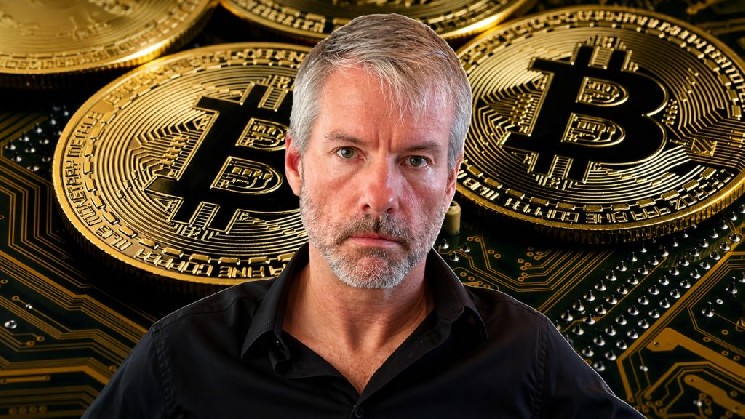
Michael Saylor, founder of MicroStrategy, argues that Bitcoin fundamentally changes how wealth is stored and transferred by transforming digital scarcity into economic value. He describes Bitcoin as the first digital monetary network, combining computers, digital networks, and cryptography. It digitizes monetary assets, allowing their supply to be controlled by public protocols rather than institutions, thus converting economic value into information transmissible over global networks. Comparing Bitcoin to gold, Saylor states that while increasing Bitcoin's supply is harder, its integration with software and transfer is easier. He highlights Bitcoin's proof-of-work mechanism, which ties it to the physical world by consuming real energy to secure the ledger, making past transactions immutable. This creates a shared security system involving miners, energy companies, and investors. Saylor suggests "digital monetary energy" is a more accurate term than "digital gold." He emphasizes that the Bitcoin network is an adaptive ecosystem of miners, nodes, developers, and users. Its core design is intentionally simple, focused on maintaining a secure ledger for scarce digital assets, with complex functionalities built in higher-layer applications. This architecture allows Bitcoin to serve as a foundation for transmitting value and fostering innovation in payments and financial services. Saylor notes Bitcoin's deeper impact lies in creating digital sovereignty, where private keys give individuals permissionless control over their economic power, with ownership verified mathematically, not by institutions. He concludes that while gold's physical scarcity makes it money, Bitcoin's digital scarcity does the same, characterizing Bitcoin as the monetary energy of the digital age.

cryptonews.ru6 h fa

Michael Saylor Compares Bitcoin and Gold!

cryptonews.ru6 h fa

Trading

Spot
活动图片