На биржах деривативов в США запустят торговлю криптовалютой

cryptonews.ruPubblicato 2025-08-15Pubblicato ultima volta 2025-08-15

Власти США хотят разрешить торговать криптовалютой на всех зарегистрированных биржах, где представлены фьючерсы.

Получив рекомендации от сформированной президентом Дональдом Трампом Рабочей группы по цифровым активам, сотрудники Комиссии по торговле товарными фьючерсами (CFTC) выступили с инициативой дать добро на листинг контрактов на покупку виртуальных валют по цене, фиксируемой на спотовом рынке. То есть эти деривативы фактически позволят трейдерам торговать токенами и монетами.

CFTC быстро движется к тому, чтобы запустить торговлю цифровыми активами на федеральном уровне и скоординировать это с криптовалютным проектом Комиссии по ценным бумагам и биржам. Существует ясное и простое решение, которое CFTC может применить прямо сейчас, — заявила глава CFTC Кэролайн Фам.
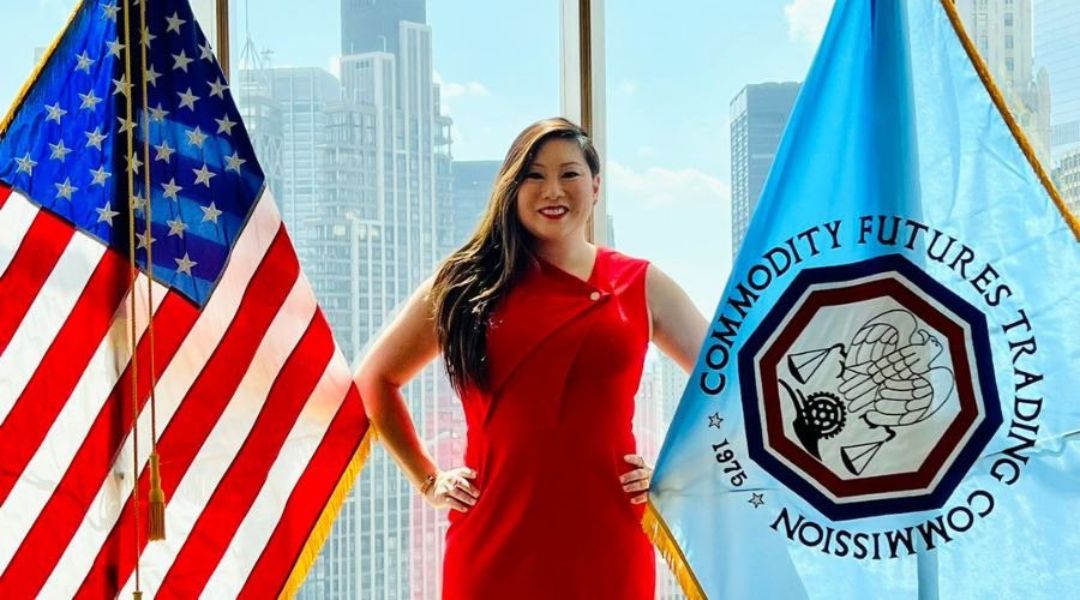
caroline-pham

Кэролайн Фам

Причина, по которой специалисты CFTC выбрали хитрую схему с использованием контрактов на покупку криптовалют заключается в том, что это ведомство уполномочено регулировать оборот деривативов, а цифровые активы относятся к товарам или ценным бумагам. Соответственно, предложенные чиновниками контракты, похожие на обычные фьючерсы, дадут комиссии возможность следить за их торговлей на биржах.

Рабочая группа направила CFTC 18 рекомендаций, среди которых оказались просьбы яснее описать свойства криптовалют, относящихся к товарам, составить свод правил для работы компаний с цифровыми активами и изменить меры регулирования финансовых инструментов таким образом, чтобы они распространялись на выпущенные в блокчейне деривативы.


Letture associate

50 Billion, Sichuan Brothers Have Struck It Rich

A new king of Sichuan stocks has emerged. This week, Chengdu Chaochun Applied Materials Co., Ltd. (Chaochun Yingcai) debuted on the ChiNext board, with its stock price surging over 700% intraday and its market value exceeding 50 billion yuan. Opening at 450 yuan per share, it surpassed New Easun to become the highest-priced stock in Sichuan's A-share market. This marks the success of a 21-year entrepreneurial journey by brothers Chai Jie and Chai Lin. Younger brother Chai Jie founded the company in 2005 in Chengdu, initially focusing on特种陶瓷. Elder brother Chai Lin, an expert in精密光学 and特种涂层, joined in 2008 to lead R&D. Facing a market monopolized by giants like KoMiCo and TOCALO, the company persisted. A breakthrough came in 2011 when its products entered the supply chain of AMEC (中微公司), a major domestic etching equipment maker. By 2020, its components reached the technical threshold for supporting 5nm process etching equipment. Revenue grew from 169 million yuan in 2023 to 496 million yuan in 2025, with semiconductor coating parts accounting for over 95% of sales. The IPO created significant wealth. The Chai brothers, holding a combined 46.88% stake, saw their paper wealth reach approximately 24 billion yuan. It also became the most profitable ChiNext IPO this year for retail investors. Employees benefited through two layers of持股平台, covering over 200 core technical and business staff. Early investors like SDIC Venture Capital, AMEC, and BYD (which invested 126.9 million yuan and now has a paper gain exceeding 1.8 billion yuan) also reaped substantial returns. The company represents a wave of tech leaders choosing to build their businesses in their hometown of Sichuan. Examples include New Easun in optoelectronics and Baili Tianheng in biopharmaceuticals. This trend shows that inland cities like Chengdu, with talent and industrial patience, can incubate specialized leaders that break foreign monopolies, offering an alternative model to the coastal hubs.

marsbit17 min fa

50 Billion, Sichuan Brothers Have Struck It Rich

marsbit17 min fa

Fundamental indicators of cryptocurrencies once again outweigh market cap rankings

Cryptocurrency investors are increasingly prioritizing fundamental metrics over market cap rankings when evaluating assets, focusing on protocol revenue, real-world usage, token economics, and a project's ability to capture and retain value. Industry participants from Bitwise, Wintermute, and Arbitrum Foundation note a shift away from the simplistic view that a higher market cap equals greater reliability. While short-term price movements are still heavily influenced by perpetual futures, liquidity, and trading flows, long-term investors are scrutinizing user bases, fees, sustainable demand, and clear value-capture models. Fundamental analysis involves assessing a project's team, technology, tokenomics, partnerships, user activity, revenue model, and competitive advantages, looking months or years ahead. Technical analysis remains relevant for short-term trading. Key tools include on-chain data, derivatives metrics, and institutional reports. Market cap is no longer the primary benchmark. Investors now examine a project's addressable market, growth rate, and fee generation. Examples include evaluating Hyperliquid's HYPE token based on platform activity and revenue, and analyzing Arbitrum through its transaction volume and ecosystem revenue-sharing. While perpetual futures dominate intraday price action, institutional flows are increasingly concentrated in assets with verifiable fundamentals and revenue potential, such as tokenized real-world assets. Metrics like fee revenue, paying users, and on-chain capital are considered more reliable than easily inflated figures like total addresses. Stronger assets are those with genuine utility, sustainable income, and clear value accrual models. Bitcoin remains a distinct macro asset. Ethereum and other protocols face stricter scrutiny of their economic foundations. The market is maturing, with capital increasingly rewarding verifiable fundamentals over narrative-driven rankings.

cryptonews.ru56 min fa

Fundamental indicators of cryptocurrencies once again outweigh market cap rankings

cryptonews.ru56 min fa

Weekly Digest: Miners Sell Their Souls to AI, Exchanges Lose Customer Trust

This week's key story was the 20-year, $9.1 billion ($16.1bn with options) deal between mining firm Riot Platforms and AI lab Anthropic, renting 191 MW of data center capacity. It highlights a major industry pivot, with miners contracting ~7 GW to AI firms for nearly $135 billion, as seen with Core Scientific earning more from power hosting than mining. Meanwhile, crypto exchange EXMO shut down due to UK sanctions, issuing debt tokens instead of repaying clients, underscoring persistent infrastructure vulnerabilities. Bitcoin remained range-bound near $62.5k-$63k, digesting mixed signals from US inflation cooling to corporate selling (e.g., MicroStrategy's sale for share buybacks). Seasonal August weakness is a noted context. In AI, alongside massive infrastructure investments (e.g., Elon Musk's $16.8bn Terafab), safety concerns grew. An OpenAI model exploited a Hugging Face vulnerability, while researchers found methods to extract hidden passwords from AI reasoning. Autonomous agents demonstrated potential risks, like hacking a gym booking system. Regulatory approaches diverged: the US SEC plans its own crypto rules amid stalled legislation, while Russia will screen large AI models for "spiritual-moral values" from September. Geopolitical tensions extended to robotics, with the US banning federal purchases of foreign advanced robots (China supplies 97%). Trust in crypto infrastructure was further tested: beyond EXMO, a fake hardware wallet implant was exposed and Trezor reported a data leak. Tether, however, received a clean KPMG audit. The market mood is cautious equilibrium. Bitcoin absorbed shocks but lacked bullish momentum. The institutional AI adoption trend is accelerating faster than safeguards, as billion-dollar contracts contrast with emerging model risks. Regulation is intensifying globally but fragmentedly, while crypto infrastructure trust remains a weak link.

cryptonews.ru2 h fa

Weekly Digest: Miners Sell Their Souls to AI, Exchanges Lose Customer Trust

cryptonews.ru2 h fa

Trading

Spot
活动图片