数据复盘TRUMP大户持仓变化:86.9%已清仓,有人浮亏超3000万美元

Odaily星球日报Pubblicato 2025-04-22Pubblicato ultima volta 2025-04-22

Introduzione

三个月过去了。如今的大户们盈亏如何?TRUMP在筹码的分布上又有了哪些新的变化?

原文作者:Frank,PANews

作为名人币的巅峰之作,TRUMP 代币的上线引发了市场的极度 FOMO 情绪,并吸引了不少大户入场。但随着整个 MEME 市场的冷寂和相继曝光的内幕团队,TRUMP 的价格一落千丈,从顶峰的 75 美元最低跌至 7.2 美元,跌幅超过九成。4 月 18 日,TRUMP 代币迎来 4% 的代币解锁,市场预估这将加剧该代币的恐慌,引发新的下跌。另一方面, 4 月 20 日有消息传出,特朗普计划为 TRUMP 代币持有者举办晚宴。利好利空的结合下,TRUMP 代币似乎已经开始止跌,开始反弹。

此前,PANews 曾对 TRUMP 代币的持币筹码进行过深入分析(相关阅读:《TRUMP 代币的财富真相:大户角逐竞技场,人均买入 59 万美元,发币 1 分钟有地址买入 109 万美元》),三个月过去了。如今的大户们盈亏如何?TRUMP 在筹码的分布上又有了哪些新的变化?

大户也扛不住暴跌, 86.9% 已清仓

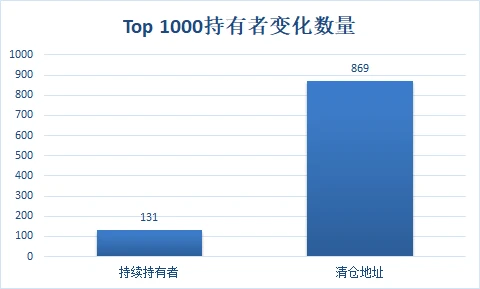
对比整体的数据来看,三个月来 TRUMP 的大户换手情况十分频繁。对比 1 月 20 日的数据,前 1000 名的持币大户当中,有 86.9% 的大户选择清仓代币,总计清仓代币 4800 万枚,占全部流通量的 24% 。
数据复盘TRUMP大户持仓变化:86.9%已清仓,有人浮亏超3000万美元

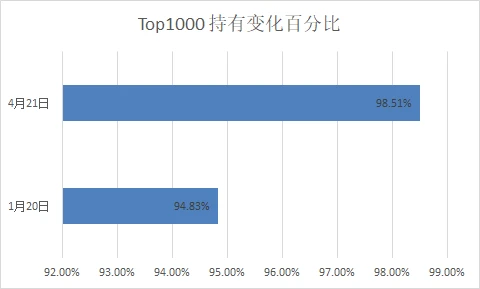
截至 4 月 21 日的数据显示,前 1000 名地址持有的 TRUMP 代币数量约为 98.51% ,较 1 月 20 日的 95.83% 上升了 3.68% 。上述的数据说明,TRUMP 的代币换手明显,且在低谷阶段似乎筹码变得更加集中。
数据复盘TRUMP大户持仓变化:86.9%已清仓,有人浮亏超3000万美元

近三个月来,新增的大户地址当中,Robinhood 成为交易所当中比较突出的新晋大户地址, 3 个月,增加了 1.44% 的代币持有量。此外像 Crypto.com、Meteora 等美国市场为主的交易所地址持币量有了明显提升。而在个人大户当中,有不少大户都是在 1 月底 TRUMP 价格高点时开始进场,被套后目前仍在不断加仓,但总体来看亏损严重。从代币的持有量来看,这些持有地址在 1 月 20 日后买入了 12.2% 的代币。

而在持续持有的大户地址当中,代币的开发地址增加了约 138 万枚代币的持有,不过这些代币大多是由其他小号地址转移回来归集的,并不是购买增持。

而在清仓的地址当中,根据 PANews 观察,不少头部的大户都是在 1 月 18 日左右开始买进, 2 月 1 日及之前选择清仓,多数都是有不少盈利。

总体的来看,最早获利的 TRUMP 的盈利大户们基本都已出场。场内新晋的地址不少是在 1 月 20 日之后在价格高点多次抄底被套的大户留存。不过从交易行为上来看,不少大户似乎对 TRUMP 币的后期仍旧看好,还在不停的加仓。

有人盈利 2500 万出场,有人被割 3366 万美元

数据复盘TRUMP大户持仓变化:86.9%已清仓,有人浮亏超3000万美元

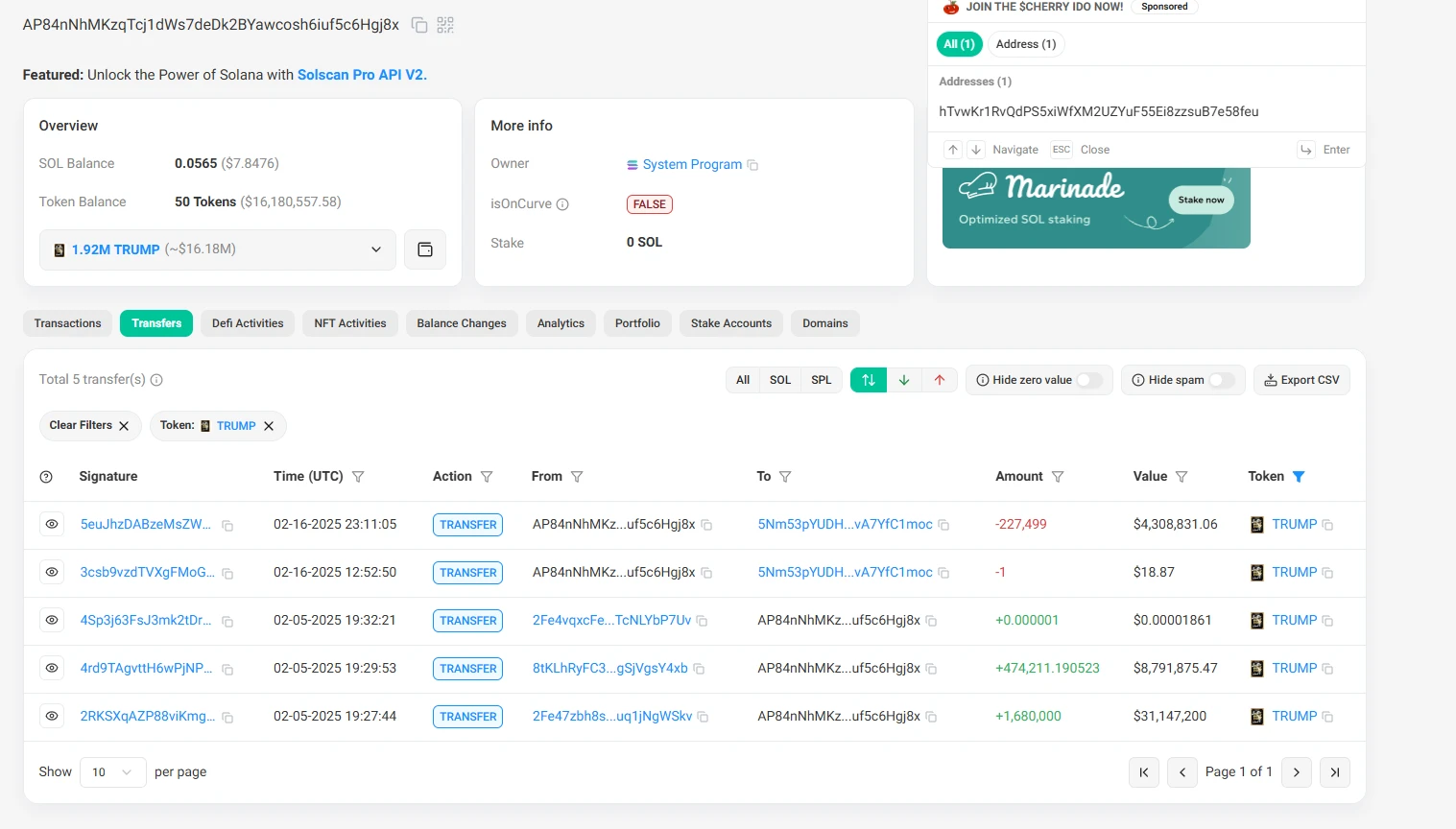
在清仓解套的大户当中,盈利金额最大的应该是2Fe47zbh8svDNGNehFy1NY8bsjQNtomvKFuq1jNgWSkv(下称:“ 2 Fe 47 ”)地址,这个地址在 TRUMP 未上线交易之前,就从创始地址处接收了 2500 万枚 TRUMP 代币,在上线后立马分配在市场上售出,后来又从创始地址 5 e 2 qR 处接收了 2700 万枚再次卖出,总计资金超过 1.12 亿美元,最后将剩余代币归集到创始地址 5 e 2 qR 当中。1 月 20 日的数据显示,该地址共持有超过 100 万枚代币,目前已全部清零。从操作路径来看,这个地址疑似是 TRUMP 代币项目方的小号地址。

另一个大户,3AWDTDGZiW8joyfA52LKL7GUWLoKBCBUBLUE5JoWgBCu从 1 月 18 日 TRUMP 刚刚上线后就开始大举买进,前后花费 7855 万美元买进,最后卖出 1.03 亿美元,大赚 2517 万美元。不过,最后的一次进场,是在 1 月 25 日~ 1 月 27 日之间,该用户认为 TRUMP 币已经跌到低位,花费了 1278 万美元建仓,到 2 月 2 日可能眼看跌无止境,全部清仓卖出 923 万美元。不过总体来说,这个地址在 TRUMP 代币上还是取得了相当大的收益。
数据复盘TRUMP大户持仓变化:86.9%已清仓,有人浮亏超3000万美元

还有一个大户,从 1 月 20 日左右开始从各个交易所大举购买 TRUMP 代币,总计花费 4573 万美元,买入 111 万枚,平均成本约为 41 美元。到 2 月 7 日以 17.6 美元卖出 30 万枚后,目前仍持有 81 万枚代币,截至目前浮亏约 3366 万美元,亏损率达到 73% 。是新晋大户当中,单个亏损金额最高的地址。

无独有偶,6qgBGeZgPyxdobeHhcNtAqVe927zodpiuoufhwGN8BhP地址的用户与上述的地址操作类似,也是从 1 月 20 日开始通过几个关联地址开始囤币,前后花费 1667 万美元,目前仍持有 600 万美元代币,亏损也金额也超过 1000 万美元。

TRUMP 代币的剧烈波动,如同一场加密市场的“真人秀”,既展现了 MEME 币投机浪潮中的暴富神话,也揭示了高杠杆博弈下的残酷现实。从早期大户的精准套现离场,到后续接盘者的深陷泥潭,这场游戏中的赢家与输家已被市场清晰分野。尽管特朗普的“晚宴利好”暂时为代币注入反弹动力,但筹码高度集中、项目方疑似操纵的阴影始终挥之不去。当下的 TRUMP 代币,看似在利空出尽后迎来喘息,但其命运仍牢牢受制于名人效应与市场情绪的共振。对散户而言,这场过山车般的行情无疑是一堂风险教育课:在缺乏基本面支撑的 MEME 币战场,即便是“顶级流量”背书,也可能只是资本收割的华丽外衣。

Letture associate

The Largest Upgrade Since The Merge? How Glamsterdam Will Affect Ethereum?

Ethereum's next major upgrade, Glamsterdam (combining consensus layer "Gloas" and execution layer "Amsterdam"), is scheduled for late 2026 and considered the most significant overhaul since The Merge. It aims to fundamentally enhance L1 performance and architecture to prepare for substantial capacity increases. The upgrade centers on three core changes: 1. **Enshrined PBS (ePBS - EIP-7732):** Integrates the Proposer-Builder Separation directly into the protocol, eliminating reliance on external relays. This extends the window for processing execution payloads, allowing nodes more time to handle larger blocks and more data, paving the way for a higher Gas Limit. 2. **Block-Level Access Lists (BALs - EIP-7928):** Provides a pre-declared "map" in the block header of all state data (accounts, storage) that transactions will access and modify. This enables potential parallel transaction processing and faster state synchronization for nodes. 3. **Gas Repricing (EIP-8037):** Overhauls the gas model to more accurately reflect the real resource costs for nodes. It separates computation costs from state storage costs, making operations that create permanent state data (like new accounts) more expensive, while computation-heavy operations become relatively cheaper. These changes work together to solve the trilemma of scaling: giving nodes more time to process larger blocks (ePBS), reducing execution bottlenecks (BALs), and controlling unsustainable state growth (Gas Repricing). The goal is a credible path to a higher Gas Limit (e.g., 200M gas) without compromising decentralization by overburdening node hardware. For users: * Transaction fees for simple transfers may decrease and become more stable due to increased block space, but state-intensive operations (contract deployment) may cost more. * Gas estimation by wallets will improve in accuracy. * L2 data posting costs could become more stable long-term due to increased Blob capacity. * EIP-7708 will standardize logs for ETH transfers, improving tracking for wallets and exchanges. Node operators must upgrade clients, but ETH holders need take no action. In essence, Glamsterdam doesn't just raise the block size limit; it re-engineers Ethereum's core block production, execution, and economic models to enable sustainable, decentralized scaling.

marsbit17 min fa

The Largest Upgrade Since The Merge? How Glamsterdam Will Affect Ethereum?

marsbit17 min fa

Robinhood Chain Mainnet Goes Live: Can Stocks Finally Be Moved Into Wallets?

Robinhood has officially launched its public mainnet, Robinhood Chain, along with stock-like tokens, the USDG yield product, and a DeFi lending portal. This marks a significant shift where a major online broker is integrating its user interface, regulatory compliance, self-custody wallet, and on-chain protocols into a single, streamlined experience. The goal is to simplify access to stock exposure, stablecoin yields, collateralized lending, and AMM trading for mainstream users. Eligible non-U.S. users can hold these "Stock Tokens"—structured as tokenized debt securities—in the Robinhood Wallet for 24/7 exposure to assets like U.S. stocks or ETFs. U.S. users can access an estimated ~7% APY on dollar-backed USDG through the Robinhood Earn program via self-custody wallets, with lending infrastructure powered by Morpho protocol. Built as a Layer 2 on Arbitrum, Robinhood Chain leverages existing DeFi protocols like Uniswap. The core strategy is not to reinvent DeFi but to channel Robinhood's large traditional finance user base (27.4 million funded customers as of Q1 2026) into on-chain finance, lowering the technical barriers. However, key limitations exist. The stock tokens are not direct equity ownership and are unavailable in the U.S. and some jurisdictions due to regulatory constraints. The ~7% yield is variable and carries inherent DeFi risks, not guaranteed principal protection. Furthermore, while AMMs enable trading, price discovery for major stocks will likely remain anchored in traditional markets like NASDAQ for the foreseeable future. Ultimately, Robinhood Chain is an early experiment in "on-chain brokerage." Its success will depend on real-world metrics like trading volume, sustained user migration to self-custody, stable yield performance, and regulatory feedback, rather than its launch narrative.

marsbit1 h fa

Robinhood Chain Mainnet Goes Live: Can Stocks Finally Be Moved Into Wallets?

marsbit1 h fa

Circle CEO Responds to OUSD Challenge: Stablecoin Market Is 'Winner-Takes-All', Consortium Model Doomed to Fail

Circle CEO Jeremy Allaire addresses market concerns following the announcement of the Open USD (OUSD) stablecoin project backed by 140 global companies. Allaire argues the stablecoin market exhibits "winner-takes-all" dynamics due to powerful network effects. He cites USDC's near-decade lead in three key areas: 1) **Application Integration & Protocol Development**: Thousands of integrated services and protocols (like CCTP) create utility and lock-in for developers and users. 2) **Liquidity Network Effects**: A deeply embedded, globally distributed liquidity infrastructure across primary and secondary markets, built over years. 3) **Regulatory Integration**: Extensive licensing and compliance groundwork ensuring USDC's acceptance in major markets like Europe and Japan. Allaire challenges OUSD's proposed advantages. He contends that promises of free redemption, while appealing, face market realities where such models can become exit routes for other stablecoins. He also questions the feasibility of fully distributing all revenue to an alliance, stating it would "starve" the critical infrastructure investments needed for scale and utility. Furthermore, he expresses skepticism about large alliance governance models, noting they often lead to slow decision-making and misaligned incentives. While welcoming OUSD to the ecosystem, Allaire reaffirms confidence in USDC's dominant position, backed by its long-term infrastructure investments and strong partnerships, including its ongoing collaboration with Coinbase.

marsbit1 h fa

Circle CEO Responds to OUSD Challenge: Stablecoin Market Is 'Winner-Takes-All', Consortium Model Doomed to Fail

marsbit1 h fa

Trading

Spot
活动图片