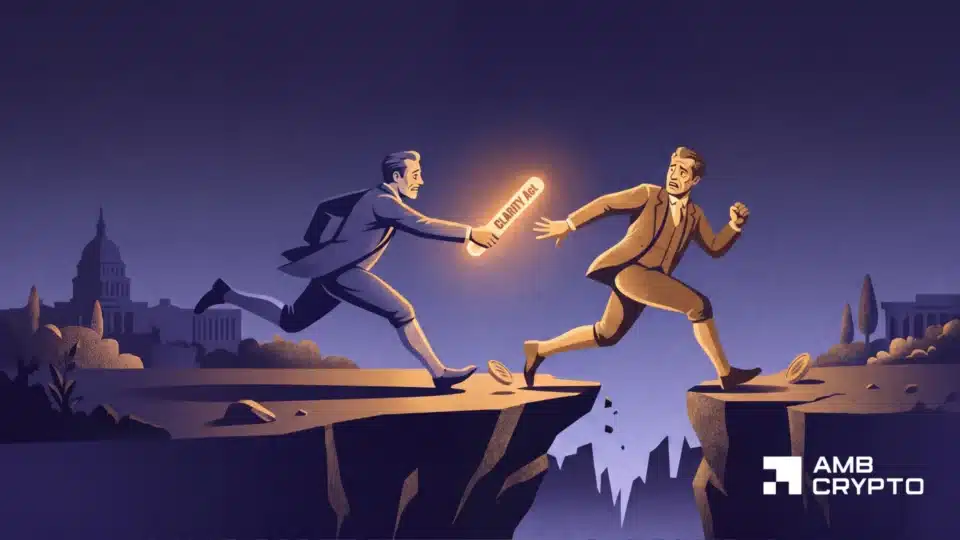
Трамп запускает расследование по полупроводникам — готовятся новые пошлины

cryptonews.ruPubblicato 2024-09-15Pubblicato ultima volta 2025-04-15

На повестке национальная безопасность и зависимость от Азии

Президент Дональд Трамп объявил о начале национального расследования в сфере полупроводников. Оно проводится по разделу 232 Закона о торговле. Цель — выяснить, представляет ли импорт чипов угрозу для национальной безопасности США.

«Мы рассматриваем весь сектор — от чипов до всей электроники», — написал Трамп в своем посте.

В центре внимания основные поставщики. Тайвань, Южная Корея, Япония, Малайзия и Китай. По мнению команды Трампа, чрезмерная зависимость от этих стран потенциальный риск. Особенно сейчас, когда геополитика становится все более напряженной.

Пошлины — 25% и выше

Если расследование подтвердит угрозу, США могут ввести новые тарифы на полупроводники и связанную электронику, начиная с 25% с возможностью дальнейшего повышения. Администрация нацелена на перенос производства в США, утверждая, что только так можно гарантировать безопасность цепочек поставок.

Читать также на Coinspot: США временно ослабили тарифы на электронику, но Китай ответил зеркально — 125%. Облегчение оказалось краткосрочным, и эскалация продолжается.

Промежуточные уступки закончились

Несколько дней назад власти США объявили о временном исключении потребительской электроники (смартфоны, ноутбуки, планшеты) из нового пакета пошлин. Это стало передышкой для Apple, HP, Dell и других компаний, зависящих от китайских сборочных мощностей.

Однако, по словам министра торговли Ховарда Латника, новый тарифный пакет коснётся и ранее исключённой электроники, включая смартфоны, компьютеры, телеком-оборудование и медицинские устройства.

«Речь идет не об отмене, а о переносе — новые пошлины в силе», — добавил Латник.

Критика растет: риски для экономики

Экономисты и инвесторы не поддерживают резкую стратегию. Билл Акман, один из сторонников Трампа, предложил снизить пошлины до 10% и отложить их на 90 дней, чтобы избежать паники и сохранить сигнал производителям.

Аналитики предупреждают о росте цен на электронику и нарушении планов технологических компаний. Свен Хенрих из NorthmanTrader отметил, что непоследовательность в заявлениях администрации усложняет планирование для бизнеса.

«Это не тарифная политика. Это — хаос», — заявила сенатор-демократ Элизабет Уоррен.

Китай отвечает: 125% на американские товары

В ответ Китай поднял пошлины до 125% и намекнул, что это не предел. Торговый представитель Китая заявил, что «колокол на шее тигра может снять только тот, кто его повесил» — намекая на США.

Администрация Трампа, в свою очередь, отказывается от переговоров с Китаем и ищет новые торговые соглашения с союзниками — Японией, Южной Кореей, Индией и ЕС. При этом новых контактов с Си Цзиньпином не планируется.

Читать далее: IMF предупредил: тарифная политика Трампа ведёт к глобальной рецессии. Международные институты уже видят в действиях США системный риск для мировой экономики.

Letture associate

Tiger Research: Zuckerberg Begins Betting on Prediction Markets, While Asian Nations Still View Them as Gambling

This article examines the rise of prediction markets, contrasting their growing institutional acceptance in the West with their restrictive regulation in Asia. It details how prediction markets, which originated from informal political betting and academic experiments like the Iowa Electronic Market, aggregate crowd wisdom into probabilistic prices through binary contracts. Their growth accelerated around 2020, reaching over $14 billion in monthly volume. A key driver is the "skin in the game" principle, where users risk their own capital, leading to high accuracy in predicting events like Fed rate decisions and elections, as demonstrated by platforms like Polymarket. Meta's entry, with Mark Zuckerberg reportedly leading the development of the Arena app, signals the market's maturation. In the U.S., court rulings have distinguished prediction markets from gambling, facilitating entry by traditional financial institutions. However, most Asian jurisdictions still classify them as gambling, focusing on social control rather than financial innovation. The article argues this stance creates three problems for Asia: 1) regulatory arbitrage pushes users to riskier offshore platforms, 2) loss of sovereign information infrastructure as valuable social sentiment data accumulates abroad, and 3) abandonment of user protection. It concludes that Asia needs a policy shift from prohibition to constructive regulation, integrating these markets into the formal system to harness their data as a national asset, as initiatives like Limitless Research are beginning to do.

marsbit2 h fa

Tiger Research: Zuckerberg Begins Betting on Prediction Markets, While Asian Nations Still View Them as Gambling

marsbit2 h fa

Ethereum's Next Decade in the Eyes of Vitalik

"Lean Ethereum" Long-Term Roadmap Unveiled by Vitalik Buterin On July 5, 2026, Vitalik Buterin published the "Lean Ethereum" roadmap, positioning it as Ethereum's third major evolution following the Merge. This multi-year, multi-phase upgrade aims to fundamentally transform Ethereum's core protocol through staged network upgrades extending to 2029. Key goals include achieving 1 gigagas per second L1 throughput (a massive increase from the current ~32 TPS), near-instant finality, and quantum-resistant cryptography. The plan involves transitioning Ethereum's security model from full transaction re-execution by all nodes to native verification via recursive STARK proofs. A major proposed change is replacing the EVM with a proof-friendly architecture like RISC-V or leanISA, though this remains a point of contention, especially with L2s like Arbitrum favoring alternatives like WASM. Other planned upgrades include a restructured state model with a large, cheap "warehouse" storage layer to drastically reduce fees for migrated applications, multi-dimensional gas pricing, and a new focus on making privacy a first-class, native protocol feature. While the roadmap significantly raises Ethereum's long-term technical ceiling, analysts note it does not directly address ETH's mid-term token economics or value capture. The plan's multi-year timeline means near-term price impact will likely depend on observable progress milestones, such as the successful deployment of the upcoming Glamsterdam gas limit increase, growth in L2 activity and blob usage, and trends in L1 fee revenue and ETH burn.

链捕手3 h fa

Ethereum's Next Decade in the Eyes of Vitalik

链捕手3 h fa

In Just 11 Days, Claude Rewrote Millions of Lines of Code, an Epic AI Engineering Feat Sparks Fury

In just 11 days, Bun's founder Jarred Sumner used Anthropic's Claude AI models to rewrite its million lines of code from Zig to Rust. This move sparked significant controversy, particularly from Zig's creator, Andrew Kelley, who publicly criticized Sumner's engineering practices and the decision to use AI for such a massive rewrite. Bun, a high-performance JavaScript/TypeScript runtime and rival to Node.js, was originally written in Zig. After Anthropic acquired Bun, the team encountered persistent stability and memory safety bugs in the Zig codebase. These issues, combined with Zig's strict policy against LLM-generated code, led to the decision to rewrite in Rust. The rewrite was executed using Claude AI tools at an estimated API cost of $165,000, dramatically reducing the expected time and financial cost. Andrew Kelley's response was scathing. He blamed the original bugs on poor engineering habits, calling Bun's Zig code a collection of "hacks on top of hacks." He expressed relief that Bun was no longer associated with Zig, fearing it would misrepresent the language and attract low-quality, AI-generated contributions. The tech community is divided; some view Kelley's critique as unprofessional, while others see it as a defense of engineering integrity. A major concern about the AI-driven rewrite is the resulting code quality. The translation from Zig left approximately 27,000 lines of unsafe Rust code, raising fears about long-term maintainability and technical debt. The debate centers on whether this project is a milestone in AI-assisted development or a future maintenance nightmare.

marsbit5 h fa

In Just 11 Days, Claude Rewrote Millions of Lines of Code, an Epic AI Engineering Feat Sparks Fury

marsbit5 h fa

Trading

Spot
活动图片