Berachain — блокчейн с новым подходом к безопасности и экономике

cryptonews.ruPubblicato 2024-01-04Pubblicato ultima volta 2025-04-04

Berachain — это Layer 1 блокчейн, работающий на собственном консенсусе proof-of-liquidity. Он основан на Cosmos SDK, но поддерживает полную совместимость с Ethereum Virtual Machine (EVM). Мейннет запустился 6 февраля 2025 года, и с тех пор экосистема проекта стремительно растет.

Как работает proof-of-liquidity

В отличие от привычных proof-of-stake и proof-of-work, модель Berachain требует не просто стейкинга нативного токена, а блокировки ликвидности. Это создает более сложную, но устойчивую систему безопасности.

Чтобы стать валидатором, нужно внести минимум 250 000 токенов BERA, при этом лимит составляет 10 миллионов BERA на одного участника. В активный набор входят только 69 валидаторов с наибольшим стейком.

Механика вдохновлена PoS, но в Berachain цепочка разделяет функции:

  • BERA используется для оплаты комиссий, безопасности сети и взаимодействия с dApps.
  • BGT — это токен управления и распределения вознаграждений. Его можно получать только через стейкинг в специальных смарт-контрактах (reward vaults).
  • HONEY — стабильная монета экосистемы.

Три токена, три роли

1. BERA — утилитарный токен.

Служит для комиссий, безопасности сети и основной деятельности в экосистеме.

2. BGT — governance-токен.

Позволяет голосовать за обновления протокола и бустить валидаторов, увеличивая их вознаграждение при соблюдении условий.

3. HONEY — стейблкоин.

Выпускается через dApp HoneySwap под залог ликвидных активов. Используется для расчетов в DeFi-сегменте Berachain.

Совместимость с Ethereum и Cosmos SDK

Berachain построен на Cosmos SDK, но сохраняет EVM-совместимость. Это значит, что разработчики могут использовать привычный стек (Solidity, Remix, MetaMask), а обновления EVM мгновенно применимы и в Berachain.

Такой подход позволяет комбинировать масштабируемость и модульность Cosmos с гибкостью и экосистемой Ethereum.

Что уже построено на Berachain

Несмотря на молодость, экосистема быстро наполняется:

  • BeraHub — хаб для управления BGT, просмотра валидаторов и взаимодействия с сетью.
  • BEX — нативная децентрализованная биржа.
  • HoneySwap — платформа для выпуска и обмена HONEY.
  • Berascan — собственный обозреватель блоков.
  • Infrared Finance — протокол ликвидного стейкинга.
  • Honey Chat — платформа SocialFi на базе Berachain.

Кто стоит за проектом

Основатели Berachain под псевдонимами: Homme Bera, Dev Bear, Papa Bear и Smokey the Bera. Но в команде уже есть люди с опытом в Sui, Polygon, Coinbase, Chainlink, Aave. Например, бывший руководитель DeFi-направления Polygon Джек Мелник присоединился к Berachain в 2024 году.

Развитием сети занимается Berachain Foundation, включая контроль за аллокацией токенов и ростом экосистемы.

Финансирование и перспективы

В апреле 2023 года Berachain привлек $42 млн, а в 2024 — еще $100 млн в рамках раунда серии B.

Модель proof-of-liquidity, модульная архитектура Cosmos и полная EVM-совместимость делают Berachain одним из самых перспективных Layer 1 блокчейнов нового поколения.

Что дальше?

Berachain делает ставку на гибридную архитектуру и сильную токеномику. Если экосистема продолжит развиваться такими темпами, проект может занять серьезную нишу в секторе DeFi, особенно на фоне переосмысления роли ликвидности и стейкинга в Web3.

Читать далее: Wormhole взлетел на 12%, но индикаторы указывают на слабость

Crypto di tendenza

Letture associate

How Collector Crypt Uses 'Recirculating Buybacks' to Create an Illusion of Growth

Title: How Collector Crypt Creates a Growth Illusion with "Buyback Loops" Key Findings: Collector Crypt's (CC) net take rate has halved from 11.2% in Q3 2025 to 5.6% in Q2 2026, while GMV grew 4.7x. This growth is driven by higher-tier card packs ($250, $1,000, $2,500) which have lower platform dollar retention rates. The newly launched $2,500 Mythic tier captured 36.7% of June GMV within 13 days. Growth is fueled by a small cohort of high-spending, high-frequency wallets rather than broad user base expansion. The economic model faces pressure from three key areas: 1) **Shifting GMV Mix**: Pushing users towards larger, lower-retention card packs increases GMV but reduces overall profitability. 2) **Physical Redemptions**: Card redemptions for physical items remove reusable inventory from the system, creating costly replenishment needs. In May, redemptions consumed 41.6% of pre-redemption net income. Only 75 wallets drove redemptions in June. 3) **B2B/API Strategy**: Partner revenue remains negligible (cumulatively $1.83M) and dependent on CC for inventory, vaulting, and buyback services, failing to create a scalable, asset-light recurring revenue stream. The core product is a repetitive pack-buyback loop with limited secondary market activity and token value accrual. Sensitive modeling shows CC's economics turn negative when any two of the following pressures coincide: replenishment costs near market price, redemption rates exceeding 9%, or high-tier buyback rates around 93%. While CC operates in a large and growing collectibles market, its current growth levers—bigger packs, high buyback rates, and capital recycling by a few wallets—create a volume illusion without demonstrating sustainable collector engagement, deep secondary markets, or a viable path to improved margins. Future proof points include broadening collector participation, deepening secondary trading, and developing true asset-light B2B revenue channels.

Foresight News23 min fa

How Collector Crypt Uses 'Recirculating Buybacks' to Create an Illusion of Growth

Foresight News23 min fa

Grayscale's Latest Research: What is Solana's Next Growth Engine?

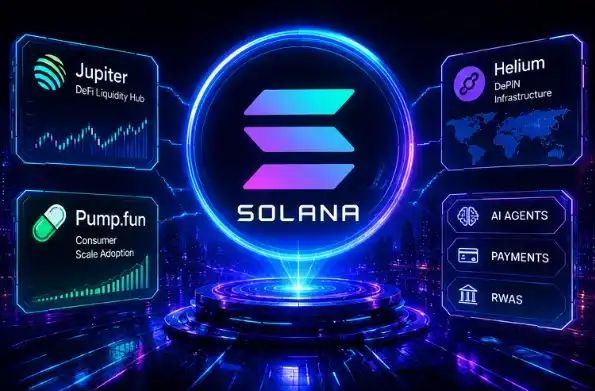
Grayscale's latest report, "Solana: Crypto's Financial Bazaar," signals a shift in how the market views Solana, moving beyond its high-performance and meme-centric reputation. The report frames Solana as an evolving application platform for large-scale economic activity, akin to a bustling digital marketplace. The analysis highlights that public chain competition has moved past raw throughput (TPS) to focus on genuine economic activity—daily users, transaction volume, and real revenue. Solana's metrics, such as over 1,000 dApps, 100M+ daily transactions, and ~4.3M daily active users, showcase this shift toward application-layer prosperity. The report identifies three key growth drivers: 1. **Jupiter**: Evolving from a DEX aggregator to a core liquidity hub and comprehensive financial platform for Solana's DeFi. 2. **Pump.fun**: Demonstrates Solana's capacity for consumer-scale applications, attracting millions of users and generating significant, sustainable revenue, validating network stability under high load. 3. **Helium & DePIN**: Represents expansion into real-world infrastructure, connecting blockchain to physical resources like wireless networks and positioning services, opening new long-term use cases. Solana Foundation's recent focus aligns with this broader vision, emphasizing AI Agents (for machine-to-machine transactions), payments, stablecoins, and Real-World Assets (RWA) to build a sustainable growth model beyond cyclical trends. While challenges remain—such as value capture for SOL and maintaining ecosystem sustainability beyond hot trends—institutional interest is growing due to Solana's maturing application business models, expanding payment/stablecoin ecosystem, and persistent developer activity. The competition is no longer about speed alone, but about which network can foster the most vibrant and valuable digital economy.

marsbit44 min fa

Grayscale's Latest Research: What is Solana's Next Growth Engine?

marsbit44 min fa

They Waited 7 Years for This Money

The article discusses the significant drop in share price of Circle, known as the "first stablecoin stock," triggered by the announcement of a new alliance including Visa, Stripe, Mastercard, Coinbase, BlackRock, Google, IBM, and Ripple. This alliance plans to launch Open USD, a USD stablecoin, later this year. Key to the market reaction is Open USD's plan to distribute reserve-generated profits to its adopters, directly challenging Circle's core revenue model from USDC's reserve interest. The piece draws a parallel to Facebook's 2019 Libra (later Diem) project, which involved many of the same companies. Libra failed due to regulatory pressure, its association with Facebook's controversial reputation, and overly ambitious global currency narratives. However, the underlying desire of these major financial and tech firms to create a new digital payment infrastructure persisted. Over seven years, the landscape changed: clearer US stablecoin regulations (GENIUS Act), mature blockchain infrastructure, and companies gaining practical experience with crypto payments. Open USD presents a more modest, compliance-focused narrative—a settlement tool and enterprise payment rail rather than a revolutionary global currency. While the new alliance poses a serious threat to Circle's profitability and exclusivity, it faces challenges typical of large consortia: slow decision-making and complex profit-sharing. USDC's established liquidity, trust, and integrations provide Circle with significant defenses. The market's reaction is seen partly as an emotional overreaction but also a necessary reevaluation of Circle's business model from a unique "stablecoin era ticket" to a "strong issuer" in a competitive commodity market. Ultimately, the core ambition from the Libra era remains: to digitize the movement of dollar value on the internet and capture the adjacent commercial opportunities. The lesson learned is to pursue this goal not as a high-profile, platform-led revolution, but as a quiet, utility-focused infrastructure play.

marsbit44 min fa

They Waited 7 Years for This Money

marsbit44 min fa

Trading

Spot

Articoli Popolari

Come comprare LAYER

Benvenuto in HTX.com! Abbiamo reso l'acquisto di Solayer (LAYER) semplice e conveniente. Segui la nostra guida passo passo per intraprendere il tuo viaggio nel mondo delle criptovalute.Step 1: Crea il tuo Account HTXUsa la tua email o numero di telefono per registrarti il tuo account gratuito su HTX. Vivi un'esperienza facile e sblocca tutte le funzionalità,Crea il mio accountStep 2: Vai in Acquista crypto e seleziona il tuo metodo di pagamentoCarta di credito/debito: utilizza la tua Visa o Mastercard per acquistare immediatamente SolayerLAYER.Bilancio: Usa i fondi dal bilancio del tuo account HTX per fare trading senza problemi.Terze parti: abbiamo aggiunto metodi di pagamento molto utilizzati come Google Pay e Apple Pay per maggiore comodità.P2P: Fai trading direttamente con altri utenti HTX.Over-the-Counter (OTC): Offriamo servizi su misura e tassi di cambio competitivi per i trader.Step 3: Conserva Solayer (LAYER)Dopo aver acquistato Solayer (LAYER), conserva nel tuo account HTX. In alternativa, puoi inviare tramite trasferimento blockchain o scambiare per altre criptovalute.Step 4: Scambia Solayer (LAYER)Scambia facilmente Solayer (LAYER) nel mercato spot di HTX. Accedi al tuo account, seleziona la tua coppia di trading, esegui le tue operazioni e monitora in tempo reale. Offriamo un'esperienza user-friendly sia per chi ha appena iniziato che per i trader più esperti.

303 Totale visualizzazioniPubblicato il 2025.02.11Aggiornato il 2026.06.02

Come comprare LAYER

Discussioni

Benvenuto nella Community HTX. Qui puoi rimanere informato sugli ultimi sviluppi della piattaforma e accedere ad approfondimenti esperti sul mercato. Le opinioni degli utenti sul prezzo di LAYER LAYER sono presentate come di seguito.

活动图片