Как пошлины США влияют на цену биткоина. Какие прогнозы

cryptonews.ruPubblicato 2024-07-03Pubblicato ultima volta 2025-04-03

Как торговые пошлины США влияют на цену биткоина? Сможет ли главная криптовалюта перестать зависеть от геополитики?

«РБК-Крипто» не дает инвестиционных советов, материал опубликован исключительно в ознакомительных целях. Криптовалюта — это волатильный актив, который может привести к финансовым убыткам.

США ввели торговые пошлины размером от 10 до 50% более чем для 180 стран, заявил президент США Дональд Трамп вечером 2 апреля. После этого цена биткоина начала резко снижаться, как и большинства других криптоактивов. Аналитики предполагают, что дальнейшее движение котировок будет зависеть от геополитики и ответных шагов на пошлины со стороны других государств. Несмотря на то что биткоин долгое время «рекламировался» как хеджирующий инструмент от геополитических и других глобальных рисков, сейчас эту роль традиционно выполняет золото.

rbc.group

В начале выступления Трампа, в котором он объявил о нововведении (2 апреля в 23:00), цена биткоина начала расти, поднявшись до $88,5 тыс., что стало максимумом с 24 марта. Однако затем котировки упали до $82,2 тыс. (к 3:00 мск 3 апреля), потеряв около 7% за эти несколько часов. По данным на 10:45 мск, цена главной криптовалюты вернулась к $83,3 тыс. Общая капитализация крипторынка упала на 4% от пика 2 марта, до $2,67 трлн, согласно Coinmarketcap.

BTC/USD

83 307 -1 663 (-1,96%)
ОКХ Apr 03 13:38:48

«Следующий большой шаг зависит от геополитики, изменений в политике и того, видят ли трейдеры биткоин как рисковый или защитный», — сказала Bloomberg криптоаналитик BTC Markets Рейчел Лукас, отметив важность ценового уровня $80 тыс.

Некоторые эксперты вовсе не расценивают биткоин как защитный актив по типу золота, цена на которое на фоне падения криптовалют достигла нового исторического максимума, впервые в истории поднявшись выше отметки $3200.

«Криптовалюты как рисковый актив обычно плохо торговались в периоды неопределенности после таких объявлений, как стабильно высокие ставки или введение торговых пошлин», — сказал президент Ava Labs Джон Ву.

Основатель и генеральный директор Asymmetric Джо Макканн отметил в разговоре с Decrypt, что сейчас очень мало причин идти на риск, имея в виду покупку рисковых активов: «Криптовалюты находятся под контролем макроэкономических и традиционных рынков на данном этапе. Без четкого и ясного катализатора криптовалюта будет торговаться как любой другой рисковый актив».

Как рассказал генеральный директор Two Prime Digital Assets Александр Блюм в комментарии для The Block, возможным катализатором для биткоина в таких экономических условиях может стать покупка главной криптовалюты в национальный резерв США. По его словам, увеличение доходов от пошлин может стать способом для приобретения большего количества биткоинов: «Трамп отдал указ о рассмотрении возможности покупки биткоинов, в случае если это будет осуществляться нейтральными для бюджета способами. Этот новый источник федерального дохода (пошлины. — РБК) может оказаться решением».

«Крест смерти»

Важность ценового уровня $80 тыс., отмеченного Лукас, совпадает с формирующимся паттерном на графике биткоина, называемым «крест смерти», когда краткосрочная средняя скользящая ценовая линия пересекает сверху вниз долгосрочную среднюю ценовую линию.
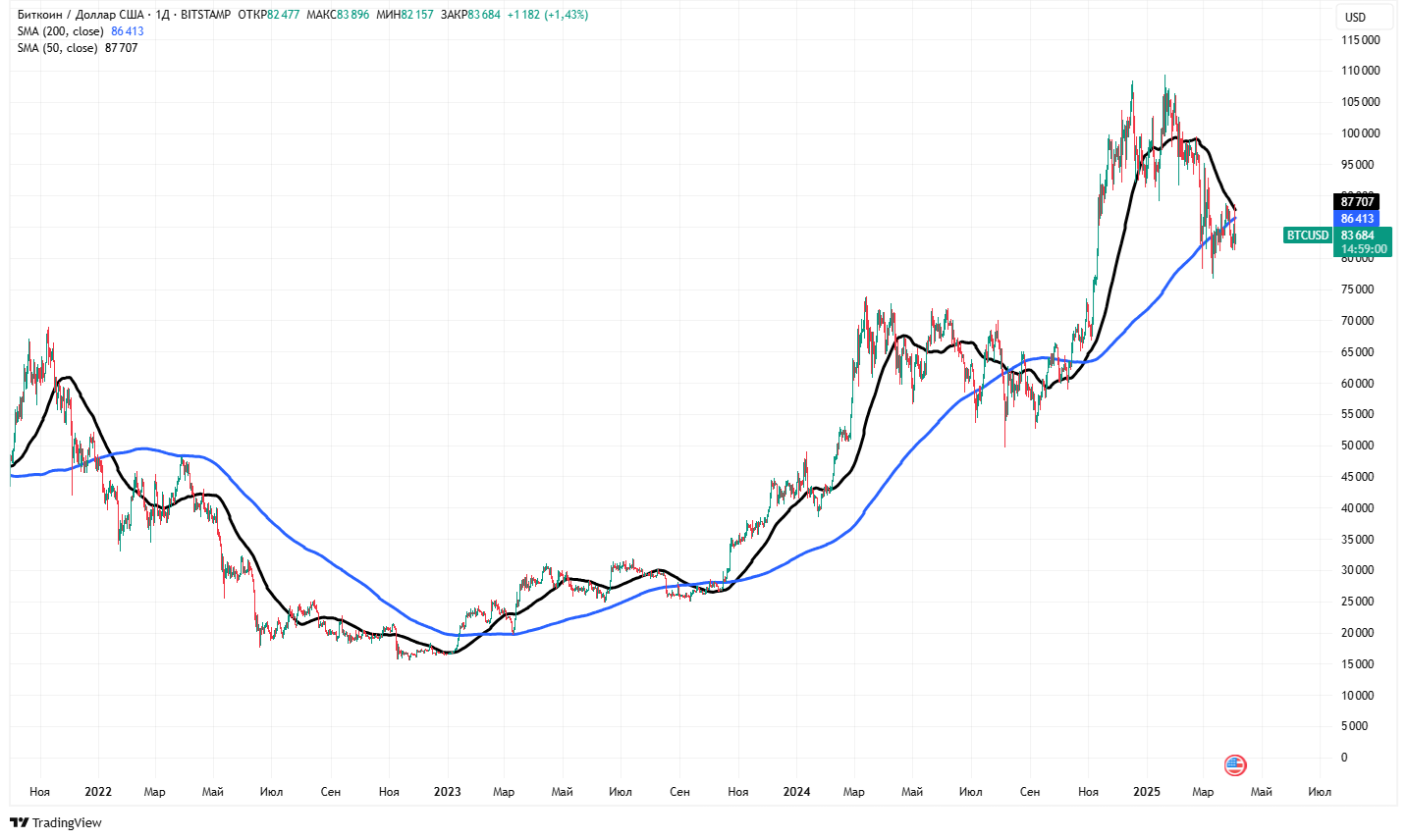
Фигура «крест смерти» на графике BTC/USD на бирже Bitstamp. Синяя линия — SMA200, черная — SMA50. Источник: TradingView

Под средней скользящей линией подразумевается индикатор Moving Аverage (MA) и его модификации, строится на графике путем усреднения цены актива за определенный промежуток времени. Чаще всего используют простую скользящую среднюю (Simple Moving Average, SMA).

Однако в предыдущие два раза «крест смерти» на графике биткоина не совпадал с началом затяжного медвежьего рынка. В сентябре 2023 года и августе 2024 года после сформированного торгового паттерна цена биткоина находилась примерно месяц в боковом движении. После чего котировки росли в течение нескольких месяцев.

Letture associate

Blood Loss of $55 Million Selling 3,588 BTC, Strategy Becomes a Literal Scumbag

On July 6th, Strategy (formerly MicroStrategy) disclosed in an SEC filing that it sold 3,588 Bitcoin (BTC) between June 29th and July 5th for approximately $216 million, at an average price of ~$60,200. This marked the company's largest net sale since initiating its Bitcoin strategy in 2020 and its first institutionalized reduction of its core holding. The sale resulted in a realized loss of about $54.8 million, as the selling price was below its average cost basis of ~$75,476 per BTC. The proceeds were used to pay preferred stock dividends and replenish USD reserves. This move follows a new "Digital Credit Capital Framework" approved on June 29th, authorizing the sale of up to $1.25 billion in Bitcoin. The sale consumes roughly 17% of this authorized amount in its first week. Strategy's foundational narrative, built by founder Michael Saylor, was a commitment to "never sell" Bitcoin. The recent institutionalized selling framework and these substantial sales represent a significant shift from that original promise. While the amount sold is only 0.4% of Strategy's total holdings of 843,775 BTC, the action challenges the premium at which its stock (MSTR) trades relative to its Bitcoin holdings. Investors had priced in the "never sell" narrative. The company now faces a contradiction: it sells Bitcoin at a loss to pay dividends on the preferred stock it issued to fund Bitcoin purchases. Saylor has framed selling as a tool for future strategic purchases, but each sale erodes the credibility of the original commitment, potentially threatening the premium valuation of MSTR shares.

Foresight News51 min fa

Blood Loss of $55 Million Selling 3,588 BTC, Strategy Becomes a Literal Scumbag

Foresight News51 min fa

Dialogue with Yihui Capital, SoundAI Technology, Ling Universe, and Zhongbo Jili: Opportunities and Challenges in the AI Smart Hardware Track

On June 28, 2026, an event titled "New Opportunities in AI Hardware: The Battle for Interactive Entry Points Begins" was held in Beijing. It featured a report from ITJuzi and discussions with experts from SoundAI, Ling Universe, One Reed Capital, and Zhongbo Juli on the opportunities and challenges in China's AI hardware sector. Key report findings highlight the sector's intense activity: 327 out of 431 startups founded post-2023 have secured funding, with 179 investments in H1 2026 alone. The landscape is dominated by embodied intelligent robots, while wearable tech like smart rings and AI glasses shows rapid growth. Geographically, Shenzhen leads, leveraging its superior hardware supply chain, followed by Beijing and Shanghai. The overarching trend is for companies to focus on micro-innovations within specific scenarios rather than reinventing foundational technology. Industry leaders shared several critical insights: 1. **Balancing Innovation & Market Readiness**: Entrepreneurs face the "hammer looking for a nail" dilemma. Success requires balancing technical capability with user acceptance, cost control, and incremental design improvements rather than chasing disruptive innovation. 2. **Competitive Landscape**: The future interactive entry point may not be a single super-device but a mix of universal terminals and specialized, scenario-specific hardware. While large companies have ecosystem advantages, startups can win by deeply targeting vertical markets and specific user groups. 3. **Core Challenges & Business Models**: Key hurdles include deep understanding of AI models and navigating non-transparent hardware supply chains. Viable business models may involve selling hardware at cost and generating revenue through software subscriptions, but this requires tight control over both hardware BOM and model inference costs. 4. **The Road to Commercialization**: The ultimate test is market validation—achieving sales growth and sustainable cash flow. Companies must find the right application scenario, use edge computing effectively, and close the loop from technology to commercial success. 5. **The Future of Interaction**: Proactive, context-aware interaction is the next frontier, though it's currently limited by issues like model hallucinations and environmental perception. The near-term focus should be on identifying target users and creating a coherent experience in specific domains, such as health wearables. In summary, to succeed in the competitive AI hardware arena, companies must strategically choose their niche, build a team with the right geographical advantages (e.g., leveraging Shenzhen's supply chain), and most importantly, execute a flawless commercialization strategy that translates technology into market-accepted products and sustainable business growth.

marsbit1 h fa

Dialogue with Yihui Capital, SoundAI Technology, Ling Universe, and Zhongbo Jili: Opportunities and Challenges in the AI Smart Hardware Track

marsbit1 h fa

Trading

Spot
活动图片