Биткоин переживает «встряску», а не конец четырехлетнего цикла

cryptonews.ruPubblicato 2024-09-17Pubblicato ultima volta 2025-03-17

Исторический бычий цикл биткоина остается неизменным, несмотря на широко распространенные опасения инвесторов по поводу текущего спада, который, по мнению аналитиков, может быть всего лишь временной «встряской» перед следующим подъемом рынка.

Цена биткоина в настоящее время снизилась на 22% от своего исторического максимума в более чем 109 000 долларов, зафиксированного 20 января, в день инаугурации президента США Дональда Трампа.

Несмотря на то, что настроения инвесторов несколько раз падали до «крайнего страха», исторические графики указывают на то, что это может быть просто встряской цены — внезапным падением, вызванным выходом нескольких инвесторов из своих позиций, которому предшествовало внезапное восстановление цены.

«Несколько ключевых технических индикаторов стали медвежьими, что привело к предположениям о том, что бычий цикл может преждевременно завершиться», — сообщили аналитики Bitfinex.
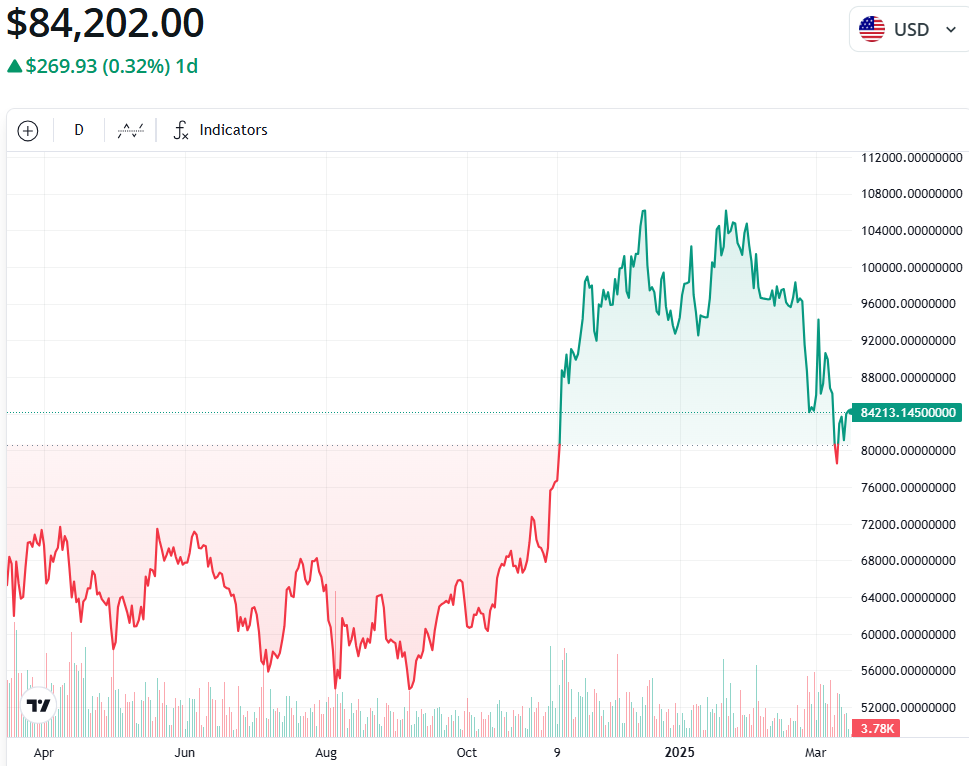

BTC/USD, годовой график. Источник: TradingView.

«Несмотря на это, 4-летний цикл биткоина остается важным фактором, исторически определяющим движение цен», — заявили аналитики.

«Коррекции в бычьих циклах нормальны, и прошлые тенденции предполагают, что это может быть скорее встряской, чем началом длительного медвежьего рынка», — добавили они.

Однако запуск американских спотовых биржевых фондов биткоина (ETF), которые временно превысили 125 миллиардов долларов в совокупных активах, наряду с растущими институциональными инвестициями в криптовалюту, делает «ясным, что традиционный цикл прекращает свое существование», — добавили аналитики.

В качестве оптимистичного знака для ценового действия биткоин продемонстрировал дневное закрытие выше 84 000 долларов 15 марта, впервые за неделю с 8 марта, показывают данные TradingView.
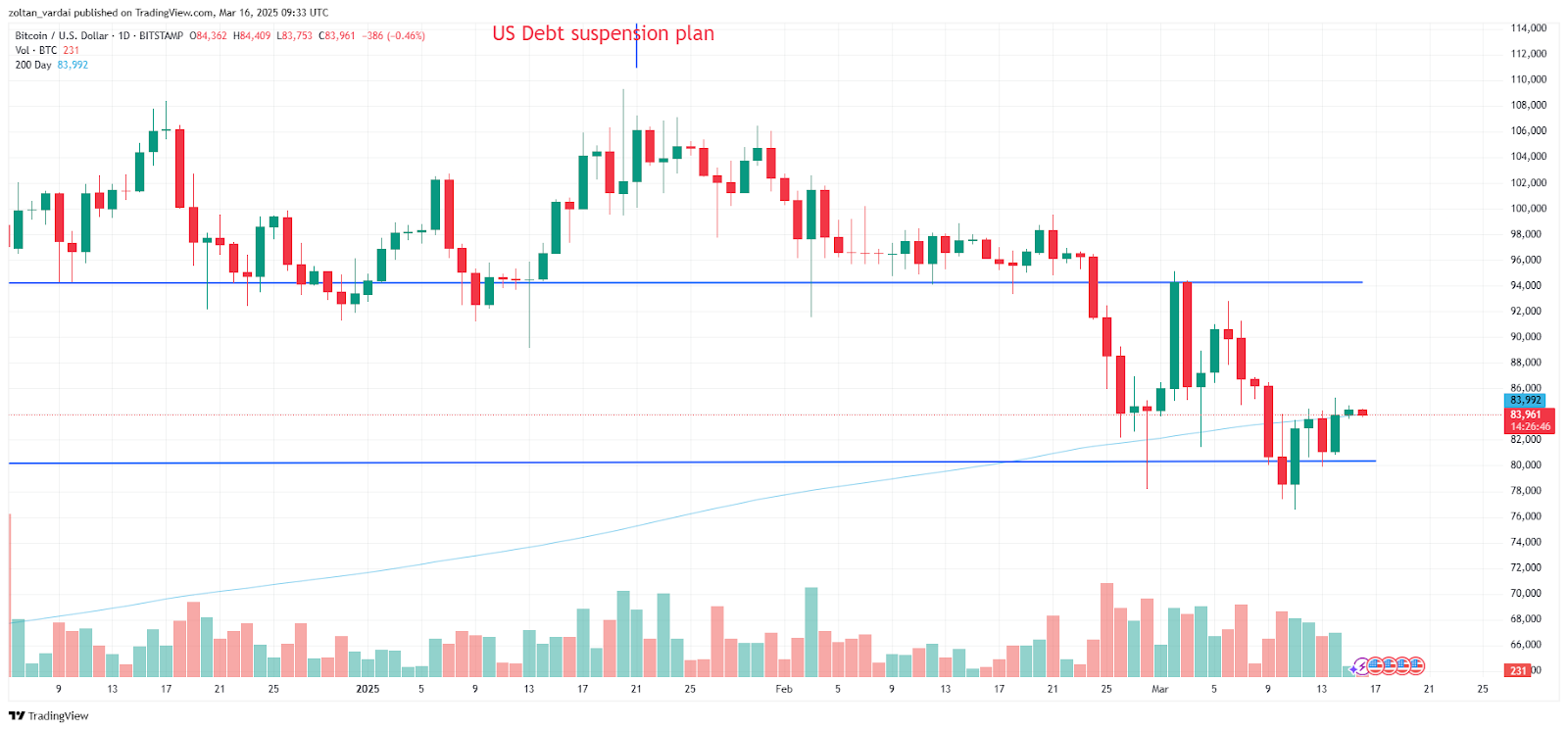

BTC/USD, 1-дневный график. Источник: TradingView

Однако из-за корреляции биткоина с традиционными финансовыми рынками, BTC может достичь дна только вместе с фондовыми рынками, в частности S&P 500, заявили аналитики Bitfinex.

«Хотя $72 000–$73 000 остаются ключевым диапазоном поддержки, более широкий рыночный контекст, особенно глобальная доходность казначейских облигаций и тенденции акций, будут определять следующий крупный шаг биткоина».

«Торговые войны уже были учтены в цене, в некоторой степени, но продолжительная экономическая напряженность может повлиять на настроения», — добавили аналитики.

Халвинг биткоина и четырехлетний цикл по-прежнему имеют решающее значение для изменений цены

Несмотря на опасения по поводу нарушенного бычьего рынка биткоина, четырехлетний цикл вместе с событием халвинга биткоина остаются решающими для ценового движения биткоина, по словам Ильи Калчева, аналитика по распределению на платформе инвестиций в цифровые активы Nexo.

«Совокупный годовой темп роста биткоина за четыре года (CAGR) снизился до рекордно низкого уровня в 8%, что ставит под сомнение актуальность его традиционного четырехлетнего цикла», — сказал Калчев.

«Хотя сильное институциональное принятие за последний год послужило значительным попутным ветром для биткоина, ожидается, что его халвинг-события по-прежнему будут оказывать долгосрочное влияние», — добавил он.

Халвинг биткоина в 2024 году снизил награду за блок в сети биткоина до 3,125 BTC за блок.
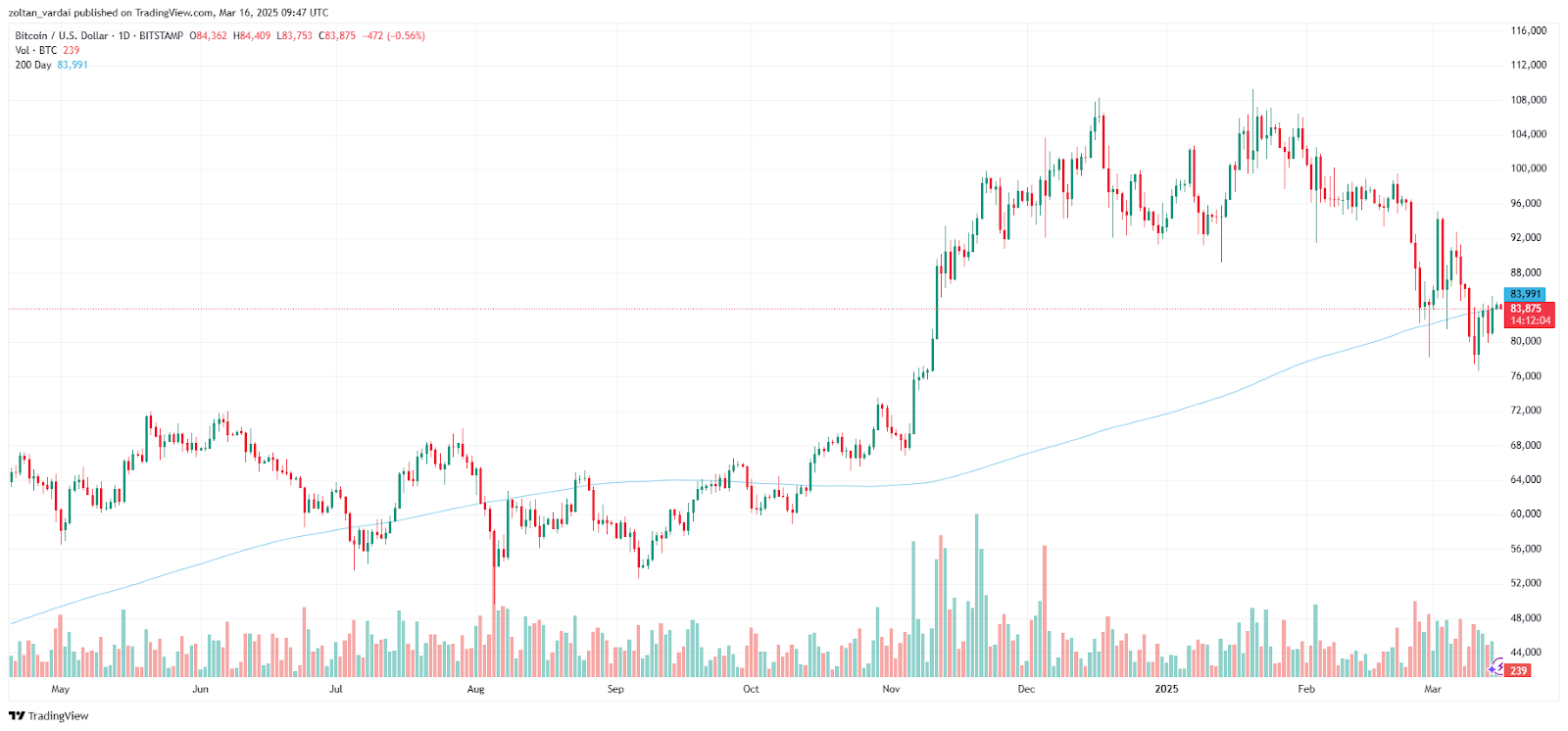

BTC/USD, 1-дневный график с халвинга 2024 года. Источник: TradingView

Цена биткоина выросла более чем на 31% с момента последнего халвинга 20 апреля 2024 года, который был назван «самой оптимистичной» настройкой для цены биткоина, отчасти из-за растущего институционального интереса к первой в мире криптовалюте.


Letture associate

Tiger Research: Zuckerberg Begins Betting on Prediction Markets, While Asian Nations Still View Them as Gambling

This article examines the rise of prediction markets, contrasting their growing institutional acceptance in the West with their restrictive regulation in Asia. It details how prediction markets, which originated from informal political betting and academic experiments like the Iowa Electronic Market, aggregate crowd wisdom into probabilistic prices through binary contracts. Their growth accelerated around 2020, reaching over $14 billion in monthly volume. A key driver is the "skin in the game" principle, where users risk their own capital, leading to high accuracy in predicting events like Fed rate decisions and elections, as demonstrated by platforms like Polymarket. Meta's entry, with Mark Zuckerberg reportedly leading the development of the Arena app, signals the market's maturation. In the U.S., court rulings have distinguished prediction markets from gambling, facilitating entry by traditional financial institutions. However, most Asian jurisdictions still classify them as gambling, focusing on social control rather than financial innovation. The article argues this stance creates three problems for Asia: 1) regulatory arbitrage pushes users to riskier offshore platforms, 2) loss of sovereign information infrastructure as valuable social sentiment data accumulates abroad, and 3) abandonment of user protection. It concludes that Asia needs a policy shift from prohibition to constructive regulation, integrating these markets into the formal system to harness their data as a national asset, as initiatives like Limitless Research are beginning to do.

marsbit1 h fa

Tiger Research: Zuckerberg Begins Betting on Prediction Markets, While Asian Nations Still View Them as Gambling

marsbit1 h fa

Ethereum's Next Decade in the Eyes of Vitalik

"Lean Ethereum" Long-Term Roadmap Unveiled by Vitalik Buterin On July 5, 2026, Vitalik Buterin published the "Lean Ethereum" roadmap, positioning it as Ethereum's third major evolution following the Merge. This multi-year, multi-phase upgrade aims to fundamentally transform Ethereum's core protocol through staged network upgrades extending to 2029. Key goals include achieving 1 gigagas per second L1 throughput (a massive increase from the current ~32 TPS), near-instant finality, and quantum-resistant cryptography. The plan involves transitioning Ethereum's security model from full transaction re-execution by all nodes to native verification via recursive STARK proofs. A major proposed change is replacing the EVM with a proof-friendly architecture like RISC-V or leanISA, though this remains a point of contention, especially with L2s like Arbitrum favoring alternatives like WASM. Other planned upgrades include a restructured state model with a large, cheap "warehouse" storage layer to drastically reduce fees for migrated applications, multi-dimensional gas pricing, and a new focus on making privacy a first-class, native protocol feature. While the roadmap significantly raises Ethereum's long-term technical ceiling, analysts note it does not directly address ETH's mid-term token economics or value capture. The plan's multi-year timeline means near-term price impact will likely depend on observable progress milestones, such as the successful deployment of the upcoming Glamsterdam gas limit increase, growth in L2 activity and blob usage, and trends in L1 fee revenue and ETH burn.

链捕手3 h fa

Ethereum's Next Decade in the Eyes of Vitalik

链捕手3 h fa

In Just 11 Days, Claude Rewrote Millions of Lines of Code, an Epic AI Engineering Feat Sparks Fury

In just 11 days, Bun's founder Jarred Sumner used Anthropic's Claude AI models to rewrite its million lines of code from Zig to Rust. This move sparked significant controversy, particularly from Zig's creator, Andrew Kelley, who publicly criticized Sumner's engineering practices and the decision to use AI for such a massive rewrite. Bun, a high-performance JavaScript/TypeScript runtime and rival to Node.js, was originally written in Zig. After Anthropic acquired Bun, the team encountered persistent stability and memory safety bugs in the Zig codebase. These issues, combined with Zig's strict policy against LLM-generated code, led to the decision to rewrite in Rust. The rewrite was executed using Claude AI tools at an estimated API cost of $165,000, dramatically reducing the expected time and financial cost. Andrew Kelley's response was scathing. He blamed the original bugs on poor engineering habits, calling Bun's Zig code a collection of "hacks on top of hacks." He expressed relief that Bun was no longer associated with Zig, fearing it would misrepresent the language and attract low-quality, AI-generated contributions. The tech community is divided; some view Kelley's critique as unprofessional, while others see it as a defense of engineering integrity. A major concern about the AI-driven rewrite is the resulting code quality. The translation from Zig left approximately 27,000 lines of unsafe Rust code, raising fears about long-term maintainability and technical debt. The debate centers on whether this project is a milestone in AI-assisted development or a future maintenance nightmare.

marsbit4 h fa

In Just 11 Days, Claude Rewrote Millions of Lines of Code, an Epic AI Engineering Feat Sparks Fury

marsbit4 h fa

Trading

Spot
活动图片