TRX显示上涨迹象,但 45% 的跌幅仍然是一个挑战

mediumPubblicato 2025-02-18Pubblicato ultima volta 2025-02-18

Introduzione

如果TRX无法突破这些区域的阻力位,可能会验证看跌的预期;反之,如果突破这些水平,TRX价格有望继续上涨,挑战更高目标。

关键要点

在相对强弱指数(RSI)上升的推动下,TRX价格从跌破0.20美元的低点反弹至0.24美元。

尽管如此,这一上涨似乎遭遇了关键阻力,可能会阻止上涨趋势的延续。

如果负向的“Awesome Oscillator”(AO)指标持续下行,这可能会验证TRX近期走势的反转信号。

TRX价格从局部低点反弹

在本月早些时候跌至0.20美元后,Tron(TRX)价格已经回升至0.24美元。尽管上涨,TRX仍可能面临挑战,难以完全从自去年12月以来的跌幅中恢复。

去年12月,TRX的价格曾达到0.44美元的历史新高。但如今,TRX的价格距离这一峰值已经下跌了45%。这一下跌主要源于市场的获利回吐、交易量低迷以及需求不足。

尽管最近这些因素有所好转,但整体市场情绪可能继续对其表现产生较大压力。因此,TRX可能很难克服前方的挑战。

相对强弱指数(RSI)显示的回升信号

根据4小时图,TRX价格之所以能够反弹至0.24美元,主要是由于买盘情绪的回升。根据CCN的分析,2月16日,RSI突破了50的中性区,表明市场动能恢复。

RSI指标通过衡量价格变动的速度和幅度来评估动能。当RSI为正时,表明市场动能看涨,价格可能上涨。

然而,尽管RSI上升,Supertrend指标的红线依然位于TRX价格上方。

Supertrend指标用来判断资产是否处于上涨或下跌趋势。通常,绿色区域位于价格下方时,表示支撑,市场处于上涨趋势。
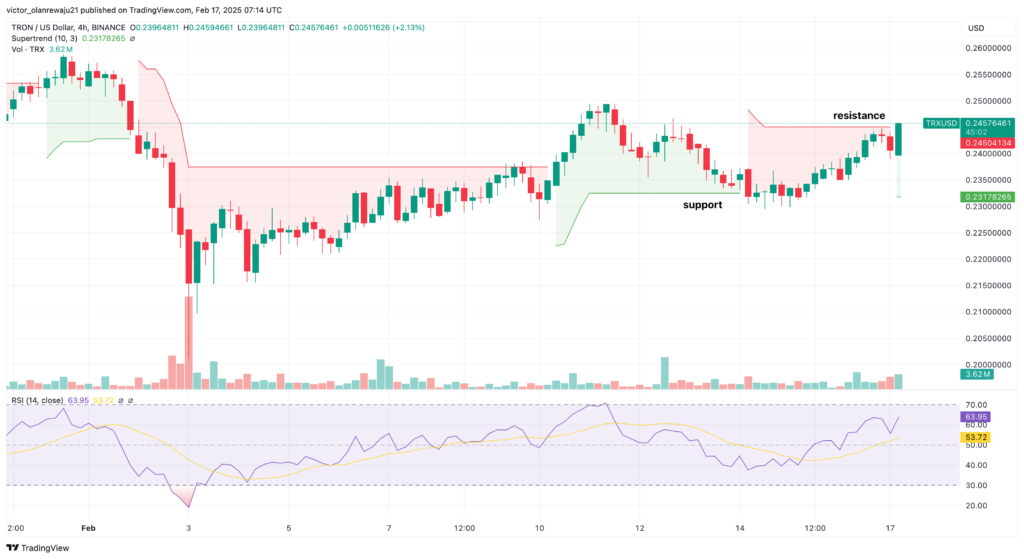
因此,从当前的情况来看,TRX价格遭遇了阻力,出现了卖出信号。这表明当前的上涨趋势可能接近结束。

看跌背离可能导致TRX难以突破阻力

进一步来看,日线图显示,TRX已接近下降通道的上轨。随着买盘压力的增加,TRX有可能突破这一上轨并继续上涨。

然而,这种情况可能不太可能发生,因为“Awesome Oscillator”(AO)显示出看跌反转的可能性更高。AO指标通过比较近期价格变化与历史波动来衡量市场动能。

当AO读数为正时,表示动能看涨。但如图所示,AO当前位于负区域,显示出看跌背离。

如果这种看跌动能继续下行,TRX价格可能很难突破0.382斐波那契水平的上方阻力位。在这种情况下,TRX价格可能会回调至0.236斐波那契水平以下,甚至可能再次跌破0.20美元。
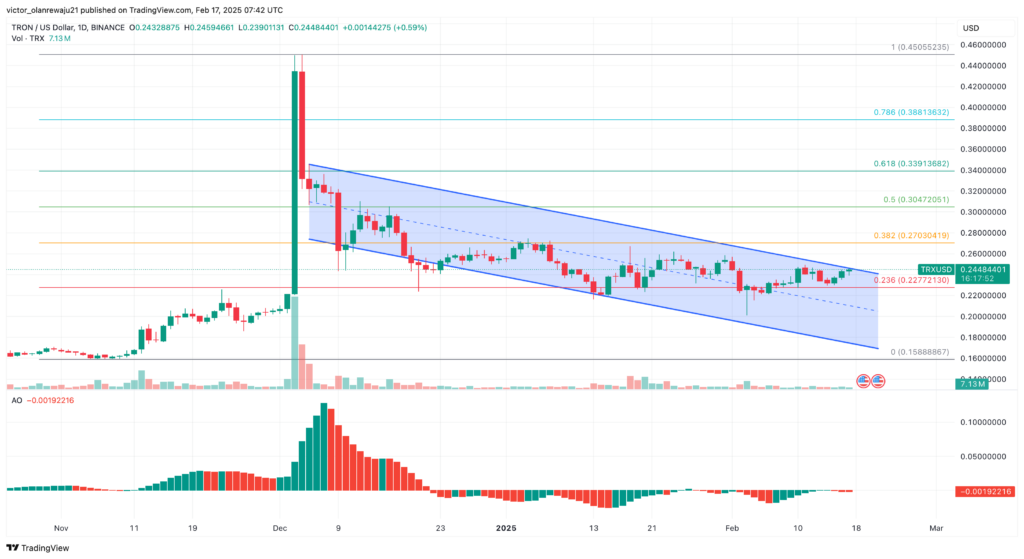
如果TRX的需求完全消退,价格可能会跌至0.16美元。然而,如果TRX能吸引更多买盘,价格的上行趋势可能会延续。

未来可能的价格走势

如果TRX能够突破当前的阻力位,价格有可能攀升至0.34美元的0.618黄金分割水平。但要实现这一目标,0.27美元和0.30美元区域的价格表现将是关键。

如果TRX无法突破这些区域的阻力位,可能会验证看跌的预期;反之,如果突破这些水平,TRX价格有望继续上涨,挑战更高目标。

Crypto di tendenza

Letture associate

Blood Loss of $55 Million Selling 3,588 BTC, Strategy Becomes a Literal Scumbag

On July 6th, Strategy (formerly MicroStrategy) disclosed in an SEC filing that it sold 3,588 Bitcoin (BTC) between June 29th and July 5th for approximately $216 million, at an average price of ~$60,200. This marked the company's largest net sale since initiating its Bitcoin strategy in 2020 and its first institutionalized reduction of its core holding. The sale resulted in a realized loss of about $54.8 million, as the selling price was below its average cost basis of ~$75,476 per BTC. The proceeds were used to pay preferred stock dividends and replenish USD reserves. This move follows a new "Digital Credit Capital Framework" approved on June 29th, authorizing the sale of up to $1.25 billion in Bitcoin. The sale consumes roughly 17% of this authorized amount in its first week. Strategy's foundational narrative, built by founder Michael Saylor, was a commitment to "never sell" Bitcoin. The recent institutionalized selling framework and these substantial sales represent a significant shift from that original promise. While the amount sold is only 0.4% of Strategy's total holdings of 843,775 BTC, the action challenges the premium at which its stock (MSTR) trades relative to its Bitcoin holdings. Investors had priced in the "never sell" narrative. The company now faces a contradiction: it sells Bitcoin at a loss to pay dividends on the preferred stock it issued to fund Bitcoin purchases. Saylor has framed selling as a tool for future strategic purchases, but each sale erodes the credibility of the original commitment, potentially threatening the premium valuation of MSTR shares.

Foresight News4 min fa

Blood Loss of $55 Million Selling 3,588 BTC, Strategy Becomes a Literal Scumbag

Foresight News4 min fa

Dialogue with Yihui Capital, SoundAI Technology, Ling Universe, and Zhongbo Jili: Opportunities and Challenges in the AI Smart Hardware Track

On June 28, 2026, an event titled "New Opportunities in AI Hardware: The Battle for Interactive Entry Points Begins" was held in Beijing. It featured a report from ITJuzi and discussions with experts from SoundAI, Ling Universe, One Reed Capital, and Zhongbo Juli on the opportunities and challenges in China's AI hardware sector. Key report findings highlight the sector's intense activity: 327 out of 431 startups founded post-2023 have secured funding, with 179 investments in H1 2026 alone. The landscape is dominated by embodied intelligent robots, while wearable tech like smart rings and AI glasses shows rapid growth. Geographically, Shenzhen leads, leveraging its superior hardware supply chain, followed by Beijing and Shanghai. The overarching trend is for companies to focus on micro-innovations within specific scenarios rather than reinventing foundational technology. Industry leaders shared several critical insights: 1. **Balancing Innovation & Market Readiness**: Entrepreneurs face the "hammer looking for a nail" dilemma. Success requires balancing technical capability with user acceptance, cost control, and incremental design improvements rather than chasing disruptive innovation. 2. **Competitive Landscape**: The future interactive entry point may not be a single super-device but a mix of universal terminals and specialized, scenario-specific hardware. While large companies have ecosystem advantages, startups can win by deeply targeting vertical markets and specific user groups. 3. **Core Challenges & Business Models**: Key hurdles include deep understanding of AI models and navigating non-transparent hardware supply chains. Viable business models may involve selling hardware at cost and generating revenue through software subscriptions, but this requires tight control over both hardware BOM and model inference costs. 4. **The Road to Commercialization**: The ultimate test is market validation—achieving sales growth and sustainable cash flow. Companies must find the right application scenario, use edge computing effectively, and close the loop from technology to commercial success. 5. **The Future of Interaction**: Proactive, context-aware interaction is the next frontier, though it's currently limited by issues like model hallucinations and environmental perception. The near-term focus should be on identifying target users and creating a coherent experience in specific domains, such as health wearables. In summary, to succeed in the competitive AI hardware arena, companies must strategically choose their niche, build a team with the right geographical advantages (e.g., leveraging Shenzhen's supply chain), and most importantly, execute a flawless commercialization strategy that translates technology into market-accepted products and sustainable business growth.

marsbit58 min fa

Dialogue with Yihui Capital, SoundAI Technology, Ling Universe, and Zhongbo Jili: Opportunities and Challenges in the AI Smart Hardware Track

marsbit58 min fa

Trading

Spot

Articoli Popolari

Come comprare TRX

Benvenuto in HTX.com! Abbiamo reso l'acquisto di TRON (TRX) semplice e conveniente. Segui la nostra guida passo passo per intraprendere il tuo viaggio nel mondo delle criptovalute.Step 1: Crea il tuo Account HTXUsa la tua email o numero di telefono per registrarti il tuo account gratuito su HTX. Vivi un'esperienza facile e sblocca tutte le funzionalità,Crea il mio accountStep 2: Vai in Acquista crypto e seleziona il tuo metodo di pagamentoCarta di credito/debito: utilizza la tua Visa o Mastercard per acquistare immediatamente TRONTRX.Bilancio: Usa i fondi dal bilancio del tuo account HTX per fare trading senza problemi.Terze parti: abbiamo aggiunto metodi di pagamento molto utilizzati come Google Pay e Apple Pay per maggiore comodità.P2P: Fai trading direttamente con altri utenti HTX.Over-the-Counter (OTC): Offriamo servizi su misura e tassi di cambio competitivi per i trader.Step 3: Conserva TRON (TRX)Dopo aver acquistato TRON (TRX), conserva nel tuo account HTX. In alternativa, puoi inviare tramite trasferimento blockchain o scambiare per altre criptovalute.Step 4: Scambia TRON (TRX)Scambia facilmente TRON (TRX) nel mercato spot di HTX. Accedi al tuo account, seleziona la tua coppia di trading, esegui le tue operazioni e monitora in tempo reale. Offriamo un'esperienza user-friendly sia per chi ha appena iniziato che per i trader più esperti.

1.6k Totale visualizzazioniPubblicato il 2024.12.10Aggiornato il 2026.06.02

Come comprare TRX

Discussioni

Benvenuto nella Community HTX. Qui puoi rimanere informato sugli ultimi sviluppi della piattaforma e accedere ad approfondimenti esperti sul mercato. Le opinioni degli utenti sul prezzo di TRX TRX sono presentate come di seguito.

活动图片