В России предложили лицензировать операторов криптоматов

cryptonews.ruPubblicato 2024-02-27Pubblicato ultima volta 2024-12-27

Зампредседателя комитета российского Совета Федерации по конституционному законодательству и госстроительству Артем Шейкин предложил ввести обязательное лицензирование лиц, организующих деятельность криптоматов. Он считает, что это позволит усилить контроль за деятельностью операторов и снизить уровень преступности.

Сенатор направил запрос первому заместителю директора Федеральной службы по финансовому мониторингу, в котором попросил прояснить вопросы регламентации деятельности криптоматов. Развитие криптовалют идет очень активно, и это «безусловно положительный тренд», но как и все, связанное с финансами, «эта область не лишена рисков», заявил член верхней палаты российского парламента. К сожалению, криптоматы используются в преступных целях, посетовал народный избранник.

«Случай с задержанием банды мошенников, похитивших деньги у 150 граждан, в том числе у участника СВО, через криптоматы, вызывает серьезную обеспокоенность. Лицензирование станет важным шагом в пресечении использования криптоматов в криминальных схемах и защите интересов наших граждан. Мы должны обеспечить, чтобы технологическое развитие шло рука об руку с обеспечением безопасности и законности в финансовой сфере», ― объяснил свою позицию Шейкин.

В начале декабря в России ликвидировали сеть подпольных криптоматов ― организаторы схемы воровали деньги клиентов с помощью устройств.
Letture associate

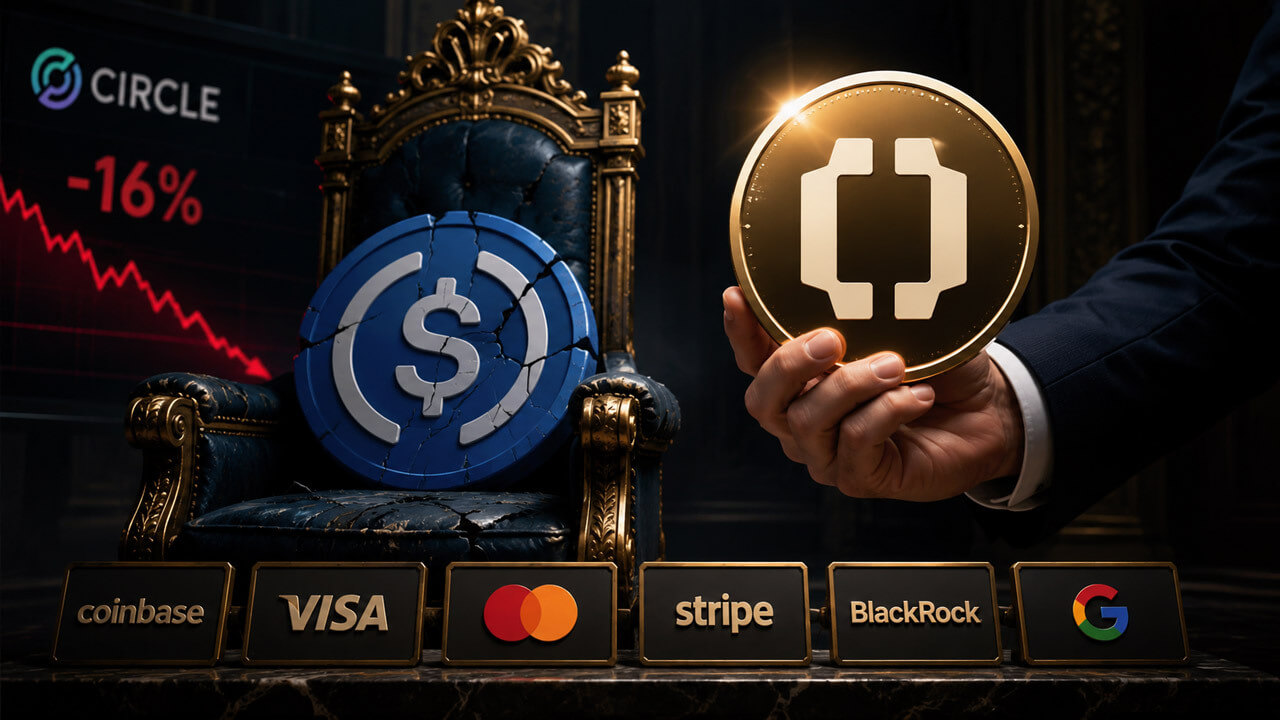
Building USDC by Its Own Hands, Why Does Coinbase Turn to Support Competitor OUSD?

Coinbase, a key distributor of the dominant stablecoin USDC, has joined over 140 major companies—including Visa, Mastercard, and BlackRock—as a founding member of the Open USD (OUSD) alliance, a move that directly challenges the current stablecoin economic model. The new project aims to upend the established profit structure by offering zero minting and redemption fees and allocating the majority of reserve interest earnings to distribution partners, rather than the issuer. This shift highlights a growing power struggle in the $320+ billion stablecoin market, where platforms with massive user bases are demanding a larger share of the revenue generated from the underlying reserves. Circle, the issuer of USDC, saw its stock plummet 16% on the day of the OUSD announcement, reflecting investor concern over the potential strain on its crucial partnership with Coinbase. While Coinbase earned over $900 million from its USDC partnership in 2024, its support for a competing model gives it significant leverage as its revenue-sharing agreement with Circle nears expiration in August 2026. Circle CEO Jeremy Allaire defended the USDC model, emphasizing its decade-long development, deep liquidity, and extensive ecosystem integration, which he argues cannot be easily replicated by a large, potentially slow-moving consortium. He also questioned the sustainability of a zero-fee model and warned that diverting all reserve interest would leave issuers without funds for critical compliance and operational infrastructure. Analysts remain skeptical of OUSD's prospects, citing the "cold start" problem of building liquidity, potential governance challenges within a large alliance, and heightened regulatory scrutiny. The emergence of OUSD signals a broader industry bifurcation, where stablecoins are increasingly viewed as backend settlement tools. The core competition is shifting from technology to a direct negotiation over how profits from the network are distributed between issuers and the powerful distribution channels.

Foresight News4 min fa

Building USDC by Its Own Hands, Why Does Coinbase Turn to Support Competitor OUSD?

Foresight News4 min fa

Zuckerberg Gave the AI Bull Market a Fright

Mark Zuckerberg and Meta inadvertently sent shockwaves through the AI stock market. News that Meta plans to sell its "excess" AI computing power to external clients triggered a trillion-dollar sell-off in AI infrastructure stocks like Nvidia and AMD, while Meta's stock rose. This seemingly simple business move—renting out idle resources—shook a core assumption underpinning the two-year AI bull market: the belief that computing power ("compute") would be perpetually scarce. This scarcity narrative had fueled valuations across the entire supply chain, from GPUs to power suppliers. Meta's motivations are layered: improving hardware utilization during non-peak R&D periods, executing a strategic pivot, and redefining AI infrastructure. Unlike rivals selling APIs, Meta's open-source approach with Llama appears aimed at building an ecosystem where it ultimately profits from the underlying compute, similar to how AWS transformed from Amazon's internal capacity. Meta is essentially offering an integrated "AI factory" service, not just raw GPU rental. The market's fear wasn't Meta selling a few chips, but the signal that GPU supply might become more shareable and efficient, transitioning the industry from a Capex-driven "hoarding" model to an Opex-driven "utilization" model. This could fundamentally reset valuation logic from scarcity to efficiency. While the sell-off reversed somewhat as investors realized this shift is long-term, the direction is set. The move marks a potential inflection point: the era of easy valuation gains from simply buying GPUs may be ending, giving way to an era where operational efficiency and return on AI assets take center stage.

marsbit48 min fa

Zuckerberg Gave the AI Bull Market a Fright

marsbit48 min fa

Trading

Spot
活动图片