Expert Says 10x Might Be Conservative for This DeFi Token That Has Raised $7 Million from Dogecoin Whales

bitcoinistPubblicato 2024-11-11Pubblicato ultima volta 2024-11-11

Introduzione

Dogecoin Whales Are Betting Big on DTX Presale DTX Exchange (DTX) is hot right now among crypto whales, especially those...

Dogecoin Whales Are Betting Big on DTX Presale

DTX Exchange (DTX) is hot right now among crypto whales, especially those who made waves with Dogecoin (DOGE) investments. These whales can move the market and have put big money into the DTX presale. In the last week alone, they’ve put in over $600,000, which is a strong endorsement of the platform. Dogecoin is currently priced at $0.19.

Now in the 4th stage of the presale, DTX Exchange (DTX) has raised over $7 million with tokens currently priced at $0.08, making DTX an attractive investment for institutional and retail investors. If you missed early DOGE gains, DTX Exchange (DTX) is a new opportunity.

Why Is DTX Exchange (DTX) Different in DeFi

DTX Exchange (DTX) isn’t just another DeFi. It’s a hybrid trading platform that combines traditional finance with blockchain technology so users can trade cryptocurrencies, stocks, and forex. Here are some of the key features that set DTX Exchange (DTX) apart:

  • 1000x Leverage: DTX Exchange (DTX) offers up to 1000x leverage, so you can amplify your positions and potentially make much bigger profits with a smaller initial investment.
  • Non-Custodial Wallets: Unlike traditional exchanges where funds are stored in custodial wallets, DTX Exchange (DTX) is non-custodial. Users have complete control over their assets, reduced counterparty risk, and aligned with the principles of decentralization.
  • Distributed Liquidity Pools: To increase trading efficiency, DTX uses distributed liquidity pools that reduce slippage so traders can execute their orders with minimal price impact.
  • No KYC: The hybrid model eliminates the need for KYC so users can trade with more privacy and ease of access.

These are all powered by the VulcanX blockchain, which has a transaction throughput of 100,000 TPS. This is the same level as Solana (SOL) and Ethereum (ETH) so DTX is a serious player.
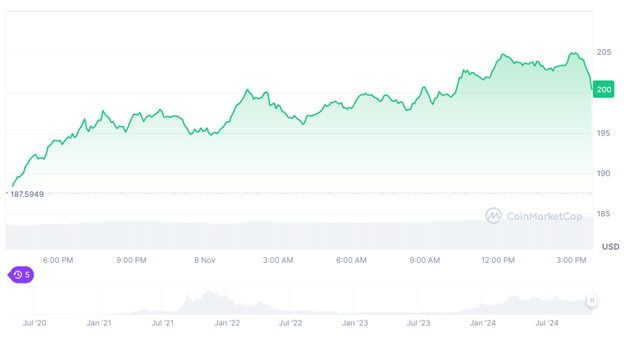
Source: CoinMarketCap

Industry Experts See Huge Upside

Crypto experts are very bullish on DTX Exchange (DTX). With the presale already exceeding expectations and whale support, many think it’s going to grow big. “Given the presale momentum and the platform’s features, 10x could be a conservative estimate” one industry insider said. DeFi innovation, high-leverage trading, and whale backing are setting DTX up to be one of the top DeFi projects in the market.

Get Involved

For high-growth investors, DTX tokens are available at a presale price of $0.08. As demand increases, the presale may close early, so get in now. Early investors will not only get DTX tokens at a discount but also get reduced trading fees, staking rewards, and governance rights. DTX Exchange (DTX) will also list on major centralized exchanges, which will drive up the token value and give early investors big gains.

With the trend of capital rotation towards utility-focused projects, DTX Exchange (DTX) is one of the most promising investment opportunities in DeFi. Bridging traditional and decentralized finance and strong presale traction, DTX is a game changer in the financial sector.

Conclusion

Dogecoin (DOGE) is a popular asset among crypto enthusiasts, but DTX Exchange (DTX) is carving out its own space in DeFi through its trading platform. With a successful presale backed by Dogecoin whales and a 1333% token value increase, DTX is a serious contender in the DeFi race. For investors looking to get in early on, the next big thing is that the DTX Exchange (DTX) is one to watch.

For more information, visit the Visit DTX Website, Buy Presale, or Join The DTX Community.

Bitcoinist

Bitcoinist

Bitcoinist is the ultimate news and review site for the crypto currency community!

Letture associate

US Government Lifts Ban on Crypto Perpetual Contracts for the First Time: What Does It Mean for the Market?

The U.S. Commodity Futures Trading Commission (CFTC) has issued guidance permitting 24/7 trading and clearing for crypto asset derivatives, effectively opening the U.S. market to crypto perpetual contracts for the first time. This move ends the previous ban and allows American individuals and institutions to trade these instruments around the clock. Direct beneficiaries include Kalshi, which received approval to list a Bitcoin perpetual contract; Coinbase, now the first CFTC-regulated futures commission merchant for U.S. clients to access global crypto derivatives; and CME, which will transition its Bitcoin futures and options to 24/7 trading. The CFTC emphasized this is a specific allowance for crypto assets, noting that traditional commodities like agriculture may not be suitable for non-stop trading. It also requires platforms to undergo case-by-case reviews for compliance and risk management. Industry leaders like Michael Saylor and Brian Armstrong praised the decision for integrating Bitcoin into capital markets and granting U.S. users access to a major global market segment. However, consumer advocacy group Better Markets criticized the CFTC for allegedly neglecting investor protection and favoring the industry it regulates. Other platforms like Kraken have announced plans to launch regulated perpetual futures for the U.S. market. The policy shift is expected to redirect significant liquidity and institutional participation to the newly accessible U.S. crypto derivatives landscape.

Odaily星球日报3 h fa

US Government Lifts Ban on Crypto Perpetual Contracts for the First Time: What Does It Mean for the Market?

Odaily星球日报3 h fa

How the CLARITY Act Reshapes the Stablecoin Yield Economy

The CLARITY Act, recently advanced by the U.S. Senate Banking Committee, fundamentally reshapes the stablecoin yield economy by closing loopholes left by the earlier GENIUS Act. Its Section 404 expands the ban on "hold-to-earn" rewards to all Digital Asset Service Providers (DASPs) and their affiliates, prohibiting any passive, interest-like yield. Crucially, it introduces a legal distinction, permitting "use-to-earn" rewards based on actual activities like spending, trading, or staking. In anticipation of this regulatory shift, major Wall Street asset managers—Morgan Stanley, BlackRock, and JPMorgan—have launched a series of tokenized money market funds (e.g., BlackRock's BRSRV, JPMorgan's JLTXX) designed explicitly for stablecoin reserve assets. These products represent a new, compliant yield layer: the stablecoin issuer earns interest from the underlying tokenized fund, which can then be passed to users through redesigned activity-based rewards. This marks a paradigm shift from a "hold-to-earn" to a "use-to-earn" market. While pathways remain for exchanges to redesign rewards (Path A) and for DeFi protocols to offer yield (Path B), the tokenized reserve asset layer (Path C) emerges as the most robust and strategically positioned infrastructure. However, this concentration—exemplified by BlackRock's BUIDL fund backing over 90% of USDtb's reserves—introduces new systemic risks. The final outcome hinges on regulatory decisions, particularly the OCC's proposed 20% cap on tokenized assets in reserves, which will determine the scalability of this new financial infrastructure layer.

marsbit4 h fa

How the CLARITY Act Reshapes the Stablecoin Yield Economy

marsbit4 h fa

Trading

Spot
Futures
活动图片