Big Solana (SOL) and Ripple (XRP) Investors Shock by Potential from this Hidden $0.03 Ethereum Token

bitcoinistPubblicato 2024-09-04Pubblicato ultima volta 2024-09-04

Introduzione

In the volatile cryptocurrency world, where giants like Solana (SOL) and Ripple (XRP) have long dominated the landscape, a new...

In the volatile cryptocurrency world, where giants like Solana (SOL) and Ripple (XRP) have long dominated the landscape, a new contender that promises to shake up the market is emerging.

This hidden gem, RCO Finance (RCOF), an Ethereum token currently priced at just $0.0344 in its presale stage, has been catching the attention of savvy investors.

With Solana experiencing a significant downturn and the Ripple community embroiled in internal debates, many are looking to RCOF as a promising alternative with the potential for extraordinary returns.

Solana (SOL) Registered a 22% Asset Value Loss in August

August was challenging for Solana (SOL), as the asset’s value plummeted by 22%, leaving many investors concerned about its future.

Solana’s fortunes worsened after a remarkable rise in the first half of the year, driven by excitement around a potential spot ETF approval in the US. The anticipated approval in the US failed to materialize, leading to a sharp sell-off by crypto whales and a subsequent price drop.

As a result, Solana’s market position has weakened, with SOL’s price hovering around $134.11, far from its earlier highs.

According to Solana’s technical price analysis, Solana (SOL) must move $135.52 to turn bullish. However, seeing that the market sentiment is currently bearish, the altcoin could drop to $128.44 in the coming days, with a drop below this level being viewed as catastrophic for Solana.

This extended bearish trend and bearish price projection have left investors searching for more stable and lucrative investment opportunities.

XRP Community Criticizes Ripple’s Control Over the Ledger, Demands DAO

As Solana struggles with a bearish trend, the XRP community, often called the ‘XRP Army,’ has been increasingly vocal about its dissatisfaction with Ripple Labs’ control over the XRP Ledger.

The community’s concerns center on the need for more decentralization, with many arguing that Ripple’s influence over the ledger stifles the potential for broader adoption and true decentralization.

One of the community members dubbed ĐΛRKHØRSΞ™ on X (formerly Twitter) shared a post stating, “unless anyone can get a seat at the table Of Ripple, you can’t amend the XRPL it is not decentralized if Ripple doesn’t want …”

The debate has sparked discussions about creating a Decentralized Autonomous Organization (DAO) to give token holders more control over the network’s future.

This internal strife has added uncertainty to XRP’s prospects, pushing some investors to consider alternative investments that offer greater autonomy and potential for growth.

SOL and XRP Investors See a 10,000x Opportunity with the New Ethereum Token, RCOF

As Solana and Ripple navigate through these turbulent times, a new opportunity has emerged in RCO Finance (RCOF), the native token of the groundbreaking AI-powered decentralized trading platform RCO Finance.

This Ethereum token has gained significant traction among investors looking for an alternative to the challenges faced by those who had invested earlier in established cryptocurrencies like SOL and XRP.

RCOF is currently in its second presale stage, where its price has already risen by 169% to $0.0344, signaling a strong bullish stance.

Investors are flocking to RCOF not just for its innovative technology but also for its potential gains. The token is expected to see further price increases in the subsequent presale stages, with the listing price anticipated to be between $0.4 and $0.6.

With RCOF’s price potentially surging by up to 1,644% during the ongoing presale to its listing on crypto exchanges and the possibility of 10,000x returns following the launch of the RCO Finance platform, it is clear why SOL and XRP investors are turning their attention to this promising new token.

RCO Finance’s AI-Powered Platform Makes RCOF a Compelling Investment Opportunity

The allure of RCO Finance (RCOF) extends beyond its presale success, as the platform represents a significant advancement in decentralized finance (DeFi).

Leveraging blockchain technology, artificial intelligence (AI), and machine learning (ML), RCO Finance aims to solve some of the most pressing financial market trading issues. By offering a fully automated trading experience, RCO Finance eliminates the need for intermediaries, making trading more efficient, transparent, and accessible.

RCO Finance platform promises to revolutionize the trading experience by offering real-time AI-powered market predictions, advanced trading tools, and access to a wide range of assets, including over 120,000 tradable assets, real-world assets, and decentralized derivatives.

The platform’s AI-powered robo advisor is a particularly revolutionary feature. It offers personalized investment strategies based on individual financial goals, risk tolerance, and market conditions.

The advisor empowers traders to make informed decisions without financial advisors or brokers, significantly enhancing the trading experience and making the investment process easy for both experienced and inexperienced investors.

Additionally, RCO Finance’s platform aims to offer various other financial services, such as staking, borrowing, and lending, providing users with multiple avenues to generate income.

To ensure the safety of investors’ funds, SoliProof has already thoroughly audited the platform’s smart contract for vulnerabilities to ensure the security of the RCOF ecosystem.

Given these revolutionary features, RCOF is poised to become a dominant player in the DeFi space, potentially surpassing the value of established tokens like Ripple (XRP) and Solana (SOL).

As the RCO Finance platform launches and gains traction, the price of RCOF is expected to skyrocket, potentially delivering returns of more than 10,000x within the first weeks of its launch.

For investors seeking an alternative to the uncertainties of established altcoins like SOL and XRP, RCOF offers a compelling and lucrative investment opportunity that could redefine the future of DeFi.

For more information about the RCO Finance Presale:

Visit RCO Finance Presale

Join The RCO Finance Community


Bitcoinist

Bitcoinist

Bitcoinist is the ultimate news and review site for the crypto currency community!

Crypto di tendenza

Letture associate

Apple and the Power Rebalancing with 'The Microns': Dissecting the Profit Ledger Behind the iPhone

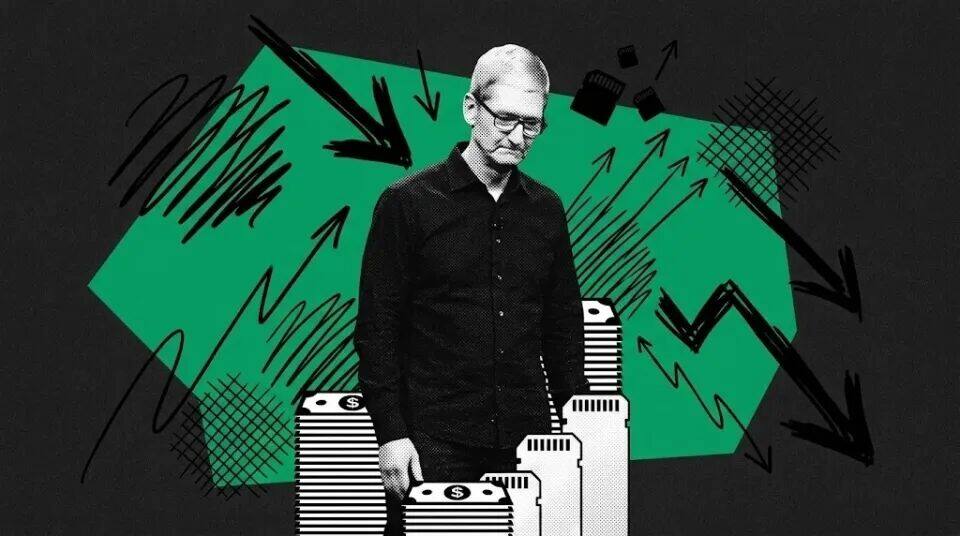
The article analyzes the shifting profit dynamics and power balance between Apple and memory suppliers like Micron within the iPhone supply chain. It highlights a social media post criticizing Apple for raising iPhone prices while blaming memory chip cost increases, despite historically paying suppliers like Micron very little. An estimated iPhone 18 cost breakdown is referenced. Historically, memory was a minor cost component. In 2017's iPhone X, memory accounted for only about 1.6-2.3% of the price, with Apple capturing nearly 50% net profit. Over time, memory's share of the Bill-of-Materials (BOM) cost has grown significantly, reaching an estimated 12-15% for the iPhone 17 series. The core driver of this change is soaring demand for memory from the AI industry, particularly for High Bandwidth Memory (HBM) and AI servers, which is diverting production capacity and squeezing supply for consumer electronics. Memory manufacturers, after enduring periods of low profits, now hold greater pricing power. This is reflected in their recent strong financials, like Micron's 84.6% gross margin. Apple CEO Tim Cook initially described the memory price pressure as unprecedented in his 40-year career, later calling it a "once-in-a-century flood," before Apple announced price hikes across several product lines, causing a significant stock drop. Elon Musk echoed Cook's sentiment about the dramatic cost surge. The article concludes that the era of memory suppliers being at the mercy of Apple's pricing power has temporarily reversed, thanks to AI-driven demand. It notes Apple is reportedly seeking to diversify its supply chain, including exploring chips from China's CXMT.

Odaily星球日报22 min fa

Apple and the Power Rebalancing with 'The Microns': Dissecting the Profit Ledger Behind the iPhone

Odaily星球日报22 min fa

Conversation with the Founder of 42 Macro: The Fed's 'Boiling the Frog Slowly' and the K-Shaped Economy

In a conversation with Anthony Pompliano, Darius Dale, founder of 42 Macro, discusses the Federal Reserve's monetary policy and the K-shaped U.S. economy. Dale characterizes new Fed Chair Kevin Warsh as a "dove in hawk's clothing," expecting the Fed to signal or enact policy tightening in the coming quarters to create room for later easing. He argues current economic signals, including high deficit spending, debt monetization, and credit growth, strongly indicate inflation is not on a credible path back to 2%, forcing the Fed to act. The discussion highlights the stark "K-shaped" economic reality. While top earners, buoyed by massive cash savings (up ~$8 trillion since pre-pandemic), continue robust spending, those at the bottom face severe financial strain, with delinquency rates on consumer loans reaching crisis-era highs. Dale attributes much of the current social and political anxiety to this divergence, driven by the "Cantillon effects" of monetary expansion, which disproportionately benefits asset owners. He emphasizes that in this environment of "financial repression," individuals must participate in asset markets to avoid being left behind. On equities, Dale notes a rotation from the "Magnificent Seven" tech giants into broader AI-exposed companies, while warning that the tech giants' massive capital expenditure cycles could eventually puncture over-optimistic cash flow projections. Dale concludes by stressing that the core desire across all economic strata is simply the dignity to provide for one's family, a goal currently undermined by systemic policies that act as a "wealth siphon" from the bottom to the top.

marsbit51 min fa

Conversation with the Founder of 42 Macro: The Fed's 'Boiling the Frog Slowly' and the K-Shaped Economy

marsbit51 min fa

The Domestic Answer to Space Computing Power: Photonics Are More Efficient, Musk and Huang's Approaches Are Too Roundabout

The Space Computing Race: A Photonic Advantage The competition for space-based computing has intensified, with figures like Elon Musk and NVIDIA's Jensen Huang highlighting its potential. Musk predicts solar-powered AI satellites could offer the most cost-effective computing by 2032. However, space presents extreme challenges for traditional electronic chips: radiation from cosmic particles can cause errors, the vacuum environment hinders heat dissipation, and limited solar power constrains energy-hungry systems. Photonic computing, using light instead of electrons, offers a promising solution. Its core advantages for space are threefold: 1) **Radiation Resistance**: Photons are charge-neutral, making them inherently immune to particle interference. 2) **Low Heat Generation**: Light propagation in waveguides generates minimal heat, bypassing critical thermal management issues. 3) **Low Power Consumption**: Photonic chips have near-zero static power draw, aligning perfectly with the energy constraints of satellites. Furthermore, for a given payload weight and volume, photonic systems can potentially deliver higher total compute density. Since they require less bulky cooling and power infrastructure, more space can be allocated to the compute units themselves. While photonic computing holds great promise, current industry approaches face hurdles like the memory-compute bottleneck (separate storage and processing) and challenges in large-scale integration. Engineering for space—withstanding launch vibrations and validating full system operation in orbit—remains a critical step. The path forward resembles the evolution from single GPUs to computing clusters, but via a photonic route. As electronic chips approach physical limits in miniaturization, photonic computing and optical interconnects (光算光联) may provide a key alternative to bypass these constraints and define the next generation of space-based computing capabilities.

marsbit1 h fa

The Domestic Answer to Space Computing Power: Photonics Are More Efficient, Musk and Huang's Approaches Are Too Roundabout

marsbit1 h fa

Trading

Spot

Articoli Popolari

Cosa è XRP 2.0

XRP 2.0: Una Nuova Frontiera nel Paesaggio delle Criptovalute Introduzione a XRP 2.0 Nel mondo in continua evoluzione delle criptovalute, nuovi progetti emergono continuamente, cercando attenzione e adozione. Una tale iniziativa promettente è XRP 2.0, un nuovo progetto di criptovaluta progettato per sfruttare avanzate tecnologie blockchain e metodologie di crittografia robuste. Anche se il nome richiama alla mente l'XRP di Ripple, è fondamentale notare che XRP 2.0 opera in modo indipendente, concentrandosi sul miglioramento della sicurezza delle transazioni, della privacy e della scalabilità. Mentre il panorama finanziario digitale abbraccia sempre di più soluzioni decentralizzate, XRP 2.0 mira a contribuire in modo significativo al web3 e all'espansione generale dei progetti crypto. Cos'è XRP 2.0? Alla sua base, XRP 2.0 è un progetto di criptovaluta che mira a creare un ecosistema di valuta digitale sicuro e decentralizzato. La sua tecnologia fondamentale integra principi di blockchain sofisticati con tecniche di crittografia all'avanguardia. L'obiettivo principale di XRP 2.0 è quello di affermarsi come una piattaforma affidabile ed efficiente in grado di consentire un'esecuzione rapida delle transazioni, dando priorità a migliori protezioni della privacy per i suoi utenti. Il progetto è promosso come una soluzione a molte limitazioni affrontate dalle criptovalute esistenti, proponendo un sistema in grado di gestire un volume maggiore di transazioni con migliorata velocità e privacy. Questa versatilità pone XRP 2.0 come un significativo competitor in un mercato affollato di varie valute digitali. Chi è il Creatore di XRP 2.0? L'identità del creatore dietro XRP 2.0 è stata segnalata come 'Wilbur'. Tuttavia, i dettagli completi riguardanti Wilbur o l'entità associata rimangono sfuggenti. L'anonimato di molti creatori di criptovalute non è un fenomeno raro nel settore, spesso progettato per mantenere un certo grado di privacy e sicurezza. Chi sono gli Investitori di XRP 2.0? Al momento, informazioni specifiche relative alle fondazioni o organizzazioni di investimento a supporto di XRP 2.0 non sono disponibili pubblicamente. Nel settore delle criptovalute, il supporto di investitori rinomati può influenzare significativamente la credibilità e il successo di un progetto, tuttavia la trasparenza riguardo ai sostenitori finanziari di XRP 2.0 non è stata stabilita. Come Funziona XRP 2.0? XRP 2.0 si distingue per l'impiego di una combinazione di tecnologia blockchain e algoritmi di crittografia avanzati che garantiscono transazioni sicure e decentralizzate. La sua struttura innovativa include caratteristiche uniche progettate per promuovere il coinvolgimento degli utenti e ampliare le funzionalità oltre le transazioni convenzionali delle criptovalute. Tra queste caratteristiche, XRP 2.0 incorpora capacità alimentate da intelligenza artificiale, come funzionalità di testo in immagini e testo in voce. Queste aggiunte sono progettate per migliorare l'esperienza interattiva per gli utenti, promuovendo una maggiore applicabilità in vari settori. Unendo progressi tecnologici con design incentrati sugli utenti, XRP 2.0 mira a catturare l'attenzione di una vasta gamma di individui e aziende che cercano di integrare soluzioni di criptovaluta nei loro framework operativi. Cronologia di XRP 2.0 Comprendere XRP 2.0 richiede di esaminare i traguardi che hanno definito il suo percorso fino ad ora: 23 luglio 2023: XRP 2.0 viene introdotto come un nuovo progetto di criptovaluta, mirante a rivoluzionare le capacità di transazione sicura e decentralizzata nel dominio blockchain. 8 settembre 2023: Si verifica il lancio di un altro progetto, XRP20, marcando l'emergere di un token ERC-20 sulla blockchain di Ethereum che resta non correlato a XRP 2.0. 13 novembre 2023: Il ledger XRP subisce un significativo aggiornamento con il rilascio della versione 2.0.0 del software server rippled. È essenziale notare che questo sviluppo è scollegato dal progetto di criptovaluta XRP 2.0. Punti Chiave su XRP 2.0 Per distillare l'essenza di XRP 2.0, emergono diversi fattori critici: Caratteristiche Uniche: L'inclusione di funzionalità come il testo in immagini e testo in voce alimentato da intelligenza artificiale diversifica ulteriormente le potenziali applicazioni di XRP 2.0. Tecnologia Blockchain: Il framework utilizza meccanismi blockchain avanzati e protocolli di crittografia, garantendo un ambiente sicuro e decentralizzato per le transazioni. Scalabilità e Privacy: XRP 2.0 dà priorità a migliori protezioni della privacy nei processi di transazione e alla scalabilità necessaria per accogliere una base di utenti in crescita. Nessuna Affiliazione con Ripple: È importante notare che, nonostante il suo nome, XRP 2.0 non ha alcuna fedeltà o collaborazione con l'XRP di Ripple, distinguendo il proprio framework operativo e obiettivi all'interno dell'ecosistema delle criptovalute. Conclusione XRP 2.0 rappresenta un'ambiziosa venture nell'ambito delle criptovalute, mirante a offrire una combinazione di sicurezza, privacy ed efficienza nelle transazioni digitali. Integrando tecnologie sofisticate e caratteristiche user-friendly, il progetto si propone di ampliare gli orizzonti di ciò che le criptovalute possono realizzare nell'economia digitale odierna. Sebbene l'anonimato del suo creatore e la mancanza di investitori dichiarati possano sollevare domande per alcuni, il focus di XRP 2.0 su funzionalità avanzate e decentralizzazione ne amplifica l'appeal in un mercato crypto sempre più affollato. Man mano che il panorama delle criptovalute continua a evolversi, XRP 2.0 potrebbe emergere come un attore decisivo nell'espansione di soluzioni blockchain sicure e scalabili.

175 Totale visualizzazioniPubblicato il 2024.04.05Aggiornato il 2024.12.03

Cosa è XRP 2.0

Come comprare XRP

Benvenuto in HTX.com! Abbiamo reso l'acquisto di XRP (XRP) semplice e conveniente. Segui la nostra guida passo passo per intraprendere il tuo viaggio nel mondo delle criptovalute.Step 1: Crea il tuo Account HTXUsa la tua email o numero di telefono per registrarti il tuo account gratuito su HTX. Vivi un'esperienza facile e sblocca tutte le funzionalità,Crea il mio accountStep 2: Vai in Acquista crypto e seleziona il tuo metodo di pagamentoCarta di credito/debito: utilizza la tua Visa o Mastercard per acquistare immediatamente XRPXRP.Bilancio: Usa i fondi dal bilancio del tuo account HTX per fare trading senza problemi.Terze parti: abbiamo aggiunto metodi di pagamento molto utilizzati come Google Pay e Apple Pay per maggiore comodità.P2P: Fai trading direttamente con altri utenti HTX.Over-the-Counter (OTC): Offriamo servizi su misura e tassi di cambio competitivi per i trader.Step 3: Conserva XRP (XRP)Dopo aver acquistato XRP (XRP), conserva nel tuo account HTX. In alternativa, puoi inviare tramite trasferimento blockchain o scambiare per altre criptovalute.Step 4: Scambia XRP (XRP)Scambia facilmente XRP (XRP) nel mercato spot di HTX. Accedi al tuo account, seleziona la tua coppia di trading, esegui le tue operazioni e monitora in tempo reale. Offriamo un'esperienza user-friendly sia per chi ha appena iniziato che per i trader più esperti.

1.6k Totale visualizzazioniPubblicato il 2024.12.10Aggiornato il 2026.06.02

Come comprare XRP

Discussioni

Benvenuto nella Community HTX. Qui puoi rimanere informato sugli ultimi sviluppi della piattaforma e accedere ad approfondimenti esperti sul mercato. Le opinioni degli utenti sul prezzo di XRP XRP sono presentate come di seguito.

活动图片