跨链桥再遭攻击,Orbit Chain损失超8000万美元

Odaily星球日报Pubblicato 2024-01-01Pubblicato ultima volta 2024-01-01

Introduzione

被盗原因并未明确,用户务必尽快撤销相关钱包授权。

原创 | Odaily星球日报

作者 | 夫如何

跨链桥再遭攻击,Orbit Chain损失超8000万美元

新年伊始,黑客又出来”兴风作浪“。根据 Beosin 旗下 EagleEye 监测,Orbit Chain 跨链桥遭黑客攻击,损失高达 8150 万美元。

通过黑客行为来看,这一切似乎早有预谋。根据 Beosin Trace 分析,黑客早在 1 天前(12 月 31 日)就尝试根据漏洞发起小规模攻击,并且将盗取的 ETH 作为了本次攻击的其余 5 个地址的转账手续费来源。

今天凌晨,黑客正式发起攻击,并将被盗资金转移到上述五个地址。在五笔独立的交易中,每笔交易都发送到一个新的钱包,Orbit Bridge 发送了 5000 万美元的稳定币(3000 万 Tether、 1000 万 DAI 和 1000 万 USDC)、 231 枚 wBTC(约 1000 万美元)和 9500 枚 ETH(约 2150 万美元)。
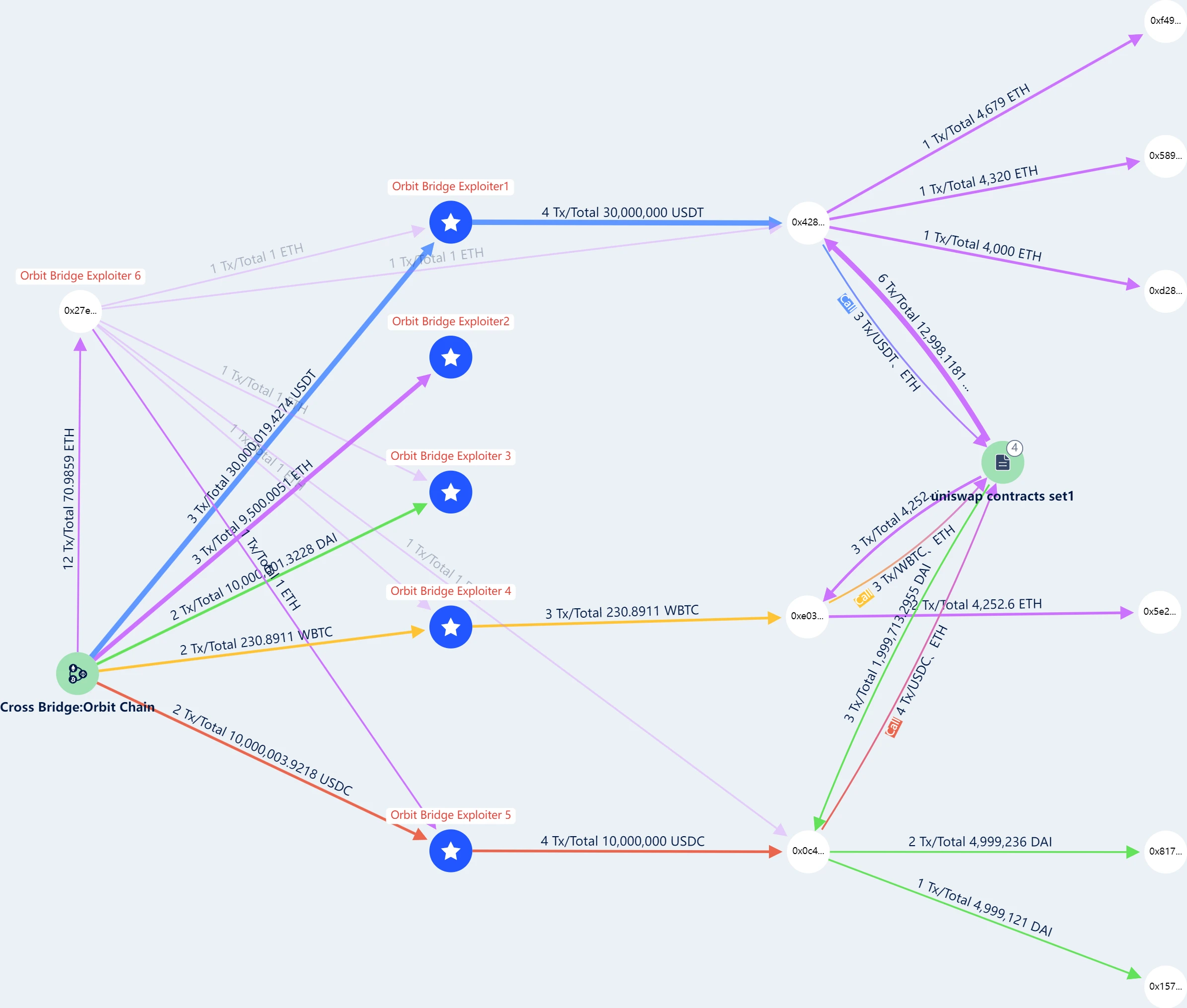
跨链桥再遭攻击,Orbit Chain损失超8000万美元

虽然跨链桥被攻击事件时有发生,但攻击类型却并不复杂。比如近期,Heco Bridge 受到私钥泄露攻击,损失高达 8660 万美元;Multichain 同样是私钥泄露攻击,损失高达 2.42 亿美元,同时影响多个项目发展,使 Fantom 上资产价格脱锚。

Orbit Chain 此次被盗的原因又是什么?安全机构慢雾认为,本次攻击事件可能是跨链桥合约漏洞引发的攻击行为或者项目中心化服务器受到入侵,前者可能更易被大众接受。“人无完人,没有坚不可摧的程序,但中心化服务器受到入侵可能会引发更多的连锁反应。”

攻击发生后,Orbit Chain 代币 ORC 跌幅超 18% ,多种通过 Orbit Bridge 跨链至 Klaytn 网络的封装资产价格出现下跌,其中 OETH、OBNB、OXRP 均已下跌超过 20% 。

Odaily星球日报提醒广大用户,由于目前 Orbit Chain 跨链桥被盗原因尚未明确,不确定黑客是否有下一步计划,请尽快撤销相关钱包批准。跨链桥作为资金密集的区域,时常受到黑客的关注,作为用户尽量做到以下三点:

  •  当事故出现时,尽快撤销对该跨链桥的合约授权,防止进一步风险蔓延,可以通过所在区块链的浏览器中 approval checker 进行撤销,同时建议大家定期审核清理一些对自身无用的合约授权,黑客常常会通过智能合约中的漏洞来多次提取资产。

  • 有频繁跨链需求的用户需要密切关注跨链桥的相关信息,比如安全公司预警的风险提示,官方预告的升级等,第一时间了解做好应对准备。

  • 作为跨链桥 LP 的参与者,面对此类事件,要积极与项目方沟通,锁定的资产要做好记录,等待事后的解决。

目前, Orbit Chain 已经暂停跨链桥合约并与黑客进行沟通,同时计划为用户发放补偿金来弥补资产受损的用户,具体补偿金额尚未公开。Odaily星球日报也将持续关注。

Letture associate

Will UNI Reach $100 in Four Years? Can Standard Chartered's Prediction Come True?

TL;DR: Standard Chartered Bank predicts UNI token will reach $100 by 2030, based on the growth of tokenized assets fueling demand for open DeFi liquidity and Uniswap's potential to capture fees from that trading. However, institutional tokenized products like BlackRock's BUIDL fund show that strict access controls and permissioned systems remain major barriers. Standard Chartered's $100 price target for Uniswap's (UNI) governance token by 2030 projects massive growth from current levels. The bank's thesis hinges on tokenized real-world assets (RWA) reaching trillions in value and a significant portion flowing into open, decentralized markets for trading and liquidity, rather than remaining in closed, permissioned systems. Uniswap's position as a leading decentralized exchange (DEX) infrastructure could allow it to capture a major share of this future trading activity. A key challenge is whether tokenized assets like bonds, funds, and stocks will trade openly on DEXs or be restricted to controlled, institutional platforms. The case of BlackRock's BUIDL fund exemplifies this tension: while it uses Uniswap's technology for settlements, trading is strictly limited to pre-approved, whitelisted institutional participants. This hybrid model provides DeFi efficiency but maintains traditional access barriers. For UNI to achieve such a high valuation, Uniswap must not only see increased trading volume from tokenized assets but also implement effective value-capture mechanisms for token holders. Recent governance proposals aim to direct protocol fees to UNI stakers, creating a clearer link between platform usage and token value. Ultimately, the realization of Standard Chartered's prediction depends on the future structure of the tokenized asset market. If open liquidity pools and reduced restrictions prevail, Uniswap's role could expand far beyond crypto-native trading. If permissioned, walled-garden systems dominate, its growth from institutional tokenization may be limited. The prediction itself signals growing institutional recognition of DeFi's potential role in the future of finance.

marsbit1 min fa

Will UNI Reach $100 in Four Years? Can Standard Chartered's Prediction Come True?

marsbit1 min fa

Banking Giants Battle in the Tokenization Arena: Who Will Take the Lead?

**Banking Titans Battle in Tokenization: Who Leads the Pack?** Four major banks—JPMorgan Chase, Goldman Sachs, HSBC, and BNY Mellon—are heavily investing in tokenization infrastructure but have adopted distinct strategic paths. This analysis compares them across four key dimensions: verified transaction volume, product breadth, regulatory compliance, and underlying infrastructure model. JPMorgan's Onyx network stands out with over $1 trillion in cumulative cleared transaction volume, focusing deeply on niche areas like tokenized collateral management and intraday repo settlement. However, its closed private network limits market reach. Goldman Sachs Digital Assets Platform (GS DAP) leads in product diversity, having executed tokenized bond issuances for sovereign entities and supranational organizations, and launched tokenized money market funds. It is also a founding member of the Canton Network, a shared ledger for institutions, though its overall cleared volume is less publicly disclosed than JPMorgan's. HSBC's Orion platform carves a niche in cross-border tokenized securities and sustainable finance, exemplified by its tokenized gold product and its role in large-scale digital green bond issuances for the Hong Kong Monetary Authority. Its global network provides a unique advantage in Asia and emerging markets. BNY Mellon, as the world's largest custodian, plays a fundamentally different role by providing essential custody and asset servicing infrastructure for digital assets, notably supporting the Canton Network. It does not actively issue front-end tokenized products. In summary, no single bank dominates all fronts. JPMorgan leads in scale, Goldman in product breadth, HSBC in global cross-border positioning, and BNY Mellon in foundational custody services. The market is likely to see multiple parallel development paths. A key future challenge is avoiding fragmentation; the success of interoperability standards like those within Canton Network will be crucial to realizing blockchain's full efficiency gains across the entire financial ecosystem. The next 5-10 years will reveal which institution builds the most enduring competitive moat.

Foresight News26 min fa

Banking Giants Battle in the Tokenization Arena: Who Will Take the Lead?

Foresight News26 min fa

Trading

Spot
Futures
活动图片