如何预测“收税代币”走势?交易所溢价给出答案

Odaily星球日报Pubblicato 2023-11-01Pubblicato ultima volta 2023-11-01

Introduzione

CEX的长期溢价区间与价格走势强关联,正溢价下跌而负溢价上涨。

原创 | Odaily星球日报

作者 | 南枳

如何预测“收税代币”走势?交易所溢价给出答案

收税代币,指在去中心化交易所(DEX)交易时,用户不会全额获取的代币,部分代币被销毁或分红。例如假设 UNIBOT(买卖收税 5% )价格 100 USDT,用户花费 100 USDT 进行购买时,只能收到 0.95 枚,同样地出售一枚时只能收到 95 USDT。

而中心化交易所(CEX)中,不具备收税的功能和机制,对于无税代币,若出现价差自然会有套利者搬平。但对于收税代币,理论上价差会处于正溢价和负溢价的叠加态,仍以 UNIBOT 在 100 USDT 价位举例:

  • 对于出售者,交易所负溢价只要在-5% 内都是可以接受的,例如-4% 的溢价下,转至 CEX 仍能卖出 96 USDT,相较链上的 95 USDT 仍存在利润;

  • 对于买入者,则可以接受 5% 以内正溢价,即 105 USDT 以下的 CEX 成交价相比链上都是划算的。

因此,CEX 的正溢价或负溢价,可能是受以上两者力量的博弈,最终达到一种均衡。Odaily星球日报据此先做出一个假设,并将在下文验证:

  • 若交易者对后市看跌,卖出力量更强,交易所将呈现持续的负溢价状态,币价将下跌;

  • 若交易者对后市看涨,买入力量更强,交易所将呈现持续的正溢价状态,币价将上升;

UNIBOT 数据分析

基本规则

分析标的:以 UNIBOT 作为第一个分析对象,该代币买卖收取 5% 税,分别分配给 LP、持币者和团队;

时间维度:以 1 小时作为分析维度;

时间跨度:近 1600 个小时,约为 8/23 ~ 10/27 ;

价格取值:DEX 中以一小时内所有成交价取均值(来自 Dune 的 dex.prices),CEX 取 Bitget 数据,一小时的开盘、收盘、最高、最低价取均值;

溢价计算:溢价率=(CEX-DEX)/DEX。

计算结果

1600 个小时中,有 790 个小时溢价超出了﹢ 5% 或﹣ 5% ,占比接近 50% 。说明市场力量过强(超买超卖),要么市场力量过弱被交易所或做市商主导

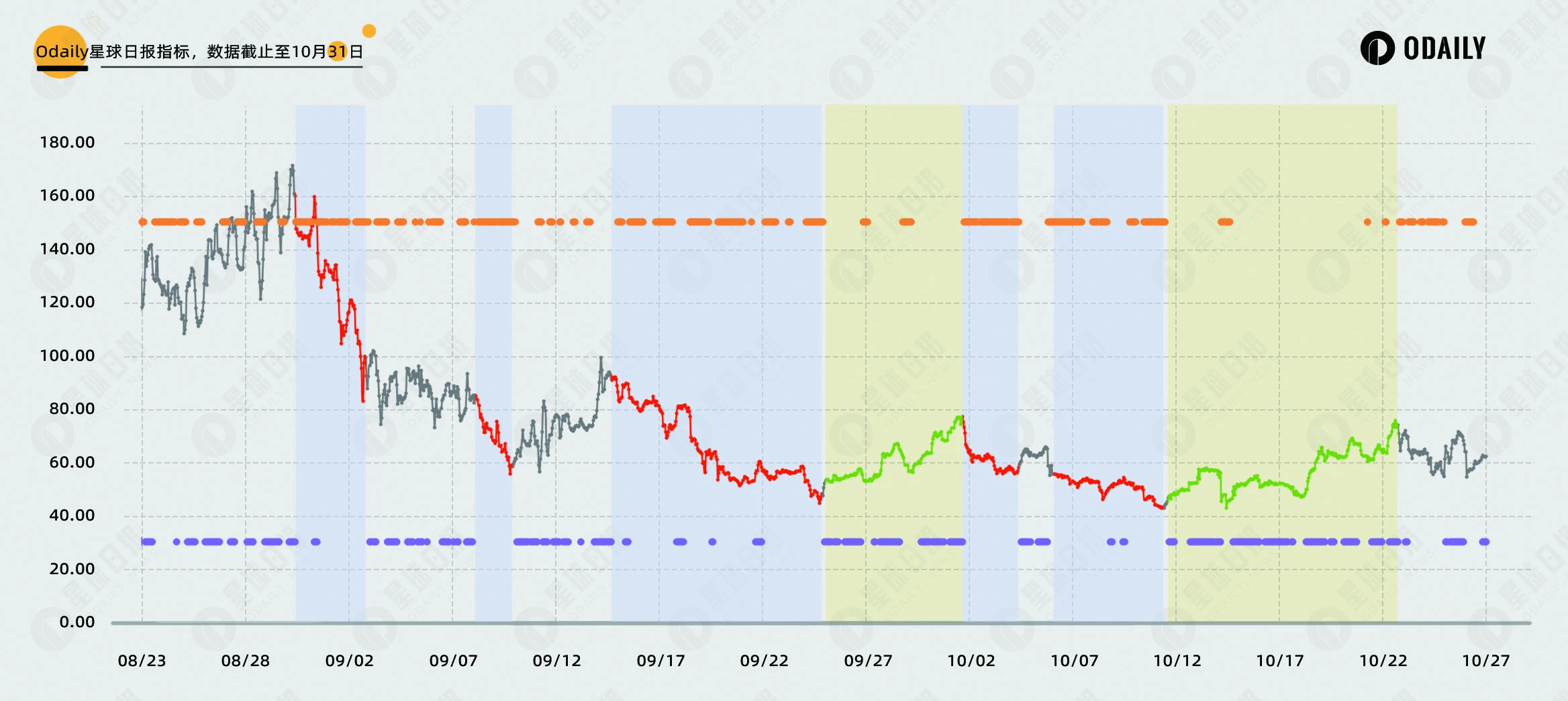
为探究正负溢价与走势的关系,Odaily星球日报将﹢3% 以上溢价记为正溢价(下图橙色),﹣3% 以下记为负溢价(下图紫色)。
如何预测“收税代币”走势?交易所溢价给出答案

在一段行情中,会出现持续的单边溢价情况,而没有另一方溢价的存在,将主要正溢价的区间标为蓝色底纹,将主要为负溢价的区间标为黄色底纹

从图中可以看出,正负溢价区间与价格走势有着明显关系,得到结论①,但与本文开头所推测的规律完全相反:

①正溢价时,价格倾向于下跌;负溢价时,价格倾向于上涨。

此外从图中还有另外几个衍生结论,本文的溢价区间选取较大,在大的溢价区间中还有小的反向的溢价区间,如 9/17 ~ 9/22 区间,以正溢价为主的区间中出现了几次小的负溢价区间,而在这个区间内价格走势发生反弹,但整体走势没有反转。

而 9/22 ~ 9/27 之间长期溢价转变,走势发生了反转。然后在 10/2 再次溢价&走势同时反转。

故而有结论如下:

②走势与长期的溢价情况相关,短期的溢价意味着反向的发展,但不改变整体方向

③长期溢价转换后,整体走势反转。

那么,正负溢价是价格走势的充分条件或者必要条件吗?答案是两者都不是:

  • 8/23 ~ 8/28 整体趋势向上,涨幅超 30% ,但没有正负溢价区间,否定了必要条件;

  • 10/4、 10/24 附近出现了小的溢价区间,但价格横盘,否定了充分条件;

故有结论正负溢价与走势强相关,但不是充分条件也不是必要条件。

进一步数据验证

AIMBOT

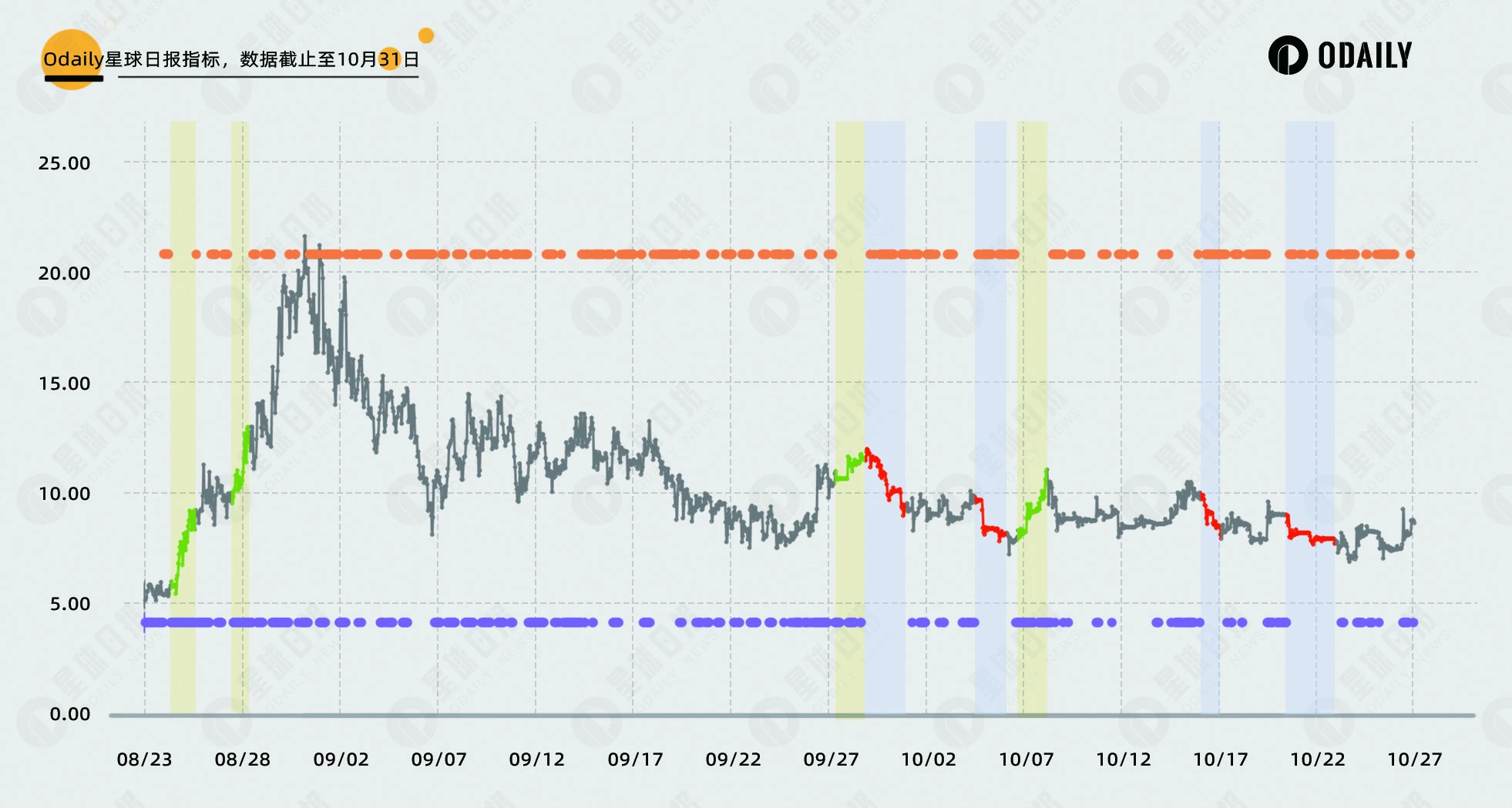
使用自动打土狗机器人 Aimbot 的代币 AIMBOT 作为研究对象,该代币同样买卖收取 5% 税,但具备另一个特性:转账也收税 5% ,这一特性阻止了套利者的搬砖行为,也将遏制交易者的链上链下互转。链上和链下的交易将成为“单机”状态。
如何预测“收税代币”走势?交易所溢价给出答案

从上图可以看出,AIMBOT 不再存在有明显的正负溢价区间,“单机”状态使得正负溢价变得十分随机,但在区间形成时,价格走势规律仍符合前文所述,新增结论如下:

⑤链上链下的转账通道是 CEX 持续溢价的必要条件。

BANANA

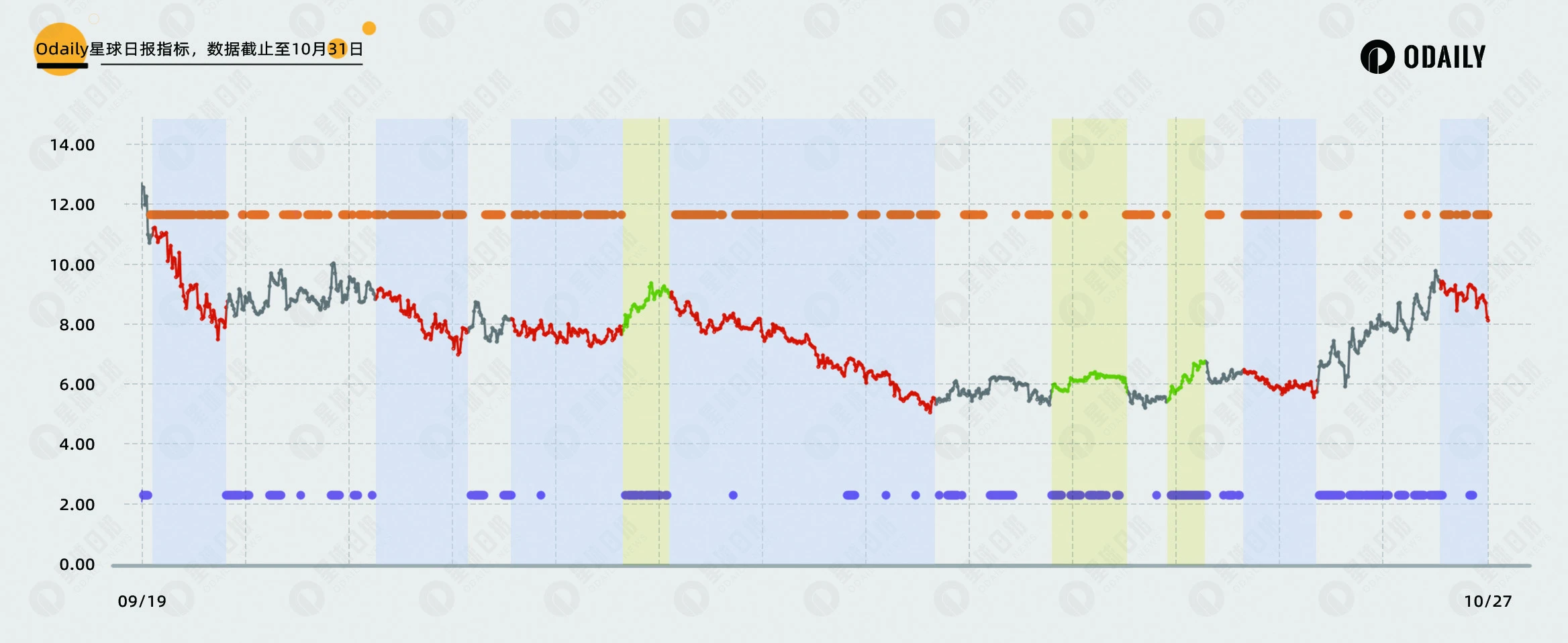
使用 Telegram 交易 Bot BananaGun 的代币 BANANA 作为研究对象,该代币买卖收税 4% ,本处将正负溢价的界限修改为± 2% ,其他条件与 UNIBOT 一致。
如何预测“收税代币”走势?交易所溢价给出答案

可以看出,正负溢价区间与价格走势的关联性依旧存在,但价格波动不是特别明显,或与 BANANA 是热门新币种有关。

相比 AIMBOT,BANANA 不收取转账费用,故溢价区间也再次变宽且更为显著,印证了结论⑤。

结论

综上,长期的溢价区间与价格走势存在明显关联,正溢价下跌而负溢价上涨,溢价的反转也是走势反转的信号之一,但还需结合代币本身的特性和交易所的情况进行甄别判断。
Letture associate

Why Is the World Nervous About Japan Raising Interest Rates?

In June 2026, the Bank of Japan raised its policy rate to 1%, marking its first hike to this level since 1995. While this rate remains low compared to global peers like the US and Europe, the move signals a profound shift for a nation that has been a global source of ultra-cheap funding for decades. Japan's long-standing near-zero or negative interest rates had facilitated massive "yen carry trades," where international investors borrowed low-cost yen to invest in higher-yielding assets worldwide, such as US tech stocks and emerging market bonds. This made Japan a critical, often overlooked, source of global liquidity. Japan's ultra-loose policy stemmed from structural challenges post-1990s asset bubble: aging demographics, chronic low inflation/deflation, and high public debt. Recent shifts, including sustained wage growth (exceeding 5% in recent years) and inflation consistently above the 2% target, have created a "wage-price spiral" possibility, prompting the policy normalization. The global market's concern lies not in the absolute rate but in the potential unwinding of the yen carry trade. As Japanese borrowing costs rise, the economics of these leveraged global investments change, potentially triggering deleveraging and capital outflows from risk assets. Market anxiety focuses on the end of a thirty-year consensus that Japan would perpetually provide cheap funding. Ultimately, the global impact will depend on the interplay with US monetary policy. While Japan is tightening, the significant interest rate differential with the US remains. The key future dynamic is whether simultaneous Japanese hikes and eventual US rate cuts will narrow this gap, forcing a major recalibration of global capital flows and asset pricing built on an era of abundant, cheap yen liquidity.

marsbit3 h fa

Why Is the World Nervous About Japan Raising Interest Rates?

marsbit3 h fa

Research Report Analysis: MRVL's Optical AI Booming, Why High Valuation Keeps Morgan Stanley's Star Analyst Sidelined?

Report Recap: MRVL Optical AI Boom - Why High Valuation Led Morgan Stanley's Star Analyst to Stay Neutral? Morgan Stanley analyst Joseph Moore maintained an "Equal-weight" (Neutral) rating on Marvell Technology (MRVL) on May 28, raising the price target from $172 to $195, below the trading price. This stance comes despite Marvell reporting a record quarter and significantly raising its full-year outlook (FY27 revenue ~$11.5B, up ~40%). Moore's neutral view is based on valuation. The $195 target implies ~40x CY2027 P/E. He contrasts MRVL with NVDA: both trade near ~$200, but Nvidia's forward EPS is more than double Marvell's. For MRVL's valuation to hold, it needs consistent earnings upgrades, proof of networking market share gains, or certainty on large-scale custom AI chip shipments—none of which are confirmed yet. Growth is driven by two pillars: **1) Optical Interconnect** (the faster runner): Moore raised FY27 growth expectations to >70%, with the optical module product line nearing a $1B annualized run rate. **2) Custom AI Chips** (the climber): Confidence in FY28 is growing, but a major new customer project only ramps in FY28, with no current revenue visibility. Key risks are the underperforming Storage, Enterprise, and legacy Networking segments. Moore acknowledges the real AI opportunity but believes the current price already reflects it. For the stock to work from here, investors need to see the optical business hit its targets, custom chips ramp as planned, and a recovery in the weaker business units.

marsbit4 h fa

Research Report Analysis: MRVL's Optical AI Booming, Why High Valuation Keeps Morgan Stanley's Star Analyst Sidelined?

marsbit4 h fa

Trading

Spot
Futures
活动图片