币价今日5月25日:比特币重回26000美元附近,竞争币币美股火爆市场担忧债务上限结果不利

Tap Chi BitcoinPubblicato 2023-05-25Pubblicato ultima volta 2023-05-25

Introduzione

美国众议院议长凯文麦卡锡在上午晚些时候的新闻发布会上表示,谈判代表在支出限制问题上仍存在分歧,并指责民主党人在谈判过程中为时已晚。麦卡锡先生还表示,他相信谈判小组可以在周三取得进展。

随着市场重新测试关键趋势线,比特币在 5 月 24 日暴跌。
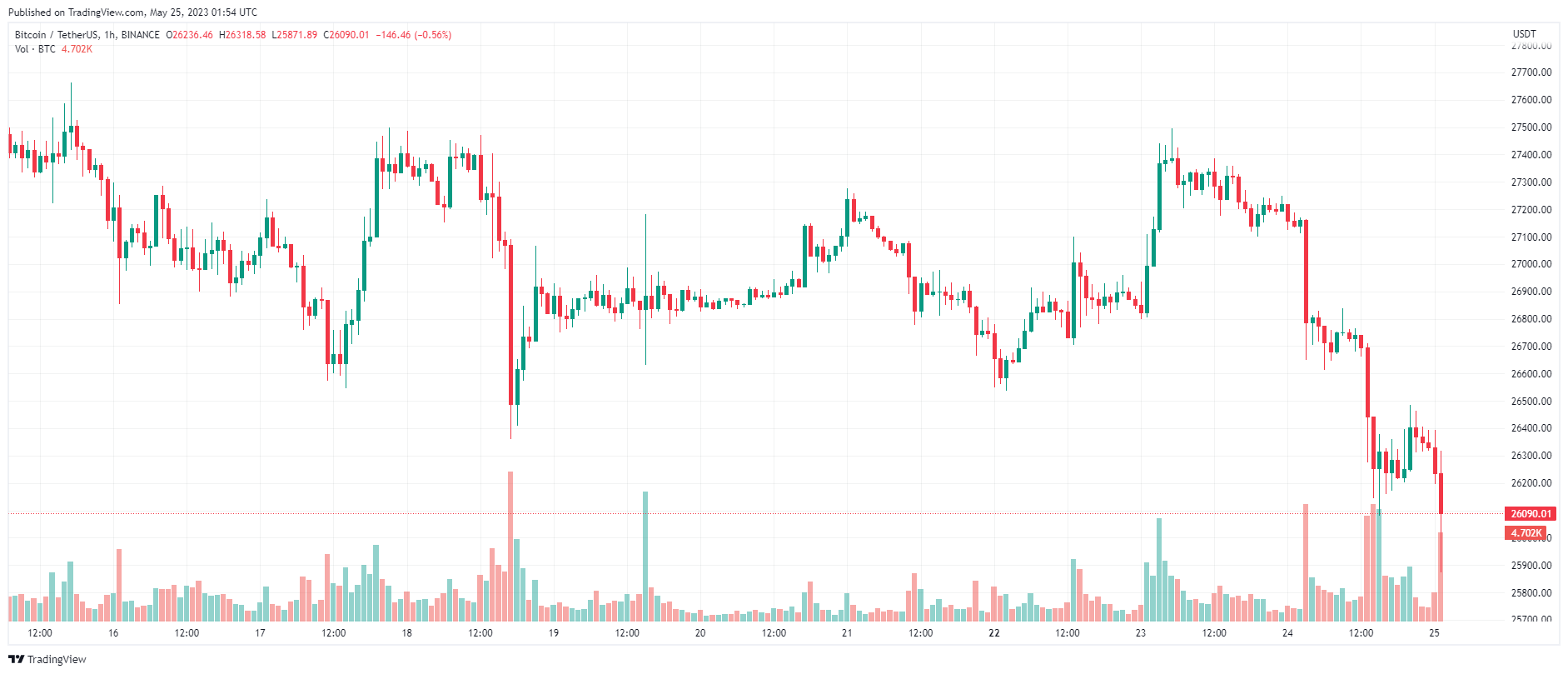
BTC价格走势图 – 1 小时 |资料来源: TradingView

道琼斯工业平均指数周三(5 月 24 日)连续第四个交易日下跌,因美国立法者难以就国家债务上限达成一致。

收盘,道琼斯指数下跌 255.6 点(或 0.77%)至 32,800 点。标准普尔 500 指数下跌 0.73% 至 4,115.2,纳斯达克综合指数下跌 0.61% 至 12,484.1。

美国众议院议长凯文麦卡锡在上午晚些时候的新闻发布会上表示,谈判代表在支出限制问题上仍存在分歧,并指责民主党人在谈判过程中为时已晚。麦卡锡先生还表示,他相信谈判小组可以在周三取得进展。

美国财政部长珍妮特耶伦此前曾警告立法者,6 月初违约的可能性“非常高”。耶伦周三指出,随着对美国历史上首次债务违约的担忧加剧,她已经看到“金融市场存在一些压力”。

50 Park Investments 首席执行官 Adam Sarhan 表示:“由于超买情况以及对 6 月 1 日临近时不利的债务上限结果的担忧,市场仍处于看跌状态。”。

美股徘徊在低位附近,最新公布的美联储会议纪要进一步暗示央行能否在 6 月再次加息的“不确定性”。

会议纪要表明,下次会议加息的决定将取决于即将发布的数据。

与此同时,周三(5 月 24 日)美元走强,黄金价格下跌,在美债违约迫在眉睫、谈判进入重要阶段的情况下,避险资金流向黄金。

收盘时,现货黄金合约下跌 0.6% 至每盎司 1,963.1 美元,此前上涨 0.5%。黄金期货下跌 0.4% 至每盎司 1,965.7 美元。

油价周三(5 月 24 日)上涨,此前美国原油库存意外下降,沙特阿拉伯能源部长警告提高了 OPEC+ 进一步减产的可能性。

尾盘,布伦特原油合约上涨 1.4 美元(折合 1.8%)至 78.24 美元/桶。 WTI 原油合约上涨 1.27 美元,或 1.7%,至每桶 74.18 美元。

来自TradingView的数据显示, BTC/ USD 在 25,890 美元处形成局部底部,这是自 5 月 12 日以来的最低水平。

最新的行动与一天前截然不同,当时上升趋势成为市场的主要故事,比特币的目标是 27,500 美元区域。

目前,交易员需要密切关注 100 天和 200 周移动平均线等重要水平。

“市场正在重新测试 200 周移动平均线。这是BTC多头需要保持的最重要水平,”Material Indicators总结道。
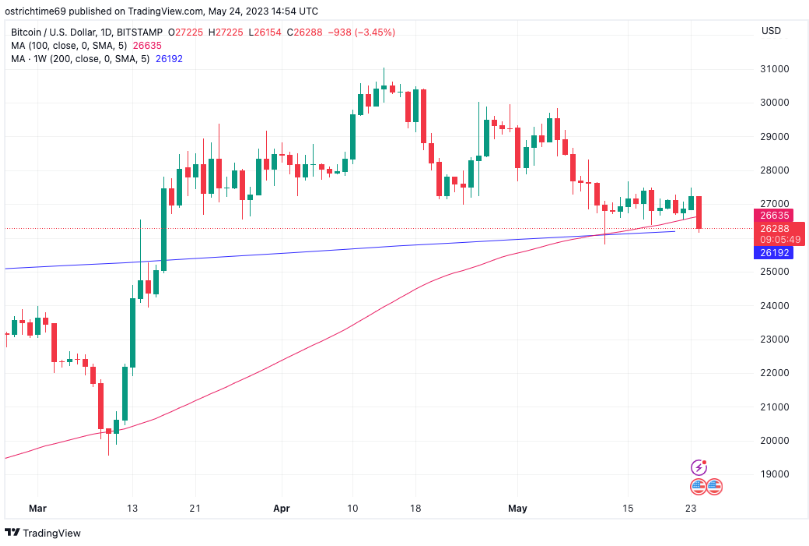
BTC/USD 烛台图表 – 1 天,100 天,200 周均线 |资料来源: TradingView

贸易公司 Eight 的创始人兼首席执行官 Michael van de Poppe 进一步指出了 200 周均线和均线。他将此描述为市场的“关键时刻”。

对于交易平台QCP Capital,现在是比特币多头谨慎的时候了。

BTC/ USD 处于不确定时期,增加了修正的机会。不过,最终结果将取决于债务上限问题的解决。

“尽管中期趋势走高,但BTC可能会迅速与其他宏观市场的暗示同步。然而,在‘无协议’的情况下,我们将轻松突破今年的高位。”

由于比特币当天修正超过 5%,竞争币火了。

领跌的是 PancakeSwap (CAKE)、Pepe (PEPE) 和 Fantom (FTM),这三个项目在短短 24 小时内损失了超过 10% 的价值。

KAVA (KAVA)、Injective(INJ)、ImmutableX(IMX)、Litecoin(LTC)、Sui(SUI)、Stacks(STX)、ApeCoin(Ape)、Aptos(APT)……均下跌了 6-9%。
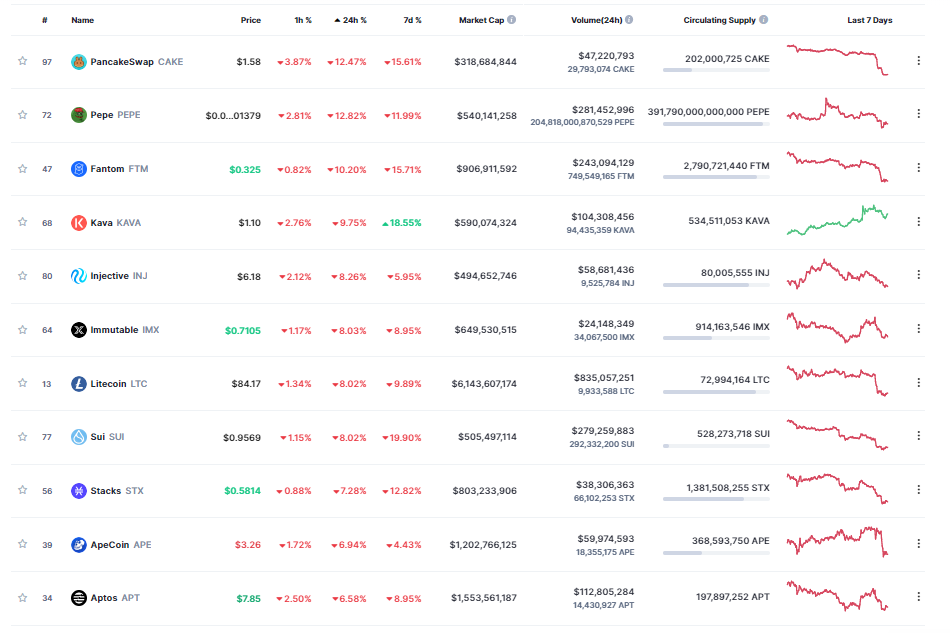
资料来源:Coinmarketcap

以太坊 (ETH) 经过几天的守势也正式跌破 1,800 美元大关。按市值计算的第二大数字资产已经建立了当地盘中底部 1,763 美元,跌幅超过 5%,目前交易价格约为 1,775 美元。
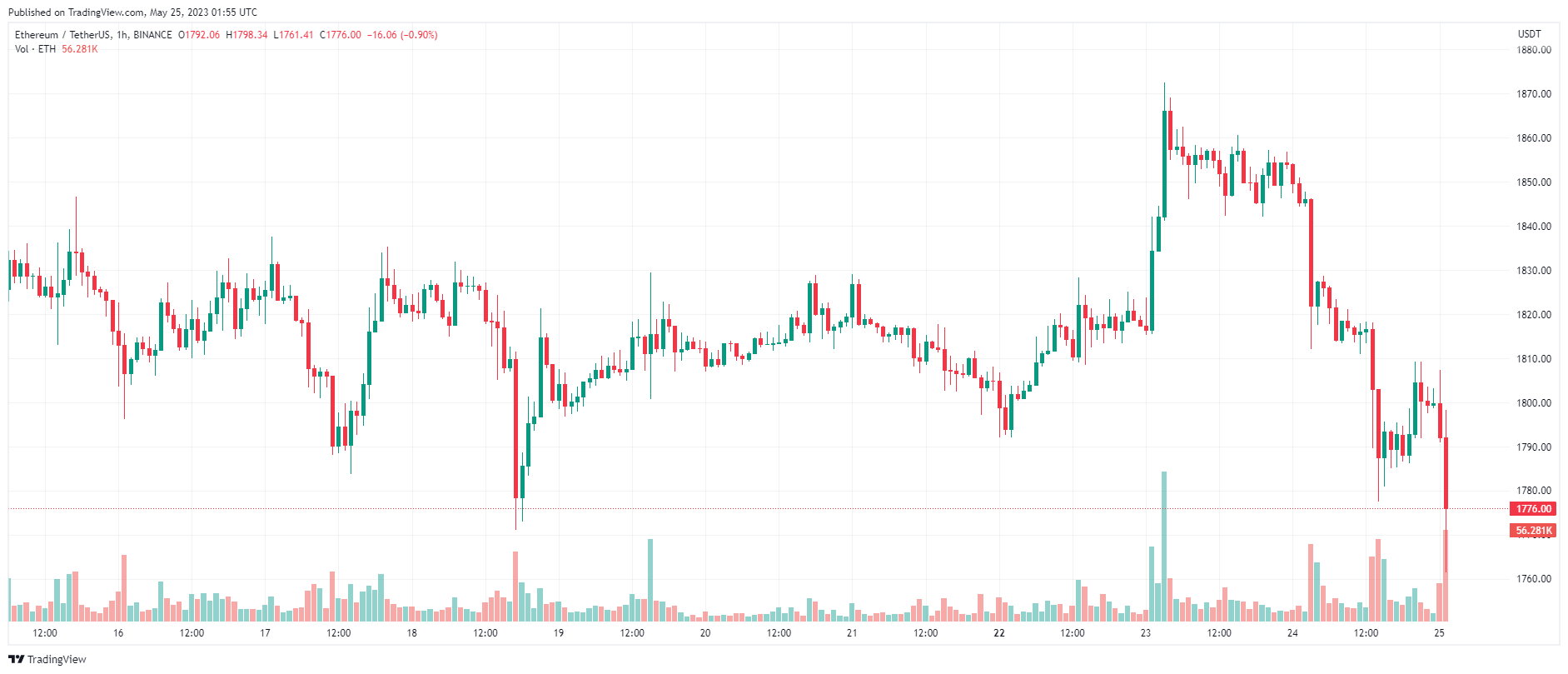
ETH价格图表 – 1 小时 |资料来源: TradingView

Letture associate

Observation of Data on the Top Six Cryptocurrency Protocols: Revenue Continues to Grow, So Why Aren't Token Prices Rising?

Despite generating impressive revenue, many top cryptocurrency protocols struggle to translate this success into token price appreciation. This analysis of six major protocols (Aave, Aerodrome, Hyperliquid, Pump, Sky, Uniswap) examines the disconnect, focusing on revenue generation, distribution, and tokenomics. While these protocols collectively earned over $726 million in the first half of 2026, token performance largely lagged due to factors like imbalanced token emissions, unclear value capture mechanisms, and equity-token separations that disadvantage holders. Key findings reveal that not all revenue is equal for token holders. Protocols differ significantly in how they allocate income. Hyperliquid, for instance, directs 100% of its revenue to holders via buybacks and burns, correlating with strong token performance. Others, like Aerodrome, Sky, and Uniswap, showed negative net token flows when accounting for high token emissions used for incentives, offsetting holder benefits. The article highlights two primary value capture methods: buybacks/burns and direct fee distribution (e.g., ve-tokenomics models). The analysis concludes that high revenue alone doesn't guarantee token growth. Investors must scrutinize a protocol's sustainable revenue sources, how that value is shared with token holders, and the associated token release schedules and supply pressures. The future points towards greater alignment between protocol success and tokenholder rewards, but only for projects that seriously address all three pillars: revenue, distribution, and emissions.

marsbit36 min fa

Observation of Data on the Top Six Cryptocurrency Protocols: Revenue Continues to Grow, So Why Aren't Token Prices Rising?

marsbit36 min fa

September 1st, A Major Chip Price Hike

On July 29, 2026 (US time), Qualcomm reported its Q3 FY2026 (Q2 CY) results. Revenue reached $9.95 billion, up 4% and beating estimates, but net profit fell 25% YoY to $2 billion. The "revenue up, profit down" trend is attributed to rising costs across semiconductor manufacturing, testing, packaging, and materials. In response, CEO Cristiano Amon announced price increases for all chip products, effective September 1, to pass on costs and restore historical profit margins. The stock fell over 5% in after-hours trading due to weaker-than-expected Q4 profit guidance. Qualcomm's core chip business (QCT) revenue was $8.5 billion, down 5% YoY. Handset revenue dropped 20% to $5.09 billion, reflecting a weak global smartphone market with declining shipments. In contrast, Automotive revenue surged 61% to $1.59 billion, marking 23 consecutive quarters of double-digit growth, and IoT revenue grew 9% to $1.83 billion. The licensing division (QTL) revenue was $1.28 billion, down 3%. Facing smartphone headwinds and a reduced component share in future iPhones, Qualcomm is aggressively diversifying. It is betting heavily on the data center AI market, maintaining a target of $5 billion in data center revenue for FY2027. The company completed the acquisition of AI software firm Modular to build an open software platform for generative AI. For Q4 FY2026, Qualcomm forecasts revenue between $9.7B and $10.5B, roughly in line with expectations. However, non-GAAP EPS guidance of $2.05-$2.25 fell short of the $2.36 analyst consensus. Management expects the chip price increases to gradually improve margins after September 1, but near-term profitability pressure from costs and the weak handset market persists.

marsbit36 min fa

September 1st, A Major Chip Price Hike

marsbit36 min fa

Trading

Spot
活动图片