Without Storytelling Power, Web3 Cannot Reach Vast Territories

marsbitDipublikasikan tanggal 2025-12-30Terakhir diperbarui pada 2025-12-30

Abstrak

Web3's failure stems not from a lack of ideas, but from its inability to resonate emotionally. Current Web3 narratives are dominated by abstract concepts—blockchains, infrastructure, protocols—which, while technically sound, lack humanity and fail to connect with ordinary people. Storytelling is crucial in Web3, more than in any other industry. Unlike topics like food or travel that evoke immediate sensory associations, Web3 feels distant and cold without emotional hooks. Projects often lead with technical explanations of how things work, neglecting the feelings they evoke—confusion, joy, relief—which are universal and relatable. Instead of listing features, effective communication starts with relatable user experiences. For example, rather than saying “this improves scalability,” describe the moment a user realizes a transaction completed instantly without waiting. Stories don’t dilute technical value; they prepare the audience to engage with complex ideas. By grounding concepts in human moments—struggles, breakthroughs, small victories—Web3 can become tangible and compelling. Practical experience shows that story-driven content, focusing on authentic user journeys, outperforms technical explanations in engagement and comprehension. The key is making Web3 feel human, not just functional.

Written by: Noir

Compiled by: Chopper, Foresight News

The failure of Web3 has never been due to a lack of creativity. In fact, its problem lies in its inability to resonate with people.

Most of the current Web3 narratives are filled with abstract concepts: public chains, infrastructure, protocols, layers... These terms are not wrong! But they lack any "human touch," making it impossible for ordinary people to feel a connection.

This is precisely where the value of storytelling comes in. In the Web3 field, the importance of storytelling far exceeds that of any other industry.

Web3 Is Built on Logic but Lacks Emotional Resonance

In other fields, people already come with a cognitive context. For example: talking about food can stimulate your appetite; discussing fitness can make you visualize progress; mentioning travel will immediately bring to mind the scenery of the destination.

But Web3 simply cannot do this. Creators and project teams are always painstakingly explaining how amazing those invisible systems and intangible processes are.

Without stories as a foundation, all of this seems distant and cold.

In short: utterly boring. Clearly, no one will pay for something boring.

Stories Are the Gateway for Ordinary People to Enter Web3
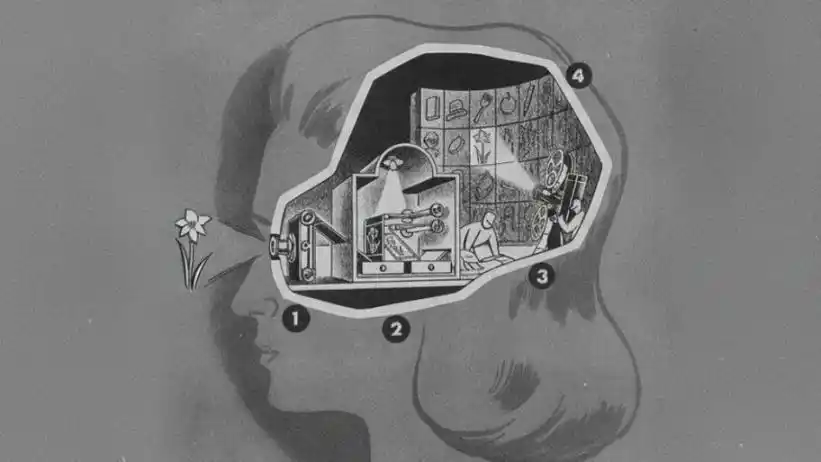
Most creators and project teams are eager to explain upfront how something works. But they forget that a good story always begins by describing how it feels.

Confusion, laughter, relief, vulnerability... these emotions are completely absent in Web3 narratives.

Friend, if this trend continues, the outcome is self-evident. Even if people don’t understand the technology, these emotions are universal. The key is that when someone recognizes familiar feelings in a story, they will instinctively follow you to hear your subsequent professional explanations.

Stop Listing Features; Talk More About User Experience Moments

Compare two ways of expression, and the difference is clear.

Feature-first version: This feature improves the system’s scalability by optimizing throughput.

There’s nothing wrong with this statement, but it’s forgettable, and... what does it even mean?😂

Story-first version: I kept refreshing the page, mentally prepared to wait again... only to find that the transaction had already been completed.

The same core information, but the latter has more warmth and is easier to understand.

Storytelling isn’t about downplaying technology; it’s about preparing the listener’s brain to receive complex information.

Got it? I hope you understand. Let’s continue...

Complex Concepts Need Real-Life Scenarios to Land
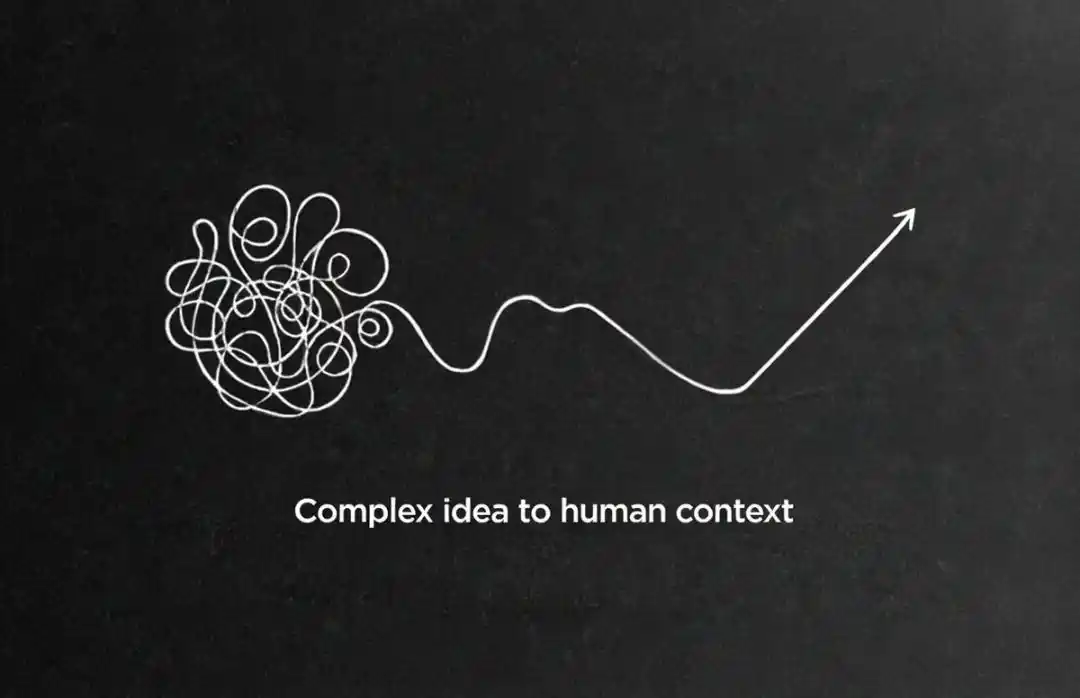
When faced with complex problems, people ask themselves: "What does this have to do with me?"

And stories can subtly provide the answer. All it takes is a simple real-life scenario to make the connection.

You don’t actually need to explain every detail. You just need to showcase a key moment: a frustrating bottleneck, a moment of relief, a small victory.

That’s enough to make a complex concept feel real and tangible.

Practical Validation: This Methodology Really Works
The core of my work is creating story-centric video content for Web3 bounty campaigns and sponsors.

Over time, I’ve noticed a pattern: the videos that win are never the ones with the most hardcore technical explanations, but those that begin with moments full of human touch.

I don’t start by listing features or explaining principles. Instead, I focus on these scenes: the initial awkwardness of using a product for the first time; the stumbling before understanding a function; the sudden clarity when everything finally connects.

This narrative approach always keeps viewers engaged longer and helps them understand faster. This is also why my videos stand out in bounty competitions.

It’s not because I explain more technology, but because I make complex concepts feel human and emotionally warm.


Pertanyaan Terkait

QWhat is the main reason for Web3's failure according to the article?

AWeb3's failure is not due to a lack of creativity, but rather its inability to resonate with people emotionally. Its narratives are filled with abstract concepts that lack a human touch, making it difficult for ordinary people to connect.

QHow does the article suggest making Web3 concepts more relatable?

AThe article suggests using storytelling to make Web3 concepts more relatable. Instead of listing technical features, creators should focus on describing the user's experience and emotional moments, such as confusion, joy, or relief, to create a connection.

QWhat is the difference between 'function-first' and 'story-first' approaches as described in the article?

AThe 'function-first' approach focuses on explaining technical details, like 'optimizing throughput to improve system scalability,' which can be boring and hard to understand. The 'story-first' approach describes a relatable user experience, such as 'I kept refreshing the page, expecting to wait... only to find the transaction was already complete,' making it more engaging and understandable.

QWhy are emotions like confusion or joy important in Web3 storytelling?

AEmotions like confusion or joy are important because they are universal and relatable. When they recognize familiar feelings in a story, people are more likely to engage and be open to understanding the subsequent technical explanations.

QWhat practical evidence does the author provide to support the effectiveness of storytelling in Web3?

AThe author, who creates story-focused video content for Web3 bounty campaigns and sponsors, found that winning videos are not the most technically detailed but those that begin with human, emotional moments. These videos, which focus on user experiences like initial struggles or moments of clarity, keep viewers engaged longer and help them understand complex concepts faster, leading to success in bounty competitions.

Bacaan Terkait

Hoskinson Membantah Rumor Keluar dari Cardano: 'Saya Tidak Meninggalkan'

Pendiri Cardano Charles Hoskinson membantah rumor yang menyatakan ia akan meninggalkan ekosistem Cardano. Dalam siaran langsung pada 4 Juni, ia menjelaskan bahwa dirinya hanya mengurangi komunikasi publik, bukan mengundurkan diri. Pernyataan ini muncul setelah postingannya di X tentang "istirahat sejenak" memicu kekhawatiran komunitas. Hoskinson menyoroti lingkungan media sosial yang sangat beracun, terutama di X, di mana sekitar 30% balasan terhadap cuitannya bersifat permusuhan dan kasar. Ia mengakui platform tersebut masih penting untuk informasi crypto, namun dampak psikologisnya terlalu besar. Ia menegaskan bahwa fokusnya tetap pada pengembangan teknologi seperti RealFi, Bitcoin yang dapat diprogram, dan Midnight, bukan pada kenaikan harga ADA. Ia menggambarkan "dua sisi Cardano": kemajuan teknis dan penelitian yang signifikan sejak 2021, versus kinerja harga yang dianggap gagal oleh banyak pihak. Kesenjangan ini menciptakan disonansi kognitif. Hoskinson menyerukan perlunya roadmap baru, meninggalkan X sebagai forum utama, serta mereformasi insentif dan budaya manajemen, termasuk mengkritik struktur Yayasan Cardano. Hoskinson menyatakan akan mengambil jeda dari video publik, wawancara, dan media sosial sambil tetap mengerjakan Midnight. Ia berencana kembali dengan proposal untuk masa depan Cardano, dengan syarat mendapat perlakuan yang hormat. Pada saat berita, ADA diperdagangkan pada $0.1589.

bitcoinist38m yang lalu

Hoskinson Membantah Rumor Keluar dari Cardano: 'Saya Tidak Meninggalkan'

bitcoinist38m yang lalu

Anthropic Meluncurkan IPO: Keajaiban Bisnis atau Gelembung Valuasi?

Anthropic, perusahaan AI terkemuka, secara diam-diam telah mengajukan aplikasi IPO dengan target listing pada Oktober mendatang. Perusahaan ini baru saja menyelesaikan putaran pendanaan H dengan valuasi $965 miliar, dan diperkirakan akan mencapai $1-2 triliun saat IPO, menjadikannya perusahaan dengan valuasi pra-IPO tertinggi di dunia. Banyak yang mempertanyakan apakah hal ini merupakan gelembung, mirip dengan gelembung dot-com tahun 2000. Namun, terdapat perbedaan mendasar. Tidak seperti perusahaan internet masa lalu yang hanya bergantung pada visi, Anthropic memiliki landasan bisnis yang kuat: pendapatan tahunannya melonjak dari $1 miliar (awal 2025) menjadi $47 miliar (Mei 2026), dengan target $100 miliar di akhir tahun. Perusahaan ini bahkan telah mencetak laba operasional positif. Dengan sekitar 3000 karyawan, produktivitas per karyawannya melebihi $1 juta. Kliennya termasuk 8 dari 10 perusahaan teratas Fortune, dan lebih dari 1000 perusahaan besar menghabiskan lebih dari $1 juta per tahun untuk layanan Claude. Valuasinya didukung oleh model bisnis SaaS dengan pendapatan berlangganan yang stabil dan tingkat retensi tinggi, sehingga dinilai dengan kelipatan Price-to-Sales yang wajar. Fenomena ini mencerminkan pergeseran ekonomi dari ekonomi berbasis karbon (manusia) menuju ekonomi hibrida berbasis karbon dan silikon (kecerdasan buatan dan komputasi), di mana investasi dalam kemampuan AI dan daya komputasi menjadi pengungkit utama daya saing perusahaan.

链捕手2j yang lalu

Anthropic Meluncurkan IPO: Keajaiban Bisnis atau Gelembung Valuasi?

链捕手2j yang lalu

Near Kembali ke Panggung AI: Transformasi ke Blockchain Publik karena "Kesulitan Gaji", Agen AI dan Privasi Jadi Kisah Pertumbuhan Baru

**Near Kembali ke Dunia AI: Dari Masalah Gaji Jadi Blockchain Publik, Fokus pada Agent dan Privasi** Near, yang didirikan oleh Illia Polosukhin (salah satu penulis makalah Transformer AI), awalnya adalah startup AI yang beralih membangun blockchain publik pada 2018. Penyebabnya adalah kesulitan membayar gaji developer global secara lintas batas menggunakan sistem pembayaran tradisional atau blockchain awal yang mahal dan lambat. Setelah melalui masa sebagai blockchain berkinerja tinggi dengan teknologi sharding dan meraih momentum di era *cross-chain*, Near kini kembali ke akar AI-nya. Momen kunci adalah ketika Polosukhin diundang oleh CEO Nvidia, Jensen Huang, pada Maret 2024, mengingatkan dunia tentang "darah AI" asli Near. Dengan fokus baru pada **Near Intents (Niat)** dan **Transaksi Privasi**, Near membidik pertumbuhan berikutnya: 1. **Near Intents**: Menyederhanakan pengalaman *cross-chain* dan DeFi. Pengguna atau AI Agent cukup menyatakan keinginan (misal, "tukar BTC jadi ETH"), dan jaringan *solver* akan menemukan rute terbaik. Mekanisme ini telah menangani **lebih dari $200 miliar** volume transaksi *cross-chain* dan menghasilkan **$34 juta** pendapatan biaya, dengan mayoritas (70%) datang dalam dua kuartal terakhir. 2. **Transaksi Privasi (*Confidential Swaps*)**: Menanggapi kebutuhan pasar akan privasi untuk menghindari MEV dan kebocoran strategi. Dalam 30 hari terakhir, transaksi privat menyumbang **41.63%** dari total volume transaksi di Near ($87 juta dari $209 juta). Fitur ini berpotensi menarik institusi tetapi juga membawa risiko perhatian regulator. Dengan kombinasi latar belakang pendiri di AI, infrastruktur *intent* yang ramah pengguna dan Agent, serta penawaran transaksi privat, Near berupaya membangun cerita pertumbuhan baru di persimpangan blockchain dan AI.

marsbit4j yang lalu

Near Kembali ke Panggung AI: Transformasi ke Blockchain Publik karena "Kesulitan Gaji", Agen AI dan Privasi Jadi Kisah Pertumbuhan Baru

marsbit4j yang lalu

Trading

Spot
Futures
活动图片




