This American Earns $250 Million a Year from Podcasting, Luo Yonghao Is Learning from Him

marsbitDipublikasikan tanggal 2025-12-23Terakhir diperbarui pada 2025-12-23

Abstrak

Joe Rogan, a comedian and UFC commentator, hosts "The Joe Rogan Experience," the world's largest podcast. Known for its long-form, unscripted conversations, the show has featured high-profile guests like Elon Musk, Donald Trump, and Jensen Huang. Musk’s 2018 appearance, where he smoked a joint, went viral with over 69 million views and impacted Tesla’s stock. In 2020, Spotify secured exclusive rights to the podcast for $200 million, later renewing in 2024 for $250 million without exclusivity. Rogan’s informal, curiosity-driven style attracts audiences distrustful of mainstream media, particularly young men. His interview with Trump during the 2024 election, viewed over 50 million times, was credited as a key factor in Trump’s victory. In China, figures like Luo Yonghao are attempting similar formats, but face challenges due to shorter content preferences and less mature monetization. Rogan’s influence is coupled with controversy, including spreading misinformation on COVID-19 vaccines and conspiracy theories, highlighting the tension between free speech and responsible broadcasting.

Written by: David, Deep Tide TechFlow

You might not listen to podcasts, but you must have seen this scene.

In 2018, a picture of Musk holding a hand-rolled cigarette, surrounded by smoke, spread across the internet, becoming one of his most iconic and viral moments.

However, few people know where this scene took place, and even fewer care about who was sitting opposite him.

Actually, this was a recording session for an American podcast.

The host handed Musk a cigarette mixed with marijuana and tobacco. Musk asked, "This is legal, right?" and then took a puff.
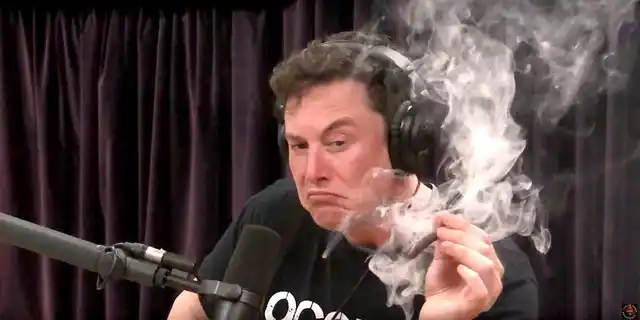
The next day, Tesla's stock price dropped by 9%.

To this day, this episode has over 69 million views on YouTube, making it the most-watched episode in the podcast's history.

What kind of show, what kind of host, could make the world's richest man do such a thing on camera?

During the 2024 US presidential election, Trump also spent three hours on this show for an interview. In his victory speech, he specifically thanked the host by name; two weeks ago, NVIDIA CEO Jensen Huang also sat in this studio, talking about AI and the chip war for two and a half hours, garnering over 2.8 million views within two weeks.

His name is Joe Rogan. His show, "The Joe Rogan Experience," is currently the world's largest podcast.

From Comedian to Podcast King, A Show Worth $250 Million

Joe Rogan's podcast influence is built on an unconventional personal resume.

Comedian, reality show host, UFC commentator. Put these three identities together, and it doesn't seem like the profile of someone who would create the world's largest podcast.

He is not a traditional interview show host, not the kind of straight-laced, classically trained media personality. His background is actually in entertainment and the fighting world, not journalism.

But it is precisely this "unconventional" path that allowed him to create something completely different from traditional media; his ability to connect and his viewership far surpass many professional media programs.
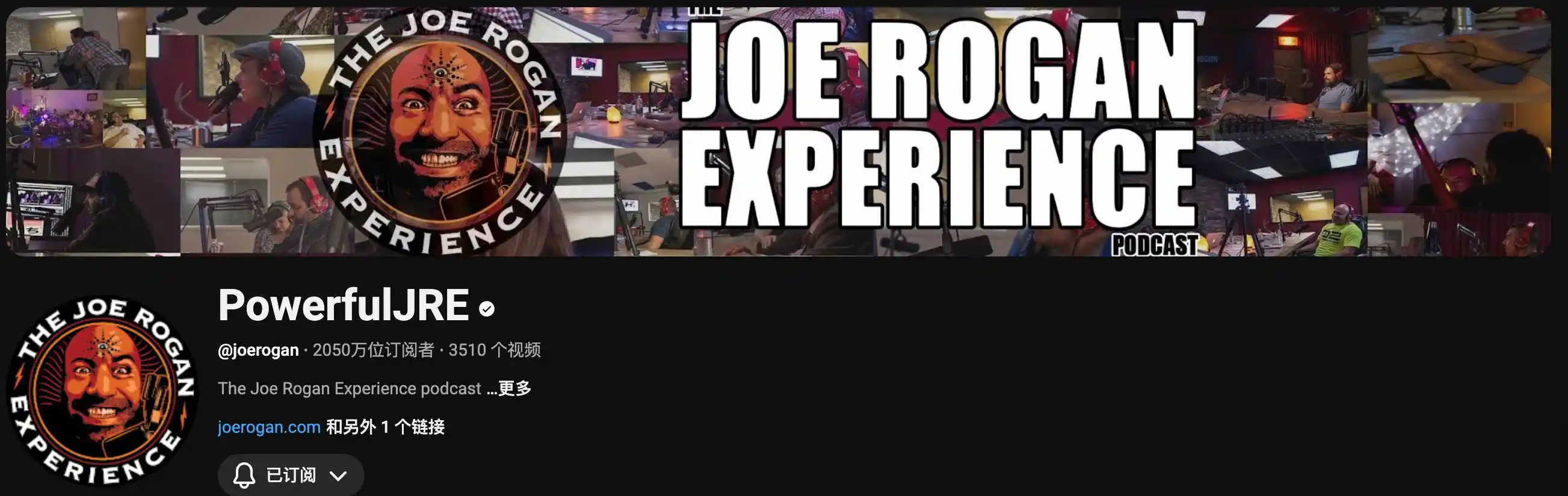
Initially, Joe Rogan was a comedian, doing stand-up in Boston clubs in the 90s. Later, he moved to Los Angeles, acted in sitcoms for a few years, and hosted a reality show called "Fear Factor."

The show followed a shock-value format, making contestants eat bugs, jump from tall buildings, relying on gross-out and刺激 to boost ratings. In today's short-video environment, it would definitely be categorized as vulgar but high-traffic.

But what really made him break through was another job.

Starting in 1997, he worked as a commentator for the UFC, sitting cageside at the Octagon to explain mixed martial arts matches, a job he held for over twenty years. This work solidified his standing in the fighting community and accumulated a large loyal male audience for him.
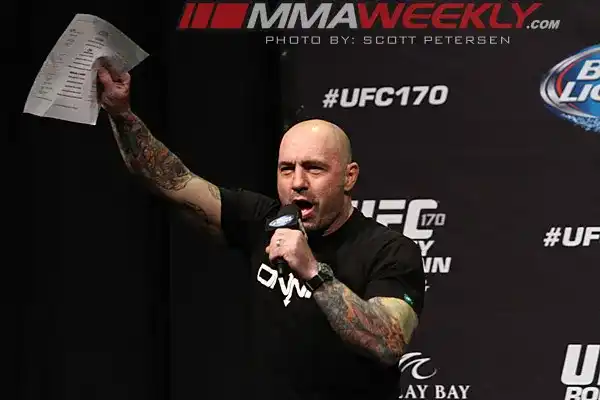
In 2009, he started recording podcasts at home.

Like the starting point for many podcasts, the equipment was simple, there were no sponsors, and no business plan. But each one lasted two to three hours, chatting with friends or guests about anything.

Looking back, all those messy previous experiences actually came in handy.

Having been a comedian, he knew how to make conversations interesting and rhythmic. Having hosted a reality show, he was also comfortable being relaxed on camera. Being a UFC commentator for twenty years meant this audience was already used to listening to him talk.

Furthermore, he isn't an expert in any single field, which gives him an unconventional advantage:

He can unabashedly ask "dumb questions."

Facing a physicist, he'll ask about the most basic concepts; facing a politician, he doesn't press for policy details, but talks about "what you personally really think." This style is something you simply don't see in traditional media.

Television interviews have strict time limits, hosts must quickly get to the point. News interviews emphasize confrontation, journalists must dig out what the interviewee doesn't want to say.

Rogan's show does the opposite, giving you three hours, unedited, uninterrupted, talking about whatever you want.

The result is that many celebrities say things on his show they wouldn't say elsewhere. Musk smoking marijuana is just one example. Zuckerberg came on to talk about MMA training, looking more like a normal person than in any Congressional hearing.

Slowly, Joe Rogan's podcast became the go-to place for celebrities to "show their real side." Traditional media interviews are performances; here, they can be themselves.

As more and more celebrities appeared, the show became increasingly valuable.

In 2020, Spotify bought the exclusive distribution rights to "The Joe Rogan Experience" for $200 million, the largest deal in podcast industry history at the time.

In 2022, Rogan faced a media storm for negative comments about certain COVID-19 vaccines on his podcast, leading to several musicians pulling their music from Spotify in protest.

Right at this critical juncture, another video platform, Rumble, publicly offered $100 million to poach his podcast, but Rogan didn't bite.

In 2024, he renewed his licensing deal with Spotify, but the price rose to $250 million.
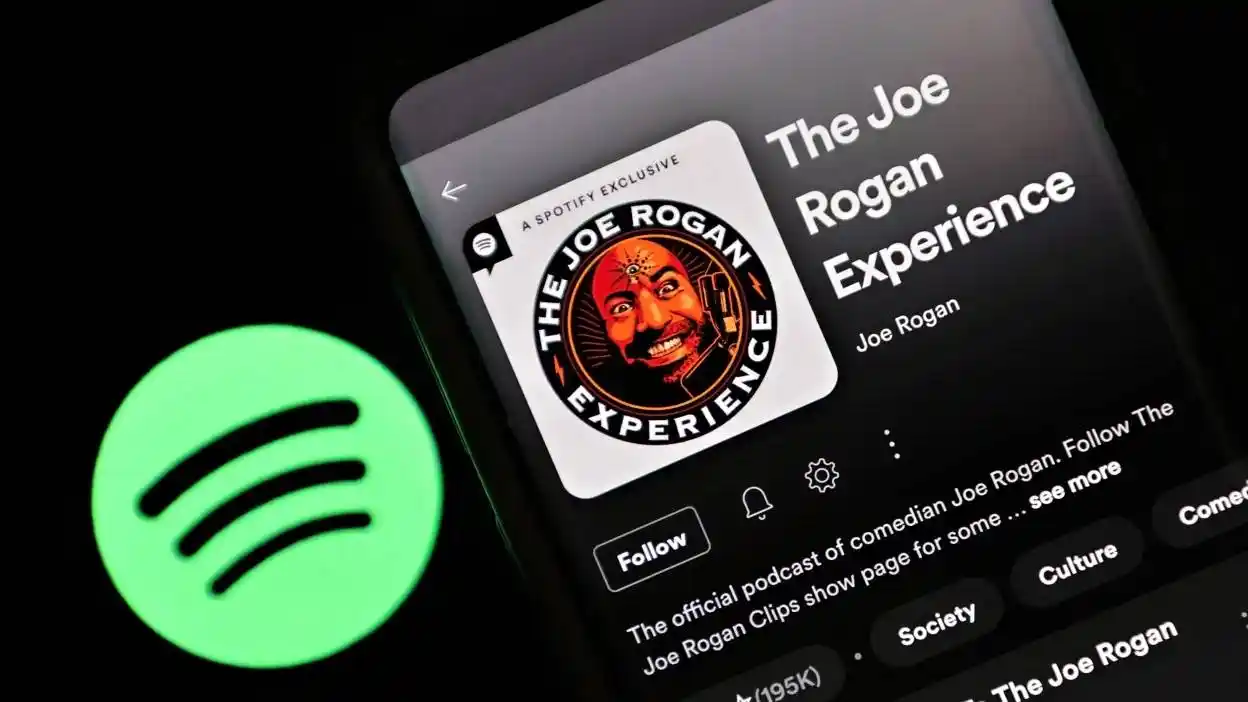
Moreover, this time he no longer accepted exclusivity; the show returned to being available simultaneously on Spotify, YouTube, and Apple Podcasts. Spotify paid more money but got fewer rights.

In 2025, "The Joe Rogan Experience" simultaneously topped the annual podcast charts on Spotify, Apple Podcasts, and YouTube for the first time.

A chat show that started recording at home sixteen years ago is now valued higher than many traditional media companies.

Podcast Chats, Precise Vote Pulling

On October 25, 2024, during the final stretch of the election campaign, Trump sat down in Rogan's Austin studio.

This episode lasted a full three hours. After recording, Trump rushed to a campaign rally in Michigan, making thousands of supporters wait an extra three hours.

What did they talk about for three hours?

UFOs. Trump said he interviewed fighter pilots who told him they saw spherical objects moving four times faster than an F-22 fighter jet.

The beds in the White House. He genuinely described his feelings the first time he walked into the Lincoln Bedroom, thinking the bed was huge because Lincoln was six foot six.

Tariffs. Trump also proposed replacing income tax entirely with tariffs. Rogan asked: "Are you serious?"

Trump said: "Of course, why not? In the 1880s, when our country was at its richest, it was all thanks to tariffs."

These topics seem unrelated, but they share one commonality:

They are things traditional political interviews would absolutely never discuss.

TV networks ask about policy details, press on controversial statements, and stick to time limits. No serious political journalist would let a presidential candidate spend ten minutes talking about UFOs and Lincoln's bed.
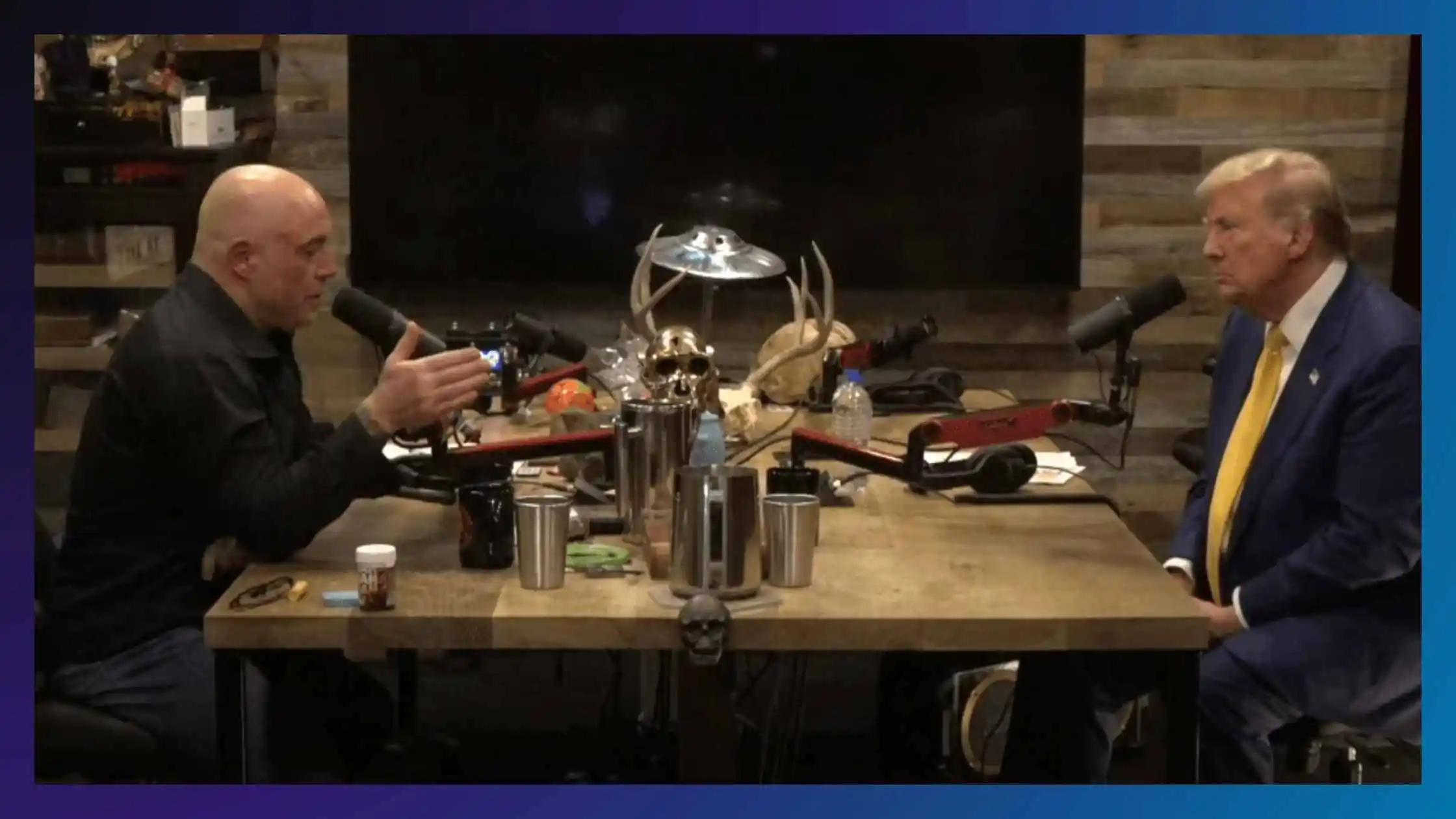
But this is precisely the characteristic of Rogan's show. Three hours, no interruptions, no set agenda, talk about whatever you want.

The audience sees not a candidate constrained by media frameworks, but a complete Trump: curious, with outrageous ideas, capable of casual conversation.

Rogan's own comment actually sums up the show's effect well:

"You say a lot of crazy things, but when traditional media takes those things and makes news out of them, it actually makes you more popular. Because people are tired of that scripted politician-speak. Even if they disagree with you, at least they know this person is real."

This sense of authenticity is especially effective with Rogan's audience.

Data from foreign research institutions shows that 80% of the show's listeners are male, with over half aged 18 to 34. Politically, 35% identify as independent, 32% lean Republican, and 27% lean Democratic. These people share a common characteristic:

They don't watch traditional TV news much, generally distrust mainstream media, but they spend hours each week listening to Rogan chat.

In other words, this is a group that is very hard to reach through traditional political communication. And Trump spending three hours sitting across from a host they trust, speaking in a relaxed, informal manner, was far more effective than any campaign ad.

After the episode went live, YouTube views quickly surpassed 50 million.

The entire video was chopped into countless clips, spreading across X, TikTok, and Instagram. Every soundbite, every outrageous statement, became standalone content, reaching people who would never click on a three-hour video.

Meanwhile, Trump's presidential election opponent, Harris, did not go on the show.

Reportedly, both sides talked, and Rogan publicly invited her. But Harris's team wanted to keep the duration under an hour, which Rogan refused. He said on his show:

"It's not that I didn't want to invite her, it's that she didn't want to come."

For comparison, Trump's episode garnered over 50 million views, while Harris's appearance on another podcast, "Call Her Daddy," got 600,000 views.

The election ended, Trump won. In his victory speech, UFC President Dana White specifically thanked Joe Rogan, listing him as one of the功臣 (key contributors) to the win.

A podcast being named in the thank-you list of a presidential victory speech is a first in American political history.

Chinese Mirror, Attempts by Luo Yonghao and Others

Can Joe Rogan's model be replicated in China?

Some are trying.

In June 2025, Luo Yonghao revealed at an AI conference that DeepSeek founder Liang Wenfeng suggested he leverage his "talent for speaking." A few months later, he launched a video podcast on Bilibili called "Luo Yonghao's Crossroads," positioning it as a counterpart to Joe Rogan and Lex Fridman.
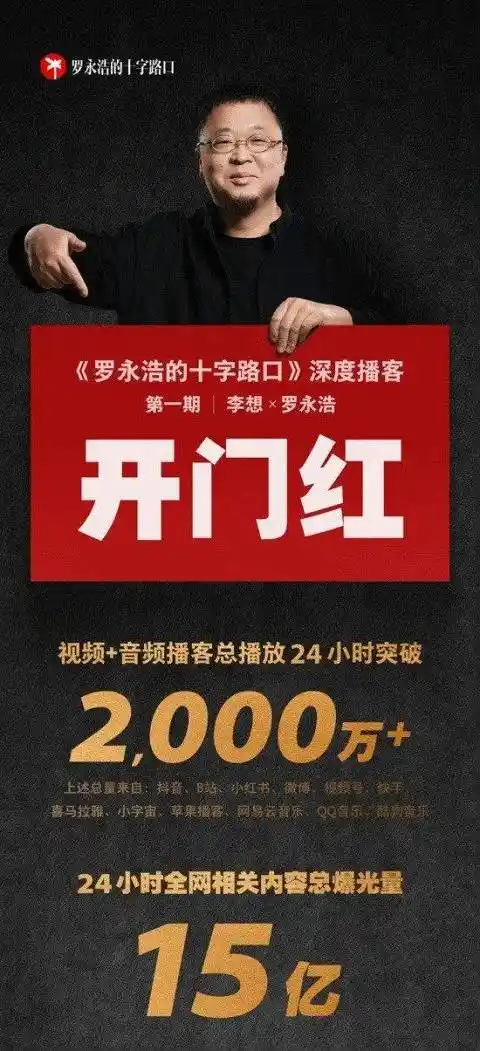
The show format is very similar to The Joe Rogan Experience: long conversations, minimal editing, three to five hours per episode.

The first guest was Li Xiang, founder of Li Auto. The two talked for four hours, from childhood trauma to his relationship with Wang Xing, daring to ask and answer anything. The reaction in the comments was:

In the short-video era, this kind of "long and satisfying super large cup" is too rare.

Luo Yonghao isn't the only one. Chen Luyu, Yu Qian, Li Dan, Yang Di—these famous talk show hosts have纷纷入驻 (flocked to) B站 (Bilibili) to do video podcasts. B站 has also made heavy investments, pouring 10 billion-level traffic support into it during the summer, providing free recording venues in Beijing, Shanghai, Guangzhou, and Hangzhou, and planning to launch AI creation tools专属 (exclusive) for podcasts.

It seems that China's video "podcast元年 (first year)" has finally arrived, but it's not that simple.

When Luo Yonghao was in conversation with Tim from '影视飓风' (Film Tornado), he mentioned his video views are around 20-30 million, while Tim believed "reaching 100 million counts as火 (being popular)." This actually reveals a structural problem:

In China's internet traffic ecosystem, long-form content is inherently at a disadvantage.

Over the past few years, users have been trained by short videos into the habit of "watching a three-minute summary of a movie." The algorithms of Douyin (TikTok) and Kuaishou reward completion rates; a three-hour video has almost no place in the recommendation pool.

More ironically, the highlight moments of many long video podcasts are often spread through几十秒 (tens-of-seconds) long clips on Douyin and Xiaohongshu.

At the same time, monetization is also a challenge.

The US podcast industry's advertising revenue exceeded $2 billion in 2024, with top hosts able to secure exclusive contracts worth hundreds of millions of dollars. In China, a podcast brand with nearly 500,000 subscribers might charge less than 40,000 RMB for a single host-read ad, with annual net income possibly only around 100,000 RMB.

YouTube has a mature AdSense revenue sharing system; the longer the video, the more ad slots, the higher the income—this incentivizes long-form content through its profit mechanism. B站's monetization capability is far from reaching this level.

There is an even more fundamental problem:

A large part of Rogan's influence comes from his ability to host people like Trump, Musk, and Huang Renjun, and these people are willing to say things on his show they wouldn't say elsewhere.

This status as an "information首发地 (first release location)" requires long-accumulated trust and a unique media environment.

Luo Yonghao can invite Li Xiang, He Xiaopeng, Zhou Hongyi—this is already the top-tier lineup in China's tech circle. But there are natural boundaries regarding the openness of topics.

So, can Joe Rogan's model be replicated in China?

The form can be learned, but the soil is different.

Controversy and Boundaries

Writing this far, there's an unavoidable question: Joe Rogan is a controversial figure.

In 2022, he caused a storm by questioning the effectiveness of COVID-19 vaccines on his show. Spotify did not drop Rogan, but added "content advisory" labels to all episodes discussing COVID-19 and removed over 70 old episodes.

This wasn't his first brush with trouble.

In 2024, he discussed the origins of AIDS with a guest on his show, spreading some claims that have been refuted by the medical community, drawing public criticism from the American Foundation for AIDS Research.

A Yale University study found that among the top ten most popular podcasts in the US, eight had spread erroneous or misleading information about climate change, with Rogan's show being among them.

His show is also a hub for various American conspiracy theories.

From the JFK assassination to UFOs, from big pharma to government surveillance, he maintains an "open attitude" towards these topics. Critics argue this provides a platform for misinformation, while his supporters believe it challenges mainstream narratives.

In July 2025, he posted on X:

"Salute to those who still don't believe in conspiracy theories, your ability to hold your ground is admirable." This post received over 15 million views.

This is also the complexity of Joe Rogan.

He is not a person of consistent stances. For example, supporting same-sex marriage, marijuana legalization, and universal healthcare are typical liberal positions. But he also questions mainstream media and provides a platform for controversial figures, which also makes him a darling of conservatives.

The reason his show has influence is precisely because he doesn't belong to any single camp. Those who have lost trust in mainstream media find an "anti-establishment" alternative in him.

But the same特质 (trait) also makes him a node for spreading misinformation. When someone with an audience of hundreds of millions says "I'm just asking questions," the questions themselves shape public perception.

This is also the inherent tension of the podcast medium:

Its charm lies in being real, relaxed, and unlimited, but when its influence reaches a certain scale, "unlimited" itself becomes a problem.

Joe Rogan is a product of this era, and also a mirror of it.

Pertanyaan Terkait

QWho is Joe Rogan and what is the name of his podcast?

AJoe Rogan is a comedian, UFC commentator, and the host of 'The Joe Rogan Experience', which is currently the world's largest podcast.

QHow much did Spotify pay for the exclusive distribution rights to 'The Joe Rogan Experience' in 2020 and 2024?

ASpotify paid $200 million for the exclusive rights in 2020 and renewed the deal for $250 million in 2024, though the show was no longer exclusive.

QWhat was a significant political impact of Joe Rogan's podcast during the 2024 U.S. election?

ADonald Trump appeared on the podcast for a three-hour interview, which garnered over 50 million views on YouTube. Trump later thanked Joe Rogan in his victory speech, marking the first time a podcast was acknowledged in a U.S. presidential election victory speech.

QWhat are some of the controversies surrounding Joe Rogan and his podcast?

AJoe Rogan has faced controversy for spreading misinformation, including questioning the efficacy of COVID-19 vaccines, discussing debunked theories about AIDS origins, and hosting episodes that spread climate change misinformation and conspiracy theories.

QHow is Luo Yonghao (罗永浩) in China attempting to replicate Joe Rogan's success?

ALuo Yonghao launched a video podcast on Bilibili called 'Luo Yonghao's Crossroads', featuring long-form, minimally edited conversations of 3-5 hours with guests like Li Xiang, founder of Li Auto, in a style similar to Joe Rogan's.

Bacaan Terkait

Panduan Penggunaan AI dari CEO Y-Combinator: Masa Depan Milik Mereka yang Membangun Sistem Berbunga Majemuk

Panduan Penggunaan AI dari CEO Y Combinator: Masa Depan Milik Mereka yang Membangun Sistem Majemuk Ketika banyak orang masih melihat AI sebagai alat obrolan yang lebih pintar, CEO Y Combinator Garry Tan telah mengubahnya menjadi sistem operasi pribadi. Inti produktivitas di era AI telah berubah: model hanyalah mesin, yang benar-benar menghasilkan pertumbuhan majemuk adalah sistem menyeluruh yang dibangun di sekitar pengetahuan, alur kerja, konteks, dan penilaian pribadi. Dalam sistem seperti ini, setiap pertemuan, buku, email, dan koneksi tidak lagi menjadi informasi terisolasi, melainkan terus dimasukkan ke dalam "otak kedua" yang terstruktur. Setiap tugas berulang tidak lagi bergantung pada prompt sementara, tetapi diabstraksi menjadi *skill* yang dapat digunakan kembali dan terus disempurnakan. AI tidak hanya membantu menyelesaikan tugas, tetapi membantu memproduktifkan, mensistemasi, dan menginfrastrukturkan cara kerja pribadi. Kompetisi masa depan mungkin bukan milik mereka yang hanya bisa menggunakan AI, tetapi milik mereka yang dapat melatih sistem AI majemuk di sekitar kehidupan dan pekerjaan nyata mereka. Sistem AI pribadi akan mengingat latar belakang Anda, memahami konteks Anda, mewarisi penilaian Anda, dan menjadi lebih kuat dengan setiap penggunaan. Nilai AI tidak terletak pada apa yang dihasilkan sekali, tetapi pada kemampuannya untuk menjadi sistem saraf yang terus mengakumulasi, menghubungkan, dan meningkatkan. Bagi individu, inilah awal sebenarnya dari "cara kerja asli AI." Tan membagikan contoh konkret: sistem "book mirror" yang menganalisis dan memetakan isi buku ke konteks hidupnya, serta persiapan rapat otomatis yang memanfaatkan basis pengetahuan pribadi berisi 100.000 halaman. Sistem ini dibangun dengan arsitektur "harness tipis, skill tebal, kode tebal," terdiri dari banyak *skill* yang dapat dikombinasikan dan *skill* meta yang dapat membuat *skill* baru. Intinya: masa depan milik individu yang dapat membangun sistem AI majemuk, bukan hanya pengguna alat AI terpusat. Perbedaannya seperti antara menulis buku harian dan memiliki sistem saraf. Semua alat dan kerangka kerja yang dijelaskan telah diopen-source-kan, mengundang siapa saja untuk mulai membangun sistem mereka sendiri.

marsbit12m yang lalu

Panduan Penggunaan AI dari CEO Y-Combinator: Masa Depan Milik Mereka yang Membangun Sistem Berbunga Majemuk

marsbit12m yang lalu

Karyawan SK Hynix di China Terpukul: Bonus Tidak Mencapai 5% dari Karyawan Korea

Sejumlah karyawan SK Hynix di China melaporkan bahwa bonus tahunan yang mereka terima kurang dari 5% dari yang diterima rekan kerja di Korea Selatan. Hal ini terjadi meskipun ada prediksi media bahwa karyawan perusahaan memori Korea itu berpotensi mendapat bonus hingga jutaan yuan karena lonjakan permintaan HBM untuk AI. SK Hynix mengonfirmasi aturan pembagian bonus 10% dari laba operasi, tetapi menyangkal angka spesifik yang beredar. Menurut seorang karyawan teknis China dengan pengalaman lebih dari 10 tahun, bonus tertinggi yang pernah diterimanya sekitar 100.000 yuan, jauh di bawah prediksi "rata-rata 3 juta yuan" untuk karyawan Korea. Perbedaan ini dikarenakan perbedaan struktur penggajian dan frekuensi pembayaran bonus antara dua negara. Perusahaan memiliki pabrik di Wuxi, Dalian, dan Chongqing. Lowongan kerja di Dalian menunjukkan gaji insinyur antara 10.000 hingga 35.000 yuan per bulan dengan 13 bulan gaji. Namun, karyawan China umumnya tidak menerima insentif saham dan jarang mencapai posisi manajemen puncak, yang didominasi oleh ekspatriat Korea. Sektor memori saat ini sedang mengalami periode boom yang didorong oleh AI, berlawanan dengan kerugian yang dialami pada siklus penurunan 2023. Analis memprediksi momentum ini akan berlanjut selama 2-3 tahun ke depan, terutama untuk produk pelanggan korporat seperti HBM, yang mungkin berdampak pada kenaikan harga produk konsumen.

链捕手15m yang lalu

Karyawan SK Hynix di China Terpukul: Bonus Tidak Mencapai 5% dari Karyawan Korea

链捕手15m yang lalu

Karyawan SK Hynix China 'Dihantam': Bonus Tak Mencapai 5% dari Karyawan Korea

Artikel ini membahas kesenjangan besar dalam bonus tahunan antara karyawan SK Hynix di Korea Selatan dan China, di tengah lonjakan permintaan memori yang didorong AI. Meskipun ada prediksi media bahwa bonus rata-rata karyawan Korea bisa mencapai jutaan yuan (bahkan hingga 6.1 juta RMB pada 2027), kenyataannya sangat berbeda bagi karyawan China. Menurut seorang karyawan China berpengalaman di SK Hynix, bonus karyawan China kurang dari 5% dari rekan Korea mereka. Saat karyawan Korea dikabarkan mendapat bonus 3 juta RMB, karyawan China hanya menerima sekitar 150 ribu RMB, dengan yang tertinggi sekitar 100 ribu RMB berdasarkan peringkat KPI. Perbedaan ini dikarenakan sistem penghitungan yang berbeda: bonus di Korea dibayarkan setahun sekali berdasarkan gaji bulanan, sementara di China dua kali setahun. Artikel ini juga menyoroti bahwa prediksi "bonus rata-rata" yang tinggi mungkin tidak akurat dan tidak merata, dengan manajemen senior kemungkinan menerima porsi terbesar. Selain itu, karyawan China umumnya tidak menerima insentif saham seperti rekan Korea, dan posisi manajemen didominasi oleh staf Korea, meskipun ada kemungkinan peningkatan kader lokal seiring waktu. SK Hynix secara resmi telah mengkonfirmasi aturan pembagian bonus 10% dari laba operasi tetapi menegaskan bahwa jumlah pasti untuk tahun 2026/2027 belum dapat diprediksi. Perusahaan ini beroperasi di beberapa pabrik di China (Wuxi, Dalian, Chongqing) dengan rentang gaji bulanan insinyur sekitar 10-35 ribu RMB. Dengan permintaan HBM dan produk server yang terus kuat untuk 2-3 tahun ke depan, industri memori diperkirakan tetap panas, namun kesenjangan kompensasi dan dampak kenaikan harga pada produk konsumen akan terus menjadi topik perbincangan.

marsbit36m yang lalu

Karyawan SK Hynix China 'Dihantam': Bonus Tak Mencapai 5% dari Karyawan Korea

marsbit36m yang lalu

Wawancara Eksklusif dengan Michael Saylor: Saya Memang Bilang Akan Jual, Tapi Bukan Penjualan Bersih

Wawancara dengan Michael Saylor, Ketua Eksekutif MicroStrategy, menjelaskan pernyataan kontroversial perusahaan tentang kemungkinan menjual Bitcoin untuk membayar dividen instrumen kredit digitalnya, STRC. Saylor menekankan bahwa meskipun perusahaan mungkin menjual sebagian Bitcoin, mereka akan tetap menjadi pembeli bersih (net buyer) aset kripto tersebut. Strategi intinya adalah menerbitkan instrumen kredit seperti STRC untuk mengumpulkan modal, yang kemudian digunakan untuk membeli Bitcoin. Karena Bitcoin diharapkan mengalami apresiasi nilai (sekitar 30-40% per tahun), keuntungan modal ini dapat digunakan untuk membayar dividen STRC sambil tetap meningkatkan kepemilikan Bitcoin secara keseluruhan. Saylor menganalogikan model bisnis ini dengan perusahaan pengembang real estat yang menggunakan pendapatan kredit untuk investasi modal. Dia menyatakan bahwa "tingkat impas" untuk model ini adalah sekitar 2.3%, yang berarti selama penerbitan utang kredit tidak melebihi 2.3% dari total kepemilikan Bitcoin dan apresiasi Bitcoin melebihi angka tersebut, perusahaan akan selalu menjadi akumulator Bitcoin bersih. Pada April 2024 saja, MicroStrategy menjual STRC senilai $3.2 miliar dan membeli Bitcoin dengan jumlah yang sama, sementara dividen yang harus dibayar hanya sekitar $80-90 juta, mengilustrasikan rasio pembelian bersih yang tinggi. Dalam wawancara, Saylor juga membahas peran Bitcoin sebagai "modal digital" dan bagaimana aset ini menjadi dasar untuk menciptakan "kredit digital" yang menawarkan hasil tinggi dengan risiko lebih rendah, seperti STRC. Dia menolak kritik bahwa tindakan perusahaan adalah skema Ponzi, dengan alasan bahwa model berbasis Bitcoin yang dikelola dengan baik justru menciptakan alat keuangan inovatif. Saylor yakin adopsi Bitcoin akan terus berlanjut didorong oleh arus modal institusional, terlepas dari kondisi makroekonomi, meskipun faktor-faktor seperti kebijakan moneter dan gejolak geopolitik dapat mempengaruhi kecepatan apresiasinya.

Odaily星球日报51m yang lalu

Wawancara Eksklusif dengan Michael Saylor: Saya Memang Bilang Akan Jual, Tapi Bukan Penjualan Bersih

Odaily星球日报51m yang lalu

Trading

Spot
Futures

Artikel Populer

Cara Membeli CC

Selamat datang di HTX.com! Kami telah membuat pembelian CC(Canton) (CC) menjadi mudah dan nyaman. Ikuti panduan langkah demi langkah kami untuk memulai perjalanan kripto Anda.Langkah 1: Buat Akun HTX AndaGunakan alamat email atau nomor ponsel Anda untuk mendaftar akun gratis di HTX. Rasakan perjalanan pendaftaran yang mudah dan buka semua fitur.Dapatkan Akun SayaLangkah 2: Buka Beli Kripto, lalu Pilih Metode Pembayaran AndaKartu Kredit/Debit: Gunakan Visa atau Mastercard Anda untuk membeli CC(Canton) (CC) secara instan.Saldo: Gunakan dana dari saldo akun HTX Anda untuk melakukan trading dengan lancar.Pihak Ketiga: Kami telah menambahkan metode pembayaran populer seperti Google Pay dan Apple Pay untuk meningkatkan kenyamanan.P2P: Lakukan trading langsung dengan pengguna lain di HTX.Over-the-Counter (OTC): Kami menawarkan layanan yang dibuat khusus dan kurs yang kompetitif bagi para trader.Langkah 3: Simpan CC(Canton) (CC) AndaSetelah melakukan pembelian, simpan CC(Canton) (CC) di akun HTX Anda. Selain itu, Anda dapat mengirimkannya ke tempat lain melalui transfer blockchain atau menggunakannya untuk memperdagangkan mata uang kripto lainnya.Langkah 4: Lakukan trading CC(Canton) (CC)Lakukan trading CC(Canton) (CC) dengan mudah di pasar spot HTX. Cukup akses akun Anda, pilih pasangan perdagangan, jalankan trading, lalu pantau secara real-time. Kami menawarkan pengalaman yang ramah pengguna baik untuk pemula maupun trader berpengalaman.

137 Total TayanganDipublikasikan pada 2026.04.21Diperbarui pada 2026.04.21

Cara Membeli CC

Cara Membeli BLEND

Selamat datang di HTX.com! Kami telah membuat pembelian Fluent (BLEND) menjadi mudah dan nyaman. Ikuti panduan langkah demi langkah kami untuk memulai perjalanan kripto Anda.Langkah 1: Buat Akun HTX AndaGunakan alamat email atau nomor ponsel Anda untuk mendaftar akun gratis di HTX. Rasakan perjalanan pendaftaran yang mudah dan buka semua fitur.Dapatkan Akun SayaLangkah 2: Buka Beli Kripto, lalu Pilih Metode Pembayaran AndaKartu Kredit/Debit: Gunakan Visa atau Mastercard Anda untuk membeli Fluent (BLEND) secara instan.Saldo: Gunakan dana dari saldo akun HTX Anda untuk melakukan trading dengan lancar.Pihak Ketiga: Kami telah menambahkan metode pembayaran populer seperti Google Pay dan Apple Pay untuk meningkatkan kenyamanan.P2P: Lakukan trading langsung dengan pengguna lain di HTX.Over-the-Counter (OTC): Kami menawarkan layanan yang dibuat khusus dan kurs yang kompetitif bagi para trader.Langkah 3: Simpan Fluent (BLEND) AndaSetelah melakukan pembelian, simpan Fluent (BLEND) di akun HTX Anda. Selain itu, Anda dapat mengirimkannya ke tempat lain melalui transfer blockchain atau menggunakannya untuk memperdagangkan mata uang kripto lainnya.Langkah 4: Lakukan trading Fluent (BLEND)Lakukan trading Fluent (BLEND) dengan mudah di pasar spot HTX. Cukup akses akun Anda, pilih pasangan perdagangan, jalankan trading, lalu pantau secara real-time. Kami menawarkan pengalaman yang ramah pengguna baik untuk pemula maupun trader berpengalaman.

120 Total TayanganDipublikasikan pada 2026.04.24Diperbarui pada 2026.04.24

Cara Membeli BLEND

Cara Membeli ACN

Selamat datang di HTX.com! Kami telah membuat pembelian AITECH CLOUD NETWORK (ACN) menjadi mudah dan nyaman. Ikuti panduan langkah demi langkah kami untuk memulai perjalanan kripto Anda.Langkah 1: Buat Akun HTX AndaGunakan alamat email atau nomor ponsel Anda untuk mendaftar akun gratis di HTX. Rasakan perjalanan pendaftaran yang mudah dan buka semua fitur.Dapatkan Akun SayaLangkah 2: Buka Beli Kripto, lalu Pilih Metode Pembayaran AndaKartu Kredit/Debit: Gunakan Visa atau Mastercard Anda untuk membeli AITECH CLOUD NETWORK (ACN) secara instan.Saldo: Gunakan dana dari saldo akun HTX Anda untuk melakukan trading dengan lancar.Pihak Ketiga: Kami telah menambahkan metode pembayaran populer seperti Google Pay dan Apple Pay untuk meningkatkan kenyamanan.P2P: Lakukan trading langsung dengan pengguna lain di HTX.Over-the-Counter (OTC): Kami menawarkan layanan yang dibuat khusus dan kurs yang kompetitif bagi para trader.Langkah 3: Simpan AITECH CLOUD NETWORK (ACN) AndaSetelah melakukan pembelian, simpan AITECH CLOUD NETWORK (ACN) di akun HTX Anda. Selain itu, Anda dapat mengirimkannya ke tempat lain melalui transfer blockchain atau menggunakannya untuk memperdagangkan mata uang kripto lainnya.Langkah 4: Lakukan trading AITECH CLOUD NETWORK (ACN)Lakukan trading AITECH CLOUD NETWORK (ACN) dengan mudah di pasar spot HTX. Cukup akses akun Anda, pilih pasangan perdagangan, jalankan trading, lalu pantau secara real-time. Kami menawarkan pengalaman yang ramah pengguna baik untuk pemula maupun trader berpengalaman.

31 Total TayanganDipublikasikan pada 2026.04.28Diperbarui pada 2026.04.28

Cara Membeli ACN

Diskusi

Selamat datang di Komunitas HTX. Di sini, Anda bisa terus mendapatkan informasi terbaru tentang perkembangan platform terkini dan mendapatkan akses ke wawasan pasar profesional. Pendapat pengguna mengenai harga A (A) disajikan di bawah ini.

活动图片