Multicoin Co-founder: Is Decentralization Always Slower Than Centralization? PropAMM Is Breaking This Bias

marsbitDipublikasikan tanggal 2026-03-13Terakhir diperbarui pada 2026-03-13

Abstrak

In a recent article, Multicoin Capital co-founder Kyle Samani argues that PropAMM (Proactive Automated Market Maker) on Solana represents one of the most significant innovations in market microstructure in decades. It challenges the long-held belief that decentralized systems are inherently slower than centralized ones due to global node communication. In traditional centralized exchanges (CEXs), market makers co-locate servers and engage in constant bidirectional communication with the exchange to update orders, resulting in latency. In contrast, PropAMM runs market-making algorithms directly on the Solana blockchain, eliminating the need for inter-server messaging. Price updates occur within the same physical silicon, drastically reducing latency. PropAMM already offers narrower spreads for SOL-USDC spot trading than major CEXs. Samani predicts it will dominate on-chain trading across spots, perpetuals, and prediction markets in 2024. Current challenges include non-deterministic routing and lack of guaranteed best execution for takers, but solutions from aggregators like Jupiter and dFlow are expected. Upcoming Solana upgrades—such as higher compute limits, reduced slot times, and lower network latency—will further enhance PropAMM performance, solidifying its advantage over traditional systems.

Author: Kyle Samani, Multicoin Co-founder

Compiled by: Azuma, Odaily Planet Daily

Editor's Note: The man who knows how to hype Solana best, Multicoin Capital's former co-founder Kyle Samani, who recently made a high-profile exit, is back!

Last night, Kyle Samani posted a long Thread on his personal X account. In the post, Samani once again demonstrated his highly persuasive "hype" (not derogatory here) rhetoric, using "efficiency"—a weak point in the decentralization narrative—as a breakthrough. He detailed how Solana's PropAMM will catch up with or even surpass traditional centralized models in efficiency, arguing that PropAMM is one of the most important innovations in market microstructure in recent years, or even decades.

Below is the original content:

PropAMM is one of the most important innovations in market microstructure in recent years, and perhaps even one of the most significant in decades.

To help everyone grasp this conclusion, let's first look at how market makers (MMs) quote prices on traditional centralized exchanges (CEXs).

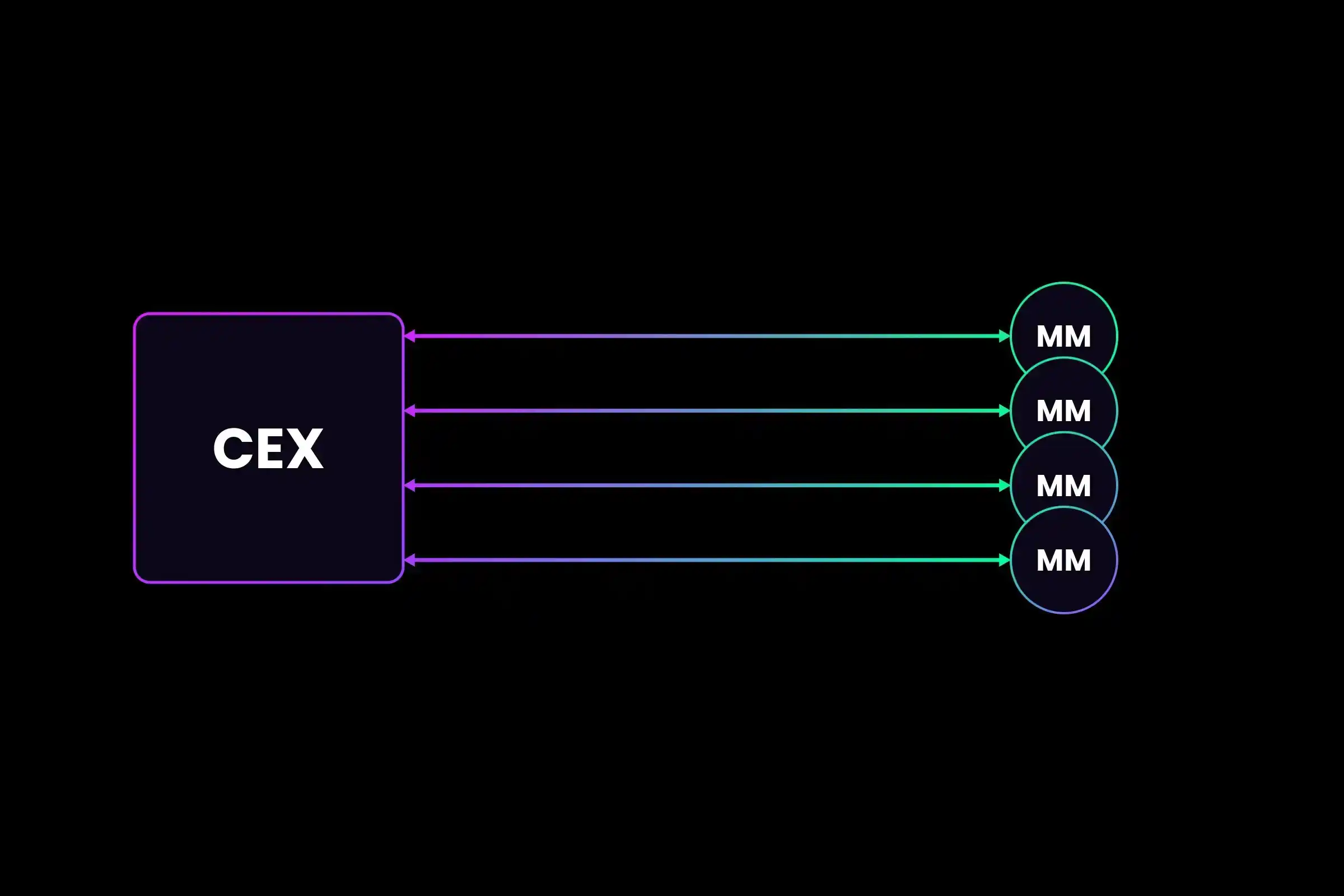
Market makers typically engage in physical co-location with the trading platform. Each market maker runs an algorithm on a server and connects to another server running the exchange's system via a network cable of uniform length (e.g., 50 meters).

A massive stream of data is constantly exchanged between market makers and the trading platform. Whenever a market maker sends an order to the exchange—whether it's a limit order, cancellation, or market order—the exchange must broadcast this information to all other market makers; then, other market makers resend their orders based on the new information; this cycle repeats indefinitely.

Here is a simple diagram.
Now let's look at how PropAMM works on the Solana mainnet.

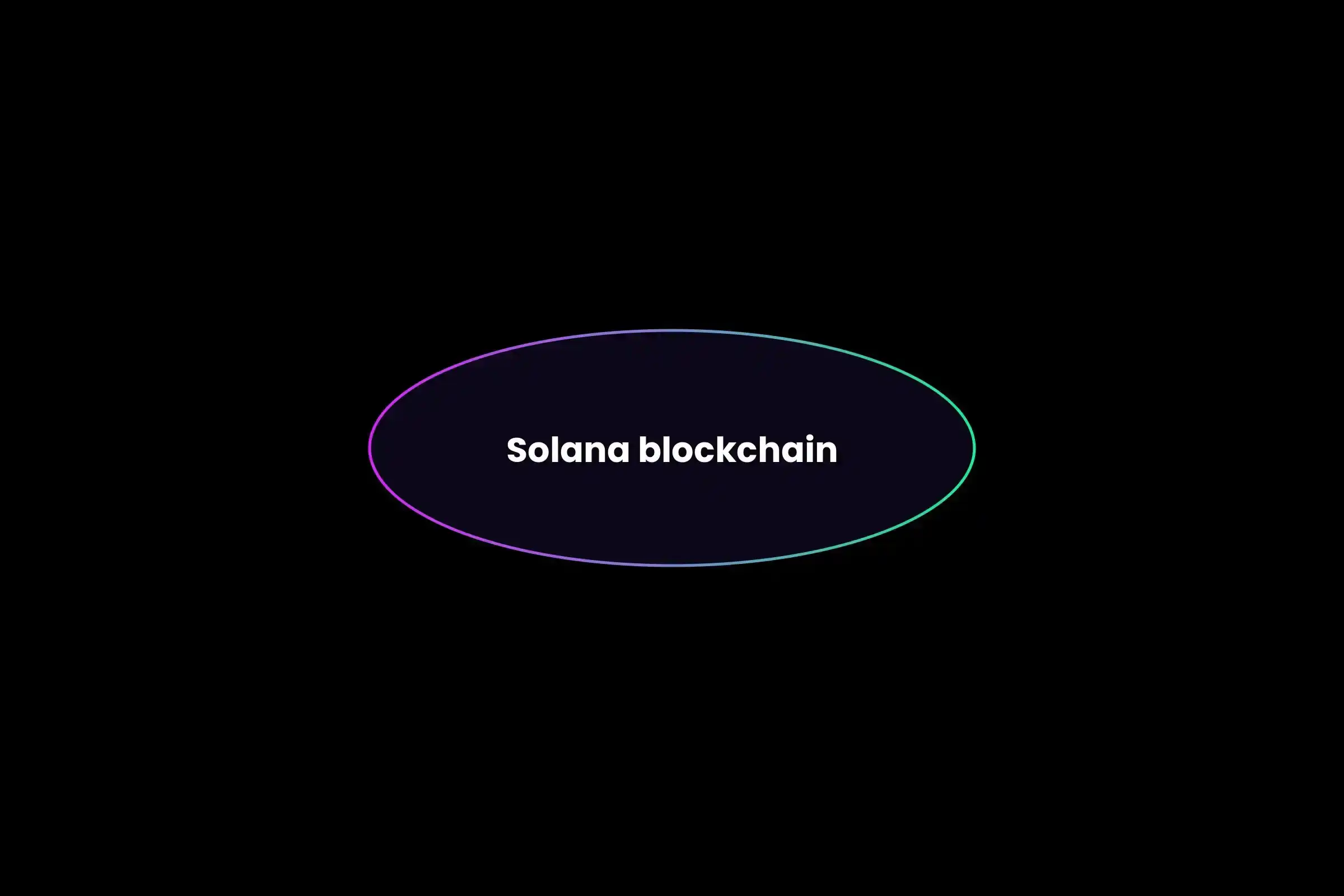
The beauty of PropAMM on Solana is that the blockchain itself directly "hosts" the market maker algorithms. This means the system no longer needs to send billions of messages back and forth between market makers and the exchange; the market-making algorithms will run directly on the same physical machine as the exchange.

Here is the new diagram. (That's right, only the Solana blockchain is needed!)
There has long been a common view in the cryptocurrency industry that decentralized systems must be slower (with higher latency) than centralized systems because they require communication between global nodes.

But if you reframe the issue, on-chain hosted algorithms could actually have lower latency than traditional centralized financial exchanges.

Why is that? The reason is that the latency required for PropAMM to update prices only involves electrons moving within the same physical silicon chip. For example, if the last market order causes a change in the SOL-USD price, this information is immediately visible to all PropAMMs and used to price the next market order. Everything happens within the same silicon chip; there is no longer a need for two-way communication between servers.

It's worth noting that PropAMM does require frequent oracle updates, but this is not a problem and does not change the overall fact described above.

The most critical point remains that when the trading platform—in this case, the Solana blockchain—directly hosts the PropAMM algorithms, the market makers' pricing changes in real-time within the same physical silicon chip.

PropAMM has already become the dominant mechanism for SOL-USDC spot quotes on Solana, with narrower spreads than all major CEXs. I expect this market structure to become the dominant model for on-chain trading this year, including spot, perpetual contracts (perps), and even prediction markets.

The biggest challenge for PropAMM is that there is currently no way to ensure that takers always get the best execution, because:

· The algorithms of all PropAMMs are not public (which is reasonable, as traditional market-making algorithms are also proprietary);

· When routing trades between multiple PropAMMs, the results are non-deterministic.

However, this problem can be solved. I expect all relevant aggregator teams to launch solutions this year, such as Jupiter and dFlow for spot, and Phoenix for contracts.

Current PropAMMs are still under-optimized and constrained by various limitations of the Solana blockchain itself. This year, Solana will roll out a series of major upgrades that will significantly enhance PropAMM performance, including:

1. Higher CU (Compute Unit) limits per transaction and larger transaction sizes;

2. Higher CU limits per block;

3. Alpenglow: Reducing slot time from 400ms to 100–150ms;

4. DoubleZero: Reducing global network latency;

5. Application-controlled execution;

6. Multiple concurrent leaders.

If PropAMMs on the Solana mainnet can already offer narrower quotes than all CEXs without these upgrades, imagine how powerful they will become as these upgrades are gradually implemented.

Related reading: The Turnaround of Kyle Samani, the "Best Crypto Investor in History," and a Mirror of a Decade Ago


Pertanyaan Terkait

QWhat is PropAMM and why is it considered a major innovation in market microstructure?

APropAMM is a mechanism on Solana where market maker algorithms are hosted directly on the blockchain, eliminating the need for constant communication between market makers and exchanges. It is considered a major innovation because it reduces latency by running algorithms on the same physical hardware as the exchange, potentially outperforming traditional centralized systems in efficiency.

QHow does PropAMM achieve lower latency compared to traditional centralized exchanges?

APropAMM achieves lower latency by hosting market maker algorithms directly on the Solana blockchain, allowing price updates to occur within the same physical silicon. This eliminates the bidirectional communication delays between market makers and exchanges in traditional systems, as all operations happen internally on the same hardware.

QWhat are the current challenges faced by PropAMM in ensuring best execution for takers?

AThe main challenges are that PropAMM algorithms are not publicly disclosed (similar to traditional market makers), and trading routing across multiple PropAMMs is non-deterministic, making it difficult to guarantee the best execution for takers automatically.

QWhich Solana upgrades are expected to enhance PropAMM performance in the future?

AKey Solana upgrades include higher CU limits per transaction, larger transaction sizes, increased CU per block, Alpenglow (reducing slot time to 100-150ms), DoubleZero (reducing global network latency), application-controlled execution, and multiple concurrent leaders.

QHow has PropAMM already demonstrated its effectiveness on Solana's mainnet?

APropAMM has become the dominant mechanism for SOL-USDC spot quotes on Solana, offering narrower spreads than all major centralized exchanges (CEXs), showcasing its efficiency and potential to lead on-chain trading in spots, perpetuals, and prediction markets.

Bacaan Terkait

Bank Italia Tidak Melihat Keunggulan Sistemik Stablecoin dalam Transfer

Studi Bank Italia menunjukkan bahwa stablecoin tidak memberikan keunggulan sistemik yang berkelanjutan dalam hal biaya dan kecepatan transfer uang. Semua keuntungan hilang akibat biaya untuk deposit dan penarikan ke/dari fiat serta proses dalam infrastruktur pembayaran lokal. Peneliti membandingkan transfer 200 USDC di 10 koridor bilateral antara Italia dengan Brasil, Argentina, Jepang, UEA, dan Afrika Selatan. Metriknya adalah biaya total dan waktu penyelesaian dibandingkan layanan uang standar. Biaya akhir transfer stablecoin bervariasi dari 0,3% hingga hampir 9%, tergantung arahnya. Di koridor dengan sistem pembayaran instan, penyelesaian membutuhkan waktu kurang dari 20 menit. Sementara di daerah tanpa infrastruktur tersebut, proses memakan waktu satu hingga dua hari kerja. Biaya dan penundaan utama dikaitkan dengan pertukaran dan konversi mata uang, serta kualitas infrastruktur lokal. Komisi blockchain bukan faktor utama. Rata-rata biaya transfer uang global adalah 6,65%. Di sebagian besar koridor yang diteliti, stablecoin lebih murah dari level ini, namun dibandingkan dengan Wise, stablecoin hanya lebih unggul di tiga dari tujuh rute yang sebanding. Penulis berpendapat efeknya akan lebih terasa jika stablecoin bisa dibelanjakan langsung untuk barang/jasa tanpa konversi ke mata uang lokal. Mereka juga mencatat bahwa rezim regulasi yang melarang tidak menghilangkan permintaan akan "koin stabil", dan aturan yang terlalu ketat justru mempersulit penggunaan oleh klien ritel.

cryptonews.ru1j yang lalu

Bank Italia Tidak Melihat Keunggulan Sistemik Stablecoin dalam Transfer

cryptonews.ru1j yang lalu

Boom Bitcoin Memanas: Pernyataan Baru Saylor Picu Spekulasi Pembelian

Ketua Eksekutif MicroStrategy Inc., Michael Saylor, kembali memicu spekulasi pembelian Bitcoin baru perusahaan setelah memposting pesan "Bitcoin Drive engaged" pada 2 Agustus. Postingan hari Minggu ini disertai dengan pelacak pembelian biasa MicroStrategy, yang sejalan dengan praktik Saylor memberi sinyal perubahan treasury sebelum laporan mingguan. Laporan Saylor menunjukkan bahwa cadangan Bitcoin MicroStrategy adalah 843.775 BTC dengan nilai pasar sekitar $53,25 miliar. Dua penjualan Bitcoin baru-baru ini, total 3.588 BTC, telah mengurangi cadangan dari 847.363 BTC. Penjualan ini, menurut pengajuan SEC, ditujukan untuk mendanai pembayaran saham preferen dan menambah cadangan dolar AS. Perusahaan juga dilaporkan tidak melakukan pembelian Bitcoin dalam minggu yang berakhir 26 Juli, sambil meningkatkan cadangan dolar AS menjadi sekitar $3,75 miliar. Ekspektasi untuk pengumuman treasury pada hari Senin diperkuat oleh pola sebelumnya, di mana sinyal serupa pada hari Minggu mendahului pengungkapan cadangan uang yang lebih besar pada 27 Juli. Pembaruan data hari Senin ini akan menunjukkan apakah MicroStrategy kembali ke akumulasi Bitcoin, karena perusahaan menyeimbangkan cadangan Bitcoinnya yang besar dengan kewajiban tunai yang meningkat dan manajemen modal yang aktif. Risiko keuangan tetap tinggi setelah MicroStrategy melaporkan kerugian operasional $8,33 miliar untuk kuartal II 2026, termasuk kerugian belum terealisasi $8,32 miliar pada aset digitalnya.

cryptonews.ru1j yang lalu

Boom Bitcoin Memanas: Pernyataan Baru Saylor Picu Spekulasi Pembelian

cryptonews.ru1j yang lalu

Saham Perusahaan yang Bergerak di Bidang Kecerdasan Buatan Diperdagangkan Seperti 'Meme Coin', Sementara Bitcoin Hampir Tak Berubah Harganya — Tinjauan Mingguan

Tinjauan minggu ini menyoroti dominasi berita pasar saham tradisional dan makroekonomi atas berita kripto. Peringatan keamanan mendesak dikeluarkan untuk pengguna Coldcard terkait potensi kompromi kunci pribadi. Sementara itu, Bitcoin relatif stabil di sekitar $64.000, perhatian pasar justru terfokus pada volatilitas ekstrem di saham AI dan pasar Asia, terutama Korea Selatan yang mengalami penurunan signifikan. Likuidasi besar oleh dana "Situational Awareness" diduga berkontribusi pada penurunan ini. Di sektor kripto, tren bearish berlanjut dengan beberapa perusahaan seperti BitMart dan Storj Labs mengumumkan penutupan atau kebangkrutan. Perusahaan yang masih beroperasi, seperti Coinbase, mengalami tekanan dengan penurunan harga saham dan gelombang PHK di industri. Di sisi lain, MicroStrategy terus menambah cadangan kasnya dan membeli kembali sahamnya. Ekosistem DeFi menghadapi tantangan potensial dari kesuksesan proyek seperti Trade.xyz dan Pump.fun, yang dapat memutuskan untuk beroperasi secara mandiri. Isu perdagangan orang dalam juga mencuat di platform Hyperliquid. Sementara itu, token AI seperti Bittensor (TAO) menarik perhatian investor venture capital, meski disertai peringatan agar investor retail berhati-hati. Artikel ditutup dengan penekanan kembali pada pentingnya kewaspadaan keamanan, khususnya dalam penyimpanan aset kripto secara mandiri, di tengah potensi meningkatnya kerentanan perangkat keras dompet digital.

cryptonews.ru1j yang lalu

Saham Perusahaan yang Bergerak di Bidang Kecerdasan Buatan Diperdagangkan Seperti 'Meme Coin', Sementara Bitcoin Hampir Tak Berubah Harganya — Tinjauan Mingguan

cryptonews.ru1j yang lalu

Trading

Spot
活动图片




