Matrixdock FRS Standard: From Gold to Silver, How Is the On-Chain Reserve Asset System Evolving?

marsbitDipublikasikan tanggal 2026-03-19Terakhir diperbarui pada 2026-03-19

Abstrak

The article discusses the evolution of on-chain real-world assets (RWA), shifting focus from simple asset tokenization to establishing sustainable and verifiable operational frameworks for long-term on-chain existence. It introduces Matrixdock’s FRS (Fungible Reserve Standard), a mechanism that encodes the economic attributes of reserve assets—like custody and operational costs—directly into the token structure. Unlike traditional mapping approaches, FRS maintains a deterministic relationship between the reserve asset, token supply, and operational costs over time. It adjusts the quantity of underlying assets per token to reflect costs structurally, without charging external fees or extracting profits. The piece highlights the extension from gold—a stable reserve asset—to more volatile and cyclical silver, demonstrating how FRS provides a consistent operational framework regardless of asset type. Matrixdock’s XAGm, a silver-backed token, is presented as a practical implementation of FRS, using LBMA-standard silver bars held in institutional vaults. Finally, the article introduces the concept of a “Reserve Layer”—a structured system of diverse, high-quality assets operating under a unified mechanism to support on-chain finance. The broader implication is that RWA’s future depends not on tokenization alone, but on robust, verifiable, and sustainable on-chain operational frameworks.

In recent times, discussions around RWA (Real World Assets) being brought on-chain have primarily revolved around one question: which assets can be introduced to the blockchain. Whether it's gold, government bonds, or various real-world assets, the core logic centers on "mapping"—converting real assets into on-chain certificates. However, as the market gradually advances, a more specific issue has begun to emerge: can these assets exist on-chain in the long term and operate in a verifiable manner over time?

When assets are no longer short-term holding instruments but need to form long-term structures on-chain, mere "mapping" is no longer sufficient. The clarity of reserve status, how token supply changes, and how custody and operational costs are reflected have become critical factors affecting asset stability.

Against this backdrop, mechanism frameworks built around "how assets operate on-chain" are becoming an important component of RWA infrastructure. Among these, the FRS (Fungible Reserve Standard) developed by Matrixdock is a structural response to this very issue.

FRS: A Mechanism Framework for Encoding the Economic Attributes of Assets

FRS is not a single product issuance model but a mechanism framework that encodes the economic attributes of reserve assets into the token structure. Its focus is not on "how to issue tokens" but on continuously maintaining a deterministic relationship between reserve assets, token supply, and operational costs on-chain.

In the FRS framework:

  • The correspondence between tokens and the underlying reserve assets is explicitly defined at the mechanism level and is verifiable
  • The economic attributes of the assets (including custody and operational costs) are continuously reflected on-chain through systematic mechanisms
  • Costs are structurally reflected on-chain according to established rules, rather than being charged separately as external fees
  • The overall structure does not include management fees or profit extraction, only reflecting the actual costs incurred from asset custody and operations

Specifically, this mechanism adjusts "the amount of asset corresponding to each unit token" so that asset costs are continuously reflected over time, thereby reflecting holding costs without changing the quantity held by users. This design transforms on-chain assets from static "mapping results" into a structured system that operates continuously according to established rules. In this sense, FRS is closer to a standardized operating mechanism for on-chain reserve assets, rather than a single product framework.

From Gold to Silver: The Logic Behind Asset Expansion

In the traditional financial system, gold has long played a central role as a reserve asset, and its value-anchoring properties have made it one of the first precious metals to enter the on-chain structure.

In contrast, silver is influenced by both investment demand and industrial cycles, exhibiting more pronounced volatility and cyclical characteristics. This also means that, in the absence of a unified mechanism, the on-chain representation of such assets often faces higher uncertainty. The stronger the asset volatility, the greater the demand for constraints and verification mechanisms in its on-chain structure.

The role of FRS is to provide a unified structural foundation in this process: regardless of how asset characteristics change, their operational logic on-chain remains consistent. Under this framework, asset expansion is no longer merely an increase in underlying assets but:

  • Introducing reserve assets with different attributes under a unified mechanism
  • Enhancing the diversity of asset portfolios while maintaining structural consistency

Therefore, the evolution from gold to silver is not just an expansion at the asset level but also a continuation at the mechanism level.

XAGm: An Implementation of FRS for Silver Assets

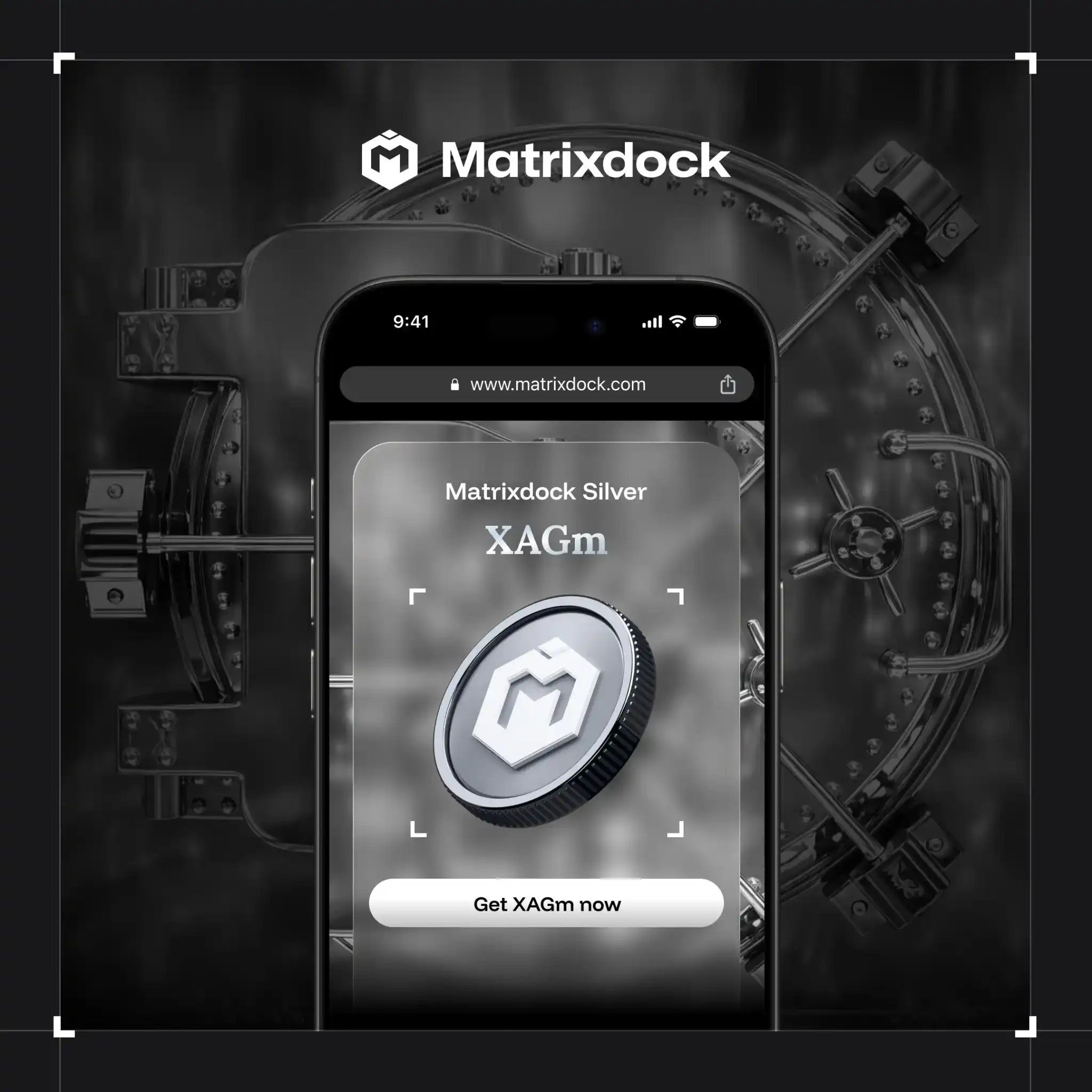
Under the FRS framework, Matrixdock has launched the silver token XAGm, representing a further application of this mechanism to precious metal assets.

From a practical perspective, XAGm operates silver assets within the FRS mechanism, rather than merely mapping physical silver on-chain. Its underlying assets are fully physically allocated silver, using LBMA Good Delivery standard silver bars, and are custodied by institutional-grade vaults. However, within the FRS framework, the key aspect of silver is not just "being put on-chain" but how its economic attributes are continuously encoded into the on-chain structure.

In this mechanism, the operation of silver assets is manifested as:

  • The configuration status of reserve assets has clear boundaries on-chain and can be independently verified through established methods
  • The amount of silver corresponding to each unit token adjusts over time according to established rules, ensuring asset costs are continuously reflected over time
  • The total token supply is adjusted mechanistically to maintain a deterministic relationship with the underlying silver reserves
  • Custody and operational costs for silver are not charged as external fees but are continuously reflected on-chain through preset rules

In this process, silver is not just represented as an on-chain asset; its economic attributes are continuously reflected within the mechanism. Therefore, the significance of XAGm is not only in bringing silver on-chain but also in providing a specific paradigm for how silver assets can be structurally organized and operated under the FRS mechanism.

Reserve Layer: From Asset Collection to Structural System

Under the FRS framework, reserve assets no longer exist as "single assets" but gradually form a structural system with internal logic.

This system (referred to by Matrixdock as the Reserve Layer) can be understood as:

  • Comprising multiple high-quality reserve assets
  • Operating under a unified mechanism
  • Collectively providing value support and a liquidity foundation for on-chain financial activities

Within this structure:

  • Gold serves a relatively stable value-anchoring function
  • Silver introduces cyclicality and trading activity
  • Different assets are organized into a portfolio with consistent operational logic through the FRS mechanism

This shift means that the significance of reserve assets lies not only in "the assets themselves" but also in their structural position and mode of operation.

RWA development is entering a new stage. The act of bringing assets on-chain is no longer the main hurdle; the real challenge lies in: how to ensure these assets can exist on-chain in the long term and operate in a verifiable manner continuously.

FRS, as a mechanism framework built by Matrixdock, provides a path to transform real-world assets into structural units on-chain. As more assets are introduced onto the chain under this framework, a reserve asset system based on "mechanisms" is gradually taking shape.


Pertanyaan Terkait

QWhat is the core focus of the FRS (Fungible Reserve Standard) framework developed by Matrixdock?

AThe core focus of the FRS framework is not on 'how to issue tokens,' but on continuously maintaining a deterministic relationship between reserve assets, token supply, and operational costs on the blockchain in a verifiable manner.

QHow does the FRS mechanism handle the costs associated with holding a reserve-backed asset like XAGm?

AThe FRS mechanism handles costs by systematically adjusting the 'amount of asset corresponding to each unit of token' over time. This reflects custody and operational costs within the token's structure itself, rather than charging them as separate, external fees.

QWhat key challenge in the RWA (Real World Asset) sector does the FRS framework aim to address?

AThe FRS framework aims to address the challenge of how to make real-world assets exist long-term on the blockchain and operate continuously in a verifiable way, moving beyond simple asset 'mapping' to a structured, rules-based system.

QWhat is the significance of expanding from gold to silver within the FRS framework, according to the article?

AThe expansion from gold to silver is significant because it demonstrates the framework's ability to incorporate assets with different attributes (like silver's higher volatility and cyclical nature) under a unified, consistent operational mechanism, thereby increasing portfolio diversity.

QHow does the article define the 'Reserve Layer' that is formed under the FRS framework?

AThe 'Reserve Layer' is defined as a structural system composed of multiple high-quality reserve assets (like gold and silver) that run under a unified mechanism (FRS) to collectively provide value support and a liquidity foundation for on-chain financial activities.

Bacaan Terkait

Hardman Exclusive | Perusahaan Kecerdasan Berbadan Laut 'Shihang Intelligent' Raih Pendanaan Rekor 10 Miliar, Zhu Xiaohu dan Temasek Berinvestasi

Penulis: Qiu Xiaofen Editor: Yuan Silai Perusahaan kecerdasan berwujud laut "Shihang Intelligent" telah menyelesaikan pendanaan Seri A senilai lebih dari 10 miliar yuan, menjadi putaran pendanaan tunggal terbesar di bidang robot laut global. Pendanaan ini dipimpin oleh dana industri dari perusahaan chip "Moore Thread" dan "Kunlunxin," termasuk Shanghe Momentum Fund, Vertex Growth (platform investasi negara Singapura), dan perusahaan publik Dayang Motor. Selain itu, Jinshajiang Venture Capital juga melakukan investasi tambahan, yang merupakan investasi kelima dari pendirinya Zhu Xiaohu. Pemegang saham lama seperti Vertex China, Huaying Capital, dan Changshi Capital juga ikut serta dalam putaran ini. Didirikan oleh CEO Chen Xiaobo (alumni Universitas Teknik Harbin kelahiran 1989), perusahaan telah lama fokus pada pengembangan robot bawah laut. Pada usia 28, Chen memenangkan Penghargaan Kemajuan Sains dan Teknologi Pertahanan Nasional, menjadikannya penerima termuda, dan memimpin pengembangan robot pembersih bawah laut komersial pertama di Tiongkok. Dana ini akan digunakan untuk pengembangan teknologi inti, ekspansi pasar global, dan pembangunan ekosistem rantai pasokan, guna mempercepat penerapan robot laut dalam skenario bawah laut yang kompleks. Laut dianggap sebagai salah satu lingkungan tersulit untuk aplikasi robotika, karena harus menghadapi tantangan seperti pencahayaan rendah, kekeruhan tinggi, arus laut kompleks, komunikasi terbatas, tekanan tinggi, dan korosi. "Shihang Intelligent" mengembangkan teknologi inti mencakup enam sistem utama: tenaga penggerak, kontrol, sensor, navigasi, penyegelan, dan penyebaran. Robot mereka mampu beroperasi hingga kedalaman 10.000 meter dengan kebebasan penuh, melakukan gerakan kompleks seperti maju, mundur, bergerak menyamping, dan berguling, serta mendukung navigasi otonom dan operasi multi-robot. Hingga saat ini, robot mereka telah diterapkan dalam pembersihan kapal, keamanan bawah laut, energi angin lepas pantai, peternakan laut, dan inspeksi dasar laut. Pada paruh pertama 2026, perusahaan telah menerima pesanan senilai lebih dari 10 miliar yuan. Pada April, perusahaan meluncurkan model besar kecerdasan berwujud laut "Cangqiong CEORION." Model ini mengintegrasikan persepsi lingkungan, pemahaman tugas, dan generasi tindakan dalam satu arsitektur ujung-ke-ujung, dilatih dengan data operasi nyata dan simulasi. "Cangqiong CEORION" dapat menangani 12 jenis skenario operasi bawah laut, termasuk inspeksi, deteksi, pembersihan, penangkapan, pemotongan, pengelasan, eksplorasi, pencarian, dan penyelamatan. Dalam pengujian simulasi, tingkat keberhasilan tugas mencapai lebih dari 90%, dengan kemampuan adaptasi tanpa contoh sebelumnya melebihi 70%. Model ini juga mengurangi tingkat kecelakaan tabrakan hingga 80% melalui modul penalaran fisik terintegrasi. Pada paruh pertama tahun ini, "Shihang Intelligent" terpilih sebagai mitra inti dalam Program Inspeksi dan Pembersihan Lambung Kapal Bawah Laut Nasional oleh Otoritas Maritim dan Pelabuhan Singapura. Perusahaan berencana untuk terus berinvestasi dalam teknologi inti robot laut, model kecerdasan berwujud laut, dan skenario aplikasi global, mendorong penerapan robot laut dalam operasi bawah laut bernilai tinggi, berisiko tinggi, dan tantangan tinggi.

marsbit45m yang lalu

Hardman Exclusive | Perusahaan Kecerdasan Berbadan Laut 'Shihang Intelligent' Raih Pendanaan Rekor 10 Miliar, Zhu Xiaohu dan Temasek Berinvestasi

marsbit45m yang lalu

Tiga Bulan 35 Miliar, Investor Berebut OpenAI Dunia Fisik

Momen akrab itu terulang kembali. Dalam tiga bulan, Jijia Shijie (极佳视界) telah merampungkan tiga putaran pendanaan, mengumpulkan total 35 miliar RMB. Para investor, mulai dari dana 'tim nasional', modal industri, hingga lembaga keuangan ternama, berbaris mendukung. Didirikan oleh Dr. Huang Guan, seorang doktor lulusan Tsinghua berusia 90-an dengan pengalaman di bidang AI fisik, visi Jijia Shijie adalah mencapai AGI Fisik (Kecerdasan Umum Buatan di Dunia Fisik). Mereka mengatasi tantangan utama seperti fragmentasi data dan keterbatasan model bahasa dengan membangun sistem "Piramida Ganda" yang terdiri dari algoritma dan data. Inti teknologinya adalah sistem model "Generasi Dunia-Tindakan". Model tindakan (seperti GigaBrain-0 dan GigaWorld-Policy) mengubah pemahaman dunia menjadi strategi aksi untuk robot, meraih peringkat tertinggi dalam berbagai benchmark global. Model generasi dunia (seperti GigaWorld-1 dan DriveDreamer) memahami dan mensimulasikan dunia fisik, menyediakan data dan dasar simulasi. Keduanya saling melengkapi untuk mendorong AGI Fisik menuju "momen GPT-3"-nya. Jijia Shijie tidak hanya berfokus pada riset. Mereka mengejar realisasi nilai industri melalui dua jalur: masuk ke rumah (sektor C) dan pabrik (sektor B). Untuk sektor C, mereka meluncurkan merek "ShiGuang SeeLight" dan robot humanoid serbaguna "S1", yang telah mendapatkan pesanan nyata dan akan mulai dioperasikan secara komersial. Di sektor B, mereka bekerja sama dengan perusahaan industri seperti FAW Mold dan Longsheng Technology untuk menyebarkan ribuan robot serbaguna dalam skenario manufaktur, menandai dimulainya produksi massal. Model dunia mengemudi DriveDreamer mereka juga telah digunakan oleh lebih dari 30 perusahaan otomotif dan otonom terkemuka. Dengan pendekatan "penggerak ganda" ini, Jijia Shijie bertujuan untuk mengumpulkan data dunia nyata yang berharga dan arus kas, yang selanjutnya akan memberi makan sistem piramida data mereka, menciptakan siklus pertumbuhan yang berkelanjutan. Mereka membayangkan masa depan di mana AGI Fisik, dengan kemampuannya untuk memahami dan bertindak dalam dunia nyata, tidak hanya meningkatkan efisiensi informasi tetapi juga secara mendalam membentuk kembali produksi dan gaya hidup, akhirnya melayani setiap rumah tangga.

marsbit1j yang lalu

Tiga Bulan 35 Miliar, Investor Berebut OpenAI Dunia Fisik

marsbit1j yang lalu

Apa Hubungannya Huang Zheng, Pendiri Pinduoduo, dengan Blockchain?

Menurut artikel ini, pendiri Pinduoduo, Huang Zheng, memandang bisnis inti platformnya sebagai "asuransi terbalik" yang berhubungan dengan ketidakpastian. Argumen utamanya adalah bahwa dalam kapitalisme tradisional, orang kaya mengumpulkan kekayaan dengan menanggung ketidakpastian (seperti risiko finansial) yang tak tertanggungkan bagi orang biasa, yang kemudian membayar premi (seperti melalui tabungan rendah bunga atau membeli produk mahal demi kepastian) untuk mengalihkan risiko tersebut. Uang mengalir dari bawah ke atas. Pinduoduo berusaha "membalikkan" aliran ini. Melalui fitur seperti "pembelian kelompok" dan penawaran waktu terbatas, platform ini mengumpulkan banyak niat pembelian yang tersebar menjadi permintaan agregat yang pasti dan besar dalam waktu singkat. Kepastian permintaan massal ini memungkinkan pabrik mengurangi risiko kelebihan produksi dan menurunkan harga, sehingga mengembalikan sebagian nilai (dalam bentuk diskon) ke konsumen. Namun, tantangan utama adalah janji atau niat beli individu tidak berharga karena mudah dibatalkan tanpa konsekuensi. Di sinilah kaitannya dengan blockchain muncul. Huang Zheng bertanya-tanya apakah teknologi blockchain, dengan kontrak pintar dan sifat terdesentralisasi, bisa menjadi solusi untuk membuat komitmen individu menjadi terikat, dapat dipercaya, dan dapat diberi harga. Kontrak pintar dapat mengunci janji beli dengan jaminan keuangan, sehingga pembatalan akan dikenakan penalti. Ini mengubah "keinginan membeli" menjadi janji yang dapat ditegakkan, memberikan kepastian yang dapat dipercaya pabrik tanpa perantara. Artikel tersebut juga menarik paralel dengan Bitcoin, menyebutkan dua jalan menciptakan kepastian: 1) **Jalan Pinduoduo**: mengumpulkan keinginan tersebar menjadi skala besar untuk menghilangkan ketidakpastian. 2) **Jalan Bitcoin**: mengunci aturan dalam kode yang tidak dapat diubah (seperti pasokan tetap), menggantikan kepercayaan pada manusia dengan kepercayaan pada aturan algoritmik. Kedua pendekatan memiliki trade-off: yang pertama membatasi kebebasan individu untuk koordinasi massa, yang kedua mengorbankan fleksibilitas aturan untuk kepastian absolut.

链捕手2j yang lalu

Apa Hubungannya Huang Zheng, Pendiri Pinduoduo, dengan Blockchain?

链捕手2j yang lalu

Trading

Spot
Futures
活动图片




