[daily public chain] sol exchange accounts for 37%, and avax accounts for us $10.1 billion

Huobi ResearchDipublikasikan tanggal 2022-03-25Terakhir diperbarui pada 2022-03-29

Abstrak

Since 2017, large-scale ambushes have emerged and the fittest have been eliminated in the wheel of the times.

Since 2017, large-scale ambushes have emerged and the fittest have been eliminated in the wheel of the times. Until this year, the public chain has ushered in a collective outbreak, from Polkadot, a cross chain network of slot auction, to many emerging public chains such as Solana, avalanche and Cardano. Ethereum has created a public chain with great competition demand, giving birth to greater market opportunities.

More than 100 public chain projects are common and cross chain, which is a new trend

At present, there are more than 100 active public chains, which can be divided into single chain and cross chain according to the attributes of the chain, and the cross chain is represented by Boca and has become the mainstream trend of this era. Overall, the number of public chains has formed a certain scale, and the competition is quite fierce.

1、Solana

Solana started the upsurge of public chain. What's the difference between them?

Solana's fire has directly stirred the upsurge of the public chain camp, including avalanche, fantom, near and so on. The market pays more attention to the public chain, and both capital, project parties and developers are full of interest in this track. So, what are the differences between them?

In terms of technical architecture:

Solana: poh clock scheme

Different from most pieces + eth2 0 scheme, Solana created a unique and innovative poh clock mechanism in the public chain circle The scheme decouples the block out time and state. In terms of global consensus, it is not limited by the hard requirements of block size and block out time. Through the global clock, a globally available time chain is generated for all nodes. The state update can be carried out asynchronously. The verifier can send state updates to other nodes in real time. The poh clock gives the participants of Solana ecology more expandable space, Further improve and expand the overall throughput capacity.

Lock data

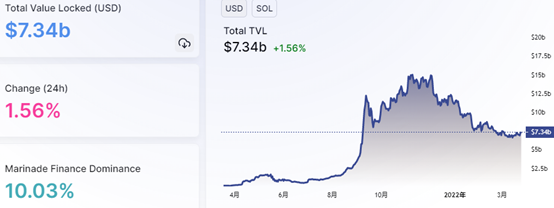
Sol's lock up scale has been pulled back from a high level, with a peak of US $15 billion in 2021. On March 24, the scale of lock up reached US $7.34 billion, and there is a large space for data callback of lock up volume.
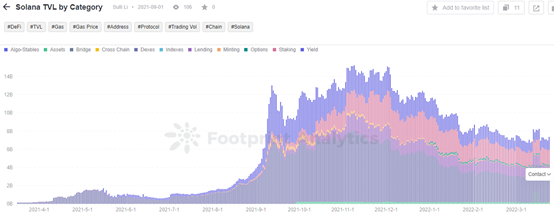
In terms of the proportion of lock up on the sol chain, the proportion of loan lock up and decentralized exchange lock up is relatively large, while the scale of loan, pledge and mining lock up is small. According to the latest data on March 24, the decentralized exchange locked positions of US $2.76 billion, while loans, pledges and mining were US $1.17 billion, US $1.65 billion and US $1.4 billion.
Token price

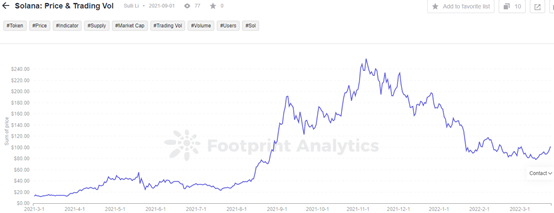
The linkage effect between slol price and lock volume is good, and the sol price has dropped from a high of more than $240 to a minimum of $80. The current price on March 24 is $102. In the later stage, we can pay attention to the ecological development, as well as the trading opportunities of the upward lock up volume and price recovery.
2. Avalanche: three chain structure

Avalanche agreement entered the public view by means of incentives, and realized the sharp rise of currency price and lock up volume. Similarly, as a smart contract platform, avalanche is very novel in architecture design and adopts the three chain structure of X chain, C chain and P chain. X chain is a transaction chain, which mainly deals with point-to-point asset creation and transaction transactions between individuals; C-chain is a smart contract chain compatible with EVM, and the basic defi projects are built on C-chain; P chain is a platform chain, which is mainly responsible for token pledge, coordinating network verifiers, creating user-defined subnets and other affairs. The three chains perform their respective functions, but complement each other, further liberating avalanche's network performance.

Lock data

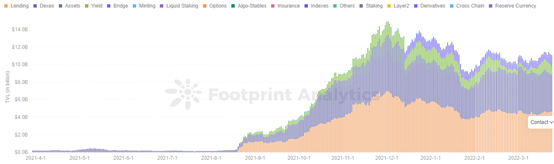
Avax lock up data increased by leaps and bounds in 2021. The data rebounded from a low of $2 billion to a maximum of more than $14 billion, with a growth space of more than six times. The current TVL value is US $10.15 billion.
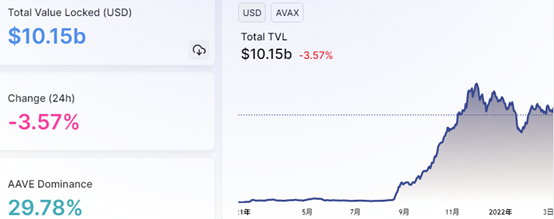
In terms of the proportion of avax chain lock, the proportion of lending, lock and decentralized exchange lock is relatively large, while the scale of mining and cross chain lock is small. On March 24, the loan lockup reached its peak. The scale of loan lockup was US $4.6 billion, that of decentralized exchange lockup was US $4 billion, and that of mining and cross chain lockup was US $900 million and US $1.1 billion.
Token price

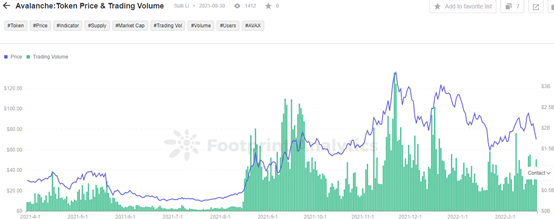
Avax experienced great growth in 2021, rising from $15 in August 2021 to a high of $135. From the second half of 2021 to the beginning of 2022, the price of avax remained around $85. Compared with the vicinity of TVL's decline, there is more room for price correction. Next, we can focus on low absorption opportunities.

Bacaan Terkait

Tim Fei-Fei Li Memperjelas Konsep 'Model Dunia', Sora Hanya Bisa Disebut Sebagai Renderer

Tim World Labs dan Profesor Stanford Li Fei-Fei menerbitkan analisis konseptual berjudul "Fungsional Taxonomy of World Models". Artikel tersebut menyatakan bahwa istilah "model dunia" telah menjadi salah satu konsep terpenting namun paling disalahgunakan di bidang AI. Pemicu kebingungan ini adalah keberagaman sistem yang disebut "model dunia". OpenAI's Sora disebut "world simulator", tetapi hanya menghasilkan video yang realistis secara visual. Tesla menggunakan "model dunia" untuk memprediksi pergerakan objek di FSD, sementara perusahaan robotika menggunakannya untuk mengevaluasi konsekuensi tindakan. Padahal, ketiganya memiliki tujuan teknis yang sangat berbeda. Berdasarkan kerangka Partially Observable Markov Decision Process (POMDP), tim mengusulkan klasifikasi fungsional yang membagi sistem "model dunia" menjadi tiga proyeksi: Renderer, Simulator, dan Planner. * **Renderer (seperti Sora, Genie 3):** Fokus pada generasi piksel yang realistis secara visual. Input adalah representasi keadaan, output adalah gambar/video. Tidak menjamin keakuratan fisik. * **Simulator (seperti NVIDIA Omniverse):** Fokus pada prediksi keadaan fisik selanjutnya secara akurat. Input adalah keadaan saat ini dan tindakan, output adalah keadaan berikutnya yang dapat dihitung untuk analisis teknis. Data 3D berkualitas untuk pelatihannya sangat langka. * **Planner (seperti model VLA):** Fokus pada keputusan tindakan. Input adalah data observasi dan instruksi tujuan, output adalah tindakan selanjutnya yang harus dijalankan. Artikel ini menyimpulkan bahwa Sora, sesuai dengan klasifikasi ini, adalah Renderer, bukan "model dunia" yang utuh karena tidak dapat memprediksi perubahan keadaan berdasarkan input tindakan. Klarifikasi ini penting untuk menghindari kesalahan teknis, memberikan kejelasan bagi investor, dan menetapkan tolok ukur yang jelas di kalangan akademisi.

marsbit29m yang lalu

Tim Fei-Fei Li Memperjelas Konsep 'Model Dunia', Sora Hanya Bisa Disebut Sebagai Renderer

marsbit29m yang lalu

Dari Web3 ke AI Agent, VC Kripto Legendaris Variant Taruhan Transformasi 2 Triliun Rupiah

**Variant Luncurkan Dana Baru Rp 3,55 Triliun, Fokus Beralih dari "Kepemilikan Digital" ke "Otonomi" (Autonomy)** Variant Fund, sebuah venture capital (VC) kripto ternama, mengumumkan peluncuran dana baru senilai USD 222 juta (sekitar Rp 3,55 triliun) bernama Variant 4. Dana ini akan berinvestasi pada tahap awal (early-stage) dan tahap pertumbuhan/likuiditas. Filosofi investasi Variant mengalami evolusi. Dari sebelumnya berfokus pada **"Kepemilikan Digital"** (atas uang, identitas, data, produk), kini berkembang menjadi tema yang lebih luas: **"Otonomi" (Autonomy)**. Inti dari Otonomi adalah **meningkatkan daya pikir dan kendali pengguna** atas hidup, aset, dan identitas mereka sendiri. Variant membedakan ini dengan sekadar **otomatisasi cerdas**. Menurut mereka, teknologi otomatisasi harus meningkatkan kedaulatan pengguna, bukan hanya menguntungkan platform. Kunci utamanya adalah: teknologi itu melayani pengguna atau pihak lain? Variant meyakini bahwa **agen AI (AI Agent)** dan **infrastruktur keuangan global yang terbuka** akan mengubah struktur internet — dari model di mana pengguna adalah produk, menjadi internet di mana pengguna memiliki daya pikir yang belum pernah terjadi sebelumnya. Pergeseran ini tidak hanya untuk konsumen, tetapi juga mencakup pasar, alat, dan layanan baru untuk pengembang dan bisnis. Oleh karena itu, tesis investasi baru mereka adalah: **Variant berinvestasi pada teknologi yang memperluas Otonomi**, dengan fokus pada pasar, infrastruktur, dan aplikasi baru yang memberdayakan pengguna melalui peningkatan akses, pengetahuan, dan kepemilikan. Tesis ini mencakup investasi masa lalu mereka di pemimpin kategori blockchain (Ethereum, Solana), infrastruktur pengembang (Blockaid, Turnkey, Relay), pasar keuangan baru (Uniswap, Morpho, OpenFX), dan produk konsumen (Phantom, World). Ini juga tercermin dalam investasi baru-baru ini seperti: * **Honcho**: Solusi penyimpanan memori agen yang di-host sendiri. * **Octet**: Memungkinkan aplikasi memverifikasi lokasi fisik pengguna secara kriptografis sebagai blok pembangun identitas digital. * **here.now**: "Awan agen" yang memungkinkan kepemilikan dan komposisi konten yang dihasilkan. Variant mengundang para pendiri yang membangun dengan tujuan untuk memperluas otonomi pengguna untuk menghubungi mereka.

marsbit35m yang lalu

Dari Web3 ke AI Agent, VC Kripto Legendaris Variant Taruhan Transformasi 2 Triliun Rupiah

marsbit35m yang lalu

Momen Ballmer Ethereum: Saat Semua Meragukan, Pasokan yang Beredar Mulai Menghilang

**Ringkasan: Saat Semua Meremehkan Ethereum, Pasokan yang Beredar Justru Menyusut** Narasi bearish tentang Ethereum kini mendominasi: pendiri Bankless menjual ETH, developer muda beralih ke Solana, dan Ethereum Foundation dianggap menghindari risiko. Situasi ini disebut sebagai "Era Ballmer" Ethereum, mengacu pada periode Microsoft di bawah Steve Ballmer yang dianggap stagnan, namun sebenarnya fondasi bisnisnya terus tumbuh solid di balik layar. Di balik narasi permukaan, dasar fundamental Ethereum menunjukkan tren positif: * **30% dari total pasokan ETH telah di-staking**, mengunci likuiditas. * Perusahaan seperti BitMine dan calon ETF spot terus menyerap ETH dari pasar. * Regulasi yang semakin jelas (seperti keputusan SEC tentang staking, GENIUS Act, CLARITY Act) mengubah crypto dari ancaman menjadi kerangka hukum yang diakui, membuka jalan bagi modal institusional. Sementara dominasi Ethereum dalam aset tokenisasi (seperti stablecoin USDC) dan DeFi berkurang dibandingkan pesaing seperti Solana, Ethereum tetap menjadi *settlement layer* netral tepercaya pilihan utama untuk aset tokenisasi institusional. Kompresi pasokan yang beredar, permintaan akan yield staking, dan statusnya sebagai pilihan default institusi dapat mendorong penilaian ulang harga ETH, bahkan tanpa kemenangan dalam "perang fee". Kesimpulannya, meskipun energi budaya dan inovasi mungkin bergeser ke chain lain, lanskap crypto secara keseluruhan sedang mengadopsi bentuk yang lebih terlembaga. Ethereum, dengan efek jaringan dan netralitasnya, diposisikan dengan baik untuk menangkap nilai dari gelombang institusional ini. Narasi bearish yang telah menjadi konsensus justru menciptakan peluang saat fondasi sebenarnya sedang diperkuat.

marsbit47m yang lalu

Momen Ballmer Ethereum: Saat Semua Meragukan, Pasokan yang Beredar Mulai Menghilang

marsbit47m yang lalu

Trading

Spot
Futures
活动图片