AMD Stock Price Forecast 2026 to 2030: Wall Street Signals a Major $657 Target!

marsbitDipublikasikan tanggal 2026-06-02Terakhir diperbarui pada 2026-06-02

Abstrak

AMD's stock has seen a dramatic rally, rising over 130% year-to-date to around $510 as of mid-2026. This surge is driven by a fundamental shift in the company's business, with its Data Center segment now the core contributor, posting a record $5.8 billion in Q1 2026 revenue (up 57% YoY) and exceeding 50% of total revenue for the first time. CEO Dr. Lisa Su raised the long-term server CPU Total Addressable Market (TAM) forecast to over $120 billion annually by 2030. Analyst sentiment is bullish. The consensus rating is a "Strong Buy" with a 12-month average price target of $472.17, though several firms have recently set higher targets, with Barclays issuing a street-high target of $665. Long-term models project a 2030 price range of approximately $493 to $822, with a baseline scenario near $657, anchored to AMD's expanded TAM guidance. Key growth catalysts include strong demand for EPYC server CPUs and Instinct AI GPUs, partnerships with OpenAI and Meta, and the upcoming MI450 series and Helios rack-scale platform. However, significant risks remain, including a high forward P/E ratio exceeding 169x and increased competition, notably from NVIDIA's planned entry into the server CPU market. Investors must weigh the strong execution and growth trajectory against these substantial valuation and competitive pressures.

AMD has delivered one of the most dramatic stock performances in the semiconductor industry in recent years.

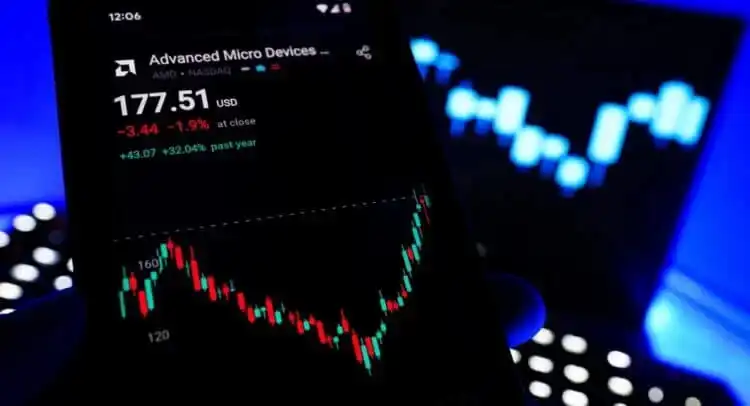
As of June 2026, the stock has surged over 130% year-to-date, trading near $510, with its 52-week range fully illustrating the scale of this turnaround—climbing from a low of $108.62 to a high of $527.20.

Such a robust rally raises a central question for investors searching for "AMD stock price forecast": Has the best of the move already been priced in, or does Wall Street still see substantial upside potential ahead?

This article will answer directly, citing specific numbers from analyst consensus data and AMD's official forward-looking guidance.

Key Takeaways

  • AMD's stock price has risen over 130% year-to-date as of June 2026, trading near $510, with a 52-week range from a low of $108.62 to a high of $527.20.
  • Q1 2026 revenue reached $10.3 billion, up 38% year-over-year, with the Data Center segment growing 57% to $5.8 billion—the first time in AMD's history that Data Center contributed more than half of total revenue.
  • AMD CEO Dr. Lisa Su revised the server CPU Total Addressable Market (TAM) forecast from $60 billion annually to over $120 billion by 2030 during the Q1 earnings call, calling this shift a "structural transformation for our business."
  • S&P Global Market Intelligence's consensus rating, aggregating 51 analysts, is a "Strong Buy," with a 12-month average price target of $472.17; the highest Wall Street target reached $665 following a Barclays upgrade on June 1, 2026.
  • Long-term analyst models forecast AMD's stock price could range between $493 and $822 by 2030, with a base-case mean near $657, anchored to AMD's official $120 billion server CPU market prediction.
  • A P/E ratio exceeding 169x and NVIDIA's announced entry into the server CPU market are two specific risks investors must seriously weigh before taking any action.

The Driver Behind AMD's AI Wave

AMD's powerful 2026 rebound is not built on narrative alone.

It reflects a genuine structural transformation at the company's core—understanding this shift is the starting point for evaluating any credible AMD stock price forecast.

In short: AMD crossed a critical threshold in 2026—Data Center is no longer just a growth story adjacent to the core business.

Data Center is now the core business itself.

A $5.8B Quarter: AMD Data Center Sets a New Record

According to the Q1 2026 earnings press release from AMD's official Investor Relations page, AMD reported Q1 2026 revenue of $10.3 billion, up 38% year-over-year, beating analyst expectations of approximately $9.9 billion.

Non-GAAP EPS was $1.37, a 43% increase from the prior year, exceeding the Wall Street consensus estimate of $1.27 by $0.10.

While the overall beat was strong, that wasn't the most critical part.

The Data Center segment generated record revenue of $5.8 billion in Q1 2026, a 57% year-over-year increase, primarily driven by enterprise and hyperscale cloud provider demand for AMD EPYC server CPUs and Instinct AI GPUs.

Lisa Su informed investors on the Q1 2026 earnings call: "These results mark a definitive inflection point in our growth trajectory and a fundamental transformation in the structure of our business."

AMD's Q1 free cash flow also hit a quarterly record of $2.6 billion, more than triple the prior year's figure. This number is crucial as it indicates the AI infrastructure cycle is translating into real profitability, not just top-line momentum.

AMD Instinct GPU Lineup and What Q2 2026 Guidance Signals

Management expects Q2 2026 revenue of approximately $11.2 billion, representing 46% year-over-year growth, with the midpoint about $700 million above prior market expectations.

This guidance gap is significant: AMD isn't just clearing a low bar; it's continuously raising the bar as AI infrastructure demand accelerates.

During the same earnings call, Lisa Su also raised AMD's long-term server CPU TAM forecast from about $60 billion annually (growing 18% per year) to over $120 billion (growing over 35% per year) by 2030.

This isn't a tactical adjustment; it's a structural growth thesis that changes how analysts model AMD's long-term revenue ceiling.

AMD also has clear GPU deployment partnerships with OpenAI and Meta, both anchored by multi-gigawatt Instinct GPU commitments, extending revenue visibility into the second half of 2026 and beyond.

The MI450 series, expected to ramp in larger volumes in H2 2026, and the Helios rack-scale platform are the next concrete catalysts institutional investors are closely watching.

AMD Stock Price Forecast: Analyst Targets from Now to 2030

This is the part most investors want to know: the specific numbers.

It's worth noting upfront that AMD's stock price has surpassed many analysts' average targets following the post-Q1 surge—this means the consensus reflects a coverage group still catching up to the move, not an impenetrable ceiling.

AMD Stock Price Forecast: 2026 Wall Street Analyst Consensus

According to S&P Global Market Intelligence, aggregating 51 analyst ratings, AMD holds a "Strong Buy" consensus rating as of mid-2026, with a 12-month average price target of $472.17.

The current highest single-stock target on Wall Street is $665, set by Barclays analyst Tom O'Malley on June 1, 2026, implying roughly 30% potential upside from AMD's current ~$510 stock price.

TradingView's aggregated consensus price target from 58 underwriters is $481.22; as of early June 2026, the highest single-stock targets on Wall Street—including Barclays' $665, Mizuho's $615, and TD Cowen's $600—reflect a consensus rapidly moving upward.

Bernstein upgraded AMD to "Outperform" with a $525 price target, citing its model forecasting EPS exceeding $14 in 2027 and nearing $20 in 2028.

Evercore ISI's AMD price target is $579, making it one of the most bullish institutional investors on AMD within weeks of the Q1 2026 earnings report.

According to TIKR's post-earnings analyst report tracking, over 20 brokerages raised their AMD price targets after the Q1 earnings release.

This breadth is significant: when over 20 institutions reassess in sync, it represents a shift in the broader institutional consensus, not just amplification of a few bullish voices.

AMD 2030 Stock Price Forecast: What Long-Term Models Say

For investors with a time horizon beyond 12 months, the picture is deliberately broader—five-year stock models carry inherent uncertainty, and AMD's 2030 range candidly reflects that.

24/7 Wall St.'s proprietary forecasting model projects an average AMD stock price around $657 by 2030, with a potential range from approximately $493 to $822, depending on AMD's execution of its AI and Data Center roadmap.

The base-case scenario (near $657) assumes AMD successfully ramps the MI450 series and Helios rack-scale platform, expands gross margins as the Data Center mix grows, and maintains the revenue momentum demonstrated in Q1 and Q2 earnings.

The bullish scenario (near the upper end around $822) requires AMD to secure more hyperscale cloud provider rack-scale orders, normalize its China revenue base, and maintain competitive positioning against a fast-moving NVIDIA product roadmap.

The conservative floor (around $493) reflects a scenario where the macro environment slows enterprise IT budgets, export controls tighten further, or NVIDIA more aggressively consolidates AI accelerator market share than current analyst models assume.

The most important anchoring data for any AMD 2030 stock price forecast comes from AMD management itself: Lisa Su's revised server CPU TAM to over $120 billion annually by 2030 is the structural revenue ceiling long-term models are based upon.

If AMD can capture a meaningful share of this market at current gross margin levels, the EPS growth trajectories underpinning Bernstein's and Evercore ISI's price targets carry considerable credibility.
AMD Stock: Bull and Bear Case

Any complete AMD stock price forecast must candidly examine both sides of the trade.

Here lies the real tension.

AMD Bull Case: How MI450, OpenAI, and Meta Could Drive the Next Leg Up

The structural bull case begins with a Data Center segment showing no signs of stalling.

AMD Data Center revenue grew 57% year-over-year in Q1 2026, and Q2 guidance implies 46% year-over-year growth, with management explicitly stating on the earnings call that key customer forecasts for MI450 and Helios rack-scale platforms now exceed AMD's initial plans.

The GPU partnerships with OpenAI and Meta—both anchored by 6-gigawatt Instinct GPU deployment agreements—extend revenue visibility into the second half of 2026 and beyond.

AMD's quarterly free cash flow also hit a record $2.566 billion, giving the company the financial strength to invest in next-generation chip development without relying on external capital.

Bernstein's price target model, forecasting EPS over $14 in 2027 and near $20 in 2028, is predicated on AMD's Data Center AI revenue beginning to compound at scale—a scenario receiving positive reinforcement from Q1 numbers.

If AMD executes the MI450 ramp successfully and generates "tens of billions" of dollars in annual Data Center AI revenue by 2027, as management guided on the Q1 call, the current distribution of analyst price targets could very well shift significantly upward again.

AMD Bear Case: 169x P/E, NVIDIA's CPU Move, and Why Timing is Everything

Valuation is the most immediate headwind, and worth stating upfront.

At the current stock price around $510, AMD's P/E ratio exceeds 169x, leaving virtually no room for execution missteps, guidance revisions, or a deterioration in AI capex cycles from its largest partners.

On the competition front, Wolfe Research noted in late May 2026 that NVIDIA is actively planning to enter the discrete server CPU market—which would pit it directly against AMD's fastest-growing business segment, the very category Lisa Su's $120 billion TAM target relies on.

TSMC's advanced node capacity remains a physical constraint, limiting AMD's ability to rapidly scale Instinct GPU shipments even with strong hyperscale cloud demand signals.

China export control risks also haven't disappeared.

Any tightening of semiconductor trade restrictions would slice into AMD's international revenue base, requiring significant guidance cuts to reflect reality—and at a 169x P/E, any downward revision carries an outsized downside risk for the stock price.

Wall Street's consensus forecast for AMD stock is "Buy," but the valuation premium embedded in that consensus demands near-flawless quarterly execution from the company.

Frequently Asked Questions

What is the AMD stock price forecast for 2026?

According to the consensus aggregated by S&P Global Market Intelligence from 51 analysts, as of mid-2026, the 12-month average AMD price target is $472.17, with the highest target at $625.

What is the AMD stock price forecast for 2030?

24/7 Wall St.'s long-term model forecasts a core AMD stock price prediction of approximately $657 for 2030, with a potential range of $493 to $822, depending on AI execution progress and competitive dynamics.

What are analyst price targets for AMD in 2026?

Notable AMD price targets to watch include Bernstein's $525, Evercore ISI's $579, and a high target of $625, all citing accelerating Data Center revenue and MI450 GPU ramp as justification.

What is the AMD stock price forecast for tomorrow?

Short-term AMD stock price forecasts are highly uncertain—AMD's recent average daily volatility is around 5%, making any single-day prediction highly speculative and should not be used for trading decisions.

What is AMD's future stock price forecast based on its own guidance?

AMD CEO Lisa Su expects the server CPU market to exceed $120 billion annually by 2030, serving as the primary growth foundation upon which long-term AMD future stock price prediction models are built.
Conclusion

AMD's transformation from a PC-era chipmaker into a data-center-centric semiconductor company is no longer just a proposition—it's showing up in the quarterly revenue numbers.

Data Center segment growth of 57% year-over-year, Q2 2026 revenue guidance of $11.2 billion, record free cash flow of $2.566 billion, and recent analyst AMD price targets ranging from $472 to $665, with Barclays setting a new Wall Street high on June 1, 2026.

That said, a P/E ratio above 169x and an increasingly competitive landscape mean the margin of safety is quite thin—any investor acting on an AMD stock price forecast should weigh these risks with equal seriousness.


Pertanyaan Terkait

QWhat is the analyst consensus rating and average 12-month target price for AMD as of mid-2026, according to the article?

AAccording to S&P Global Market Intelligence, AMD has a 'Strong Buy' consensus rating from 51 analysts, with an average 12-month target price of $472.17.

QWhat key milestone did AMD's Data Center segment achieve in Q1 2026, and what was its revenue?

AIn Q1 2026, AMD's Data Center segment revenue exceeded 50% of total company revenue for the first time, generating $5.8 billion, which represents a 57% year-over-year increase.

QWhat is the primary long-term anchor for AMD's 2030 stock price predictions mentioned in the article?

AThe primary anchor is CEO Dr. Lisa Su's revised projection that the server CPU Total Addressable Market (TAM) will exceed $120 billion annually by 2030, up from a previous estimate of about $60 billion.

QWhat are the main bearish (or risk) arguments for AMD stock presented in the article?

AThe main bearish arguments are: 1) A high forward P/E ratio exceeding 169x, leaving little room for execution errors. 2) Increased competition, notably from NVIDIA's reported plans to enter the discrete server CPU market. 3) Potential constraints from TSMC's advanced node capacity and risks from tighter export controls to China.

QWhat is the long-term price prediction range for AMD stock by 2030 according to the 24/7 Wall St. model cited?

AThe 24/7 Wall St. model predicts an average AMD stock price of approximately $657 by 2030, with a potential range from around $493 to $822, depending on execution of its AI roadmap and competitive dynamics.

Bacaan Terkait

Hardman Exclusive | Perusahaan Kecerdasan Berbadan Laut 'Shihang Intelligent' Raih Pendanaan Rekor 10 Miliar, Zhu Xiaohu dan Temasek Berinvestasi

Penulis: Qiu Xiaofen Editor: Yuan Silai Perusahaan kecerdasan berwujud laut "Shihang Intelligent" telah menyelesaikan pendanaan Seri A senilai lebih dari 10 miliar yuan, menjadi putaran pendanaan tunggal terbesar di bidang robot laut global. Pendanaan ini dipimpin oleh dana industri dari perusahaan chip "Moore Thread" dan "Kunlunxin," termasuk Shanghe Momentum Fund, Vertex Growth (platform investasi negara Singapura), dan perusahaan publik Dayang Motor. Selain itu, Jinshajiang Venture Capital juga melakukan investasi tambahan, yang merupakan investasi kelima dari pendirinya Zhu Xiaohu. Pemegang saham lama seperti Vertex China, Huaying Capital, dan Changshi Capital juga ikut serta dalam putaran ini. Didirikan oleh CEO Chen Xiaobo (alumni Universitas Teknik Harbin kelahiran 1989), perusahaan telah lama fokus pada pengembangan robot bawah laut. Pada usia 28, Chen memenangkan Penghargaan Kemajuan Sains dan Teknologi Pertahanan Nasional, menjadikannya penerima termuda, dan memimpin pengembangan robot pembersih bawah laut komersial pertama di Tiongkok. Dana ini akan digunakan untuk pengembangan teknologi inti, ekspansi pasar global, dan pembangunan ekosistem rantai pasokan, guna mempercepat penerapan robot laut dalam skenario bawah laut yang kompleks. Laut dianggap sebagai salah satu lingkungan tersulit untuk aplikasi robotika, karena harus menghadapi tantangan seperti pencahayaan rendah, kekeruhan tinggi, arus laut kompleks, komunikasi terbatas, tekanan tinggi, dan korosi. "Shihang Intelligent" mengembangkan teknologi inti mencakup enam sistem utama: tenaga penggerak, kontrol, sensor, navigasi, penyegelan, dan penyebaran. Robot mereka mampu beroperasi hingga kedalaman 10.000 meter dengan kebebasan penuh, melakukan gerakan kompleks seperti maju, mundur, bergerak menyamping, dan berguling, serta mendukung navigasi otonom dan operasi multi-robot. Hingga saat ini, robot mereka telah diterapkan dalam pembersihan kapal, keamanan bawah laut, energi angin lepas pantai, peternakan laut, dan inspeksi dasar laut. Pada paruh pertama 2026, perusahaan telah menerima pesanan senilai lebih dari 10 miliar yuan. Pada April, perusahaan meluncurkan model besar kecerdasan berwujud laut "Cangqiong CEORION." Model ini mengintegrasikan persepsi lingkungan, pemahaman tugas, dan generasi tindakan dalam satu arsitektur ujung-ke-ujung, dilatih dengan data operasi nyata dan simulasi. "Cangqiong CEORION" dapat menangani 12 jenis skenario operasi bawah laut, termasuk inspeksi, deteksi, pembersihan, penangkapan, pemotongan, pengelasan, eksplorasi, pencarian, dan penyelamatan. Dalam pengujian simulasi, tingkat keberhasilan tugas mencapai lebih dari 90%, dengan kemampuan adaptasi tanpa contoh sebelumnya melebihi 70%. Model ini juga mengurangi tingkat kecelakaan tabrakan hingga 80% melalui modul penalaran fisik terintegrasi. Pada paruh pertama tahun ini, "Shihang Intelligent" terpilih sebagai mitra inti dalam Program Inspeksi dan Pembersihan Lambung Kapal Bawah Laut Nasional oleh Otoritas Maritim dan Pelabuhan Singapura. Perusahaan berencana untuk terus berinvestasi dalam teknologi inti robot laut, model kecerdasan berwujud laut, dan skenario aplikasi global, mendorong penerapan robot laut dalam operasi bawah laut bernilai tinggi, berisiko tinggi, dan tantangan tinggi.

marsbit17m yang lalu

Hardman Exclusive | Perusahaan Kecerdasan Berbadan Laut 'Shihang Intelligent' Raih Pendanaan Rekor 10 Miliar, Zhu Xiaohu dan Temasek Berinvestasi

marsbit17m yang lalu

Tiga Bulan 35 Miliar, Investor Berebut OpenAI Dunia Fisik

Momen akrab itu terulang kembali. Dalam tiga bulan, Jijia Shijie (极佳视界) telah merampungkan tiga putaran pendanaan, mengumpulkan total 35 miliar RMB. Para investor, mulai dari dana 'tim nasional', modal industri, hingga lembaga keuangan ternama, berbaris mendukung. Didirikan oleh Dr. Huang Guan, seorang doktor lulusan Tsinghua berusia 90-an dengan pengalaman di bidang AI fisik, visi Jijia Shijie adalah mencapai AGI Fisik (Kecerdasan Umum Buatan di Dunia Fisik). Mereka mengatasi tantangan utama seperti fragmentasi data dan keterbatasan model bahasa dengan membangun sistem "Piramida Ganda" yang terdiri dari algoritma dan data. Inti teknologinya adalah sistem model "Generasi Dunia-Tindakan". Model tindakan (seperti GigaBrain-0 dan GigaWorld-Policy) mengubah pemahaman dunia menjadi strategi aksi untuk robot, meraih peringkat tertinggi dalam berbagai benchmark global. Model generasi dunia (seperti GigaWorld-1 dan DriveDreamer) memahami dan mensimulasikan dunia fisik, menyediakan data dan dasar simulasi. Keduanya saling melengkapi untuk mendorong AGI Fisik menuju "momen GPT-3"-nya. Jijia Shijie tidak hanya berfokus pada riset. Mereka mengejar realisasi nilai industri melalui dua jalur: masuk ke rumah (sektor C) dan pabrik (sektor B). Untuk sektor C, mereka meluncurkan merek "ShiGuang SeeLight" dan robot humanoid serbaguna "S1", yang telah mendapatkan pesanan nyata dan akan mulai dioperasikan secara komersial. Di sektor B, mereka bekerja sama dengan perusahaan industri seperti FAW Mold dan Longsheng Technology untuk menyebarkan ribuan robot serbaguna dalam skenario manufaktur, menandai dimulainya produksi massal. Model dunia mengemudi DriveDreamer mereka juga telah digunakan oleh lebih dari 30 perusahaan otomotif dan otonom terkemuka. Dengan pendekatan "penggerak ganda" ini, Jijia Shijie bertujuan untuk mengumpulkan data dunia nyata yang berharga dan arus kas, yang selanjutnya akan memberi makan sistem piramida data mereka, menciptakan siklus pertumbuhan yang berkelanjutan. Mereka membayangkan masa depan di mana AGI Fisik, dengan kemampuannya untuk memahami dan bertindak dalam dunia nyata, tidak hanya meningkatkan efisiensi informasi tetapi juga secara mendalam membentuk kembali produksi dan gaya hidup, akhirnya melayani setiap rumah tangga.

marsbit42m yang lalu

Tiga Bulan 35 Miliar, Investor Berebut OpenAI Dunia Fisik

marsbit42m yang lalu

Apa Hubungannya Huang Zheng, Pendiri Pinduoduo, dengan Blockchain?

Menurut artikel ini, pendiri Pinduoduo, Huang Zheng, memandang bisnis inti platformnya sebagai "asuransi terbalik" yang berhubungan dengan ketidakpastian. Argumen utamanya adalah bahwa dalam kapitalisme tradisional, orang kaya mengumpulkan kekayaan dengan menanggung ketidakpastian (seperti risiko finansial) yang tak tertanggungkan bagi orang biasa, yang kemudian membayar premi (seperti melalui tabungan rendah bunga atau membeli produk mahal demi kepastian) untuk mengalihkan risiko tersebut. Uang mengalir dari bawah ke atas. Pinduoduo berusaha "membalikkan" aliran ini. Melalui fitur seperti "pembelian kelompok" dan penawaran waktu terbatas, platform ini mengumpulkan banyak niat pembelian yang tersebar menjadi permintaan agregat yang pasti dan besar dalam waktu singkat. Kepastian permintaan massal ini memungkinkan pabrik mengurangi risiko kelebihan produksi dan menurunkan harga, sehingga mengembalikan sebagian nilai (dalam bentuk diskon) ke konsumen. Namun, tantangan utama adalah janji atau niat beli individu tidak berharga karena mudah dibatalkan tanpa konsekuensi. Di sinilah kaitannya dengan blockchain muncul. Huang Zheng bertanya-tanya apakah teknologi blockchain, dengan kontrak pintar dan sifat terdesentralisasi, bisa menjadi solusi untuk membuat komitmen individu menjadi terikat, dapat dipercaya, dan dapat diberi harga. Kontrak pintar dapat mengunci janji beli dengan jaminan keuangan, sehingga pembatalan akan dikenakan penalti. Ini mengubah "keinginan membeli" menjadi janji yang dapat ditegakkan, memberikan kepastian yang dapat dipercaya pabrik tanpa perantara. Artikel tersebut juga menarik paralel dengan Bitcoin, menyebutkan dua jalan menciptakan kepastian: 1) **Jalan Pinduoduo**: mengumpulkan keinginan tersebar menjadi skala besar untuk menghilangkan ketidakpastian. 2) **Jalan Bitcoin**: mengunci aturan dalam kode yang tidak dapat diubah (seperti pasokan tetap), menggantikan kepercayaan pada manusia dengan kepercayaan pada aturan algoritmik. Kedua pendekatan memiliki trade-off: yang pertama membatasi kebebasan individu untuk koordinasi massa, yang kedua mengorbankan fleksibilitas aturan untuk kepastian absolut.

链捕手2j yang lalu

Apa Hubungannya Huang Zheng, Pendiri Pinduoduo, dengan Blockchain?

链捕手2j yang lalu

Bos Penyimpanan yang Menaklukkan Kerajaan Triliunan, Akhirnya Tak Bisa Jadi Orang Terkaya

**Ringkasan: "Raja Penyimpanan yang Membangun Kerajaan Triliunan, Akhirnya Tak Menjadi Orang Terkaya"** Artikel ini membahas kisah Zhu Yiming, pendiri dua raksasa chip memori Tiongkok: Gigadevice (GigaDevice) dan ChangXin Memory Technologies (CXMT). Gigadevice (terdaftar di Shanghai dan Hong Kong), yang didirikan Zhu pada 2005, memulai bisnisnya dengan memanfaatkan celah pasar. Perusahaan ini mengembangkan bisnis utamanya di NOR Flash—jenis chip memori yang meski dianggap "kelas bawah" oleh raksasa seperti Samsung, tetap penting untuk aplikasi seperti mobil dan elektronik konsumen—hingga menguasai 20% pangsa pasar global (2025). Gigadevice kemudian mendiversifikasi ke Mikrokontroler (MCU), sensor, dan chip analog melalui akuisisi. Meski terdampak siklus industri, perusahaan ini tetap profitable dengan margin kotor stabil di atas 40% dan efisiensi biaya yang baik. Model bisnisnya adalah Fabless (tanpa pabrik fabrikasi). Namun, dalam industri chip memori yang sangat siklis dan kapital-intensif, model Fabless dianggap kurang tangguh. "Pemenang" sejarah seperti Samsung dan SK Hynix adalah perusahaan IDM (integrasi vertikal) yang mampu melakukan ekspansi "anti-siklus" dengan investasi besar saat industri lesu. Menyadari batasan Gigadevice, Zhu Yiming pada 2016 bekerja sama dengan pemerintah Hefei mendirikan CXMT dengan model IDM untuk memproduksi DRAM canggih. Keputusan Zhu untuk memimpin CXMT, menolak gaji hingga perusahaan untung, serta mendedikasikan sebagian besar insentif sahamnya untuk karyawan, membangun kepercayaan dan memungkinkan pendanaan besar dari negara dan bank. Hingga akhir 2025, nilai buku peralatan CXMT mencapai 169 miliar RMB, bahkan melebihi BYD. Meski kedua perusahaan yang dibangunnya—Gigadevice bernilai ~340 miliar RMB dan CXMT diproyeksikan bernilai triliunan RMB—Zhu Yiming hanya memiliki kurang dari 3% saham (tidak langsung) di CXMT dan sekitar 1% setelah IPO. Dengan perkiraan kekayaan kurang dari 50 miliar RMB, ia tidak akan masuk jajaran orang terkaya Tiongkok, menunjukkan pilihan strategisnya untuk membangun kerajaan industri daripada kekayaan pribadi.

marsbit2j yang lalu

Bos Penyimpanan yang Menaklukkan Kerajaan Triliunan, Akhirnya Tak Bisa Jadi Orang Terkaya

marsbit2j yang lalu

Trading

Spot
Futures

Artikel Populer

Cara Membeli ONE

Selamat datang di HTX.com! Kami telah membuat pembelian Harmony (ONE) menjadi mudah dan nyaman. Ikuti panduan langkah demi langkah kami untuk memulai perjalanan kripto Anda.Langkah 1: Buat Akun HTX AndaGunakan alamat email atau nomor ponsel Anda untuk mendaftar akun gratis di HTX. Rasakan perjalanan pendaftaran yang mudah dan buka semua fitur.Dapatkan Akun SayaLangkah 2: Buka Beli Kripto, lalu Pilih Metode Pembayaran AndaKartu Kredit/Debit: Gunakan Visa atau Mastercard Anda untuk membeli Harmony (ONE) secara instan.Saldo: Gunakan dana dari saldo akun HTX Anda untuk melakukan trading dengan lancar.Pihak Ketiga: Kami telah menambahkan metode pembayaran populer seperti Google Pay dan Apple Pay untuk meningkatkan kenyamanan.P2P: Lakukan trading langsung dengan pengguna lain di HTX.Over-the-Counter (OTC): Kami menawarkan layanan yang dibuat khusus dan kurs yang kompetitif bagi para trader.Langkah 3: Simpan Harmony (ONE) AndaSetelah melakukan pembelian, simpan Harmony (ONE) di akun HTX Anda. Selain itu, Anda dapat mengirimkannya ke tempat lain melalui transfer blockchain atau menggunakannya untuk memperdagangkan mata uang kripto lainnya.Langkah 4: Lakukan trading Harmony (ONE)Lakukan trading Harmony (ONE) dengan mudah di pasar spot HTX. Cukup akses akun Anda, pilih pasangan perdagangan, jalankan trading, lalu pantau secara real-time. Kami menawarkan pengalaman yang ramah pengguna baik untuk pemula maupun trader berpengalaman.

551 Total TayanganDipublikasikan pada 2024.12.12Diperbarui pada 2026.06.02

Cara Membeli ONE

Diskusi

Selamat datang di Komunitas HTX. Di sini, Anda bisa terus mendapatkan informasi terbaru tentang perkembangan platform terkini dan mendapatkan akses ke wawasan pasar profesional. Pendapat pengguna mengenai harga ONE (ONE) disajikan di bawah ini.

活动图片