Interop Roadmap Accelerates: After Fusaka Upgrade, Ethereum Interoperability May Take a Key Leap

marsbitDipublikasikan tanggal 2025-12-11Terakhir diperbarui pada 2025-12-11

Abstrak

Recent Ethereum Fusaka upgrade, while primarily focused on Blob capacity expansion, introduced the underappreciated EIP-7825, a critical enabler for Ethereum's zero-knowledge (ZK) and interoperability roadmap. This proposal sets a hard per-transaction gas limit (~16.78 million gas), preventing "mega-transactions" from monopolizing a block. This change transforms block proof generation from a sequential logic problem into a parallelizable computational task, making real-time ZK proofs an engineering feasibility rather than a theoretical impossibility. This foundational shift is pivotal for the L1 zkEVM vision, where Ethereum itself generates verifiable proofs for its state transitions. L1 zkEVM acts as a universal "trust anchor," allowing Layer 2s (L2s) to instantly and trustlessly verify the mainnet's state without waiting for challenge periods. This eliminates the speed-trust decentralization trade-off, enabling near-instant, decentralized cross-chain interoperability. Concurrently, ZK technology is evolving from EVM-compatible zkEVMs to more efficient, ZK-optimized zkVMs. EIP-7825's parallelizable environment allows these zkVMs to operate at peak efficiency, drastically reducing proof generation cost and time. The convergence of EIP-7825, L1 zkEVM, and advanced zkVMs paves the way for the final stage of interoperability (Interop)—abstracting away chain boundaries to deliver a single-chain user experience where cross-chain actions are seamless, secure, and instantaneous.

Author: imToken

In previous articles of the Interop series, we discussed OIF (Intent Framework) and EIL (Interoperability Layer), which respectively address the standardization of cross-chain intents (making the entire network understand what you want to do) and the execution channel problem (enabling funds to move in a standardized manner).

However, achieving a perfect "single-chain experience" still involves a trade-off between speed and trust. After all, in the current interoperability experience, one must either endure slowness (such as Optimistic Rollup requiring a 7-day challenge period to confirm finality) or sacrifice decentralization (relying on the trust assumptions of multi-signature bridges).

To break this "impossible triangle," it is essential to have a foundational capability that spans the "acceleration" and finalization of Ethereum's interoperability roadmap—the "real-time proof" brought by ZK technology (extended reading: "Ethereum Interop Roadmap: How to Unlock the 'Last Mile' of Mass Adoption").

And the recently activated Fusaka upgrade, with its inconspicuous EIP-7825, has cleared the biggest engineering obstacle for this ultimate goal.

I. Behind the Fusaka Upgrade: The Underestimated EIP-7825

On December 4, the Ethereum Fusaka upgrade was officially activated on the mainnet. Unlike the fanfare of the Dencun upgrade, the market spotlight was largely focused on Blob scaling and PeerDAS, with much discussion about the further reduction of L2 data costs.

But beyond this buzz, there was actually a low-profile proposal, EIP-7825, which removed the biggest obstacle to achieving L1 zkEVM and real-time proof for Ethereum, and can even be said to be quietly paving the way for the ultimate goal of Interop.
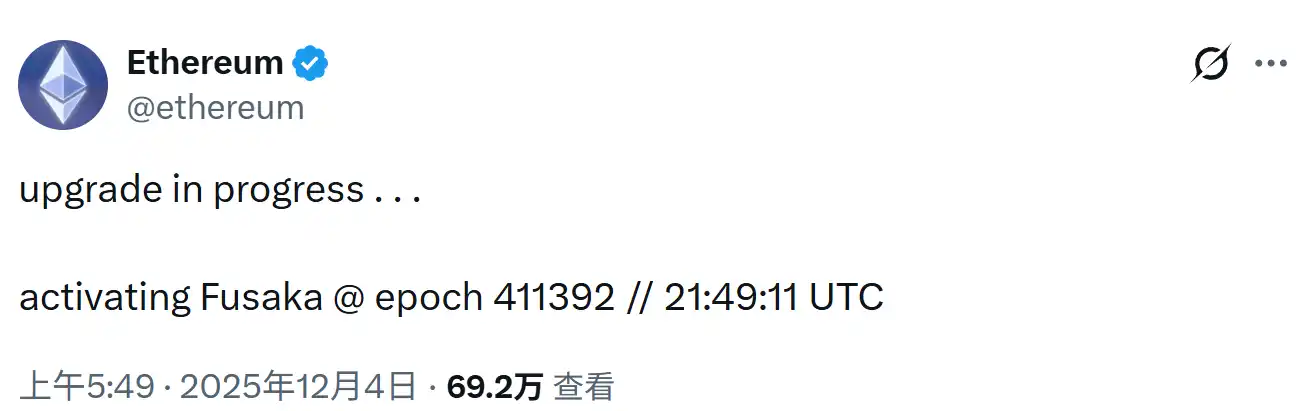
In this Fusaka upgrade, the focus was almost entirely on scaling: Blob capacity expanded by 8 times, combined with PeerDAS random sampling verification, making the cost narrative of the DA (Data Availability) track a thing of the past.

Indeed, cheaper L2s are a good thing, but for Ethereum's long-term ZK roadmap, EIP-7825 is the real game-changer because it sets a Gas limit for a single transaction on Ethereum (about 16.78 million Gas).

As we all know, Ethereum's block Gas Limit was increased to 60 million this year. But even as the upper limit continues to rise, theoretically, if they were willing to pay an extremely high Gas Price, someone could send a super-complex "Mega-Transaction" that directly occupies the entire block's 60 million Gas capacity, thereby clogging the entire block.

This was allowed before, but EIP-7825 introduces a new restriction: no single transaction can consume more than 16.78 million Gas, regardless of the block size.

So why limit the size of a single transaction? This change actually has no impact on ordinary user transfers, but for ZK Provers (proof generators), it is a matter of life and death, and it is also closely related to how ZK systems generate proofs.

To give a simple example, before EIP-7825, if a block contained a "Mega-Transaction" consuming 60 million Gas, the ZK Prover had to run this extremely complex transaction sequentially—it couldn't be split or parallelized. This is like a single-lane highway where a giant, extremely slow truck is in front, and all the cars behind (other transactions) have to wait for it to pass.

This would undoubtedly sentence "real-time proof" to death—because the time to generate the proof would be completely unpredictable, potentially taking dozens of minutes or even longer.

After EIP-7825, even if the block capacity expands to 100 million Gas in the future, since each transaction is forcibly limited to within 16.78 million Gas, each block is broken down into predictable, bounded, and parallelizable "small task units." This means that Ethereum's proof generation has changed from a tricky "logical puzzle" to a pure "money problem":

As long as enough parallel computing power is invested, we can process these split small tasks simultaneously in an extremely short time, thereby generating ZK proofs for huge blocks.

As Michael, co-founder and CEO of Brevis, said, EIP-7825 is the most underestimated upgrade on the future path of ZK and 100x scaling for Ethereum. It turns "real-time proof" from "theoretically impossible" to "engineerably schedulable." As long as we can solve the computing power problem through parallel computation, even a 200 million Gas block could achieve second-level proof. This is not only a breakthrough for ZK technology but also the physical foundation for Ethereum's Interoperability Layer (EIL) to achieve second-level cross-chain settlement.
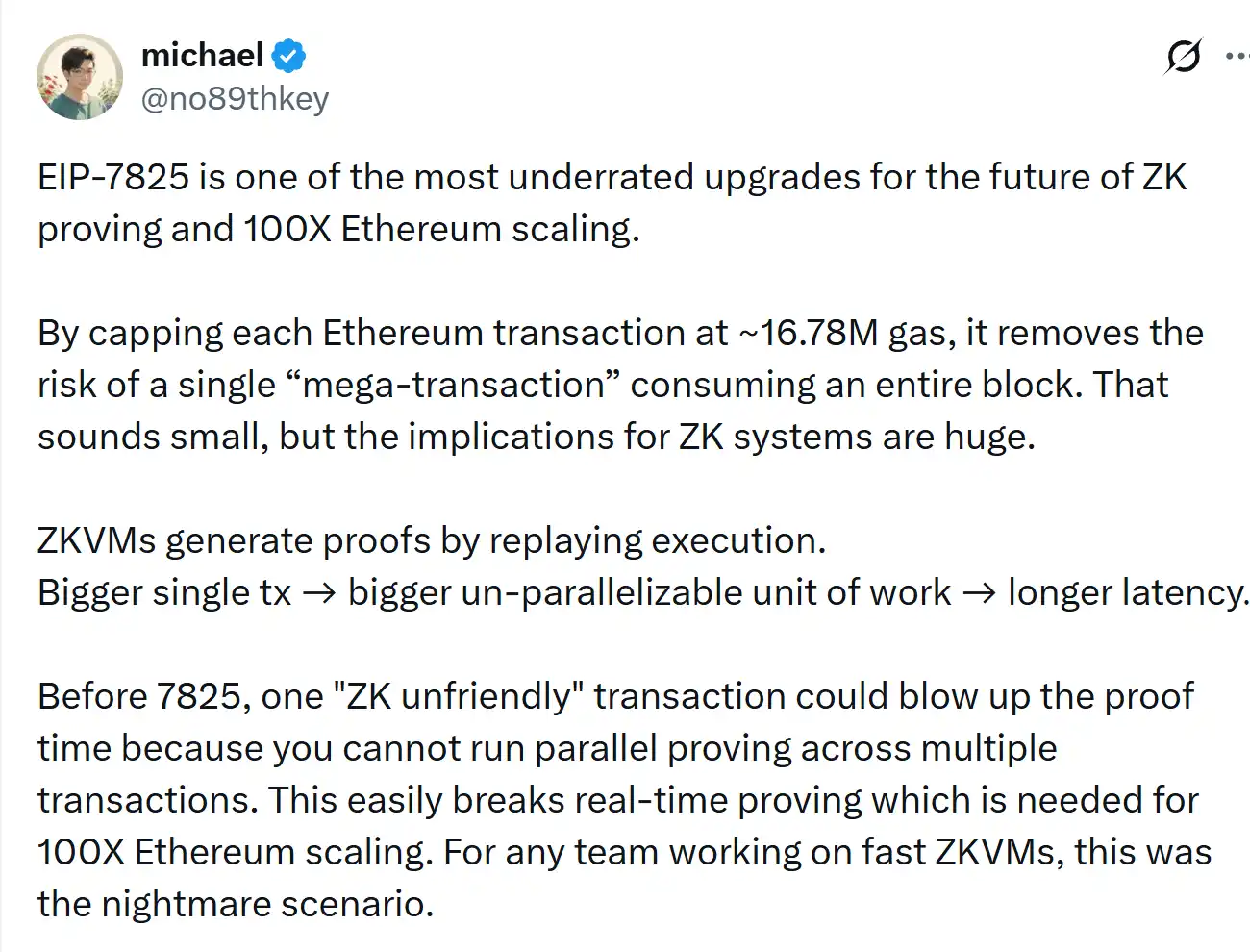
So this upgrade might not seem like the main event, but it is actually a huge breakthrough for the ZK roadmap and Ethereum's scaling future in 2026.

II. L1 zkEVM: The "Trust Anchor" for Ethereum Interoperability

However, although EIP-7825 paves the physical path (parallelizability) for real-time proof by limiting single transaction size, this is only one side of the coin. The other side is how the Ethereum mainnet itself utilizes this capability?

This involves the most hardcore narrative in Ethereum's roadmap—L1 zkEVM.

For a long time, zkEVM has been regarded as the "holy grail" for scaling Ethereum, not only because it can solve performance bottlenecks but also because it redefines the trust mechanism of blockchain. Its core idea is to enable the Ethereum mainnet to generate and verify ZK proofs.

In other words, in the future, after each Ethereum block is executed, it can output a verifiable mathematical proof, allowing other nodes (especially light nodes and L2s) to confirm the correctness of the result without repeating the calculation—if the ability to generate ZK proofs is directly written into the Ethereum protocol layer (L1), the proposer packs a block and generates a ZK proof, and validating nodes no longer need to rerun the transactions; they only need to verify this tiny mathematical proof.

What does this mean for interoperability?

In the context of Interop, the significance of L1 zkEVM far exceeds scaling itself. It can be said to be the "trust anchor" for all L2s. After all, if Ethereum L1 can generate proofs in real time, it means all L2s can read L1's final state in real time and trustlessly. This will bring about two qualitative changes:

  • Eliminate the Challenge Period: The confirmation time between chains will be compressed from "7 days (OP mechanism)" to "seconds (ZK mechanism)";
  • Decentralized Interconnection: Cross-chain will no longer require trust in third-party multi-signature bridges but will trust the mathematical truth of the Ethereum mainnet;

This is also the physical foundation we mentioned in the previous article for EIL (Interoperability Layer) to truly work—without real-time finality from L1, interoperability between L2s will never escape the shadow of "delay."

The goal is set (L1 zkEVM), and the physical limitation is removed (EIP-7825). So what about the specific implementation tools?

This leads to the subtle evolution happening in the ZK technology stack: from zkEVM to zkVM.

III. Fusaka & EIP-7825: The Interoperability Roadmap is Liberated

If EIP-7825 provides a "parallelizable hardware environment" for ZK by limiting single transaction size, then the evolution of the ZK technology stack is to find a "more efficient software architecture." This might sound like a tongue twister, but the difference is significant and represents two stages of ZK development.

The first stage is naturally zkEVM, which can be seen as the compatibility faction or the reformist faction.

The logic is to strive to imitate every instruction of the Ethereum EVM, allowing developers to deploy Solidity code directly, reducing migration costs and barriers.

In other words, the biggest advantage of zkEVM is its compatibility with existing Ethereum applications, greatly reducing the workload for Ethereum ecosystem developers. They can reuse most of the existing infrastructure and tools (including execution clients, block explorers, debugging tools, etc.).

However, precisely because of this, since the EVM was not designed with ZK-friendliness in mind, for the sake of compatibility, zkEVM's proof efficiency often has a ceiling, and proof times are much slower, burdened by historical baggage.

zkVM, on the other hand, belongs to the radical revolutionary faction, directly building a virtual machine that is extremely friendly to ZK proofs (such as based on RISC-V or WASM) to speed up proof time and achieve better execution speed and performance.

But it also loses compatibility with many EVM features and the ability to use existing tools (like low-level debuggers). However, a clear trend is that more and more L2 projects are shedding their baggage,极致 optimizing proof speed and cost, and exploring architectures based on zkVM.

So why is the Fusaka upgrade the unlocker?

After all, before EIP-7825, whether zkEVM or zkVM, once they encountered a Mega-Transaction on Ethereum, the proof generation time would skyrocket due to the inability to split the task.

Now, EIP-7825 forcibly breaks down transactions into predictable small units. With a parallelizable environment, an efficient architecture like zkVM can exert its maximum power. Even complex Ethereum blocks, when placed in a zkVM and combined with parallel computing power, can achieve real-time proof.

What does this mean for interoperability? The proliferation of zkVM combined with EIP-7825 means the cost of generating proofs will drop significantly. When the cost of generating a cross-chain proof is low enough to be negligible, and the speed is as fast as sending an email, traditional "cross-chain bridges" will completely disappear, replaced by underlying universal message protocols.

In Conclusion

As repeatedly mentioned in previous articles of the Interop series, the ultimate goal of Interop is not just asset "cross-chain," nor is it limited to the concept of "asset bridges" anymore. It is a comprehensive set of system-level capabilities, including cross-chain data communication, cross-chain logic execution, cross-chain user experience, cross-chain security, and consensus.

From this perspective, Interop can be understood as the universal language between future Ethereum ecosystem protocols. Its significance lies not only in transferring value but also in sharing logic. ZK's role in this is to guarantee execution correctness and support real-time state verification, making cross-domain calls "dare to do, able to do." It can even be said that without real-time ZK, there can hardly be truly usable Interop UX.

So when EIP-7825 was quietly activated in the Fusaka upgrade, and as L1 zkEVM gradually becomes a reality, we are getting closer to that ultimate goal: execution, settlement, and proof are completely abstracted in the background, and users are completely unaware of the chain's existence throughout the process.

This is the Interop endgame we all look forward to in the future.

Pertanyaan Terkait

QWhat is the significance of EIP-7825 in the Fusaka upgrade for Ethereum's interoperability?

AEIP-7825 introduces a gas limit per transaction (approximately 16.78 million gas), which prevents a single complex 'mega-transaction' from blocking an entire Ethereum block. This allows for parallel processing of transactions, making it feasible to generate ZK proofs in real-time. This is a critical engineering enabler for Ethereum's ZK roadmap and interoperability, as it transforms proof generation from a logical challenge into a solvable computational problem, paving the way for near-instant cross-chain settlements.

QHow does L1 zkEVM serve as a 'trust anchor' for Ethereum interoperability?

AL1 zkEVM integrates the ability to generate and verify ZK proofs directly into the Ethereum protocol layer. This means every block produced on Ethereum L1 can be accompanied by a verifiable mathematical proof. For interoperability, this allows all L2s to read the final state of L1 in real-time without trust. It eliminates the need for long challenge periods (e.g., the 7-day wait in Optimistic Rollups) and enables decentralized cross-chain communication without relying on trusted multi-signature bridges, as chains can trust the mathematical truth of Ethereum's mainnet.

QWhat is the key difference between zkEVM and zkVM in the context of ZK technology evolution?

AzkEVM focuses on full compatibility with the Ethereum Virtual Machine (EVM), allowing developers to deploy existing Solidity code with minimal changes. However, this compatibility often results in slower proof generation due to EVM's design not being ZK-friendly. In contrast, zkVM is a more radical approach that builds a new virtual machine (e.g., based on RISC-V or WASM) optimized for ZK proof efficiency and execution speed. While zkVM sacrifices some EVM compatibility and existing tooling, it offers significantly faster proof generation and better performance, which is crucial for real-time interoperability.

QHow does the combination of EIP-7825 and zkVM architecture enhance Ethereum's interoperability capabilities?

AEIP-7825 ensures that Ethereum transactions are broken down into small, predictable units that can be processed in parallel. This eliminates the problem of 'mega-transactions' causing unpredictable proof generation times. When combined with the efficient architecture of zkVM, which is designed for speed and low cost, it becomes possible to generate ZK proofs for complex Ethereum blocks in real-time. This drastically reduces the cost and increases the speed of cross-chain proof generation, making traditional cross-chain bridges obsolete and enabling seamless,底层通用消息协议 for interoperability.

QWhat is the ultimate goal of Interop (interoperability) in the Ethereum ecosystem, as described in the article?

AThe ultimate goal of Interop is not just cross-chain asset transfers but a comprehensive system-level capability that includes cross-chain data communication, logic execution, user experience, security, and consensus. It aims to create a universal language for protocols within the Ethereum ecosystem, enabling not only value transfer but also logic sharing. ZK technology ensures execution correctness and real-time state verification, making cross-domain interactions feasible and user-friendly. The end vision is a fully abstracted backend where users are unaware of the underlying chains, experiencing seamless interoperability.

Bacaan Terkait

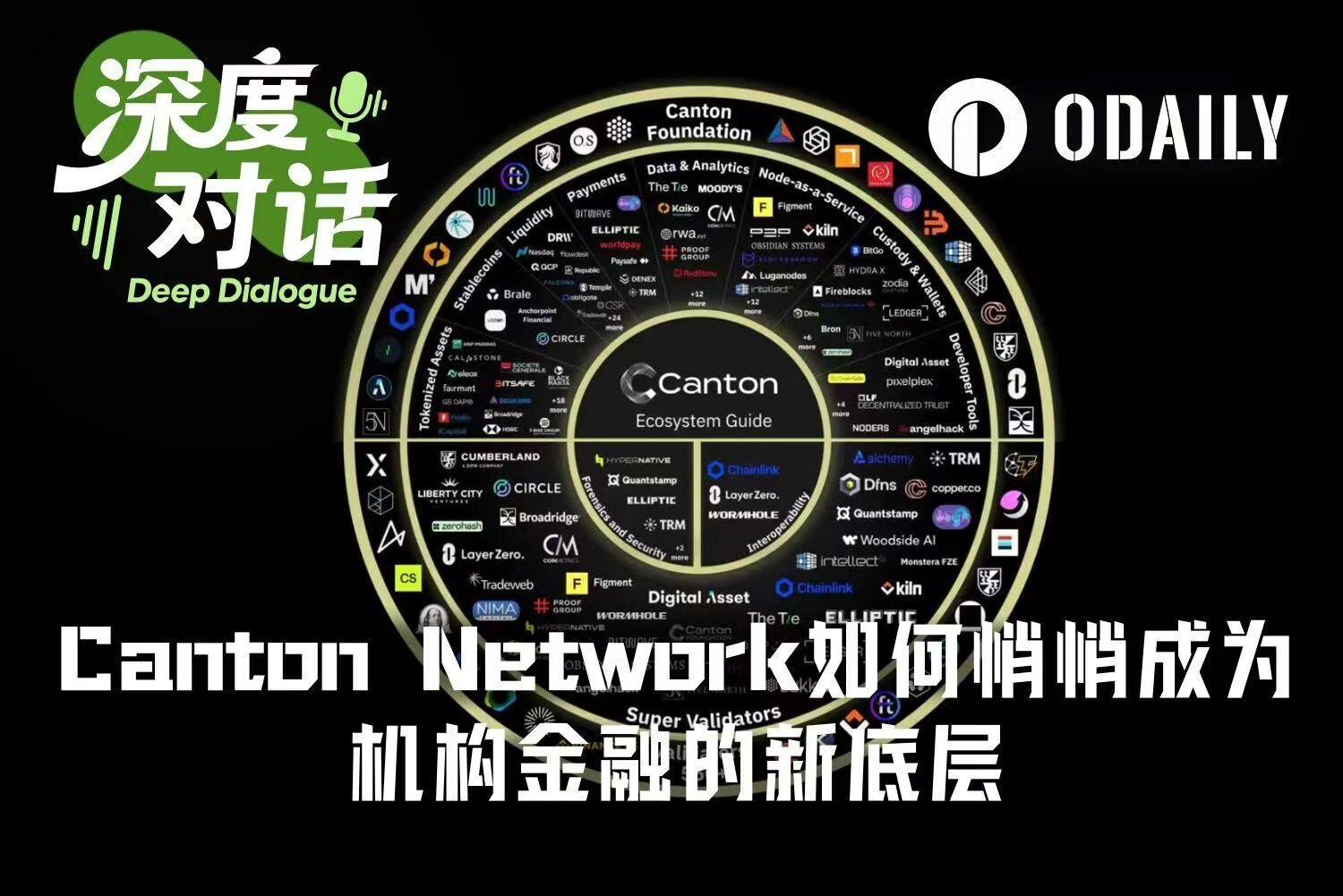
Membawa Pasar Itu Sendiri ke dalam Rantai: Canton Network secara Diam-diam Menjadi Lapisan Dasar Kelembagaan Finansial Baru

**Jaringan Canton: Landasan Baru untuk Keuangan Institusional yang Membawa Pasar ke dalam Blockchain** Pada Maret 2026, Visa bergabung sebagai **super validator dengan bobot tertinggi** di Canton Network hanya dalam tiga hari setelah mengajukan proposal, menandai langkah penting adopsi infrastruktur blockchain oleh lembaga keuangan tradisional. Canton, yang dikembangkan oleh Digital Asset Holdings, berbeda dengan blockchain publik seperti Ethereum karena fokusnya pada **kebutuhan institusi seperti kontrol visibilitas data**. Jaringan ini memungkinkan transaksi antara lembaga (seperti bank) menjadi **privat dan hanya terlihat oleh pihak yang terlibat**, melindungi strategi dan posisi dari pesaing. Desain ini menarik banyak raksasa keuangan seperti **Goldman Sachs, JPMorgan, BNP Paribas, DTCC, dan Nasdaq** untuk menjadi validator. Canton telah memproses lebih dari **$9 triliun per bulan** dengan transaksi nyata seperti **repo yang ditokenisasi, penyelesaian obligasi pemerintah AS, dan pergerakan jaminan**. Contoh nyata termasuk JPM Coin dari JPMorgan untuk penyelesaian dan proyek tokenisasi obligasi AS oleh DTCC. Visa diharapkan memperkuat sisi pembayaran untuk mencapai **penyelesaian atomik** (pembayaran dan pengiriman aset terjadi bersamaan). Token asli jaringan, **CC**, didesain sebagai "aset utilitas jaringan" yang didukung oleh volume aktivitas keuangan nyata, dengan distribusi yang adil (tanpa pra-tambang, alokasi tim, atau VC). Target jangka panjang Canton adalah menjadi **infrastruktur "tak terlihat"** yang mendorong keuangan global, di mana stablecoin menjadi standar untuk penyelesaian antar-lembaga dan modal lintas batas bergerak hampir secara real-time. Tantangan utama kini bukan lagi teknologi, tetapi adopsi dan koordinasi global di antara lembaga dan yurisdiksi yang berbeda.

Odaily星球日报8m yang lalu

Membawa Pasar Itu Sendiri ke dalam Rantai: Canton Network secara Diam-diam Menjadi Lapisan Dasar Kelembagaan Finansial Baru

Odaily星球日报8m yang lalu

Evernorth Klaim RLUSD Bukanlah Pembunuh XRP: Inilah Alasannya

Sagar Shah, Kepala Petugas Bisnis Evernorth, menegaskan bahwa stablecoin RLUSD Ripple yang didukung dolar tidak akan menggantikan XRP. Dalam postingan blog, ia menjelaskan kedua aset memiliki fungsi berbeda dalam keuangan on-chain. RLUSD dirancang sebagai dolar digital berkualitas tinggi untuk transaksi yang membutuhkan penyelesaian dalam dolar. Sementara XRP berperan sebagai aset penetral untuk perutean, penyelesaian silang aset, likuiditas, dan jaminan di XRP Ledger. Shah menggunakan analogi anak-anak yang bertukar camilan untuk menjelaskan peran XRP sebagai "anak penukar" yang memfasilitasi perdagangan ketika dua pihak tidak ingin memperdagangkan pasangan aset yang sama secara langsung. Dalam transaksi seperti penukaran tokenisasi Treasury bill dengan euro stablecoin, XRP bertindak sebagai jembatan tak terlihat yang memungkinkan perdagangan instan tanpa perlu mencocokkan pembeli dan penjual spesifik. Shah menyebutkan tiga alasan mengapa RLUSD tidak bisa menjadi "pembunuh" XRP: 1. **Risiko penerbit**: RLUSD bergantung pada perusahaan penerbit dan cadangan dolar, yang bisa menjadi kelemahan struktural jika diharuskan menjadi aset perutean utama. 2. **Netralitas**: Stablecoin harus mematuhi sanksi dan pembatasan, yang bertentangan dengan kebutuhan aset perutean global yang netral dan tanpa izin. 3. **Struktur pasar**: Likuiditas terfragmentasi di banyak pool yang berbeda, sedangkan XRP sudah likuid dan berfungsi sebagai jembatan umum di berbagai aset. Kesimpulannya, pertumbuhan keuangan on-chain membutuhkan kedua aset: RLUSD sebagai dolar digital dan XRP sebagai aset perutean dan jembatan yang netral, likuid, dan tahan sensor.

bitcoinist2j yang lalu

Evernorth Klaim RLUSD Bukanlah Pembunuh XRP: Inilah Alasannya

bitcoinist2j yang lalu

Trading

Spot
Futures

Artikel Populer

Cara Membeli HPP

Selamat datang di HTX.com! Kami telah membuat pembelian House Party Protocol (HPP) menjadi mudah dan nyaman. Ikuti panduan langkah demi langkah kami untuk memulai perjalanan kripto Anda.Langkah 1: Buat Akun HTX AndaGunakan alamat email atau nomor ponsel Anda untuk mendaftar akun gratis di HTX. Rasakan perjalanan pendaftaran yang mudah dan buka semua fitur.Dapatkan Akun SayaLangkah 2: Buka Beli Kripto, lalu Pilih Metode Pembayaran AndaKartu Kredit/Debit: Gunakan Visa atau Mastercard Anda untuk membeli House Party Protocol (HPP) secara instan.Saldo: Gunakan dana dari saldo akun HTX Anda untuk melakukan trading dengan lancar.Pihak Ketiga: Kami telah menambahkan metode pembayaran populer seperti Google Pay dan Apple Pay untuk meningkatkan kenyamanan.P2P: Lakukan trading langsung dengan pengguna lain di HTX.Over-the-Counter (OTC): Kami menawarkan layanan yang dibuat khusus dan kurs yang kompetitif bagi para trader.Langkah 3: Simpan House Party Protocol (HPP) AndaSetelah melakukan pembelian, simpan House Party Protocol (HPP) di akun HTX Anda. Selain itu, Anda dapat mengirimkannya ke tempat lain melalui transfer blockchain atau menggunakannya untuk memperdagangkan mata uang kripto lainnya.Langkah 4: Lakukan trading House Party Protocol (HPP)Lakukan trading House Party Protocol (HPP) dengan mudah di pasar spot HTX. Cukup akses akun Anda, pilih pasangan perdagangan, jalankan trading, lalu pantau secara real-time. Kami menawarkan pengalaman yang ramah pengguna baik untuk pemula maupun trader berpengalaman.

126 Total TayanganDipublikasikan pada 2026.04.29Diperbarui pada 2026.04.29

Cara Membeli HPP

Apa Itu GENIUS

I. Pengenalan Proyek1. Apa itu Genius?Genius (GENIUS) diposisikan sebagai “terminal on-chain terbaik,” sebuah platform perdagangan terdesentralisasi yang fokus pada privasi dan kecepatan. Dengan mengintegrasikan teknologi privasi kelas atas, platform ini bertujuan untuk membangun infrastruktur perdagangan privasi generasi berikutnya di seluruh jaringan seperti BNB Chain, memungkinkan pengguna untuk berinteraksi on-chain dengan pengalaman yang mulus yang sebanding dengan bursa terpusat.2. Bagaimana Cara Kerja Genius?Arsitektur teknis inti Genius disusun sebagai berikut:(1) Tidak terlihat di rantai: Pengguna tidak perlu menangani persetujuan multi-langkah secara manual untuk operasi lintas rantai, pembungkusan aset, atau manajemen gas yang kompleks.(2) Perdagangan Tanpa Tanda Tangan: Melalui integrasi seperti Turnkey, Genius memungkinkan perdagangan instan tanpa konfirmasi pop-up atau otorisasi per transaksi.(3) Agregator Agregator: Genius didukung oleh tumpukan agregasi terbaik di kelasnya yang terintegrasi dengan lebih dari 150 DEX, mengklaim efisiensi kutipan yang lebih baik dibandingkan produk pesaing.(4) Manajemen Akun: Platform ini mengadopsi arsitektur non-kustodian dan memanfaatkan Turnkey dan Lit Protocol untuk manajemen kunci, memungkinkan pengguna untuk mengakses akun mereka dengan aman melalui passkeys.3. Siapa yang Menciptakan Genius?Menurut Ketentuan Layanan resminya, Genius dikembangkan oleh Shuttle Labs, Inc. Berdasarkan akun X resmi proyek, Ryan Myher adalah salah satu kontributor kunci yang mendorong iterasi produk, termasuk pengembangan seperti peluncuran protokol Ghost, serta keterlibatan komunitas yang lebih luas.Pendiri Binance CZ secara resmi telah bergabung dengan proyek ini sebagai penasihat, dengan tujuan membantu tim membangun pengalaman perdagangan on-chain yang lebih cepat dan lebih menjaga privasi.Selain itu, proyek ini telah menerima dukungan kuat dari YZi Labs, yang telah berinvestasi di Genius dan bekerja sama dengan Genius Foundation, yang bertanggung jawab untuk memelihara Protokol Jembatan Genius (GBP) inti.4. Tokenomik GeniusGENIUS adalah token asli dari ekosistem Genius. Hingga saat ini, proyek ini belum merilis dokumen tokenomik lengkap.Berdasarkan pengungkapan resmi terbaru, Genius menggabungkan mekanisme deflasi, dan 4,6% dari total pasokan token telah dibakar selama fase peluncuran awal.Sistem Genius Points (GP):(1) Perdagangan untuk Mendapatkan: Platform ini telah menetapkan kumpulan hadiah sebesar 200 juta Genius Points, dan pengguna mendapatkan GP untuk setiap perdagangan yang dilakukan melalui terminal.(2) Tingkatan dan Lencana: Genius memiliki sistem lencana berbasis progresi yang berkisar dari Smart hingga God, dengan level yang lebih tinggi membuka keuntungan dan manfaat tambahan.(3) Hasil Asli: Pengguna yang memegang aset tertentu seperti usdGG di dasbor dapat memperoleh hasil asli secara langsung tanpa melalui staking yang kompleks.(4) Insentif Rujukan: Pemberi rujukan dapat memperoleh pengembalian biaya lebih dari 45% yang dibayarkan dalam USDC, bersama dengan GP tambahan.5. Garis Waktu & Tonggak UtamaMaret 2020: Akun X resmi proyek dibuat, menandai awal fase persiapan awalnya.13 Januari 2026: Genius mengumumkan investasi multi-juta dolar dari YZi Labs dan secara bersamaan mengonfirmasi CZ sebagai penasihat untuk mempercepat pembangunan infrastruktur perdagangan privasinya.18 April 2026: Proyek ini mengumumkan bahwa protokol privasi Ghost akan segera diluncurkan.29 April 2026: Protokol Ghost secara resmi dibuka untuk 50 penguji pertamanya, menandai awal era baru untuk perdagangan privasi di BNB Chain. Pada saat yang sama, tim mengonfirmasi bahwa 4,6% token telah dibakar.​II. Informasi Token1) Informasi DasarNama token: GENIUS (Genius)III. Tautan TerkaitSitus web:https://www.tradegenius.com/homePenjelajah:https://bscscan.com/address/0x1f12b85aac097e43aa1555b2881e98a51090e9a6Sosial:https://x.com/GeniusTerminalCatatan: Pengenalan proyek berasal dari materi yang diterbitkan atau disediakan oleh tim proyek resmi, yang hanya untuk referensi dan tidak merupakan nasihat investasi. HTX tidak bertanggung jawab atas kerugian langsung atau tidak langsung yang dihasilkan.

237 Total TayanganDipublikasikan pada 2026.04.29Diperbarui pada 2026.05.12

Apa Itu GENIUS

Cara Membeli GENIUS

Selamat datang di HTX.com! Kami telah membuat pembelian Genius (GENIUS) menjadi mudah dan nyaman. Ikuti panduan langkah demi langkah kami untuk memulai perjalanan kripto Anda.Langkah 1: Buat Akun HTX AndaGunakan alamat email atau nomor ponsel Anda untuk mendaftar akun gratis di HTX. Rasakan perjalanan pendaftaran yang mudah dan buka semua fitur.Dapatkan Akun SayaLangkah 2: Buka Beli Kripto, lalu Pilih Metode Pembayaran AndaKartu Kredit/Debit: Gunakan Visa atau Mastercard Anda untuk membeli Genius (GENIUS) secara instan.Saldo: Gunakan dana dari saldo akun HTX Anda untuk melakukan trading dengan lancar.Pihak Ketiga: Kami telah menambahkan metode pembayaran populer seperti Google Pay dan Apple Pay untuk meningkatkan kenyamanan.P2P: Lakukan trading langsung dengan pengguna lain di HTX.Over-the-Counter (OTC): Kami menawarkan layanan yang dibuat khusus dan kurs yang kompetitif bagi para trader.Langkah 3: Simpan Genius (GENIUS) AndaSetelah melakukan pembelian, simpan Genius (GENIUS) di akun HTX Anda. Selain itu, Anda dapat mengirimkannya ke tempat lain melalui transfer blockchain atau menggunakannya untuk memperdagangkan mata uang kripto lainnya.Langkah 4: Lakukan trading Genius (GENIUS)Lakukan trading Genius (GENIUS) dengan mudah di pasar spot HTX. Cukup akses akun Anda, pilih pasangan perdagangan, jalankan trading, lalu pantau secara real-time. Kami menawarkan pengalaman yang ramah pengguna baik untuk pemula maupun trader berpengalaman.

167 Total TayanganDipublikasikan pada 2026.04.29Diperbarui pada 2026.05.12

Cara Membeli GENIUS

Diskusi

Selamat datang di Komunitas HTX. Di sini, Anda bisa terus mendapatkan informasi terbaru tentang perkembangan platform terkini dan mendapatkan akses ke wawasan pasar profesional. Pendapat pengguna mengenai harga A (A) disajikan di bawah ini.

活动图片