Google Bows To Crypto Fury, Unbans Non-Custodial Wallets

bitcoinistDipublikasikan tanggal 2025-08-14Terakhir diperbarui pada 2025-08-14

Abstrak

A policy whiplash at Google set the crypto industry ablaze on Wednesday before ending in a rare and explicit climbdown:...

Trusted Editorial content, reviewed by leading industry experts and seasoned editors. Ad Disclosure

A policy whiplash at Google set the crypto industry ablaze on Wednesday before ending in a rare and explicit climbdown: non-custodial wallets are not covered by the Play Store’s new licensing regime.

The clarification, posted by Google’s official communications account on X late August 13, came after lawyers, developers, and high-profile Bitcoiners blasted an earlier interpretation of revised rules that appeared to force Anti-Money-Laundering and Know-Your-Customer checks on self-custody software in the United States and effectively box out indie wallet teams across the European Union.

“Non-custodial wallets are not in scope of Google Play’s Cryptocurrency Exchanges and Software Wallets Policy. We are updating the Help Center to make this clear,” Google wrote.

The initial backlash was swift. VP of Regulatory Affairs at Paradigm Justin Slaughter called it a “surprising move… amid [Google’s] antitrust litigation,” arguing that “pure coding should not require a federal license,” while Jack Dorsey summed up the mood with a one-word verdict: “terrible.”

By nightfall in the US, crypto analyst Pentoshi declared “Breaking news Google has unbanned self custodial wallets,” while Pierre Rochard praised the course correction: “All companies make mistakes, great companies listen to online feedback and course-correct. Google Play can’t afford to ban itself from Bitcoin.”

Google Bow To Crypto Community (Partially)

Under the policy actually taking effect, Google is synchronizing Play Store distribution with licensing in roughly 15 jurisdictions for custodial products—crypto exchanges and custodial “software wallets”—with enforcement to begin on October 29, 2025. In practice that means US developers must operate under a federal or state banking charter or register with FinCEN as a money services business and obtain state money transmitter license; in the EU they must hold authorization as a MiCA crypto-asset service provider.

France and Germany have transitional windows before MiCA fully displaces national licensing. Google’s own policy pages and the updated explainers published Wednesday night underline that non-custodial wallets—apps where users retain their private keys and no third party takes custody—are outside this licensing scope.

The pivot capped a confusing news cycle. Several outlets reported during the day that Google would require licenses for all wallets, custodial and non-custodial alike, before clarifications on X and in follow-up coverage reversed that reading. Google’s statement confirms that self-custody apps are exempt, while noting that the Play Store will still gate custodial apps and exchanges in the US, EU, UK, and other listed markets. The net effect: the compliance burden shifts squarely onto entities that hold user funds, not the open-source code that enables users to hold their own.

Even with Google’s clarification, edge cases remain. Francis Pouliot, CEO of Bull Bitcoin, pressed the company to explain whether the policy captures non-custodial wallets that embed optional gateways to regulated exchanges, with access controls enforced inside the app rather than via Play Store geo-targeting. That unresolved ambiguity matters to builders who have stitched together self-custody with fiat on-ramps through partner integrations, and who must now assess whether those features nudge a wallet into “custodial software wallet” territory for Play’s purposes.

Developers also reported inconsistent enforcement as the policy story evolved. Adam Simecka, founder of the self-custodial Manna Wallet, said the app was de-listed from Play search “with no warning, notice, or recourse,” then later observed that visibility differed across devices and regions: “Some people are able to see it in their Play Store… Out of our family’s 3 Android devices, it is showing on 1.” He added that positive reviews had disappeared alongside search visibility.

For users and developers, the path ahead is clearer but not frictionless. The Help Center’s country-by-country matrix now anchors distribution for custodial apps to local licensure—FinCEN MSB and state money transmission in the US; CASP authorization under MiCA in the EU; FCA registration in the UK; and comparable regimes in Switzerland, the UAE, Japan, South Korea, and others—with France and Germany granted interim national options before their MiCA deadlines.

Google states the blockchain content policy update becomes effective October 29, 2025, with additional Help Center links added to reflect the new requirements. In parallel, Google has reiterated—now on the record—that non-custodial wallets are outside the scope of these licensing checks.

At press time, the total crypto market cap stood at $4.11 trillion.
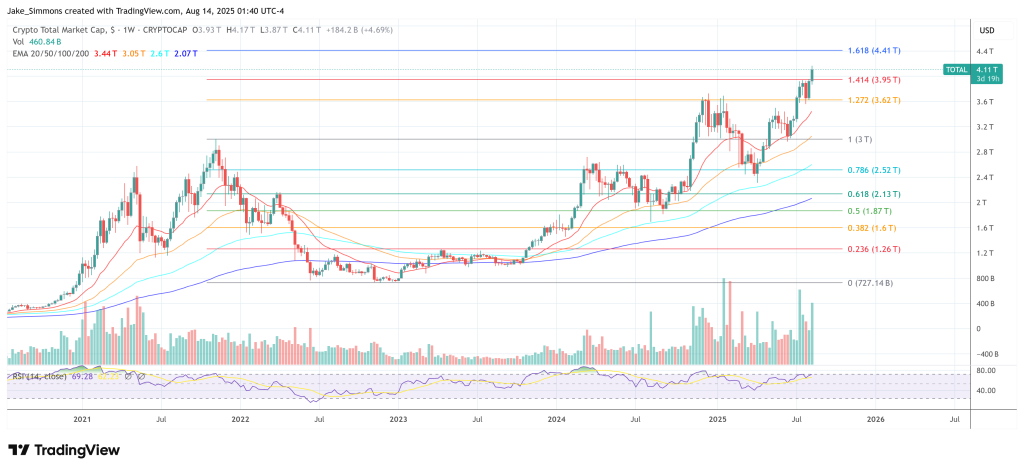
Total crypto market cap
Total crypto market cap, 1-week chart | Source: TOTAL on TradingView.com
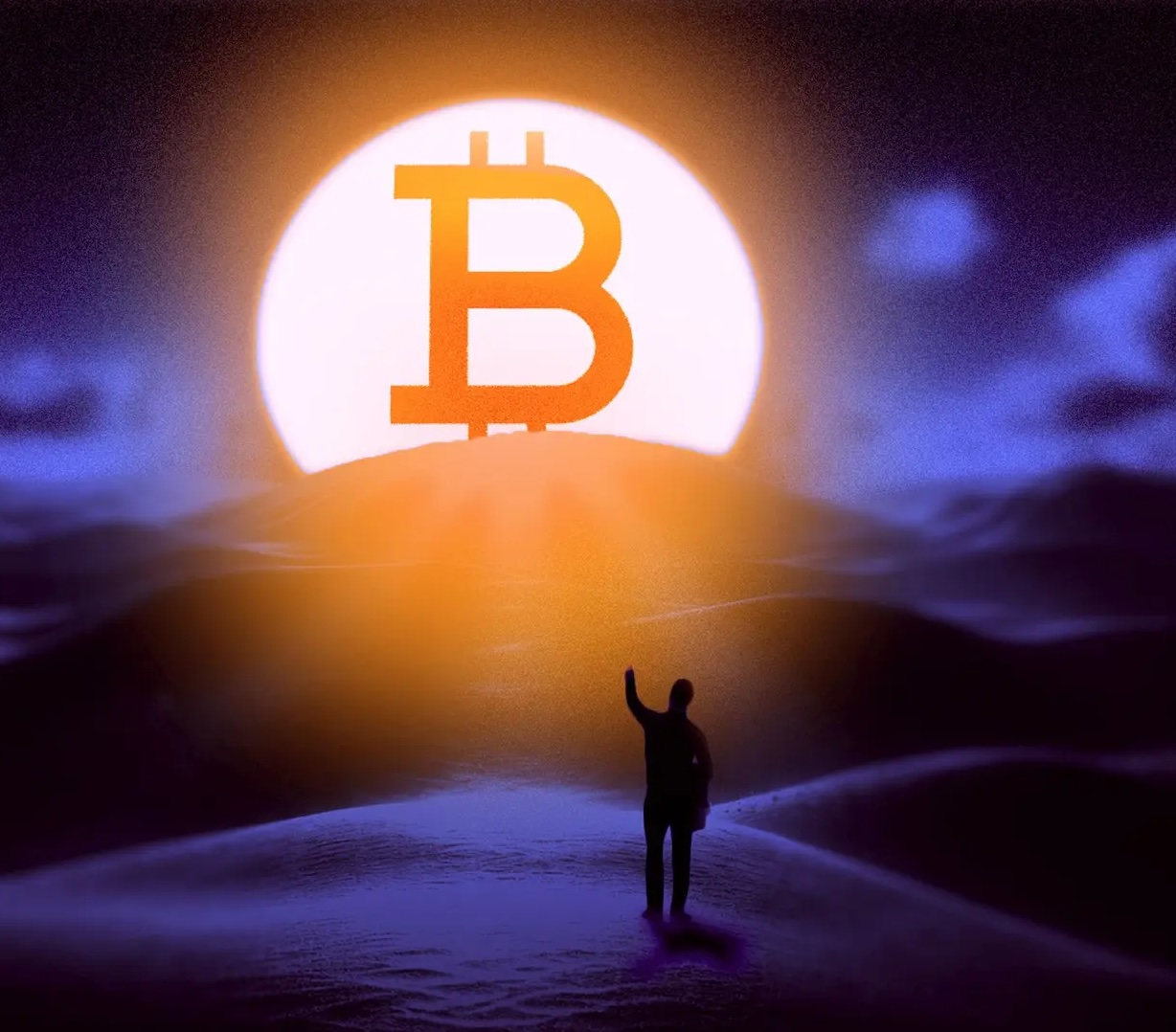
Featured image created with DALL.E, chart from TradingView.com
Editorial Process for bitcoinist is centered on delivering thoroughly researched, accurate, and unbiased content. We uphold strict sourcing standards, and each page undergoes diligent review by our team of top technology experts and seasoned editors. This process ensures the integrity, relevance, and value of our content for our readers.

Jake Simmons has been a Bitcoin enthusiast since 2016. Ever since he heard about Bitcoin, he has been studying the topic every day and trying to share his knowledge with others. His goal is to contribute to Bitcoin's financial revolution, which will replace the fiat money system. Besides BTC and crypto, Jake studied Business Informatics at a university. After graduation in 2017, he has been working in the blockchain and crypto sector. You can follow Jake on Twitter at @realJakeSimmons.

Bacaan Terkait

Sebuah Negara yang Menambang Bitcoin Selama 8 Tahun, Mendirikan Bank Kripto Khusus Miliknya Sendiri

Sejak 2018, kerajaan kecil Bhutan di Pegunungan Himalaya telah menambang Bitcoin, memanfaatkan sumber daya hidro yang melimpah. Kini, negara ini melangkah lebih jauh dengan mendirikan DK Bank, bank berlisensi khusus untuk aset kripto, yang berlokasi di zona administratif khusus Gedu Mindfulness City (GMC). DK Bank, di bawah pengawasan bersama Otoritas Moneter Kerajaan Bhutan, bertujuan mengisi celah layanan perbankan bagi bisnis kripto yang sering ditolak bank tradisional karena kesulitan manajemen risiko. Bank ini menawarkan akun terpadu yang mendukung 9 mata uang fiat dan stablecoin seperti USDT/USDC dalam satu tempat, layanan kustodi aset kripto, serta jalur on/off-ramp. GMC, yang mengadopsi sistem "satu negara, dua sistem", membangun kerangka regulasi dengan merujuk hukum umum Singapura dan aturan pasar keuangan Abu Dhabi Global Market (ADGM). Perusahaan berlisensi dari yurisdiksi tersebut dapat mempercepat proses izin operasi di sini. Para pemimpin proyek menekankan fokus pada infrastruktur keuangan institusional seperti penambangan, kustodian, dan tokenisasi aset riil, bukan produk spekulatif untuk ritel. Mereka juga menyoroti diversifikasi portofolio di berbagai sektor blockchain untuk memitigasi risiko volatilitas Bitcoin. Dengan bandara internasional yang direncanakan selesai pada 2029 dan visa digital nomad yang sedang diuji, Bhutan bercita-cita menjadikan GMC sebagai pusat layanan keuangan untuk Asia Selatan, menawarkan stabilitas dan pendekatan yang tertib dalam lanskap keuangan global yang semakin kompleks.

Foresight News1j yang lalu

Sebuah Negara yang Menambang Bitcoin Selama 8 Tahun, Mendirikan Bank Kripto Khusus Miliknya Sendiri

Foresight News1j yang lalu

Kraken Luncurkan Futures Perpetual Berlisensi CFTC untuk Trader Profesional AS

Kraken telah meluncurkan futures abadi (perpetual futures) yang diatur oleh CFTC untuk klien institusional dan profesional di AS melalui integrasi Bitnomial. Kontrak baru ini tersedia di Kraken Pro, dengan aset yang mencakup BTC, ETH, SOL, XRP, ADA, LINK, DOGE, LTC, dan AVAX, menggunakan struktur suku bunga pendanaan delapan jam. Peluncuran ini penting karena membawa produk derivatif kripto yang dominan secara global ke dalam kerangka kerja AS yang sesuai aturan. Futures abadi memungkinkan perdagangan leveraged tanpa tanggal kedaluwarsa tetap, namun aktivitas ini sebagian besar terjadi di luar AS karena regulasi yang lebih ketat. Kraken memberikan alternatif bagi trader profesional AS untuk mengakses likuiditas dengan kenyamanan regulasi domestik. Produk ini bukan untuk pasar ritail umum, melainkan terbatas pada klien institusional dan profesional yang memenuhi syarat. Langkah ini merupakan bagian dari upaya Kraken membangun ekosistem derivatif yang lebih lengkap di AS, dan menandakan bahwa futures abadi tidak lagi hanya produk lepas pantai. Tantangannya adalah apakah platform teratur ini dapat menarik likuiditas yang cukup untuk bersaing dengan venue lepas pantai. Kesuksesannya akan bergantung pada penyebaran harga, efisiensi pendanaan, aturan margin, dan kualitas eksekusi. Jika likuiditasnya kuat, ini dapat menarik aktivitas kembali ke dalam negeri; jika tipis, produk ini tetap penting secara simbolis sebagai tanda kematangan pasar derivatif kripto AS.

bitcoinist1j yang lalu

Kraken Luncurkan Futures Perpetual Berlisensi CFTC untuk Trader Profesional AS

bitcoinist1j yang lalu

Trading

Spot
Futures
活动图片