New research reveals Terra’s collapse may have been an inside job

FinboldDipublikasikan tanggal 2022-06-14Terakhir diperbarui pada 2022-06-14

Abstrak

Apparently, the wallet identified as an “attacker” for generating a transaction that caused the collapse of the algorithm-based stablecoin project Terra was actually maintained by Do Kwon’s Terraform Labs.

Apparently, the wallet identified as an “attacker” for generating a transaction that caused the collapse of the algorithm-based stablecoin project Terra was actually maintained by Do Kwon’s Terraform Labs.

Consequently, this indicates that the collapse of the Terra (LUNA) ecosystem, which resulted in losses to investors of tens of billions of dollars, was brought about by activities taken inside the firm, according to new research uncovered by blockchain security company Uppsala Security and CoinDesk Korea published on June 14.

South Korean prosecutors also confirmed that the information revealed that the attackers who hit Terra were not the rumored Wall Street whales, but rather the wallets and internal behavior managed by Terraform Labs itself, which is now being investigated.

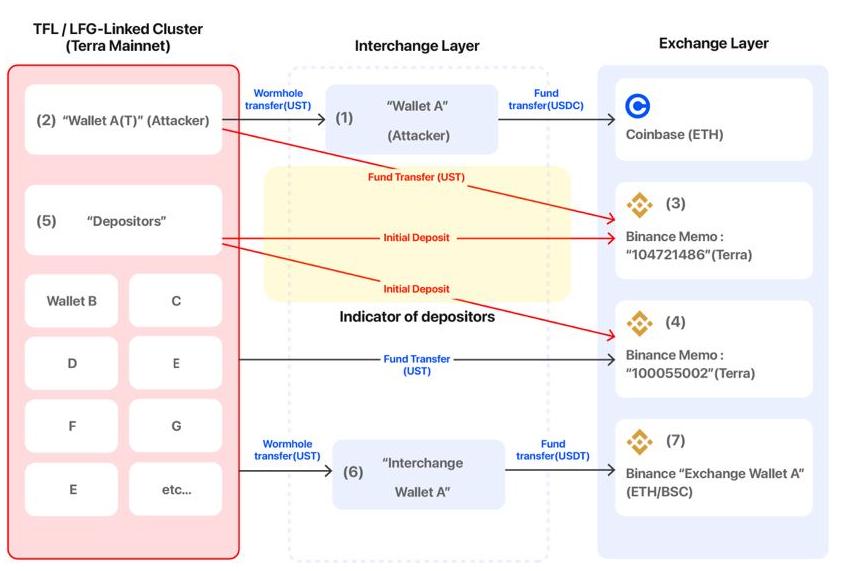
Using on-chain data forensic tools, Uppsala Security and CoinDesk Korea have been examining the reason for the Terra project’s crash on May 7 for approximately a month. The wallet (0x8d47f08ebc5554504742f547eb721a43d4947d0a) or referred to as “Wallet A” for convenience had been flagged as an attacker wallet by a slew of research firms.
Terra ecosystem collapses

Wallet A, which was built on the Ethereum blockchain, came into being on May 7, at around 4:32 PM, based on Coordinated Universal Time (UTC).

On the same day, an attempt to de-peg the UST currency, which had been supposed to be tied to the dollar, failed. At around 9:44 p.m. on the same day, Terraform Labs withdrew approximately 150 million USTs, which is equivalent to approximately $150 million, from the DeFi service curve.

This action ensured that the Terra blockchain retained its liquidity. In reference to this topic, the Ceo Kwon Do-hyeong said, “the reason for subtracting the UST worth 150 million dollars from the curve is to provide a more stable UST liquidity.”

TerraUSD de-pegging takes place

The same day, at 9:57 p.m., wallet A swapped 85 million UST for Curve, another stable coin. Wallet A generated a large-scale UST transaction within 13 minutes after Terraform Labs temporarily removed the liquidity of UST from the curve.

Wallet A then transmitted USDC to Coinbase, the biggest North American virtual asset exchange, after exchanging UST. A substantial quantity of UST was put into numerous exchanges throughout the globe before and after this transaction, which accelerated de-pegging and finally led to a bank run.

As a result, Wallet A has been identified as the attacker’s wallet by various blockchain research firms across the globe. Some people speculated that this wallet belonged to a Wall Street financial firm out to bring Terra down.

Bacaan Terkait

9,4 Miliar, Ini Investasi Terbesar Robot Tahun Ini

**Neura, Perusahaan Robot Humanoid Jerman, Raup Rp94,9 Triliun dalam Pendanaan Seri C** Neura, perusahaan robot humanoid asal Munich, Jerman, berhasil mengumpulkan pendanaan seri C sebesar $14 miliar atau sekitar Rp94,9 triliun. Pendanaan ini menempatkan valuasi perusahaan sekitar $7 miliar, membawanya ke jajaran teratas perusahaan robot humanoid global. Yang menarik dari pendanaan ini adalah profil investor. Selain raksasa teknologi seperti NVIDIA, Amazon, dan Qualcomm, dua nama besar industri Jerman, **Schaeffler** (pembuat bantalan dan sistem transmisi) dan **Bosch** (komponen otomotif & peralatan industri), turut serta. Keikutsertaan mereka menandakan pergeseran logika dalam industri: robot humanoid tidak lagi sekadar demonstrasi teknologi, tetapi mulai dilihat sebagai solusi yang siap diimplementasikan di lantai pabrik. Neura sendiri sudah memiliki klien nyata seperti BMW. Pendanaan besar-besaran ke sektor ini didorong oleh dua hal utama: **titik kritis kemampuan AI** (terutama model besar yang meningkatkan persepsi dan pengambilan keputusan robot) dan **tekanan kebutuhan industri** (kekurangan tenaga kerja terampil dan biaya tenaga kerja yang terus naik secara global). Saat ini, ada dua jalur berbeda yang ditempuh perusahaan robot: 1. **Robot Humanoid Umum**: Bertujuan membuat robot serbaguna seperti Figure AI. Jalur ini menjanjikan namun penuh tantangan teknis dan siklus komersialisasi panjang. 2. **Fokus pada Skenario Industri Spesifik**: Seperti Neura, yang memprioritaskan tugas-tugas industri berulang dan terdefinisi dengan baik (misalnya, di pabrik mobil). Jalur ini memiliki jalur komersialisasi yang lebih jelas. Tantangan utama ke depan bukan lagi pada kemampuan teknis dasar (bergerak, memahami perintah), tetapi pada **stabilitas, keandalan, dan pembentukan ekosistem komersial** di dunia nyata. Ini termasuk biaya adaptasi yang tinggi untuk setiap pabrik dan pembangunan sistem pemeliharaan yang tangguh. Namun, masuknya modal industri dari perusahaan seperti Schaeffler dan Bosch menunjukkan keyakinan bahwa tantangan-tantangan ini dapat diatasi. Pertempuran sesungguhnya untuk robot humanoid kini telah berpindah dari laboratorium ke lantai pabrik.

marsbit4j yang lalu

9,4 Miliar, Ini Investasi Terbesar Robot Tahun Ini

marsbit4j yang lalu

Trading

Spot
Futures
活动图片