Jack Dorsey’s crypto business unit TBD recently announced they’re building a Bitcoin-based decentralized platform: Web5. This project aims to put personal data and identity management back into the hands of web users.
The internet as we know it is a network of web pages, systems, servers, and computers. More like a global system that democratizes access to information. Although, in a quest to access information on the web, we leave traces of ourselves on online platforms by signing up and accepting their cookie policies.
Often, we struggle to remember and secure our accounts and passwords with the plethora of websites and platforms we visit. Jack Dorsey’s Bitcoin-based platform identifies ‘Identity’ as the missing layer of the web and is out to solve it.
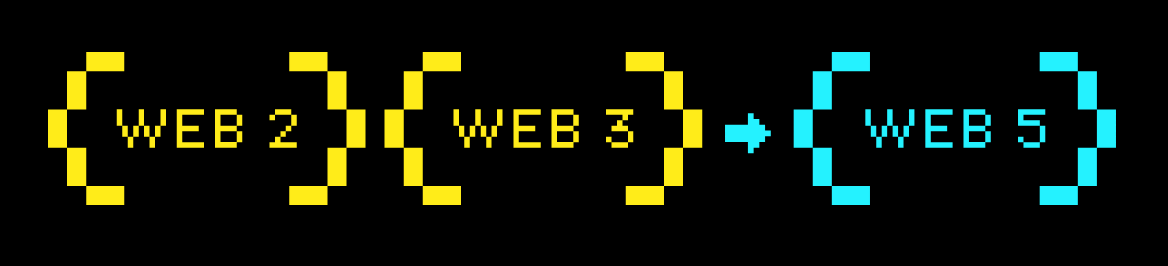
Introducing Web5
So, What is Web5 ?
Web5 is a decentralized web platform that enables developers to leverage decentralized identifiers, verifiable credentials, and decentralized web nodes to write decentralized web apps, returning ownership and control over identity and data to individuals.
In simple terms, web5 aims at empowering individuals with control over their identity and data on the web by creating apps and protocols that prioritize the individual. It all boils down to creating a decentralized society (DeSoc) that elevates identity management above personal gains.
Web5 comprises four components, which are its building blocks. They are decentralized identifiers (DID), decentralized web nodes (DWNs), and self-sovereign identity services (SSIS).
Let’s go right in!
The Components of Web5
Decentralized Identifier (DID)
A decentralized identifier is a Web5 component that is self-governed and self-owned, not requiring any centralized registration authority. The beauty of DIDs is that they have maximum resistance to all forms of injunction, and at the same time, they’re universally discoverable.
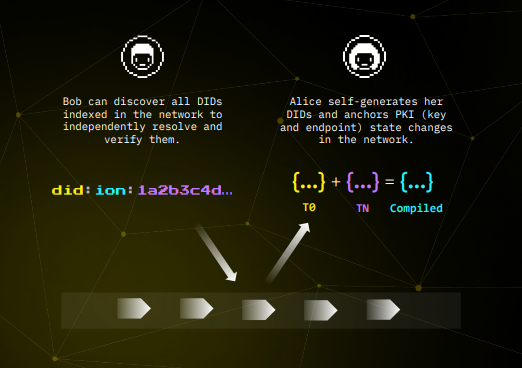
DIDs in action
Here’s where it gets interesting: DID leverages ION, a decentralized identifier network that runs on Bitcoin. ION brings censorship and scalability to DID. They support thousands of DID transactions per week and secure web users from violating their digital rights.
Decentralized Web Node (DWN)
Decentralized web nodes are an innovative standard for data storage and relay that permits entities of any type (people, organizations, etc.) to send and store encrypted or public messages, enabling a wide variety of decentralized apps and protocols to be built on top.
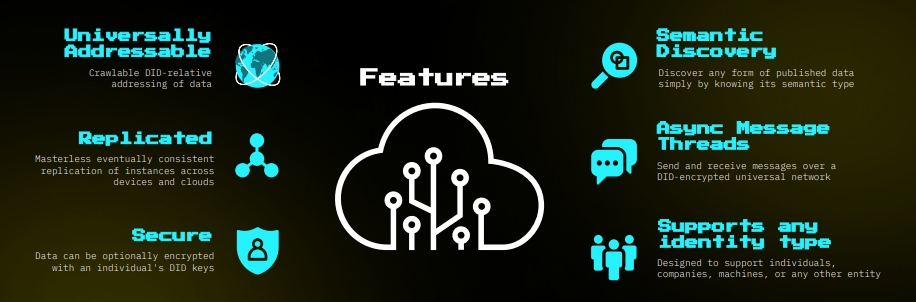
Features of a Decentralized Web Node (DWN)
I’ll break it down. DWN facilitates the interconnectivity between different entities that need to verify the identity of each other to transfer information to one another. They prove DID authentication, access, and authorization, interface definitions, object signing, etc.
Self-Sovereign Identity Service (SSIS)
Web5’s SSIS accelerates everything relating to DIDs and verifiable credentials. It’s an independent service verifying all information that a physical credential represents. The primary functions of SSIS include enabling verifiable credentials, credential revocation, exchanging credentials, messaging using DWNs, requesting credentials, etc.
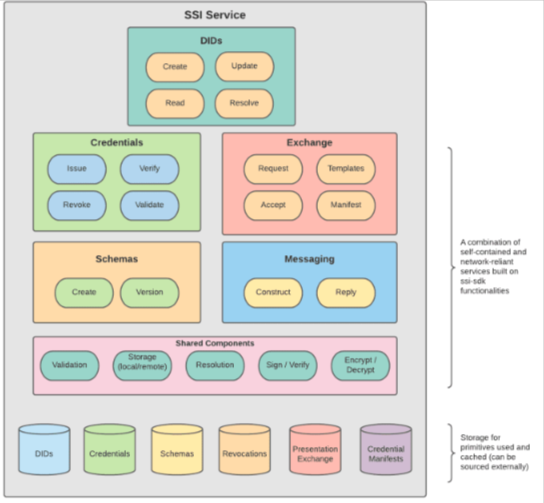
Representation of SSIS
DID, DWN and SSIS are the foundations of web5, and they’re interconnected. DID aids in the authentication and routing of identity, SSIS handles all verifiable credentials, and DWN stores data and transmits messages between different entities.
Who are the Actors of Web5?
TBD’s web5 obviously can’t function in isolation. It’s a system that requires actors or players to function effectively. There are three actors in web5; wallets, decentralized web nodes, and decentralized web apps.
Wallets serve as instruments for facilitating individual and institution identity and data interaction.
Decentralized Web Nodes (DWNS) are individual datastores that hold and transmit data.
Decentralized Web Apps (DWAS): Web5 apps with decentralized and storage capabilities
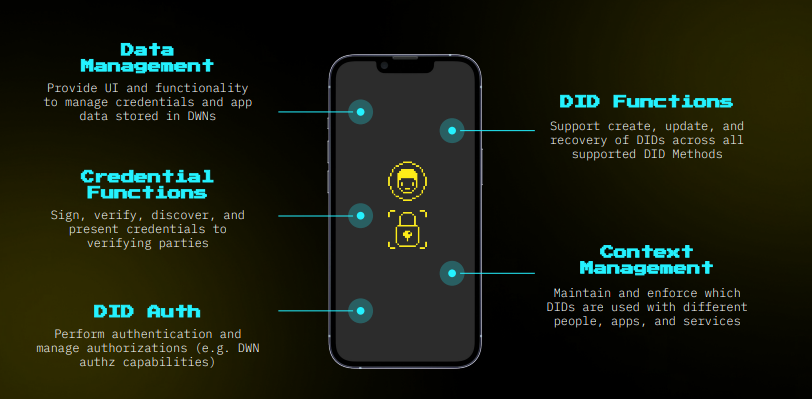
Anatomy of an Identity Wallet
Web5 Use Cases
Identity Control
Kate owns a digital wallet which securely stores and manages her data, authorization, and identity. Kate uses her digital wallet to sign into a new decentralized social media app. Since Kate is connected to the app with her decentralized identity, she doesn’t need to create a profile, and all the connections, posts, and activities she establishes on the app are stored directly in her decentralized web node.
Kate doesn’t need to create a new password or account for every decentralized web app she uses. She carries her social persona with her.
Data Ownership
Pete is a music lover that loves exploring new songs when he switches apps. But he’s always served his usual kind of songs whenever he changes apps because the music vendors have known his interest based on historical data.
Thankfully, he can end this cycle of music pains with his decentralized web nodes. Now, whenever he switches music apps, he can choose whether or not to let the app into his music preferences and settings.
We are arguably the luckiest generation on earth. Builders constantly push the boundaries of possibilities to ensure we have enough leverage to work, live and play. Kudos to the team at TBD.