Thousands of people around the world are selling their identities to train AI, but at what cost?

marsbitPublié le 2026-03-23Dernière mise à jour le 2026-03-23

Résumé

A global investigation reveals a growing gray market where thousands of people worldwide are selling their biometric data—voices, faces, call logs, and daily videos—to train AI models for small payments. Examples include individuals in South Africa, India, and the U.S. earning modest sums through apps like Kled AI, Silencio, and Neon Mobile. While this provides crucial income, especially in economically strained regions, it raises serious concerns about privacy, exploitation, and long-term risks. Contributors often grant broad, irreversible rights to their data, potentially exposing them to deepfakes, identity theft, and unauthorized commercial use. Experts warn that this practice is unstable, offers no career progression, and primarily benefits tech companies in wealthier nations, leaving workers vulnerable with little recourse. Cases like an actor discovering his AI likeness promoting medical products without consent highlight the ethical and personal consequences of this emerging data-for-cash economy.

Author: The Guardian

Compiled by: Deep Tide TechFlow

Deep Tide Introduction: This investigative report reveals a rapidly growing gray industry: thousands of people worldwide are earning money for AI training by selling their voices, faces, call records, and daily videos.

This is not a general discussion about privacy controversies, but an investigation with real people, real amounts of money, and real consequences—an actor who sold his face later saw "himself" promoting an unknown medical product on Instagram, with people in the comments evaluating his "looks."

When the data hunger of AI companies combines with global economic disparities, it is creating an unequal transaction.

Full text as follows:

One morning last year, Jacobus Louw, who lives in Cape Town, South Africa, went out for his usual walk, feeding seagulls along the way. But this time he recorded a few videos—filming his footsteps and view as he walked on the sidewalk. This video earned him $14, about 10 times the country's minimum wage and equivalent to half a week's food expenses for this 27-year-old.

This was a "city navigation" task Louw completed on Kled AI. Kled AI is an app that pays users to upload photos, videos, and other data for training AI models. In just a few weeks, Louw earned $50 by uploading photos and videos from his daily life.

Thousands of miles away, in Ranchi, India, 22-year-old student Sahil Tigga regularly earns money through Silencio—an app that crowdsources audio data for AI training, accessing his phone's microphone to capture ambient noises like inside restaurants or busy intersections. He also uploads recordings of his own voice. Sahil makes special trips to unique locations, such as hotel lobbies not yet recorded on Silencio's map. He earns over $100 per month from this, enough to cover all his food expenses.

In Chicago, 18-year-old welding apprentice Ramelio Hill sold his private phone conversations with friends and family to Neon Mobile—a conversational AI training platform that pays $0.50 per minute—earning a few hundred dollars. For Hill, the calculation was simple: he believes tech companies already have vast amounts of his private data, so he might as well get a share of the profits.

These "AI training gigs"—uploading surroundings, personal photos, videos, and audio—are at the forefront of a new global data gold rush. As Silicon Valley's hunger for high-quality human data exceeds what can be scraped from the open internet, a booming data market industry has emerged to bridge this gap. From Cape Town to Chicago, thousands of people are micro-licensing their biometric identities and private data to the next generation of AI.

But this new gig economy comes at a cost. Behind the few dollars earned, these trainers are fueling an industry that may ultimately render their skills obsolete, while exposing themselves to future risks of deepfakes, identity theft, and digital exploitation—risks they are only beginning to understand.

Keeping the AI Gears Turning

AI language models like ChatGPT and Gemini require massive amounts of material to continuously improve, but they are facing a data shortage. The most commonly used training data sources—C4, RefinedWeb, and Dolma—which comprise a quarter of the highest-quality datasets on the web, are now restricting generative AI companies from using their data to train models. Researchers estimate that AI companies could run out of available fresh, high-quality text as early as 2026. Although some labs have begun training models with synthetic data generated by AI itself, this recursive process leads to models outputting error-filled "garbage," eventually causing a collapse.
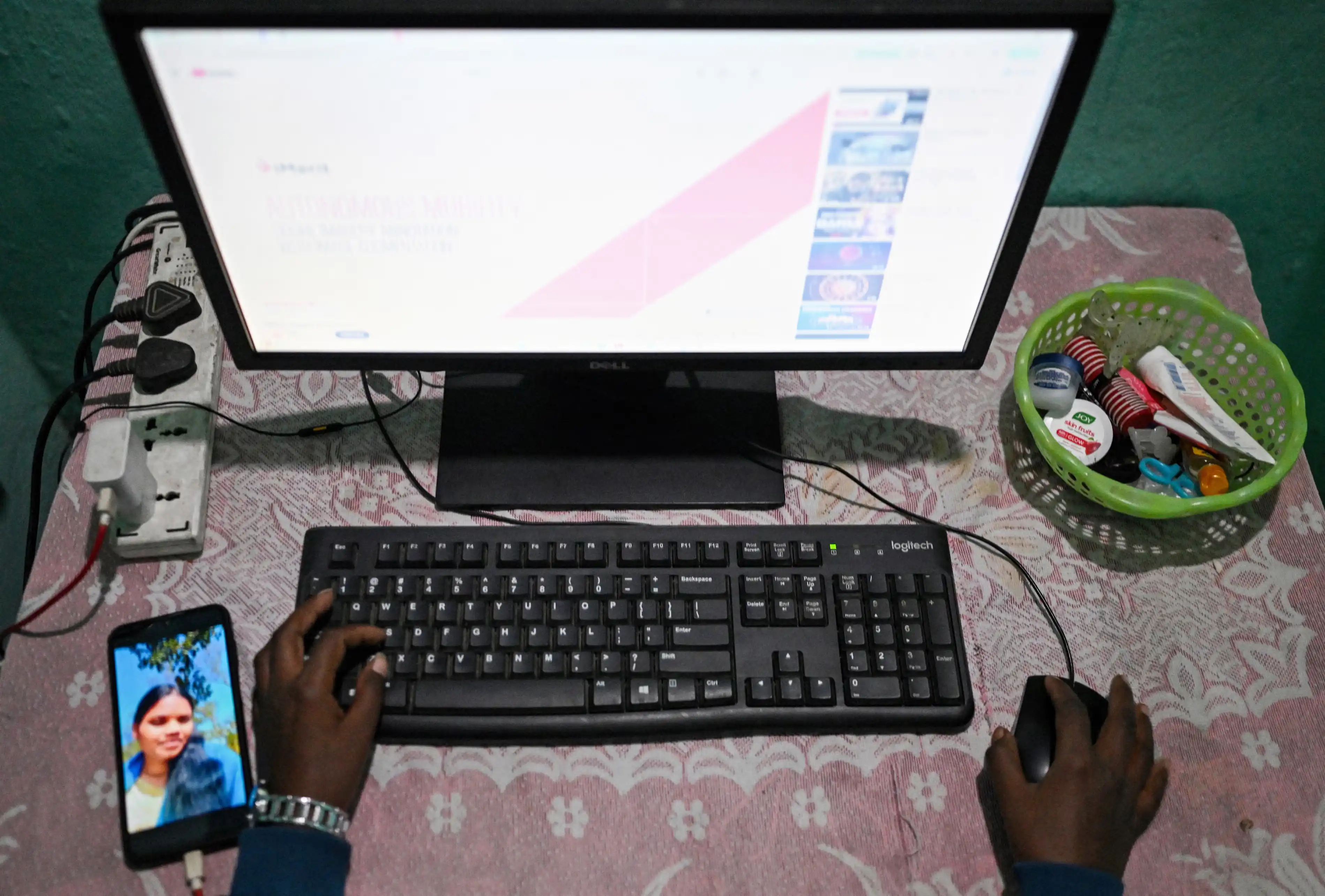
This is where apps like Kled AI and Silencio come in. In these data markets, millions of people are feeding and training AI by selling their identity data. Beyond Kled AI, Silencio, and Neon Mobile, AI trainers have many choices: Luel AI, backed by the famous incubator Y-Combinator, acquires multilingual conversation material at about $0.15 per minute; ElevenLabs allows you to digitally clone your voice and make it available for others to use at a base rate of $0.02 per minute.

Bouke Klein Teeselink, an economics professor at King's College London, says AI training gigs are an emerging work category that will grow significantly.

AI companies know that paying people for data licensing helps avoid copyright disputes that might arise from relying entirely on web-scraped content, Teeselink says. AI researcher Veniamin Veselovsky adds that these companies also need high-quality data to model new, improved behaviors for their systems. "For now, human data is the gold standard for sampling outside the model's distribution," Veselovsky added.

The humans driving these machines—especially those in developing countries—often need the money and have few alternatives. For many AI training gig workers, taking on this work is a pragmatic response to economic disparity. In countries with high unemployment rates and depreciating local currencies, earning dollars is often more stable and lucrative than local jobs. Some struggle to find entry-level work and are forced into AI training out of necessity. Even in wealthier countries, rising living costs make selling oneself a logical financial choice.

Cape Town-based AI trainer Louw is well aware of the privacy cost. Although the income is unstable and not enough to cover all his monthly expenses, he is willing to accept these conditions to earn money. He has suffered from neurological diseases for years, making it difficult to find work, but the money he earned from AI data markets (including Kled AI) allowed him to save $500 to enroll in a spa training course to become a massage therapist.

"As a South African, receiving dollars is more valuable than people think," Louw said.

Mark Graham, a professor of internet geography at Oxford University and author of "Feeding the Machine," acknowledges that for individuals in developing countries, the money may have practical significance in the short term, but he warns, "Structurally, this work is unstable, has no upward mobility, and is essentially a dead end."

Graham added that AI data markets rely on "a race to the bottom in wages" and a "temporary demand for human data." Once that demand shifts, "workers will have no security, no transferable skills, and no safety net."

Graham said the only winners are "the platforms in the Global North, which capture all the lasting value."

Full Authorization

Chicago-based AI trainer Hill has mixed feelings about selling his private phone calls to Neon Mobile. About 11 hours of call content earned him $200, but he said the app often goes offline and delays payments. "Neon always seemed suspicious to me, but I kept using it just to earn some extra pocket money to pay bills," Hill said.

Now he is reconsidering whether the money was really that easy. Last September, Neon Mobile went offline just weeks after launching, after TechCrunch discovered a security vulnerability that allowed anyone to access users' phone numbers, call recordings, and transcripts. Hill said Neon Mobile never notified him of this situation, and now he is worried his voice could be misused online.

Jennifer King, a data privacy researcher at Stanford University's Institute for Human-Centered Artificial Intelligence, is concerned that AI data markets are not clear about how and where user data will be used. She added that without understanding their rights or being able to negotiate them, "consumers face the risk of their data being reused in ways they dislike, do not understand, or did not anticipate, with almost no recourse."

When AI trainers share data on Neon Mobile and Kled AI, they grant a full authorization (global, exclusive, irrevocable, transferable, and royalty-free) allowing the platform to sell, use, publicly display, and store their likeness, and even create derivative works based on it.

Kled AI founder Avi Patel said his company's data agreement limits use to AI training and research purposes. "The entire business model relies on user trust. If contributors think their data might be misused, the platform cannot function." He said the company vets buyers before selling datasets, avoiding cooperation with "suspicious-intent" organizations, such as the pornography industry, and "government agencies" they believe might use the data in ways that violate that trust.

Neon Mobile did not respond to requests for comment.

Enrico Bonadio, a law professor at City, University of London, pointed out that these agreement terms allow the platform and its clients to "do almost anything with that material, permanently, without additional payment, and contributors have no practical way to withdraw consent or renegotiate."

More worrying risks include: trainers' data being used to create deepfakes and identity impersonation. Although data markets claim to strip identifying information (such as names and locations) from data before sale, biometric patterns are inherently difficult to anonymize meaningfully, Bonadio added.

Seller's Remorse

Even if AI trainers could negotiate more detailed protections for how their data is used, they might still regret it. In 2024, New York-based actor Adam Coy sold his likeness for $1,000 to Captions—an AI video editing software now renamed Mirage. His agreement stipulated that his identity would not be used for any political purposes, not for promoting alcohol, tobacco, or pornography, and the license would last for one year.

Captions did not respond to requests for comment.

Soon after, Adam's friends began forwarding videos they found online featuring his face and voice, which had garnered millions of views. In one Instagram video, Adam's AI replica claimed to be a "vaginal doctor" promoting unverified medical supplements for pregnant and postpartum women.

"It's embarrassing to explain this to others," Coy said.

"The comments were weird because they were evaluating my appearance, but it wasn't even me," Coy added. "My thinking when I made the decision (to sell my likeness) was that most models would scrape data and portraits from the internet anyway, so I might as well get paid."

Coy said he has not taken any AI data gigs since. He said he would only consider doing it again if a company offered significant compensation.


Questions liées

QWhat is the main concern raised in the article about people selling their personal data for AI training?

AThe article highlights that while individuals earn money by selling their biometric identities and private data (like voice, face, and conversations) to train AI models, they face risks such as deepfakes, identity theft, and digital exploitation, often without fully understanding the long-term consequences or having recourse if their data is misused.

QWhy are AI companies turning to data markets like Kled AI and Silencio for training data?

AAI companies are facing a shortage of high-quality training data from the open internet due to restrictions on datasets and potential copyright issues. Data markets provide a way to acquire fresh, human-generated data directly from individuals, which is considered the 'gold standard' for training AI models to improve their behavior and avoid using synthetic data that can lead to model degradation.

QHow do economic disparities play a role in the growth of AI training gigs?

AEconomic disparities drive the growth of AI training gigs because people in developing countries, or those facing high unemployment and currency devaluation, can earn valuable dollars from these platforms. For many, it is a pragmatic response to financial need, offering income that is more stable and lucrative than local jobs, even though the work is unstable and lacks long-term career prospects.

QWhat are some specific risks mentioned regarding the authorization agreements signed by AI trainers?

AThe authorization agreements often grant platforms global, exclusive, irrevocable, transferable, and royalty-free rights to use, sell, display, and create derivative works from the contributors' data. This means trainers have little control over how their data is used long-term, and risks include data being used for deepfakes, identity impersonation, or in ways they did not anticipate, with no practical way to withdraw consent or renegotiate.

QCan you provide an example from the article where an AI trainer regretted selling their data?

AActor Adam Coy from New York sold his likeness for $1000 to Captions (now Mirage) with specific restrictions, but later found his AI replica used in Instagram videos promoting unverified medical supplements, with millions of views. He felt embarrassed and noted that the comments were evaluating his appearance based on the AI clone, which was not actually him. He stated he would only consider such gigs again for significant payment due to the negative experience.

Lectures associées

Pour se couvrir, achetez de l'or ou du pétrole ; pour les plus-values, achetez de l'IA. Le Bitcoin "dépassé" entre en marché baissier

Le bitcoin est en baisse persistante, tombant récemment à 66 123 USD, son plus bas en deux mois. Les explications variées (sorties des ETF, tensions géopolitiques, ventes inattendues) sont considérées comme des symptômes d'un problème plus profond : le bitcoin perd une compétition entre actifs. Autrefois, il profitait du mécontentement des investisseurs face à des taux nuls et à l'inflation. Aujourd'hui, le marché a changé. Le bitcoin est pris dans une "position intermédiaire inconfortable" et perd sur trois fronts : 1. **Couverture contre l'inflation** : L'or, les actions énergétiques et les matières premières, avec leurs supports physiques et leur pouvoir de fixation des prix, sont désormais préférés. 2. **Croissance** : Les entreprises d'IA, générant des revenus et bénéfices réels, attirent les investisseurs en quête de croissance forte, un domaine où le bitcoin, sans flux de trésorerie, n'a pas d'avantage. 3. **Exposition aux crypto-monnaies** : Les investisseurs peuvent désormais se tourner vers les places de marché, les stablecoins ou les infrastructures, dont la performance est liée à l'adoption réelle du secteur. Un signe révélateur : les avertissements récents sur une inflation persistante n'ont pas provoqué de hausse du bitcoin, contrairement aux réactions passées. Le récit de "l'or numérique" est grignoté par l'or physique et l'énergie. Les sorties des ETF et les ventes sont donc le reflet d'une nouvelle réalité : les capitaux ont plus de choix et les investisseurs sont plus exigeants. La nouvelle logique baissière n'est plus que le bitcoin est une bulle, mais que **la rareté seule ne suffit plus**. Il n'est ni la meilleure valeur refuge, ni le meilleur actif de croissance, ni la seule option crypto.

华尔街日报Il y a 51 mins

Pour se couvrir, achetez de l'or ou du pétrole ; pour les plus-values, achetez de l'IA. Le Bitcoin "dépassé" entre en marché baissier

华尔街日报Il y a 51 mins

Pourquoi les flux entrants des ETF XRP augmentent-ils tandis que Bitcoin et Ethereum enregistrent des sorties ?

Les fonds ETF adossés au XRP continuent d'enregistrer des entrées de capitaux régulières, tandis que les ETF Bitcoin et Ethereum subissent d'importantes sorties de fonds consécutives. Depuis le 20 mai, les ETF américains liés au XRP auraient attiré environ 35 millions de dollars d'entrées nettes, selon un analyste, alors que les produits Bitcoin et Ethereum ont vu des sorties combinées avoisinant 2 milliards de dollars sur la même période. Ce contraste marqué reflète un refroidissement de la demande institutionnelle pour les deux principales cryptomonnaies et un intérêt croissant pour des actifs alternatifs comme le XRP. Les observateurs évoquent des facteurs tels que son positionnement réglementaire, les perspectives d'expansion des ETF et des spéculations sur une éventuelle demande de type "trésorerie" liée à Ripple. Cependant, malgré ces entrées de fonds soutenues, le cours du XRP est resté atone, affichant même une baisse de plus de 6% sur la semaine passée. Dans le détail, les ETF XRP ont enregistré 17 jours consécutifs d'entrées nettes, avec 4,13 millions de dollars ajoutés le 1er juin. À l'inverse, les ETF spot Bitcoin ont connu leur 11e jour consécutif de sorties (-483,7 M$ le 1er juin) et les ETF Ethereum leur 15e jour consécutif (-44,4 M$ le 1er juin). Ce schéma suggère que les investisseurs institutionnels deviennent plus sélectifs, ciblant des actifs selon des récits de marché spécifiques plutôt qu'en effectuant des rotations larges vers les actifs à plus grande capitalisation.

bitcoinistIl y a 1 h

Pourquoi les flux entrants des ETF XRP augmentent-ils tandis que Bitcoin et Ethereum enregistrent des sorties ?

bitcoinistIl y a 1 h

Le paysage on-chain du Bitcoin est bien différent de son pic du marché haussier de 2021

Le paysage on-chain du Bitcoin présente une nette différence par rapport au pic du marché haussier de 2021. Malgré un prix actuel supérieur, l'activité sur le réseau a considérablement diminué. En mai 2021, le réseau enregistrait environ 1,12 million d'adresses actives et 489 000 nouvelles adresses créées par jour. Aujourd'hui, ces chiffres sont tombés à environ 624 000 et 278 000 respectivement, soit des baisses d'environ 44% et 43%. Cette réduction de l'activité des petits porteurs et des nouvelles participations est attribuée à plusieurs facteurs. L'émergence des FNB (ETF) spot et des véhicules d'investissement institutionnels permet aux investisseurs d'accéder au Bitcoin sans nécessiter de mouvements on-chain directs ou de création de portefeuilles. Parallèlement, de nombreux détenteurs à long terme adoptent un comportement plus passif, privilégiant la conservation de leurs actifs. Les analystes notent que cette baisse d'activité n'est pas nécessairement un signal baissier, la volatilité étant souvent le principal déclencheur des pics d'activité du réseau. L'intérêt croissant pour les actions et les métaux précieux pourrait également expliquer ce ralentissement. Au moment de la rédaction, le Bitcoin s'échange à environ 69 876 dollars, avec une hausse de près de 5% sur 24 heures et un volume de transactions en forte augmentation.

bitcoinistIl y a 3 h

Le paysage on-chain du Bitcoin est bien différent de son pic du marché haussier de 2021

bitcoinistIl y a 3 h

Trading

Spot
Futures

Articles tendance

Comment acheter PEOPLE

Bienvenue sur HTX.com ! Nous vous permettons d'acheter ConstitutionDAO (PEOPLE) de manière simple et pratique. Suivez notre guide étape par étape pour commencer votre parcours crypto.Étape 1 : Création de votre compte HTXUtilisez votre adresse e-mail ou votre numéro de téléphone pour ouvrir un compte sur HTX gratuitement. L'inscription se fait en toute simplicité et débloque toutes les fonctionnalités.Créer mon compteÉtape 2 : Choix du mode de paiement (rubrique Acheter des cryptosCarte de crédit/débit : utilisez votre carte Visa ou Mastercard pour acheter instantanément ConstitutionDAO (PEOPLE).Solde :utilisez les fonds du solde de votre compte HTX pour trader en toute simplicité.Prestataire tiers :pour accroître la commodité d'utilisation, nous avons ajouté des modes de paiement populaires tels que Google Pay et Apple Pay.P2P :tradez directement avec d'autres utilisateurs sur HTX.OTC (de gré à gré) : nous offrons des services personnalisés et des taux de change compétitifs aux traders.Étape 3 : stockage de vos ConstitutionDAO (PEOPLE)Après avoir acheté vos ConstitutionDAO (PEOPLE), stockez-les sur votre compte HTX. Vous pouvez également les envoyer ailleurs via un transfert sur la blockchain ou les utiliser pour trader d'autres cryptos.Étape 4 : tradez des ConstitutionDAO (PEOPLE)Tradez facilement ConstitutionDAO (PEOPLE) sur le marché Spot de HTX. Il vous suffit d'accéder à votre compte, de sélectionner la paire de trading, d'exécuter vos trades et de les suivre en temps réel. Nous offrons une expérience conviviale aux débutants comme aux traders chevronnés.

548 vues totalesPublié le 2024.12.12Mis à jour le 2026.06.02

Comment acheter PEOPLE

Discussions

Bienvenue dans la Communauté HTX. Ici, vous pouvez vous tenir informé(e) des derniers développements de la plateforme et accéder à des analyses de marché professionnelles. Les opinions des utilisateurs sur le prix de PEOPLE (PEOPLE) sont présentées ci-dessous.

活动图片












