The Founder of Coinbase Is Going to Research Immortality

marsbitPublié le 2026-06-03Dernière mise à jour le 2026-06-03

Résumé

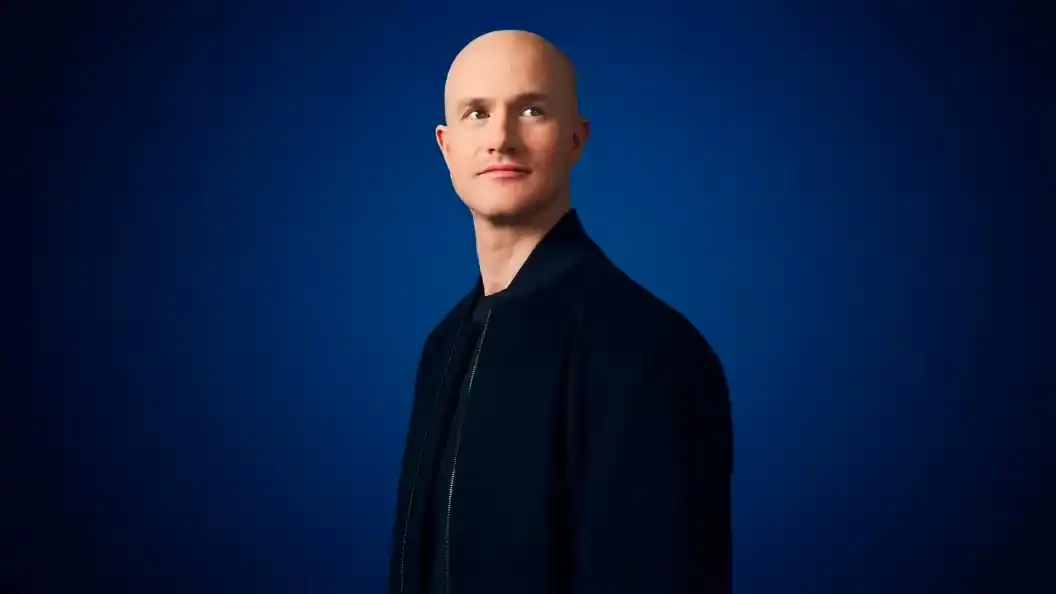
Coinbase founder Brian Armstrong has co-founded NewLimit, a longevity biotech startup, which just raised $435 million in a Series C funding round led by Peter Thiel’s Founders Fund. The round values the company at $3.1 billion, more than triple its valuation from a year ago. NewLimit is developing drugs aimed at reversing cellular aging to extend human healthspan. Its approach builds on Nobel Prize-winning research on cellular reprogramming (Yamanaka factors), with a focus on identifying specific gene combinations that can restore younger cell function. The company plans to begin human clinical trials next year, initially targeting alcohol-related liver disease as a form of accelerated aging. Founded in 2021 by Armstrong alongside biotech investor Blake Byers and scientist Jacob Kimmel, NewLimit has now raised over $700 million across multiple rounds. It joins a growing field of well-funded longevity ventures backed by tech billionaires, including Sam Altman’s Retro Biosciences and Jeff Bezos-backed Altos Labs, reflecting a surge of interest in using science to combat aging and extend healthy lifespan.

Author | Azuma(@azuma_eth)
At 3:00 AM Beijing time on June 3, longevity technology startup NewLimit announced the completion of a $435 million Series C funding round. This round was led by Peter Thiel's fund Founders Fund, with continued participation from Abstract Ventures, Kleiner Perkins, NFDG, Eli Lilly Ventures, Valor Equity Partners, among others, while also introducing new investors such as Thrive Capital, Greenoaks, and Quiet Capital.

A WSJ report indicated that NewLimit's valuation in this round reached $3.1 billion, more than triple its valuation from a year ago.
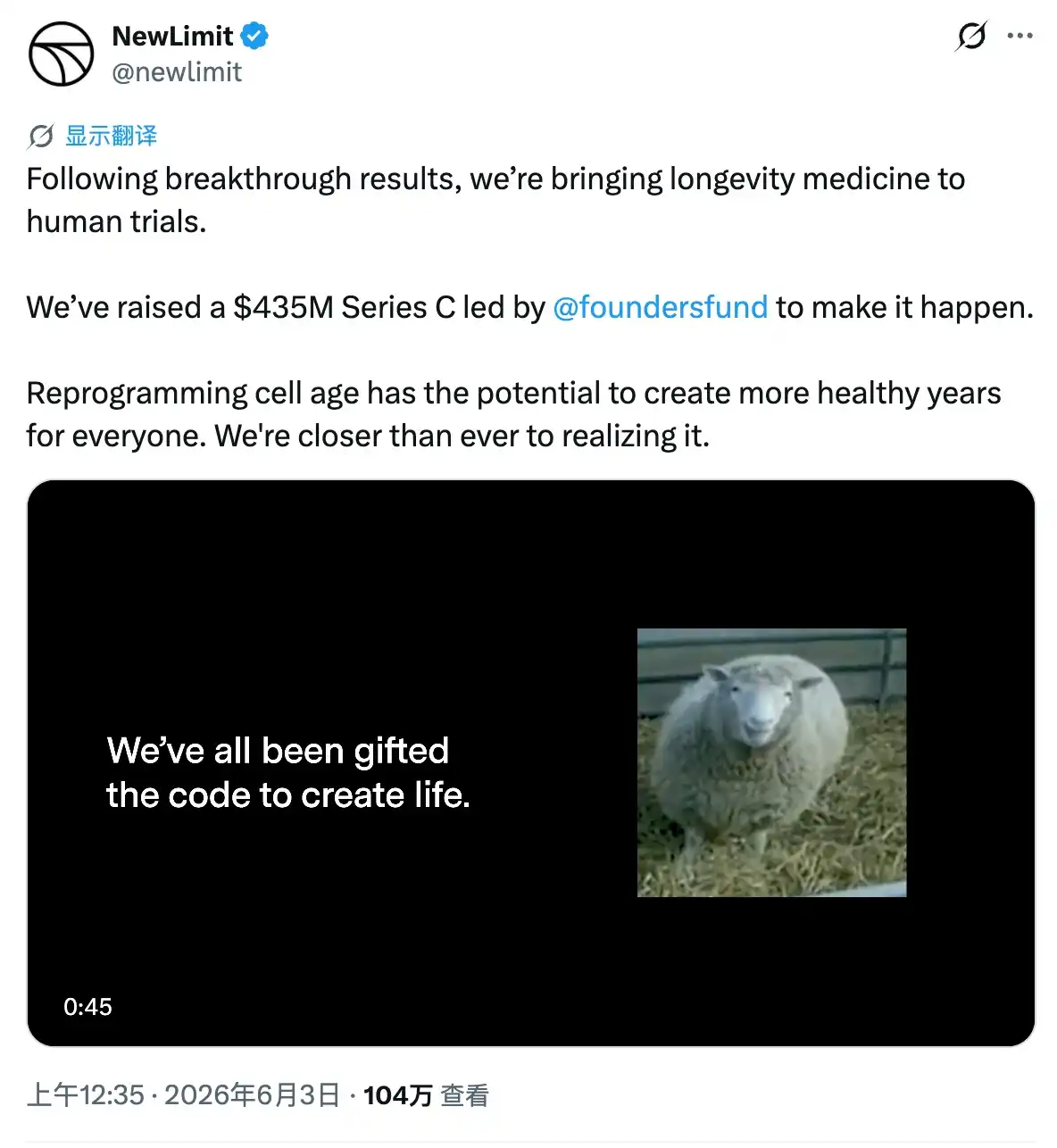
In its funding announcement, NewLimit revealed that following breakthrough research achievements, the company is advancing longevity medicine into the human clinical trial stage. Its first drug targeting alcohol-related liver disease is expected to commence clinical trials next year.

NewLimit also emphasized: "By reprogramming cell age, humans may achieve longer health spans, and now, we are closer than ever to the goal of delaying or even reversing aging."

The Founder Turns Out to Be an Old Acquaintance

It is worth mentioning that one of NewLimit's co-founders is none other than our old acquaintance — Coinbase founder and CEO Brian Armstrong.

In 2021, Brian Armstrong, together with former GV partner and bioengineer Blake Byers and stem cell biologist Jacob Kimmel, invested $110 million to establish NewLimit in South San Francisco.

Picture: The NewLimit founding team

Prior to this funding round, NewLimit had already completed three rounds of financing, as detailed below.

  • May 2023: Completed a $40 million Series A round, with investors including Dimension, Founders Fund, and Kleiner Perkins;
  • May 2025: Completed a $130 million Series B round, reaching a valuation of $810 million, led by Kleiner Perkins, with participation from Founders Fund, Khosla Ventures, and Human Capital, among others;
  • October 2025: Received an additional $45 million investment, bringing the post-money valuation to $1.62 billion, with investors including Lilly Ventures, Duke University, Section 32, etc.;

According to NewLimit's official introduction, the company is dedicated to developing drugs that can extend human health span — "As humans age, cellular function gradually declines, making people more susceptible to diseases. It was once believed that aging was inevitable, but emerging science shows that the aging process can be reversed at the cellular level. We are developing the first drugs based on these discoveries to restore the youthful function of aging cells."

In simpler terms, NewLimit is using scientific methods to research immortality!

Reversing Aging is Not a Fantasy

Over the past few decades, while the scientific community has long recognized the link between aging and cellular functional decline, it could not precisely find a way to make cells "rejuvenate." The turning point came in 2006 when Japanese scientist Shinya Yamanaka discovered that activating just a few specific transcription factors could reprogram adult cells into a youthful state resembling embryonic stem cells. This discovery was later named "Yamanaka Factors" and helped him win the 2012 Nobel Prize in Physiology or Medicine.
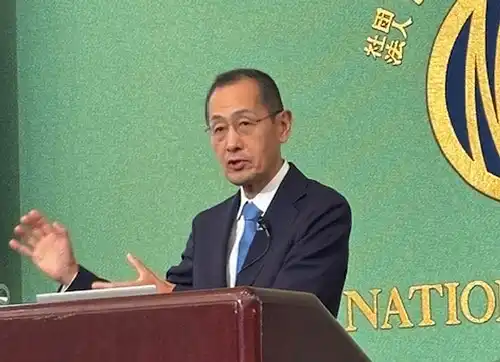
Odaily Note: Picture shows Shinya Yamanaka speaking in Tokyo

Yamanaka's research first proved something previously considered impossible — that cellular age is not irreversible. And the story told by NewLimit is built precisely upon this discovery.

NewLimit writes on its website: "Our drugs can reprogram a cell's epigenome to a younger state by activating specific transcription factor genes. We already know this reversal is possible. However, for different cell types, exactly which combinations of transcription factors are needed to restore their youthful function remains unknown. Finding and discovering these effective payloads is the core challenge of our work."

NewLimit's strategy is to first target a specific disease to obtain drug approval, and then explore broader applications. As mentioned earlier, NewLimit is advancing a drug for alcohol-related liver disease into clinical trials.

NewLimit Co-founder and CEO Jacob Kimmel further explained, "Liver disease can actually be viewed as an 'accelerated version of aging,' it just presents the aging process that everyone experiences in a faster and more intense manner."

The Biggest Investors in This Sector Are All Billionaires

NewLimit is not the only tech company currently targeting "immortality."

In 2022, Sam Altman invested $180 million in Retro Biosciences, which is developing drugs to rejuvenate aging cells. Last month, Retro Biosciences disclosed its valuation had reached $1.8 billion.

Furthermore, Altos Labs, reportedly backed by Jeff Bezos's funding, also launched in 2022 with $3 billion and has since raised nearly twice that amount in total funding.

It's easy to see that from Peter Thiel to Sam Altman to Jeff Bezos, the biggest investors in this sector are without exception super-rich individuals at the pinnacle of technology and wealth. Peter Thiel has publicly expressed extreme aversion to death, advocating similar views on multiple occasions: "Death is humanity's greatest enemy, yet we treat it as a natural law..."

The logic behind these tech titans' willingness to invest hundreds of millions is not hard to understand — when wealth and power reach their peak, time becomes the only enemy, the only luxury that cannot be bought directly with money.

Having earned enough money, "how to live longer" becomes the greatest challenge.

Questions liées

QWhat is NewLimit, and what is its primary goal?

ANewLimit is a longevity biotechnology startup. Its primary goal is to develop drugs to extend human healthspan by reversing the aging process at the cellular level.

QWho is the notable co-founder of NewLimit mentioned in the article?

AThe notable co-founder is Brian Armstrong, who is also the founder and CEO of the cryptocurrency exchange Coinbase.

QWhat scientific breakthrough is NewLimit's research based on?

ANewLimit's research is based on the discovery of the 'Yamanaka Factors' by Japanese scientist Shinya Yamanaka in 2006, which showed that adult cells can be reprogrammed into a younger, pluripotent state.

QHow much funding did NewLimit recently raise and at what valuation?

ANewLimit recently raised $435 million in a Series C funding round, which valued the company at $3.1 billion.

QWhy are super-wealthy tech figures like Peter Thiel and Sam Altman investing in longevity companies?

AFor super-wealthy individuals, time is seen as the ultimate luxury that money cannot directly buy. After achieving immense wealth and power, extending their healthspan and potentially reversing aging becomes a primary focus.

Lectures associées

BREAKING : Mastercard ouvre son réseau de paiement mondial aux crypto-monnaies — Quelles altcoins font partie de l'accord ?

**Mastercard ouvre son réseau mondial de paiement à la crypto.** Le 3 juin, Mastercard a annoncé élargir son infrastructure de règlement mondial pour prendre en charge le règlement sur chaîne via des stablecoins réglementés. Cela permet pour la première fois de régler les transactions par carte 24h/24 et 7j/7, y compris les week-ends et jours fériés. **Stablecoins et blockchains sélectionnés.** Six stablecoins réglementés sont pris en charge dans un premier temps : l'USDC de Circle, le PYUSD de PayPal, l'USDG et l'USDP émis par Paxos, le RLUSD de Ripple et le SoFiUSD de SoFi. Le règlement s'effectuera sur huit réseaux blockchain : Ethereum, Solana, Polygon, Base, Arbitrum, XRP Ledger, Canton et Tempo. **Changements en back-end uniquement.** Cette annonce concerne la couche de règlement, pas une modification des produits pour les consommateurs. Les émetteurs et acquéreurs du réseau Mastercard peuvent désormais choisir de régler les transactions par carte en utilisant ces stablecoins sur chaîne, en parallèle des processus traditionnels en monnaie fiduciaire. Aucun changement n'est requis pour le titulaire de la carte. **Avantages clés.** L'infrastructure backend de compensation et de finalisation des transactions peut désormais fonctionner en continu sur des blockchains, éliminant les interruptions dues aux horaires bancaires, fermetures de week-end et jours fériés, une source historique de friction. **Partenaires et déploiement.** Les premiers partenaires incluent ARQ, CBW Bank, Cross River, Lead Bank et Nuvei. Le déploiement initial cible les États-Unis et l'Amérique latine avant une expansion plus large d'ici 2026. **Une validation institutionnelle majeure.** Ce déploiement en conditions réelles (et non comme un pilote) par le deuxième plus grand réseau de cartes au monde représente la validation institutionnelle la plus claire à ce jour pour l'économie des stablecoins, selon l'annonce.

bitcoinistIl y a 2 h

BREAKING : Mastercard ouvre son réseau de paiement mondial aux crypto-monnaies — Quelles altcoins font partie de l'accord ?

bitcoinistIl y a 2 h

Le Rallye Qui N'a Pas Eu Lieu

Le marché du Bitcoin subit une pression significative dans un contexte macroéconomique plus strict, avec des anticipations de resserrement de la Fed et un retrait massif des ETF spot américains. Le prix, en baisse de 13% à environ 67 000$, est repassé sous la moyenne du marché (True Market Mean à 77,8k$), confirmant la persistance du régime de marché baissier. Les indicateurs on-chain se détériorent : la base de coût des détenteurs à court terme est inférieure à la moyenne clé, signe d'un marché baissier avancé. Le ratio des profits/pertes réalisés s'est effondré, montrant une dominance des ventes à perte. Les nouveaux acheteurs, notamment ceux entrés entre 78k$ et 82k$, sont sous pression. Hors-chaîne, le prix a été rejeté à la base de coût moyenne des ETF (~83k$), désormais une résistance. Les flux spot sont nettement négatifs, indiquant une domination des vendeurs. Bien qu'un événement de liquidation de positions longues ait réduit l'effet de levier, la demande spot durable reste absente. Les marchés d'options reflètent une prudence persistante, avec une demande pour une protection contre la baisse et une prime de volatilité élevée, sans pour autant signaler un point de capitulation majeur. En conclusion, le marché reste fragile, avec une faiblesse structurelle, une offre provenant d'investisseurs piégés et un manque de demande d'achat solide, le laissant vulnérable à d'autres corrections au sein de la structure baissière plus large.

insights.glassnodeIl y a 4 h

Le Rallye Qui N'a Pas Eu Lieu

insights.glassnodeIl y a 4 h

WLFI lance l'alerte : Les portefeuilles sous sanctions pourraient bloquer les transferts de crypto

Les sénateurs américains Elizabeth Warren et Jack Reed surveillaient déjà World Liberty Financial (WLFI) avant l'avis de conformité de mardi, ayant précédemment demandé aux autorités d'examiner si des adresses liées à la Russie, à la Corée du Nord et au mélangeur de confidentialité Tornado Cash avaient contourné les contrôles de la présale du projet. WLFI a rejeté ces allégations, affirmant appliquer des vérifications strictes contre le blanchiment d'argent et d'identité. Cependant, le projet a admis que ses contrats intelligents intègrent des pouvoirs codés pour geler, restreindre ou brûler les soldes des portefeuilles, ce qui suscite des interrogations sur son positionnement dans la finance décentralisée (DeFi). L'avertissement de conformité publié mardi sur X indique clairement que les transferts impliquant des personnes, entités ou adresses de portefeuille sous sanctions peuvent être retardés, restreints ou rejetés. WLFI justifie ces contrôles par la nécessité de respecter les obligations réglementaires. Cet avis est intervenu le même jour où le Département du Trésor américain a pris des sanctions contre plusieurs plateformes cryptographiques iraniennes, dont le plus grand échange, Nobitex, accusé d'avoir traité des transactions pour le Corps des gardiens de la révolution islamique. Le Trésor affirme que le régime iranien utilise les actifs numériques pour contourner les sanctions. WLFI exhorte ses utilisateurs à vérifier que leurs fonds et adresses n'ont aucun lien avec des activités interdites avant tout transfert, et poursuivra son examen des transactions pour les risques liés aux sanctions. Cette posture de conformité crée une tension avec l'image publique du projet, car si la couche blockchain est décentralisée, l'application doit respecter les règles fédérales.

bitcoinistIl y a 4 h

WLFI lance l'alerte : Les portefeuilles sous sanctions pourraient bloquer les transferts de crypto

bitcoinistIl y a 4 h

Trading

Spot
Futures
活动图片