Robinhood Chain Mainnet Launch Ignites Industry Shockwaves: Rally of Top Protocols, but Leaves dYdX in a Deep Pit

链捕手Publié le 2026-07-02Dernière mise à jour le 2026-07-02

Résumé

Robinhood's launch of its Layer 2 blockchain, Robinhood Chain, and a suite of new crypto products has significantly impacted the market. The announcement, made ahead of its Q2 earnings, caused the company's stock to rise 8.35%. The chain, built on Arbitrum Orbit, aims to be an institutional-grade, AI-native infrastructure optimized for Real World Assets (RWA). Key product launches include tokenized stocks available globally via various DEXs, perpetual contracts with fee incentives, and a decentralized lending product called Robinhood Earn offering yields on USDG stablecoin. The company is also expanding its AI trading tools to crypto. The move has attracted major protocols like Uniswap and Chainlink to its ecosystem. However, a partnership with dYdX to launch a new DEX called Arcus on Robinhood Chain sparked controversy. The dYdX community expressed concerns that the core team's focus on this new, independent platform could divert resources and liquidity away from the existing dYdX Chain, potentially diluting the value of the DYDX token. Despite assurances from dYdX's founder about shared interests and potential future token allocations for the dYdX community, the DYDX token price dropped roughly 40.7% following the news. Amidst slowing crypto revenue growth, Robinhood is leveraging its large user base and financial expertise to expand globally and transform from an internet broker into a broader financial gateway through its new blockchain initiative.

Author: Nancy, PANews

On the eve of its Q2 earnings release, Robinhood made a bombshell announcement: the mainnet launch of its Layer-2 chain, Robinhood Chain, alongside a slew of crypto products like tokenized stocks, on-chain lending, and AI trading, while accelerating its global expansion. Following the news, the market reacted positively, with Robinhood's stock price rising 8.35% to $108.6, hitting a nearly six-month high.

In the highly monopolistic L2 landscape, backed by Robinhood's massive user base and mature financial services, Robinhood Chain has quickly rallied a group of leading crypto protocols, sparking unexpected community controversy.

Self-built L2 Goes Mainnet, Multi-product Suite Builds On-Chain Financial Gateway

After several teaser tweets, Robinhood held a "The World is Flat" launch event in London in the early hours of July 2nd, unveiling its latest strategic layout centered on on-chain finance, AI trading, and global expansion, further demonstrating its ambition to build global financial infrastructure.
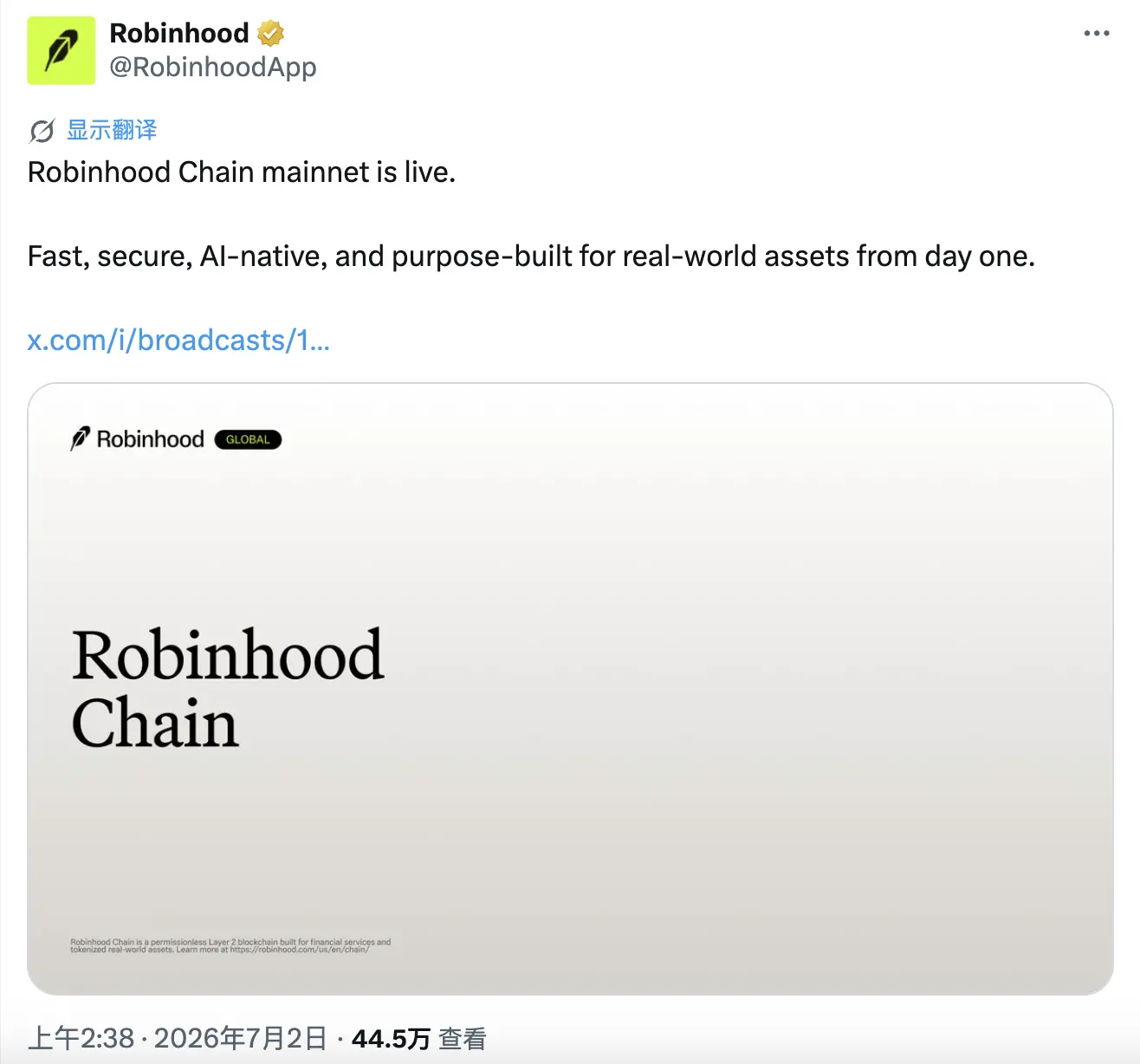
The most anticipated part of the event was its Layer-2 chain, Robinhood Chain. Built on Arbitrum Orbit, the chain officially launched its public mainnet after months of testing. It will directly connect Robinhood's on-chain users and provide developers with a plug-and-play DeFi development environment. According to the official description, Robinhood Chain is positioned as blockchain infrastructure for institutional-grade applications, AI-native architecture, and specifically optimized for real-world assets (RWA).

Around this chain, Robinhood simultaneously expanded its on-chain product matrix, covering trading and yield scenarios.

Regarding tokenized stocks, Robinhood Wallet added related features, available in over 120 countries and regions worldwide. Users can trade via DEXs like Uniswap, Rialto, Lighter, 1inch, and Arcus on Robinhood Chain, and further use the assets as collateral in DeFi lending or provide liquidity to earn yields. This feature was previously only available in Europe. Its expansion globally reflects rapidly growing demand for tokenized assets and ongoing competition between traditional and crypto trading platforms.

In the on-chain perpetuals space, Robinhood Wallet also launched related features, providing investors a new channel to trade stocks, commodities, and other assets outside traditional market hours. To boost user participation, Robinhood initially offers 90 days of zero fees, gas subsidies, and reward points.

Regarding yield products, Robinhood Earn, targeting US users, is being rolled out gradually. This is the first decentralized lending product within its main app. Users can deposit the USD stablecoin USDG into a self-custody wallet and expect to earn around 7% annual yield. The product is built on Morpho's underlying lending infrastructure, supported by multiple DeFi protocols like Steakhouse, Ethena, Spark, Maple, and includes insurance mechanisms to mitigate risk exposure.

Meanwhile, Robinhood is extending its AI trading capabilities to on-chain trading with the crypto version of Agentic Accounts. Eligible US users can connect to AI models, set risk parameters and capital boundaries, letting the AI autonomously execute market scans and trading strategies. Previously, Robinhood had introduced similar tools in its stock and options business.

This series of expansion moves comes against the backdrop of continued pressure on Robinhood's crypto business. In Q1, its crypto revenue fell 47% year-over-year to $134 million, and crypto notional trading volume dropped 48% YoY to $24 billion. Facing slowing crypto growth, Robinhood urgently needs new growth engines.

Regarding globalization, the company already serves about 28 million users and continues to advance its overseas market layout, including officially launching in Canada, its Singapore subsidiary obtaining a MAS Capital Markets Services license, plans to launch commodity, ETF, and FX perpetuals in Europe, and imminent availability of crypto trading services in the UK.

Rallying Crypto Protocols, dYdX's "Starting Anew" Sparks Doubts

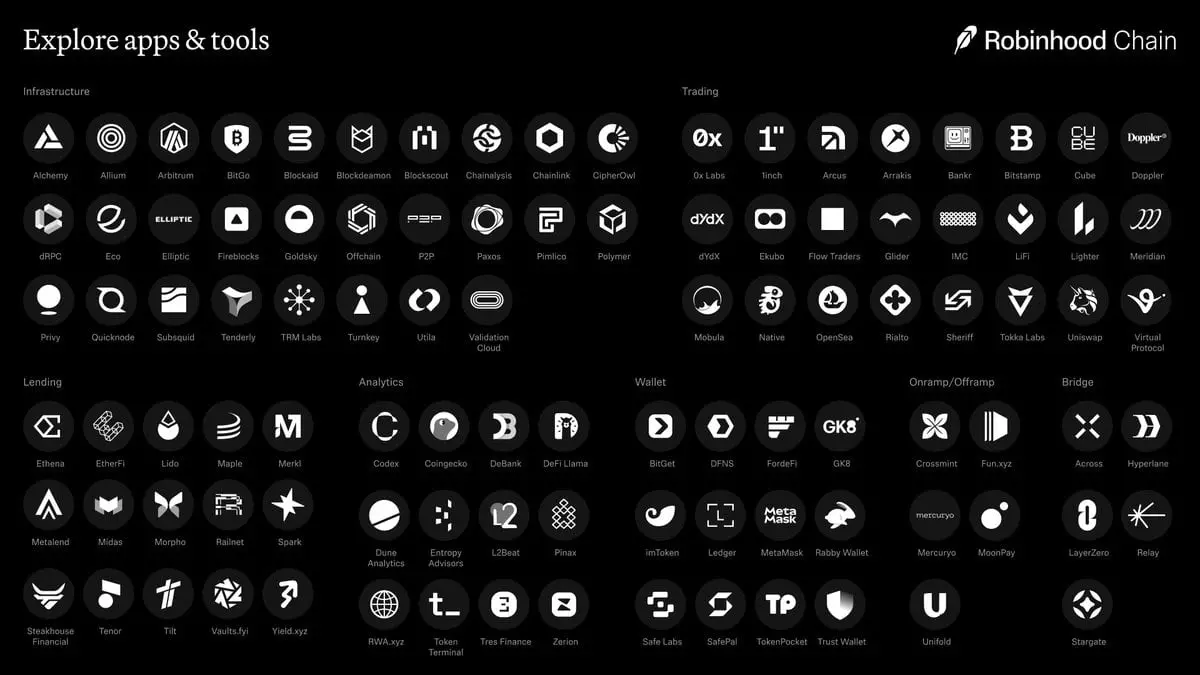
Leveraging its massive user base, leading crypto protocols like Uniswap, 1inch, Lighter, Morpho, Chainlink, BitGo, Ethena, and EtherFi announced their integration with Robinhood Chain, covering core areas like trading, liquidity, lending, oracles, custody, and cross-chain.
However, within this ecosystem integration, the new DEX Arcus launched by dYdX has stirred controversy.

On July 2nd, the dYdX Foundation announced a partnership with Robinhood to launch the decentralized trading platform Arcus on Robinhood Chain. The platform will support 95 tokenized stocks, perpetual contracts, and major crypto asset trading, with plans to further support using tokenized stocks and crypto assets as collateral for perpetuals, and open Pre-IPO equity trading for popular private companies like OpenAI. Currently, Arcus has launched a Bea test version and is expected to officially go live later in 2026.
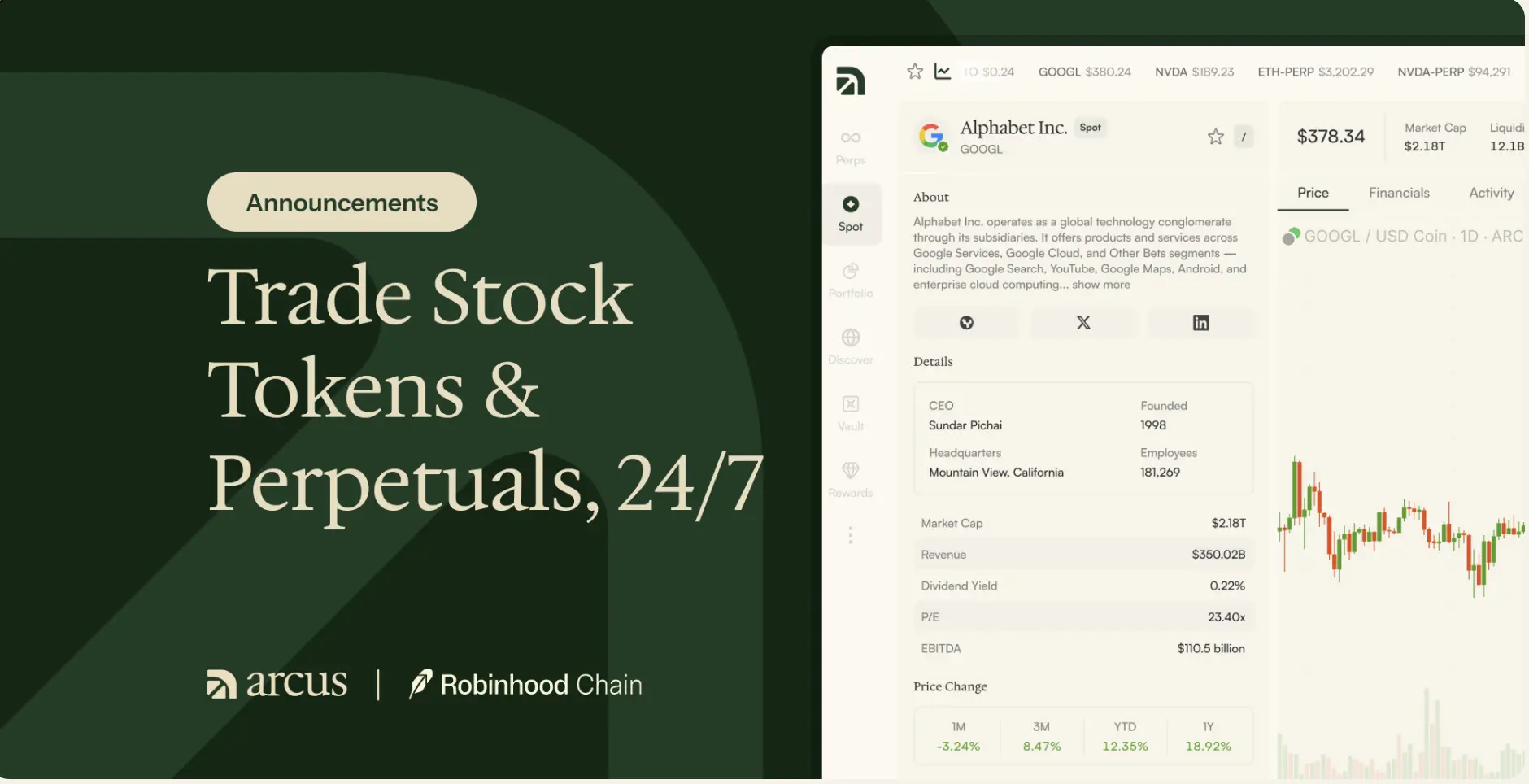
What sparked community discussion is that, as a new product launched by the dYdX team, Arcus is not built on dYdX Chain, but instead chose to deploy on Robinhood Chain, operating as an independent product and infrastructure suite.

In response, dYdX founder Antonio explained in an open letter that while running dYdX Chain, the team gradually realized that building a decentralized public chain from scratch meant constantly trading off between performance, user experience, and decentralization, while competitors kept capturing market share with faster execution, simpler product experiences, and more abundant liquidity. Combining lessons from past generations of dYdX products, months of user feedback, and current DEX pain points, the team ultimately decided to launch Arcus.

Antonio disclosed that choosing Robinhood Chain was largely due to considerations of users and liquidity, as Robinhood has approximately 27.7 million funded accounts, providing Arcus with a ready-made user base and liquidity. Furthermore, Arcus also received strategic investment from Robinhood Crypto, deepening the partnership.

However, this news quickly drew dissatisfaction from the dYdX community. Many community members believe that the core dYdX team starting a new brand from scratch implies development resources, product focus, and market attention might shift towards Arcus, even posing a risk of cannibalizing or replacing the dYdX brand value. Moreover, given dYdX's history of conducting one of the industry's largest airdrops and the potential token launch expectation for Arcus, this could attract traders and liquidity to migrate to the new platform, leading to a decline in dYdX Chain trading volume and activity, further diluting the value of the DYDX token.

In response, the dYdX Foundation emphasized that its duty to support the dYdX protocol and community governance remains unchanged. dYdX Chain is unaffected; trading, deposits, withdrawals, staking, and governance functions all operate normally. The governance and staking mechanisms of the DYDX token remain the same, with staking rewards continuing to be distributed in USDC. Community treasury, reward treasury, and other assets remain fully controlled by DYDX holders through governance.

Antonio also stated that, as the founder of dYdX and the largest holder of DYDX tokens, his interests are deeply aligned with the dYdX community. "My interests are more deeply tied to dYdX than anyone else's." He promised that if Arcus issues a token in the future, a portion of the tokens will be pre-allocated to the dYdX community; additionally, Arcus will also prioritize granting access to dYdX traders.
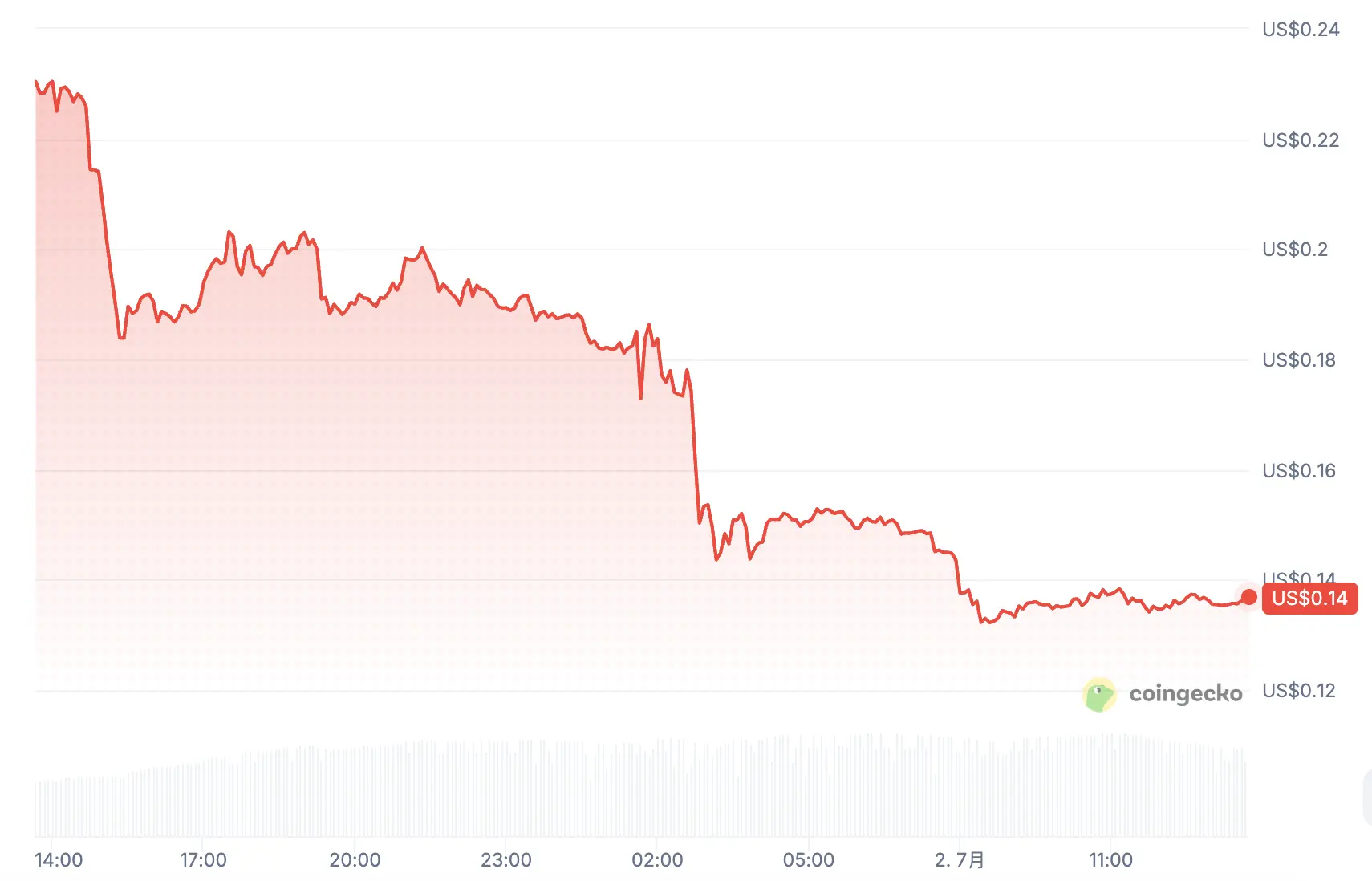
However, these responses do not seem to have fully alleviated market concerns. Following the new product announcement, the DYDX token fell approximately 40.7% intraday.

Overall, Robinhood's ambition extends far beyond providing on-chain infrastructure. Leveraging its massive user traffic, mature brokerage business, and global compliance layout, Robinhood is attempting to use Robinhood Chain to expand its business boundaries, accelerating its transformation from an internet brokerage to the next-generation global financial gateway. Whether this ambition becomes reality remains to be tested by the market.


Cryptos en tendance

Questions liées

QWhat are the key products and features announced as part of Robinhood Chain's mainnet launch?

ARobinhood announced the mainnet launch of its Layer-2 chain, Robinhood Chain (built on Arbitrum Orbit), along with a suite of new crypto products. These include tokenized stock trading (expanded globally), on-chain perpetual contracts (with 90 days of zero fees and gas subsidies), a decentralized lending product called Robinhood Earn (for US users, offering ~7% APY on USDG), and AI-powered agentic accounts for crypto trading.

QWhy has the dYdX community reacted negatively to the announcement of the Arcus DEX?

AThe dYdX community is concerned because Arcus, a new DEX announced by the dYdX team, is built on Robinhood Chain instead of the dYdX Chain. This has raised fears that the core team's focus, development resources, and market attention might shift to the new product, potentially undermining the dYdX brand and ecosystem. Furthermore, expectations of an Arcus token airdrop could draw liquidity and users away from the dYdX Chain, potentially diluting the value of the existing DYDX token.

QAccording to dYdX founder Antonio, what were the primary reasons for choosing Robinhood Chain as the foundation for Arcus?

AAntonio stated that the decision to build Arcus on Robinhood Chain was driven by considerations of user base and liquidity. Robinhood's approximately 27.7 million funded accounts provide a ready-made source of users and liquidity for Arcus. He also cited the challenges of balancing performance, user experience, and decentralization when running a self-built chain (like dYdX Chain), noting that competitors gain market share with faster execution and simpler products.

QWhat was the immediate market reaction to Robinhood's announcements and the dYdX Arcus news?

AThe market reacted positively to Robinhood's overall announcements, with its stock price rising 8.35% to $108.6. However, the news of the Arcus DEX built by the dYdX team on a competing chain had a severe negative impact on the DYDX token, which dropped approximately 40.7% on the day of the announcement.

QWhat is Robinhood's broader strategic goal behind launching Robinhood Chain and expanding its crypto product suite?

ARobinhood's broader strategy is to transform itself from an internet brokerage into a next-generation global financial gateway. By leveraging its large user base, mature brokerage business, and global compliance efforts, Robinhood aims to use Robinhood Chain as infrastructure to expand its business boundaries, integrating traditional and crypto finance to build a comprehensive on-chain financial ecosystem.

Lectures associées

N'importe qui peut créer facilement des marchés de prédiction, les marchés générés par les utilisateurs de Limitless peuvent-ils durer ?

La création de marchés prédictifs ouverts à tous est un défi persistant dans la cryptosphère. Des plateformes comme Augur, Omen, Zeitgeist ou Manifold Markets ont échoué, victimes d'un manque de liquidités, d'une mauvaise découverte des marchés et de longs processus de règlement contestables. Limitless propose une nouvelle approche avec sa fonctionnalité UGM (User-Generated Market). Elle permet à quiconque de créer un marché prédictif sur le prix d'une cryptomonnaie en quelques étapes simples. Pour éviter les pièges du passé, Limitless se concentre exclusivement sur les marchés objectifs (ex: "Le SOL dépassera-t-il X prix à telle date?"), réglés instantanément par oracle (Pyth, Chainlink) sans vote ni délai. Contrairement aux anciens modèles, la création d'un marché a un coût (100 à 1000 jetons LMTS, brûlés) et une récompense : le créateur reçoit 50% des frais de transaction générés. Ce mécanisme dissuade les marchés "spam" tout en récompensant les créateurs de marchés actifs. Limitless bénéficie déjà d'une base d'utilisateurs significative (plus de 30 milliards de dollars de volume total) et utilise un carnet d'ordres, éliminant le besoin pour les créateurs de fournir des liquidités initiales. Cette combinaison – règlement fiable par oracle, base d'utilisateurs existante et incitations économiques équilibrées – pourrait enfin fournir un modèle viable pour les marchés prédictifs générés par les utilisateurs.

Foresight NewsIl y a 1 h

N'importe qui peut créer facilement des marchés de prédiction, les marchés générés par les utilisateurs de Limitless peuvent-ils durer ?

Foresight NewsIl y a 1 h

La sénatrice Cynthia Lummis défend la loi de Clarté face aux critiques d'Elizabeth Warren

La sénatrice Cynthia Lummis a vivement répliqué aux critiques de la sénatrice Elizabeth Warren concernant la loi Clarity (Clarity Act), que cette dernière accuse de créer des failles potentielles pour les activités illicites impliquant des cryptomonnaies. Warren soutient que le texte actuel pourrait saper la lutte contre le blanchiment d'argent et le contournement des sanctions, citant notamment un rapport sur un blanchiment de 3,84 milliards de dollars via une plateforme d'échange. Elle appelle à renforcer la réglementation plutôt qu'à créer de nouvelles lacunes. Lummis a rejeté ces allégations, affirmant que la loi Clarity contient plus de seize dispositions spécifiquement conçues pour prévenir la finance illicite. Elle a souligné des articles clés, comme l'application des règles de lutte contre le blanchiment (Bank Secrecy Act) aux activités cryptos, le pouvoir de sanctionner des juridictions étrangères comme l'Iran, et la possibilité de geler des transactions d'actifs numériques lors d'enquêtes. Les discussions se poursuivent au Sénat, le projet de loi visant à clarifier les rôles des régulateurs (SEC et CFTC) et à renforcer la protection des investisseurs. Warren plaide également pour des règles éthiques plus strictes, évoquant les gains en cryptomonnaie de l'ancien président Trump. Les marchés prédictifs estiment actuellement les chances d'adoption de la loi à environ 39 %.

TheNewsCryptoIl y a 1 h

La sénatrice Cynthia Lummis défend la loi de Clarté face aux critiques d'Elizabeth Warren

TheNewsCryptoIl y a 1 h

La Première Femme la Plus Riche Se Lance dans le VC

L’affaire commence avec un tour de table. Cette semaine, l’entreprise chinoise d’intelligence incarnée **Kuawei Intelligent** a clôturé un financement de série B de 1 milliard de yuans, devenant une nouvelle licorne. Parmi la liste des investisseurs figure une surprise : **Lens Technology**. Cette entrée révèle l’arrivée dans le monde du capital-risque de sa fondatrice, **Zhou Qunfei**. Née en 1970, elle a bâti un empire à partir d’un simple morceau de verre, passant d’ouvrière à la « Reine du verre » à la tête d’un groupe de 300 milliards d’euros de capitalisation. Ces dernières années, elle et Lens Tech investissent discrètement dans des sociétés technologiques prometteuses comme **BrainCo, Xinghaitou, Qingtianzu**, etc. **Une femme d’affaires discrète tisse sa toile d’investissement** Son investissement dans Kuawei Intelligent n’est pas un coup de tête. En avril 2025, après une visite et une démonstration, **Zhou Qunfei a pris la décision d’investir sur-le-champ**, engageant des centaines de millions de yuans de fonds personnels. La confiance était née d’une collaboration antérieure depuis 2022, où les technologies de Kuawei étaient utilisées dans les usines de Lens Tech. Derrière cette opération se cache un portefeuille plus large. Sa société d’investissement personnelle, **Changsha Qunxin**, basée à Hunan, a réalisé 17 investissements directs, principalement dans les semi-conducteurs (Xinai Technology, Chixin Semiconductor…) et la technologie matérielle. En parallèle, le groupe Lens Technology mène une stratégie d’investissement plus active et stratégique, ayant récemment soutenu des sociétés d’IA comme **BrainCo, Pudu Technology**, ou encore le fabricant de dispositifs médicaux **Kefu Medical**. **Du statut d’ouvrière à celui d’impératrice industrielle** Le parcours de Zhou Qunfei est une épopée. Issue d’une famille modeste du Hunan, elle quitte l’école à l’adolescence pour travailler sur une chaîne de montage à Shenzhen. En 1990, elle reprend courageusement une usine de verre sur le point de fermer. C’est le point de départ de ce qui deviendra **Lens Technology** en 2003 (« Lens » étant l’homophone de « lentille » en anglais). Le grand tournant arrive avec des commandes de **Motorola**, puis d’**Apple**. Elle devient un fournisseur clé pour l’iPhone et consolide sa position au fil des générations de produits. En 2006, elle retourne dans sa province natale du Hunan pour y construire des usines, avec la ferme intention de prouver que la région peut exceller dans la haute technologie. Aujourd’hui, Lens Tech fournit des composants en verre, céramique ou métal à un éventail de géants comme Apple, Huawei, Xiaomi, Porsche ou Nio. Cotée à Shenzhen et Hong Kong, la société a réalisé un chiffre d’affaires de plus de 74 milliards de yuans en 2025. Zhou Qunfei et son mari sont les personnes les plus riches du Hunan, avec une fortune estimée à 135 milliards de yuans. **Les grands industriels chinois parisent sur l’avenir technologique** Zhou Qunfei n’est pas un cas isolé. Une tendance se dessine : les grands patrons issus de l’industrie manufacturière chinoise réorientent massivement leurs investissements personnels ou familiaux vers les **technologies de rupture**. On observe ce phénomène avec : * **Liu Yi** de **iHealth Labs** (connu pour ses autotests COVID), qui investit dans des fonds et des sociétés comme **Moonshot AI (Kimi), StepFun, Zhiyuan Robotics**. * Le family office de **Zhu Xingming**, fondateur du géant de l’automatisation **Inovance**, qui a investi dans la licorne d’intelligence incarnée **Qianxun Intelligent**. * Le family office **Liling Fund** lié à **Luxshare Precision** et sa dirigeante **Wang Laichun**, qui investit dans la puce et les semi-conducteurs. Ils délaissent progressivement l’immobilier et l’industrie traditionnelle pour se tourner vers **l’IA, l’intelligence incarnée, l’interface cerveau-ordinateur ou la fusion nucléaire**. Leur conviction commune : **la croissance future ne réside plus dans le béton et l’acier, mais dans le monde des données et des algorithmes**. Ainsi, par leurs investissements, ces capitaines d’industrie ne cherchent pas seulement à faire fructifier leur fortune. Ils utilisent leurs ressources et leur expérience pour **miser concrètement sur le prochain avenir technologique de la Chine**.

marsbitIl y a 1 h

La Première Femme la Plus Riche Se Lance dans le VC

marsbitIl y a 1 h

Trading

Spot

Articles tendance

Comment acheter DYDX

Bienvenue sur HTX.com ! Nous vous permettons d'acheter dYdX (DYDX) de manière simple et pratique. Suivez notre guide étape par étape pour commencer votre parcours crypto.Étape 1 : Création de votre compte HTXUtilisez votre adresse e-mail ou votre numéro de téléphone pour ouvrir un compte sur HTX gratuitement. L'inscription se fait en toute simplicité et débloque toutes les fonctionnalités.Créer mon compteÉtape 2 : Choix du mode de paiement (rubrique Acheter des cryptosCarte de crédit/débit : utilisez votre carte Visa ou Mastercard pour acheter instantanément dYdX (DYDX).Solde :utilisez les fonds du solde de votre compte HTX pour trader en toute simplicité.Prestataire tiers :pour accroître la commodité d'utilisation, nous avons ajouté des modes de paiement populaires tels que Google Pay et Apple Pay.P2P :tradez directement avec d'autres utilisateurs sur HTX.OTC (de gré à gré) : nous offrons des services personnalisés et des taux de change compétitifs aux traders.Étape 3 : stockage de vos dYdX (DYDX)Après avoir acheté vos dYdX (DYDX), stockez-les sur votre compte HTX. Vous pouvez également les envoyer ailleurs via un transfert sur la blockchain ou les utiliser pour trader d'autres cryptos.Étape 4 : tradez des dYdX (DYDX)Tradez facilement dYdX (DYDX) sur le marché Spot de HTX. Il vous suffit d'accéder à votre compte, de sélectionner la paire de trading, d'exécuter vos trades et de les suivre en temps réel. Nous offrons une expérience conviviale aux débutants comme aux traders chevronnés.

182 vues totalesPublié le 2024.12.13Mis à jour le 2026.06.02

Comment acheter DYDX

Discussions

Bienvenue dans la Communauté HTX. Ici, vous pouvez vous tenir informé(e) des derniers développements de la plateforme et accéder à des analyses de marché professionnelles. Les opinions des utilisateurs sur le prix de DYDX (DYDX) sont présentées ci-dessous.

活动图片