How to Capture the Potential Opportunities of the pump.fun Hackathon?

marsbitPublié le 2026-01-28Dernière mise à jour le 2026-01-28

Résumé

Pump.fun has announced a $3 million hackathon and the launch of its ecosystem venture fund, Pump Fund. Unlike traditional hackathons, this event has no judges or set themes. Instead, 12 winners will each receive $250,000 in funding based on market performance. Key rules require teams to hold at least 10% of their token supply and actively engage with the community via live streams on pump.fun. The hackathon is seen as an evolution of Pump.fun’s earlier GFF initiative, aiming to identify and support high-potential tokens with market caps targeting at least $10 million. It emphasizes stronger tokenomics, broader narratives beyond memes (such as AI, prediction markets, and privacy), and increased use of platform features like live streaming. Notable projects highlighted include $MIA (AI companion), $RAIN (AI prediction market), and $MONEROCHAN (privacy DeFi). Other participants like $LUMEN (evolving AI robot), $GOLD (AI-powered game token), and $PUMPCADE (real-time prediction market) are also in the running. The event reflects Pump.fun’s strategy to diversify content, boost engagement, and foster ecosystem growth through market-driven validation.

On January 20, pump.fun officially announced a hackathon with a prize pool of $3 million, and simultaneously launched the ecosystem venture fund Pump Fund.
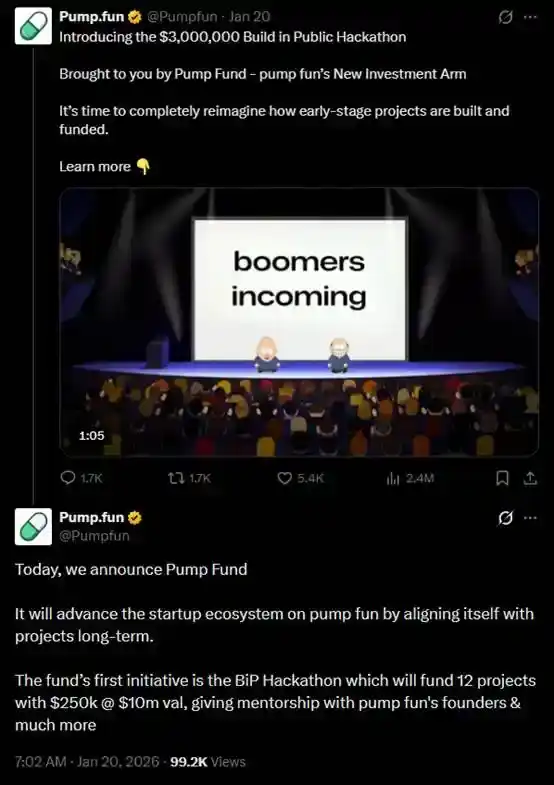
This is a very different hackathon. There are no judges, no theme, and there will be 12 winners, each taking away $250,000. Because of these special rules, before observing the projects, we need to first understand the logic behind this hackathon.

Called a Hackathon, Actually GFF 2.0

According to pump.fun's official statement, this hackathon abandons the traditional model of pleasing judges or investors to win funding, making the market the judge.

In short, it encourages everyone to launch tokens, and then it's up to their own abilities; whoever performs better in the market is more likely to win.

Apart from the requirement that the token must be deployed before the hackathon application deadline, the entire hackathon has almost only two restrictions. First, the team must own at least 10% of the token supply, and priority will be given to teams owning 20% - 50% of the supply. Second, the team must build "publicly," actively sharing their latest progress with the community, and priority will be given to teams that stream live on pump.fun at least 5 times a week.

For the最终 winning tokens, pump.fun will purchase $250,000 worth of tokens at a valuation of $10 million and provide ongoing consulting and incubation support.

This is hard not to remind people of last August, when pump.fun was challenged by the aggressive bonk.fun, they launched GFF (Glass Full Foundation), spending about $1.7 million to buy some well-performing meme coins in their ecosystem.

This hackathon, pump.fun is essentially still "buying coins," but in a more transparent and rule-based way, and the themes are no longer limited to pure meme coins. Based on the above interpretation of the rules, we can speculate on pump.fun's purpose and their understanding of the current market:

- Want to create 12 targets with at least a $10 million market cap

- Without good "control," there won't be new "golden dogs." If it's good control, it's called supply control adapted for long-term development. If it's bad control, it's called bundling.

- Still want to promote their own live streaming feature

- The theme of pure meme coins is too narrow; more narratives are needed for more revenue

At the same time, they have learned from the previous GFF lesson. GFF's promotion was just an announcement, with only a vague goal of "giving back to the ecosystem," and the theme was also limited to pure meme coins. Looking back now, it very much resembles a "wartime product" hastily created to deal with the bonk.fun challenge and the negative public opinion environment.

If following GFF's investments, the coin with the highest return was $neet, which rose over 200% at its peak two months after GFF's purchase, but more GFF holdings spiked instantly and then fell back.

Will this time be different? We cannot predict the future, only learn from history. A cautious strategy might be:

- Focus more on new coins, as new coins can bring more revenue to pump.fun

- Focus more on themes beyond pure meme coins, such as AI, Vibe Coding, or pump.fun live streaming coins

- Focus more on team background and influence, as this is a competition judged by market performance. If the founder is initially unknown, it's not easy to launch in the current market environment.

- Don't be too ambitious and long-term; don't expect pump.fun to do the work of helping those in need.

All of the above tells us that it is not easy to directly bet on "who will be the winner." If a token performs very strongly in the market, it actually doesn't need the official recognition from pump.fun to break through a $10 million market cap. Conversely, if a token needs official recognition from pump.fun as a driving force for its rise, then the token itself might not be that excellent.

Here, we can only look at some projects worth observing based on some available information and personal opinions that do not constitute investment advice.

3 "Case Studies" from the Official

First are the 3 coins that appeared as "case studies" in the official hackathon announcement: $MIA, $RAIN, and $MONEROCHAN.
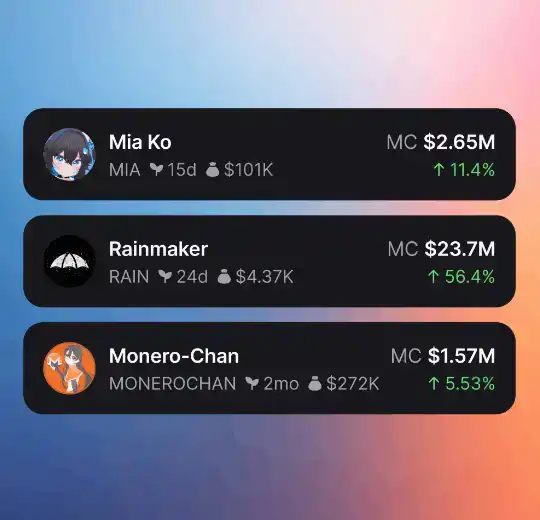
$MIA is building an interactive, multi-platform AI companion with real emotions. $RAIN is building an AI automated prediction market betting platform. $MONEROCHAN is building privacy DeFi on Solana.

$RAIN has a market cap of about $17 million, while $MIA and $MONEROCHAN are both around $1 million. However, none of these 3 tokens have publicly mentioned on their official Twitter whether they have applied to participate in this pump.fun hackathon, and for $MIA and $MONEROCHAN, it is unclear if the teams meet the hackathon's requirement of "the team holding at least 10% of the token supply."

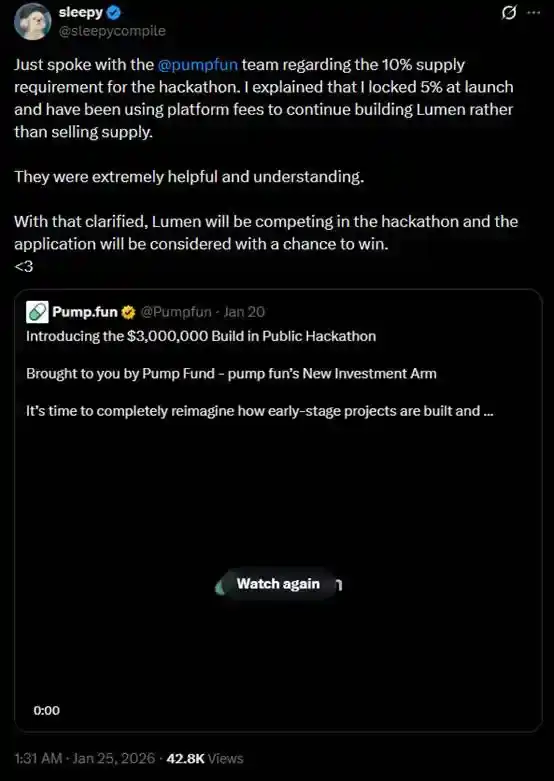
However, according to a tweet from the dev of the $LUMEN token, the requirement of "the team holding at least 10% of the token supply" can be leniently treated with a reasonable explanation.
From the 3 "case studies" given by pump.fun, we can also see that pump.fun might prefer the three sectors of AI, prediction markets, and privacy.

Observations on New Projects That Have Clearly Applied

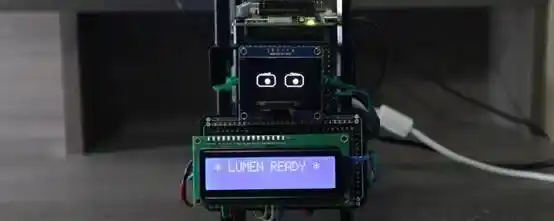
Lumen Frankenstein($LUMEN)

$LUMEN is building a robot that carries a continuously learning and evolving LLM with real emotions. The final product will be delivered to holders, and all delivered products will be connected to a backend cloud server, allowing all robots in the hands of holders to grow synchronously. The current market cap of this token is approximately $1.5 million.
Hyperscape($GOLD)

Under the AI theme, another competitor worth watching is $GOLD. The dev of this token is Shaw, the former founder of elizaOS and ai16z. Although, from TreasureDAO to ai16z, Shaw has issued too many assets and has a poor reputation among players.

$GOLD is the in-game token for the new game Hyperscape being developed by Shaw and his team, where 1 $GOLD = 1 in-game token. As the name suggests, this is a retro-style MMORPG like Runescape, built using AI and incorporating AI Agents powered by elizaOS. The game will be open source.
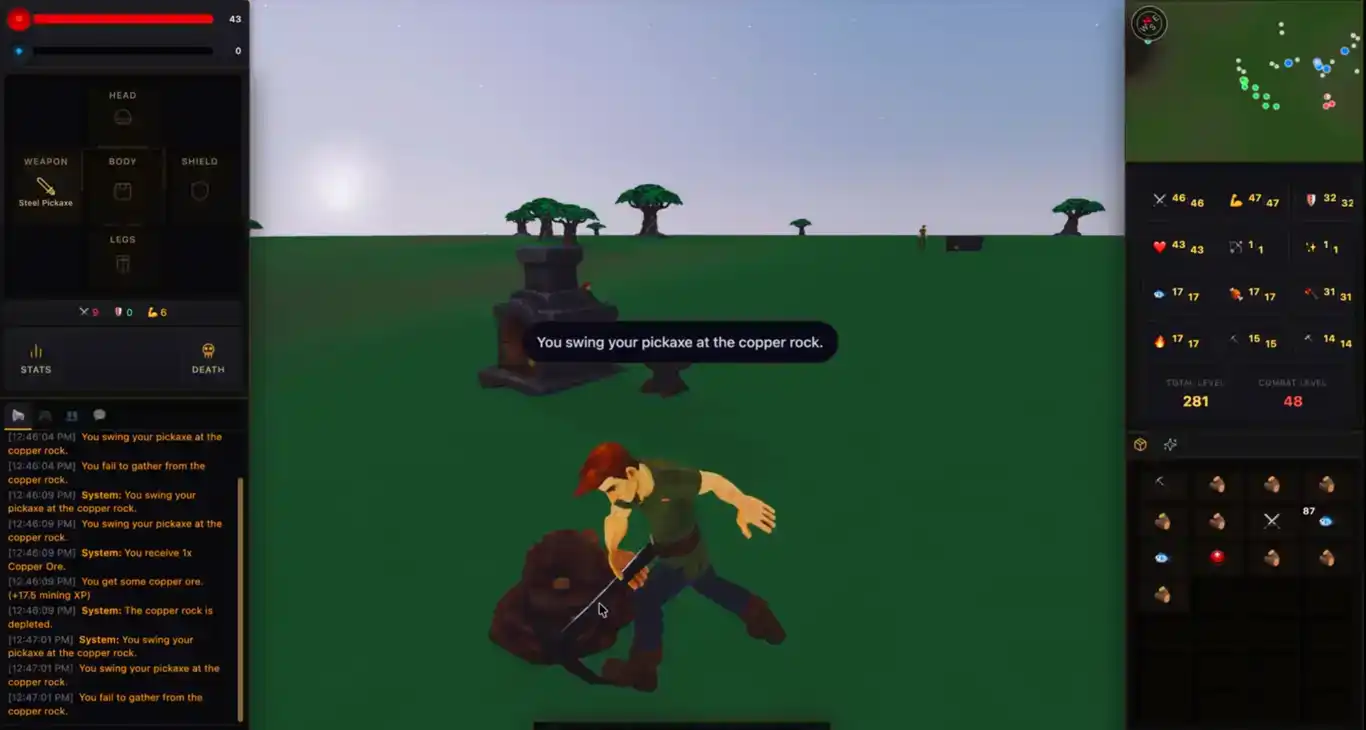
After briefly surging to nearly a $3 million market cap, $GOLD's current market cap is only about $360,000. Many players mock Shaw, but the final outcome is still hard to say.

PUMPCADE($PUMPCADE)

In the prediction market theme, a relatively outstanding competitor worth seeing is $PUMPCADE. This prediction market focuses on real-time betting on short-term volatility. Compared to prediction markets more friendly to medium-to-long-term beliefs, Pumpcade targets users seeking short-term entries and exits. For example, users might bet on the odds change for "Will Trump buy Greenland?" in the next hour, or they have developed a data source plugin for Runescape, allowing users to bet on the real-time收益 situation after killing a Boss, and so on.
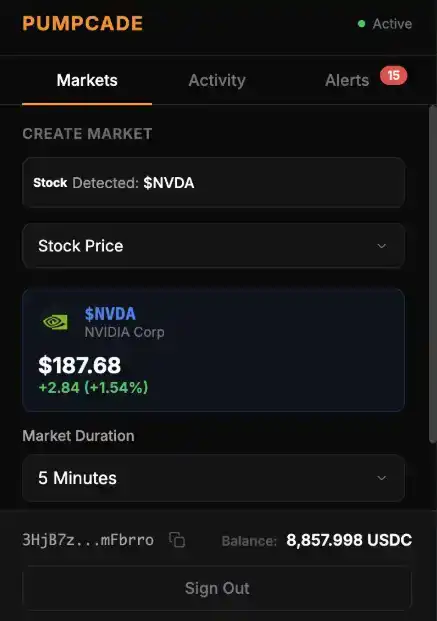
The current market cap of this token is approximately $3 million, having peaked at nearly $15 million.

The 3 non-"case study" projects mentioned above have clearly stated their participation in the pump.fun hackathon, but this is only for market observation and does not constitute investment advice.

Questions liées

QWhat is the total prize pool for the pump.fun hackathon and how many winners will be selected?

AThe total prize pool for the pump.fun hackathon is $3 million, and there will be 12 winners.

QWhat are the two main restrictions for teams participating in the pump.fun hackathon?

ATeams must own at least 10% of the token supply, and they must build publicly by actively sharing progress with the community, with a preference for teams that stream at least 5 times a week on pump.fun.

QWhat does the pump.fun hackathon's winning mechanism suggest about its purpose compared to the previous GFF initiative?

AThe hackathon, acting as GFF 2.0, uses a market-driven approach to select winners by acquiring their tokens at a $10 million valuation, aiming to create successful projects and diversify beyond pure meme coins, unlike the more reactive and meme-focused GFF.

QAccording to the article, what are some of the potential strategies for identifying promising projects in this hackathon?

AStrategies include focusing on new tokens that generate more revenue for pump.fun, prioritizing non-meme coin narratives like AI or prediction markets, evaluating team background and influence for better market performance, and avoiding overly long-term holds.

QName three example projects provided by pump.fun as 'case studies' for the hackathon and their respective focuses.

AThe three example projects are $MIA (an interactive, multi-platform AI companion with real emotions), $RAIN (AI-powered automated prediction market betting), and $MONEROCHAN (privacy-focused DeFi on Solana).

Lectures associées

L'Ère des Agents IA Accélère, Questflow Définit un Nouveau Paradigme d'Intelligence Financière par les Courtiers IA en Ligne

L’agence de renseignements sur le marché technologique CB Insights a publié son classement annuel AI 100, mettant en lumière 100 startups d’IA les plus prometteuses au monde en 2026. Le thème central de cette année est passé de « l’IA peut-elle fonctionner » à « à quelle vitesse l’IA peut-elle être déployée, gouvernée et étendue à des workflows complexes ». Les agents d’IA, capables d’exécuter de manière autonome des tâches en plusieurs étapes, deviennent le moteur clé de cette nouvelle vague de transformation. Questflow, une startup basée à Singapour spécialisée dans le courtage financier sur chaîne (« chain AI brokerage »), incarne cette tendance. Alors que de nombreux outils financiers alimentés par l’IA se contentent de tableaux de bord, Questflow développe des agents d’IA capables d’agir comme des entités de trading autonomes. Ces agents, appelés « AI Clones », scannent en permanence les marchés (notamment sur Polymarket et Hyperliquid), forment leurs propres jugements et exécutent des transactions via une interface conversationnelle, sans nécessiter d’intervention humaine pour chaque décision. La proposition centrale de Questflow est de démocratiser l’intelligence financière. Si Robinhood a permis à tous de s’asseoir à la table de jeu, Questflow ambitionne de donner « un cerveau à chacun ». En combinant la technologie des clones d’IA et le copy trading, la plateforme abaisse la barrière d’entrée à 1 $, sans frais de gestion ni commission sur performance. Son modèle repose uniquement sur des frais d’exécution des transactions (1 %), alignant ses intérêts avec ceux des utilisateurs. Le timing semble idéal, selon l’analyse de CB Insights qui souligne trois signaux : la mise à l’échelle des agents d’IA, l’accélération de la pénétration de l’IA dans les services financiers et la maturation des infrastructures sur chaîne. Avec des liquidités suffisantes sur les marchés cibles et des capacités d’inférence d’IA renforcées, Questflow vise à fusionner à terme les rôles de courtier, de fonds et de bourse en une seule plateforme, permettant à des millions d’utilisateurs de gérer leur propre « fonds quantitatif ».

链捕手Il y a 2 mins

L'Ère des Agents IA Accélère, Questflow Définit un Nouveau Paradigme d'Intelligence Financière par les Courtiers IA en Ligne

链捕手Il y a 2 mins

La volatilité du Bitcoin fait son retour alors que le prix teste un niveau d'indicateur critique

En raison d'événements mondiaux, le Bitcoin a connu la volatilité traditionnelle de fin de semaine, son prix dépassant brièvement les 82 000 dollars. Cependant, cette hausse fut de courte durée, le cours du BTC/USD retombant rapidement autour des 80 000 dollars selon les données de CMC. Cette fluctuation a entraîné des liquidations de positions, équilibrant les ordres longs et courts sur les carnets d'ordres des plateformes. Plus de 400 millions de dollars de positions ont été liquidées en 24 heures dans le marché des cryptomonnaies, comme le rapporte CoinGlass. Le prix du Bitcoin, en hausse de 40 % depuis ses plus bas de février, teste actuellement une zone de résistance cruciale : la moyenne mobile exponentielle (EMA) sur 200 jours, située au-dessus de 82 580 dollars. L'incapacité des acheteurs à franchir ce niveau technique a entraîné un recul du prix autour de 80 500 dollars lundi. Historiquement, depuis novembre 2025, les tentatives de rebond du Bitcoin ont été limitées à ce niveau, chaque rejet étant suivi de corrections importantes (en moyenne 30 %). Un analyste suggère qu'une rupture au-dessus de la moyenne mobile exponentielle sur 200 jours pourrait signaler "la fin du marché baissier". Dans le cas contraire, si le schéma de rejet habituel se reproduit, le prix du Bitcoin pourrait potentiellement retomber vers 56 600 dollars. Parallèlement, les produits d'investissement en cryptomonnaie ont enregistré des entrées de fonds pour la sixième semaine consécutive, totalisant 4,9 milliards de dollars, soutenues par un sentiment positif autour de la future réglementation américaine dans le secteur.

TheNewsCryptoIl y a 43 mins

La volatilité du Bitcoin fait son retour alors que le prix teste un niveau d'indicateur critique

TheNewsCryptoIl y a 43 mins

L'ère où les écrivains humains doivent prouver qu'ils ne sont pas des machines est arrivée

L'ère est venue où les écrivains humains doivent prouver qu'ils ne sont pas des machines. Depuis l'émergence de ChatGPT, les livres générés par l'IA inondent les plateformes comme Amazon, atteignant 300 000 nouveaux titres mensuels d'ici fin 2025. Des biographies de célébrités décédées apparaissent en trois heures, des ouvrages contrefaits usurpent l'identité d'experts, et des guides de cueillette de champignons potentiellement mortels sont vendus. La pollution s'étend : environ 80% des meilleures ventes dans certaines catégories seraient écrites par l'IA. En 2026, même l'édition traditionnelle est touchée : un roman à succès publié par Hachette a été retiré après qu'un détecteur d'IA ait estimé que 78% de son contenu était probablement généré automatiquement. Face à cette crise, la réaction du secteur est vive. En 2026, lors du Salon du livre de Londres, environ 10 000 auteurs ont publié conjointement un livre de 88 pages entièrement vide, intitulé "Ne volez pas ce livre", en signe de protestation contre la légalisation potentielle du pillage des œuvres par les entreprises d'IA. Parallèlement, la "certification d'auteur humain" se développe pour tenter de rétablir la confiance. Le cercle vicieux est enclenché : l'IA génère des livres de mauvaise qualité, qui polluent les données d'entraînement des futures IA, menaçant d'une "collapse des modèles". La promesse fondamentale de l'édition – que quelqu'un assume la responsabilité des mots – est en train de s'éroder.

marsbitIl y a 1 h

L'ère où les écrivains humains doivent prouver qu'ils ne sont pas des machines est arrivée

marsbitIl y a 1 h

Trading

Spot
Futures
活动图片