How to Capture the Potential Opportunities of the pump.fun Hackathon?

marsbitPublié le 2026-01-28Dernière mise à jour le 2026-01-28

Résumé

Pump.fun has announced a $3 million hackathon and the launch of its ecosystem venture fund, Pump Fund. Unlike traditional hackathons, this event has no judges or set themes. Instead, 12 winners will each receive $250,000 in funding based on market performance. Key rules require teams to hold at least 10% of their token supply and actively engage with the community via live streams on pump.fun. The hackathon is seen as an evolution of Pump.fun’s earlier GFF initiative, aiming to identify and support high-potential tokens with market caps targeting at least $10 million. It emphasizes stronger tokenomics, broader narratives beyond memes (such as AI, prediction markets, and privacy), and increased use of platform features like live streaming. Notable projects highlighted include $MIA (AI companion), $RAIN (AI prediction market), and $MONEROCHAN (privacy DeFi). Other participants like $LUMEN (evolving AI robot), $GOLD (AI-powered game token), and $PUMPCADE (real-time prediction market) are also in the running. The event reflects Pump.fun’s strategy to diversify content, boost engagement, and foster ecosystem growth through market-driven validation.

On January 20, pump.fun officially announced a hackathon with a prize pool of $3 million, and simultaneously launched the ecosystem venture fund Pump Fund.
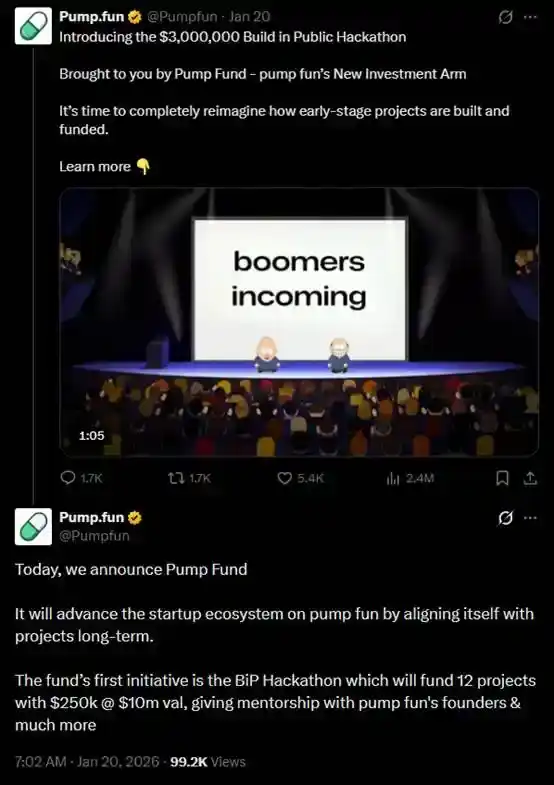
This is a very different hackathon. There are no judges, no theme, and there will be 12 winners, each taking away $250,000. Because of these special rules, before observing the projects, we need to first understand the logic behind this hackathon.

Called a Hackathon, Actually GFF 2.0

According to pump.fun's official statement, this hackathon abandons the traditional model of pleasing judges or investors to win funding, making the market the judge.

In short, it encourages everyone to launch tokens, and then it's up to their own abilities; whoever performs better in the market is more likely to win.

Apart from the requirement that the token must be deployed before the hackathon application deadline, the entire hackathon has almost only two restrictions. First, the team must own at least 10% of the token supply, and priority will be given to teams owning 20% - 50% of the supply. Second, the team must build "publicly," actively sharing their latest progress with the community, and priority will be given to teams that stream live on pump.fun at least 5 times a week.

For the最终 winning tokens, pump.fun will purchase $250,000 worth of tokens at a valuation of $10 million and provide ongoing consulting and incubation support.

This is hard not to remind people of last August, when pump.fun was challenged by the aggressive bonk.fun, they launched GFF (Glass Full Foundation), spending about $1.7 million to buy some well-performing meme coins in their ecosystem.

This hackathon, pump.fun is essentially still "buying coins," but in a more transparent and rule-based way, and the themes are no longer limited to pure meme coins. Based on the above interpretation of the rules, we can speculate on pump.fun's purpose and their understanding of the current market:

- Want to create 12 targets with at least a $10 million market cap

- Without good "control," there won't be new "golden dogs." If it's good control, it's called supply control adapted for long-term development. If it's bad control, it's called bundling.

- Still want to promote their own live streaming feature

- The theme of pure meme coins is too narrow; more narratives are needed for more revenue

At the same time, they have learned from the previous GFF lesson. GFF's promotion was just an announcement, with only a vague goal of "giving back to the ecosystem," and the theme was also limited to pure meme coins. Looking back now, it very much resembles a "wartime product" hastily created to deal with the bonk.fun challenge and the negative public opinion environment.

If following GFF's investments, the coin with the highest return was $neet, which rose over 200% at its peak two months after GFF's purchase, but more GFF holdings spiked instantly and then fell back.

Will this time be different? We cannot predict the future, only learn from history. A cautious strategy might be:

- Focus more on new coins, as new coins can bring more revenue to pump.fun

- Focus more on themes beyond pure meme coins, such as AI, Vibe Coding, or pump.fun live streaming coins

- Focus more on team background and influence, as this is a competition judged by market performance. If the founder is initially unknown, it's not easy to launch in the current market environment.

- Don't be too ambitious and long-term; don't expect pump.fun to do the work of helping those in need.

All of the above tells us that it is not easy to directly bet on "who will be the winner." If a token performs very strongly in the market, it actually doesn't need the official recognition from pump.fun to break through a $10 million market cap. Conversely, if a token needs official recognition from pump.fun as a driving force for its rise, then the token itself might not be that excellent.

Here, we can only look at some projects worth observing based on some available information and personal opinions that do not constitute investment advice.

3 "Case Studies" from the Official

First are the 3 coins that appeared as "case studies" in the official hackathon announcement: $MIA, $RAIN, and $MONEROCHAN.
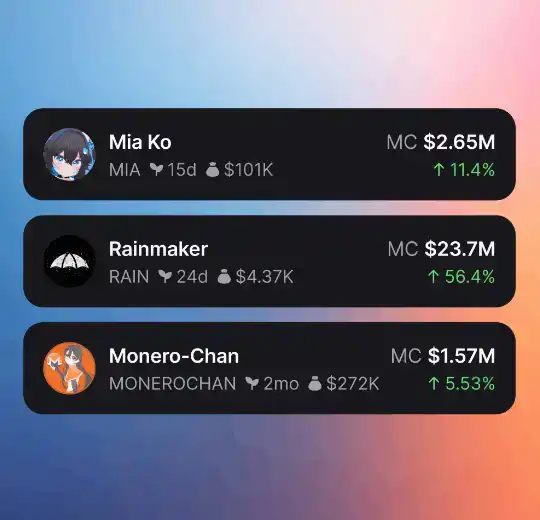
$MIA is building an interactive, multi-platform AI companion with real emotions. $RAIN is building an AI automated prediction market betting platform. $MONEROCHAN is building privacy DeFi on Solana.

$RAIN has a market cap of about $17 million, while $MIA and $MONEROCHAN are both around $1 million. However, none of these 3 tokens have publicly mentioned on their official Twitter whether they have applied to participate in this pump.fun hackathon, and for $MIA and $MONEROCHAN, it is unclear if the teams meet the hackathon's requirement of "the team holding at least 10% of the token supply."

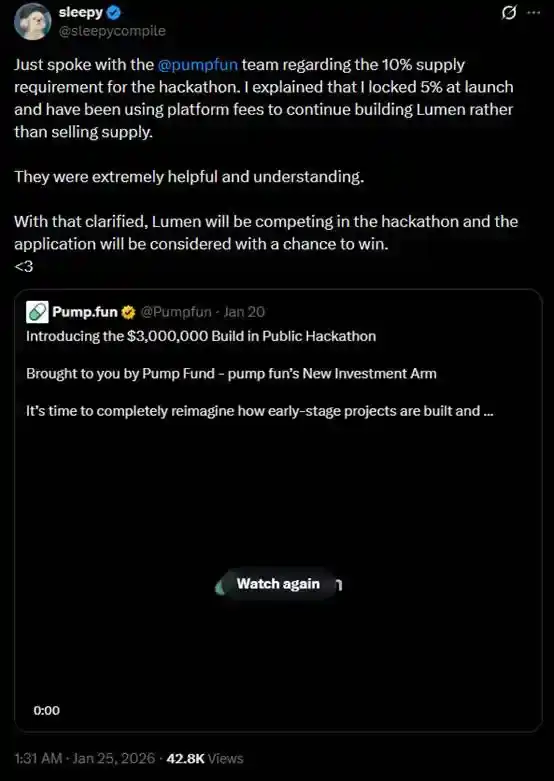
However, according to a tweet from the dev of the $LUMEN token, the requirement of "the team holding at least 10% of the token supply" can be leniently treated with a reasonable explanation.
From the 3 "case studies" given by pump.fun, we can also see that pump.fun might prefer the three sectors of AI, prediction markets, and privacy.

Observations on New Projects That Have Clearly Applied

Lumen Frankenstein($LUMEN)

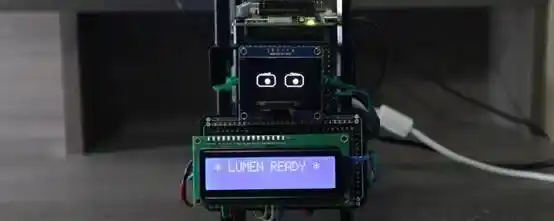
$LUMEN is building a robot that carries a continuously learning and evolving LLM with real emotions. The final product will be delivered to holders, and all delivered products will be connected to a backend cloud server, allowing all robots in the hands of holders to grow synchronously. The current market cap of this token is approximately $1.5 million.
Hyperscape($GOLD)

Under the AI theme, another competitor worth watching is $GOLD. The dev of this token is Shaw, the former founder of elizaOS and ai16z. Although, from TreasureDAO to ai16z, Shaw has issued too many assets and has a poor reputation among players.

$GOLD is the in-game token for the new game Hyperscape being developed by Shaw and his team, where 1 $GOLD = 1 in-game token. As the name suggests, this is a retro-style MMORPG like Runescape, built using AI and incorporating AI Agents powered by elizaOS. The game will be open source.
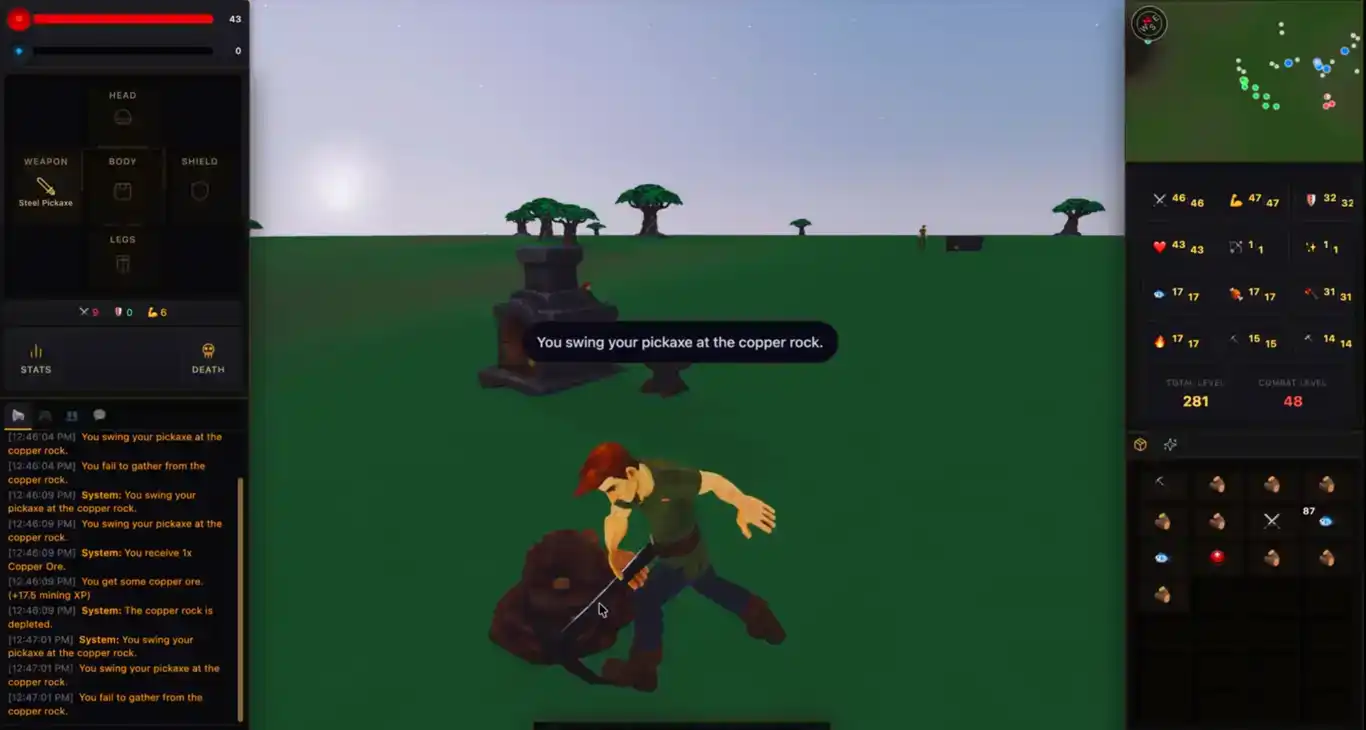
After briefly surging to nearly a $3 million market cap, $GOLD's current market cap is only about $360,000. Many players mock Shaw, but the final outcome is still hard to say.

PUMPCADE($PUMPCADE)

In the prediction market theme, a relatively outstanding competitor worth seeing is $PUMPCADE. This prediction market focuses on real-time betting on short-term volatility. Compared to prediction markets more friendly to medium-to-long-term beliefs, Pumpcade targets users seeking short-term entries and exits. For example, users might bet on the odds change for "Will Trump buy Greenland?" in the next hour, or they have developed a data source plugin for Runescape, allowing users to bet on the real-time收益 situation after killing a Boss, and so on.
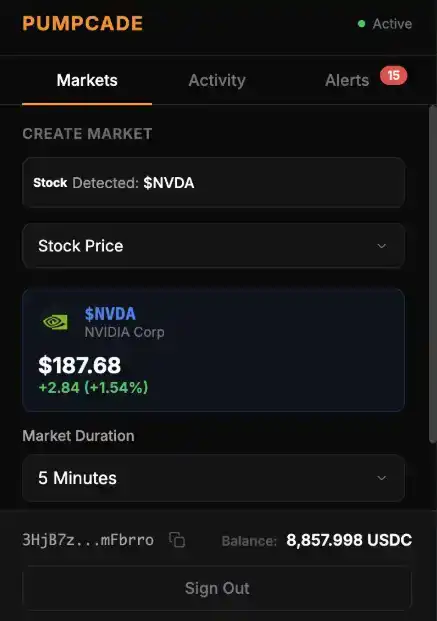
The current market cap of this token is approximately $3 million, having peaked at nearly $15 million.

The 3 non-"case study" projects mentioned above have clearly stated their participation in the pump.fun hackathon, but this is only for market observation and does not constitute investment advice.


Questions liées

QWhat is the total prize pool for the pump.fun hackathon and how many winners will be selected?

AThe total prize pool for the pump.fun hackathon is $3 million, and there will be 12 winners.

QWhat are the two main restrictions for teams participating in the pump.fun hackathon?

ATeams must own at least 10% of the token supply, and they must build publicly by actively sharing progress with the community, with a preference for teams that stream at least 5 times a week on pump.fun.

QWhat does the pump.fun hackathon's winning mechanism suggest about its purpose compared to the previous GFF initiative?

AThe hackathon, acting as GFF 2.0, uses a market-driven approach to select winners by acquiring their tokens at a $10 million valuation, aiming to create successful projects and diversify beyond pure meme coins, unlike the more reactive and meme-focused GFF.

QAccording to the article, what are some of the potential strategies for identifying promising projects in this hackathon?

AStrategies include focusing on new tokens that generate more revenue for pump.fun, prioritizing non-meme coin narratives like AI or prediction markets, evaluating team background and influence for better market performance, and avoiding overly long-term holds.

QName three example projects provided by pump.fun as 'case studies' for the hackathon and their respective focuses.

AThe three example projects are $MIA (an interactive, multi-platform AI companion with real emotions), $RAIN (AI-powered automated prediction market betting), and $MONEROCHAN (privacy-focused DeFi on Solana).

Lectures associées

Jensen Huang s'adresse aux diplômés : L'IA ne vous remplacera pas, mais ceux qui savent l'utiliser le feront

Le cofondateur et PDG de Nvidia, Jensen Huang, a prononcé un discours d'ouverture à l'université Carnegie Mellon, où il a reçu un doctorat honorifique. S'adressant aux diplômés de 2026 dans un contexte de craintes concernant l'impact de l'IA sur l'emploi, il a déclaré : "L'IA ne vous remplacera pas, mais la personne qui utilise l'IA le fera." Huang a partagé son parcours d'immigrant arrivé à 9 ans aux États-Unis, évoquant ses débuts modestes et les échecs initiaux de Nvidia, soulignant l'humilité et la résilience. Il a affirmé aux diplômés qu'ils entraient dans le monde au meilleur moment, au début de la révolution de l'IA, une transformation qu'il compare aux révolutions précédentes de l'informatique. Il a reconnu les inquiétudes concernant l'IA mais a plaidé pour une adoption responsable et optimiste. Selon lui, l'IA ne supprime pas le sens du travail mais amplifie les capacités humaines, démocratisant la création et comblant les fractures technologiques. Il a décrit la naissance d'une nouvelle industrie de fabrication d'intelligence à grande échelle et une opportunité de réindustrialisation. Huang a exhorté les diplômés à embrasser cette ère de découverte, à utiliser les outils puissants à leur disposition pour façonner l'avenir et à mettre leur cœur dans leur travail. Son message final était un appel à l'action : "Alors courez, ne marchez pas."

marsbitIl y a 11 mins

Jensen Huang s'adresse aux diplômés : L'IA ne vous remplacera pas, mais ceux qui savent l'utiliser le feront

marsbitIl y a 11 mins

Trois scénarios pour l'avenir du BTC et un duel entre deux géants | Analyse exclusive

Le marché du Bitcoin (BTC) oscille actuellement autour d'une zone clé de 79 500 à 80 600 dollars. L'analyse technique présente trois scénarios principaux pour la structure de correction journalière initiée depuis le sommet de 126 200 dollars en octobre 2025. Le premier scénario (haussier) suggère que la correction en trois vagues A-B-C est terminée à 60 000 dollars, et que le marché est désormais dans une nouvelle vague impulsive de hausse (grande vague I). Le deuxième scénario (baissier) envisage une structure complexe à cinq vagues A-B-C-D-E, le prix évoluant actuellement dans la vague de rebond D. Le troisième scénario (baissier) propose une correction de plus grande ampleur (niveau hebdomadaire), le marché se trouvant dans la vague de rebond B depuis 60 000 dollars. L'analyse écarte en partie le scénario à cinq vagues en raison d'un déséquilibre temporel, laissant les scénarios un et trois comme plus probables. À court terme (niveau 4 heures), l'évolution dépendra de la bataille autour du canal latéral C (support : ~75 000-78 500 dollars). La stratégie pour BTC recommande la patience pour les positions à moyen terme. Pour le trading à court terme, deux plans sont proposés : acheter si le prix se maintient fermement au-dessus de 78 500-79 500 dollars, ou vendre s'il chute en dessous de 73 500-75 000 dollars, avec des stops de protection stricts. Pour l'actif HYPE, l'attention se porte sur une structure en sept segments sur le graphique journalier. Le point clé cette semaine est de voir si le prix peut franchir le précédent sommet à 45,76 dollars. La stratégie de trading à court terme sera déterminée par l'action des prix autour des limites supérieure (~38,41 dollars) et inférieure (~34,44 dollars) d'un canal identifié. Un rappel essentiel : les marchés évoluent rapidement. Cette analyse, basée sur l'étude technique, est présentée à titre informatif uniquement et ne constitue en aucun cas un conseil en investissement. Une gestion rigoureuse des risques (comme le déplacement des stops de protection) est cruciale.

Odaily星球日报Il y a 18 mins

Trois scénarios pour l'avenir du BTC et un duel entre deux géants | Analyse exclusive

Odaily星球日报Il y a 18 mins

Rapport Morgan Stanley 2026 sur les semi-conducteurs : Achetez les emballages, les tests et les puces chinoises, évitez les pistes traditionnelles

**Résumé : Rapport Morgan Stanley 2026 sur les Semi-conducteurs** Le rapport identifie le déploiement massif de l'IA comme le moteur principal du secteur, entraînant une divergence profonde entre les semi-conducteurs liés à l'IA et les segments traditionnels. Les conclusions clés pour 2026-2027 sont : **Thèmes d'investissement prioritaires :** 1. **Emballage avancé (CoWoS/SoIC) :** Goulot d'étranglement critique avec une demande explosive. TSMC, leader incontournable, est le principal bénéficiaire. Le SoIC représente la prochaine courbe de croissance. 2. **Équipements de test :** Secteur sous-évalué avec une croissance structurelle assurée par l'augmentation exponentielle de la durée et de la complexité des tests des puces IA (ex. : testeurs, sockets, cartes à aiguilles). 3. **Puce IA chinoise :** La substitution forcée par les contrôles à l'exportation et des coûts totaux (TCO) inférieurs de 30 à 60% à ceux de NVIDIA stimulent une adoption irréversible. Cambricon est le choix le plus solide, Huawei dominant le marché. **Segments à éviter ou à sélectionner avec prudence :** * **Semi-conducteurs non-IA (consommation, automobile) :** Marginalisés par l'effet d'aspiration des ressources (capacités, substrats) vers l'IA. La reprise sera faible, sans rebond vigoureux. * **Mémoire :** Forte divergence interne. **À privilégier :** HBM (porté par l'IA, Hynix en tête) et NOR Flash. **Neutralité/prudence sur :** La hausse des prix du NAND/DDR4, due à des rationnements de l'offre et non à une demande fondamentale robuste. **Variables clés :** Poursuite des restrictions géopolitiques, tensions sur l'approvisionnement énergétique des data centers US, et « inflation technologique » (hausse des coûts des wafer, de l'assemblage-test et de la mémoire). **En un mot :** Privilégier l'**emballage (TSMC), les équipements de test et les leaders chinois des puces IA (ex. Cambricon)** ; éviter les paris sur une forte reprise des semi-conducteurs traditionnels. Le cycle des dépenses en IA est loin d'être terminé.

marsbitIl y a 1 h

Rapport Morgan Stanley 2026 sur les semi-conducteurs : Achetez les emballages, les tests et les puces chinoises, évitez les pistes traditionnelles

marsbitIl y a 1 h

Circle : Un marché déprimé ? Le leader des stablecoins continue de s'étendre

**Circle (CRCL) : Une croissance résiliente malgré un marché morose, mais des bénéfices sous pression** Le leader des stablecoins, Circle, a publié ses résultats du T1 2026. Malgré un contexte de marché crypto difficile, l’entreprise continue son expansion. **Points clés :** * **USDC en croissance modérée** : La valeur moyenne en circulation a atteint 752 milliards de dollars, terminant le trimestre à environ 770 milliards (+2% trimestriel). L’émission nette a ralenti, reflétant la faible activité du marché crypto, mais les besoins hors trading (nouveaux cas d’usage) restent solides. * **Concurrence avec l'USDT toujours féroce** : La part de marché de l'USDC est restée stable à 28%, mais l'USDT de Tether représente toujours une menace importante. * **Développement de l'écosystème** : Circle augmente la part d'USDC détenue en interne (18%), réduisant ainsi les coûts de partage des revenus. Le nombre de portefeuilles actifs a augmenté de 400 000 pour atteindre 7,2 millions. Des partenariats (Cash App, Polymarket, Kyriba) et le déploiement de nouvelles solutions de paiement (Managed Payments) visent à étendre l'utilisation de l'USDC. * **Revenus "autres" en hausse, mais ralentissement** : Les revenus non liés aux intérêts (services logiciels, paiements CPN, frais de transaction) ont atteint 42 millions de dollars, en hausse de 13% en glissement trimestriel, mais la croissance ralentit par rapport au trimestre précédent. * **Marge améliorée, mais bénéfices en baisse** : La marge brute s'est légèrement améliorée à 41,4%, grâce à une part interne plus élevée et aux revenus à marge élevée des services. Cependant, les bénéfices d'exploitation ajustés ont diminué en raison des investissements continus dans l'expansion et de la sensibilité aux variations des revenus d'intérêts. * **Perspectives maintenues, mais prudence à court terme** : La direction maintient ses prévisions pour 2026, y compris un taux de croissance annuel composé (TCAC) à long terme de 40% pour l'USDC et des revenus "autres" entre 150 et 170 millions de dollars. L'analyse note que ces objectifs ambitieux dépendent fortement de l'adoption et de l'avancée réglementaire (loi CLARITY). **Conclusion :** Circle démontre une croissance organique résiliente en diversifiant les cas d'usage de l'USDC au-delà du trading crypto. Cependant, cette expansion nécessite des investissements qui pèsent sur la rentabilité à court terme. L'évaluation actuelle semble raisonnable, et des progrès réglementaires pourraient offrir un soutien supplémentaire. La suite dépendra de la capacité de l'entreprise à accélérer l'adoption de son écosystème.

链捕手Il y a 1 h

Circle : Un marché déprimé ? Le leader des stablecoins continue de s'étendre

链捕手Il y a 1 h

Les récits des actions technologiques dépendent de plus en plus d'Anthropic

Le récit des actions technologiques dépend de plus en plus d'Anthropic. La société est devenue le centre d'un puissant écosystème comprenant Google, Amazon et SpaceX (Elon Musk). Cet axe, baptisé « A », s'oppose à l'alliance « O » d'OpenAI, Microsoft et SoftBank, marquant une division profonde dans le secteur de l'IA. L'importance d'Anthropic réside dans sa capacité à générer des revenus et à structurer les récits financiers. Malgré un nombre d'utilisateurs actifs inférieur à celui d'OpenAI, son revenu par utilisateur est bien plus élevé. Ses engagements de commandes de calcul massifs (centaines de milliards de dollars) avec Google et Amazon, ainsi que le nouveau contrat de location avec SpaceXAI, en font un « nœud financier systémique ». Les bénéfices trimestriels de Google et Amazon sont fortement influencés par les réévaluations de sa participation dans Anthropic. En revanche, OpenAI, bien que pionnier, voit sa part de marché et ses revenus relatifs diminuer face à la montée d'Anthropic et des modèles open source comme DeepSeek-V4. La pression pour se monétiser s'intensifie, comme le montre l'introduction de publicités dans ChatGPT. L'alliance « O » montre des signes de faiblesse, avec la fin de l'exclusivité entre Microsoft et OpenAI. Le marché est en train de passer d'un récit axé sur la puissance de calcul (symbolisée par Nvidia) à un récit axé sur l'application commerciale rentable, où Anthropic excelle. Cependant, cette concentration du capital et des espoirs sur une seule entreprise crée un risque systémique. La performance continue des modèles d'Anthropic est essentielle pour soutenir les valorisations de ses puissants alliés. La menace des modèles open source performants, comme DeepSeek, plane comme une épée de Damoclès sur ce modèle économique fermé, ce qui pourrait entraîner des mesures géopolitiques pour les contenir.

marsbitIl y a 1 h

Les récits des actions technologiques dépendent de plus en plus d'Anthropic

marsbitIl y a 1 h

Trading

Spot
Futures
活动图片




