Has the Era of Global Central Banks 'Hoarding Gold' Come to an End?

marsbitPublié le 2026-04-03Dernière mise à jour le 2026-04-03

Résumé

The article questions whether the global central bank gold-buying spree, ongoing for 15 years, is ending. Citing a UBS report, it concludes that a structural shift to large-scale selling is highly unlikely. While the pace of purchases may slow to 800-850 tons in 2026 from 860 tons in 2025, central banks are expected to remain net buyers. The report challenges the narrative that recent sales, like Turkey's alleged sale of 50 tons, signal a trend. It argues Turkey's data is distorted by commercial bank positions and swaps, and its central bank uses gold for domestic liquidity management, not necessarily market speculation. Short-term price volatility is attributed to dollar strength and real interest rates, not central bank selling. The underlying logic for holding gold remains strong: over 60% of central banks follow a buy-and-hold strategy, with diversification being the primary motive. While short-term noise and price consolidation are expected, the medium-term outlook is bullish, with UBS forecasting an average 2026 price of $5000/oz and a year-end target of $5600/oz.

Original Author: Zhao Ying

Original Source: Wall Street News

The hottest question in the market recently is: Are global central banks selling gold? Has this 15-year-long official "gold hoarding wave" come to an end?

According to Wind Trading Desk, UBS strategist Joni Teves gave a clear judgment in the latest precious metals research report released on April 2: The possibility of a structural shift and large-scale selling by central banks is extremely low. Official institutions will maintain a net buying stance, but the pace of purchases will slow moderately—it is estimated that gold purchases in 2026 will be about 800 to 850 tons, slightly lower than the approximately 860 tons in 2025.

The report targeted the most glaring recent example—the news that Turkey "sold about 50 tons of gold in a few weeks." Teves believes: Turkey's official gold data includes commercial bank positions, swaps, and other operations. Relying solely on headlines to infer that "central banks are starting to sell" is highly risky, and it is better to wait for more detailed breakdown data before making a judgment.

In terms of price, UBS defines the short term as "full of noise": news cycles about geopolitical situations will keep gold prices fluctuating and consolidating; but the medium-term logic still points to new highs. The bank lowered its 2026 average gold price forecast to $5,000 (previously $5,200, mainly an adjustment for the first quarter) and maintained its year-end target price of $5,600 (set at the end of January).

Evidence That "Central Bank Gold Selling" Is the Main Cause of This Pullback Is Not Solid; 800-850 Tons Is More Like "Slowing Down"

The market's concern is specific: If the Middle East conflict prolongs, oil prices push up inflation, growth weakens, and local currencies depreciate, some central banks may be forced to sell gold to cope with the pressure. The report does not deny that "individual central banks may sell," but it emphasizes that this does not equate to a trend reversal in the official sector.

A key reminder from the report is: During the past 15 years of continuous gold accumulation by the official sector, "selling" in a single month is not uncommon. The reasons can be practical—central banks that bought cheaply earlier may take some profit tactically outside their core positions; sharp gold price increases trigger rebalancing; "natural inflows" from gold-producing countries turn into external shipments at certain points. In other words, selling can be an action, not necessarily a stance.

The baseline judgment is that net buying continues, but at a slower pace. The detail here lies in the trading habits of the official sector: They are more like "physical buyers," often providing support during pullbacks, helping the market stabilize more quickly at higher levels; conversely, the official sector typically does not chase rallies, preferring to intervene when prices are more suitable and volatility is lower.

This also explains why, when volatility increases, the market suddenly feels that "central banks have disappeared." The observation mentioned in the research is: Recently, the official sector and other long-term holders have tended to wait and see rather than immediately replenish positions in every decline.

The Narrative of Turkey Selling "50 Tons" Is Overstated; Short-Term Gold Prices Are More Influenced by the Dollar and Real Interest Rates

The case of Turkey is sensitive because it seems to fit the narrative of "central banks starting to sell gold." But Turkey has certain particularities: Some changes may be due to swaps rather than direct selling; more importantly, the Turkish Central Bank has long used gold as a policy tool to support liquidity management in the domestic banking system.

Part of the total gold disclosed by the Turkish Central Bank corresponds to commercial bank positions. Combined with policies since 2017 that allow banks and other entities to use gold within the financial system, "changes in total data" do not equal "central bank selling in the market." The report's advice is clear: Wait for more detailed data that can break down the口径 before discussing trends.

The trading environment in March had "dual uncertainty": On one hand, gold prices were seeking a new stable range after sharp rises and falls in January-February when Iran-related news fermented; on the other hand, the impact of the Middle East conflict on macro and asset pricing is nonlinear, and long-term funds are reluctant to bet easily.

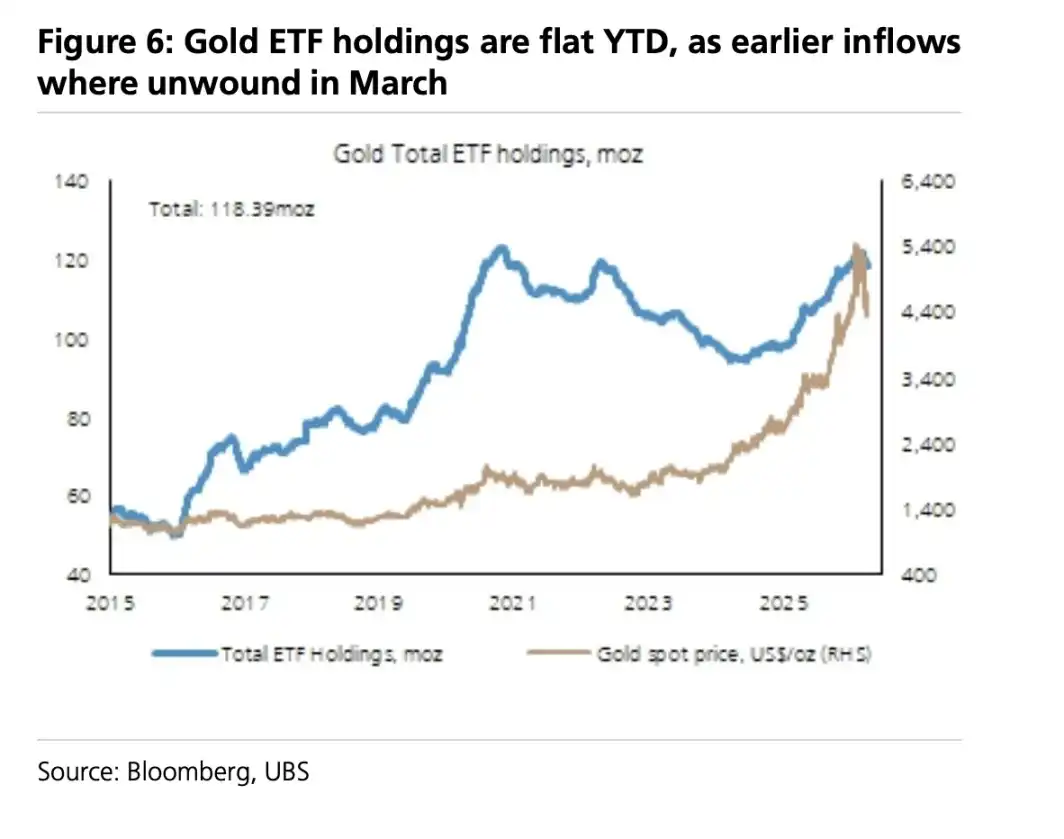
When strategic funds that "buy on dips" are absent, gold prices in the short term are more likely to return to the traditional framework: A stronger U.S. dollar and rising U.S. real interest rates suppress gold prices; long positions are further squeezed out, and even some short-selling forces emerge. In addition, Chinese demand supported the decline during this phase, with gold prices stabilizing near $4,500 before fluctuating around the $4,700 level.
The Underlying Logic of Central Bank Gold Holdings: Buy and Hold

The World Bank's "Fifth Biennial Reserve Management Survey Report (2025)" explains a more fundamental question: How do central banks really think about gold? The survey covers holdings as of December 2024, with 136 institutions participating—the highest ever—and for the first time includes a separate chapter on gold.

Several numbers can clarify the behavioral boundaries of central banks: About 47% of central banks determine gold holdings based on "historical legacy," about 26% based on qualitative judgment; only about a quarter incorporate gold into a formal strategic asset allocation framework.

More critically, only about 4.5% make short-term tactical adjustments to gold reserves, while the investment style for gold is mainly buy-and-hold (about 62%). This profile means: Even if the buying pace slows, the official sector is not like a group of traders driven by news to frequently trade positions.

In terms of reasons for increasing holdings, more than half cited "diversification" as the primary reason; local gold purchase plans accounted for about 35%, geopolitical risks about 32%; only about 6% cited "liquidity needs" as a reason. The official sector's rationale for gold has not been invalidated by recent volatility.

Short-Term Volatility Is Inevitable, but "New Highs Not Finished" Remains the Main Theme

Returning to the trading level, gold's rise is not a straight line: It may continue to consolidate and experience bumpy movements in the coming weeks as the market repeatedly reassesses geopolitical risks. But it believes that the two long-term drivers pushing funds to allocate to gold—the combination of growth and inflation risks, and the persistence of geopolitical tensions—are making "diversification into gold" a more common portfolio action.

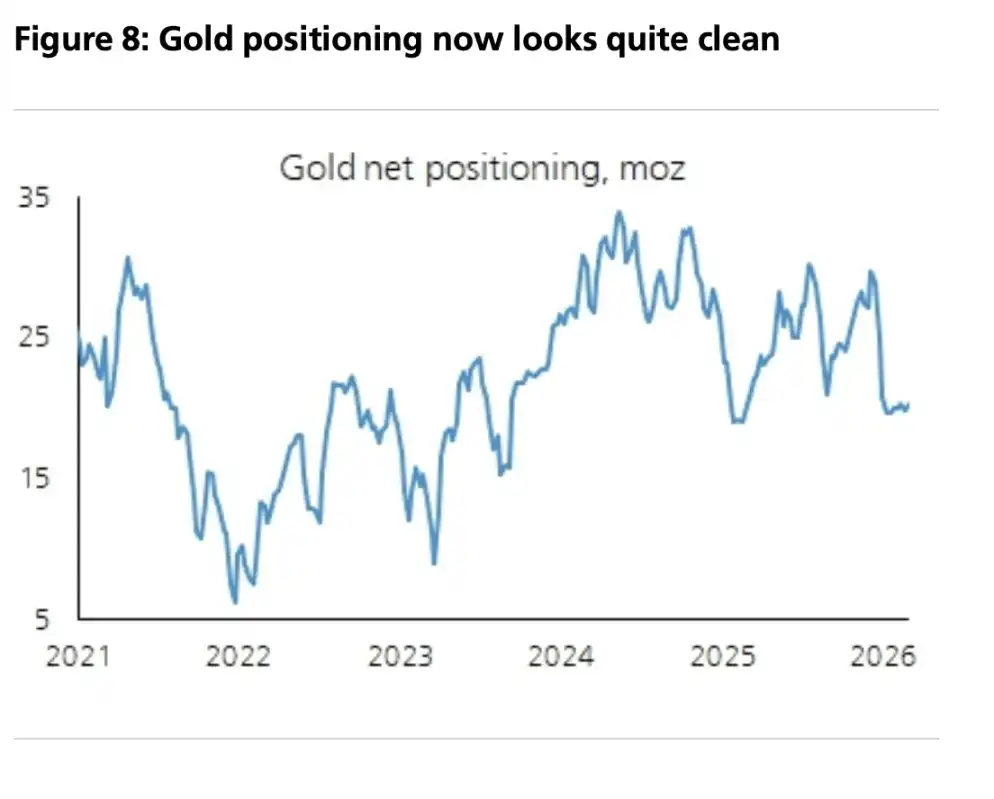
Under this framework, the report's pricing anchor is: An average gold price of $5,000 in 2026, with a year-end target of $5,600. It also mentions that speculative positions are already "cleaner," and long-term participants are still underweight; if another pullback occurs, it is closer to a "strategic window for building positions" rather than a signal of the end of the trend.
Questions liées

QIs the UBS report suggesting that global central banks are structurally shifting away from gold and starting large-scale selling?

ANo, the UBS report states that the possibility of a structural shift and large-scale selling by central banks is extremely low. They are expected to maintain a net buying stance, albeit at a slightly slower pace.

QWhat is the specific reason cited in the report for the recent news about Turkey selling gold, and why should it be interpreted cautiously?

AThe report cautions that Turkey's official gold data includes commercial bank positions and swap operations. It suggests waiting for more detailed, disaggregated data before concluding that the central bank is selling, as the headline figure does not equate to direct central bank market selling.

QAccording to the World Bank's survey, what is the primary investment style and main reason central banks hold gold?

AThe primary investment style for central banks is 'buy and hold' (approximately 62%). The main reason for increasing gold holdings is 'diversification', cited by over half of the central banks surveyed.

QWhat is UBS's medium-term price target for gold by the end of 2026, and what is their revised average price forecast for the year?

AUBS maintains a year-end 2026 price target of $5600 per ounce. They have revised their average annual price forecast for 2026 down to $5000 from a previous $5200, mainly as an adjustment for Q1 performance.

QWhat two long-term factors does the report identify as driving continued gold allocation, despite short-term noise and volatility?

AThe two long-term factors driving gold allocation are the combination of growth and inflation risks, and the persistence of geopolitical tensions, which are making diversification into gold a more common portfolio action.

Lectures associées

ChatGPT peut désormais gérer vos finances, seriez-vous prêt à lui confier vos comptes bancaires ?

Le 15 mai, OpenAI a lancé un outil de gestion financière personnelle pour ChatGPT, permettant aux utilisateurs américains de l'abonnement Pro (200 $/mois) de connecter leurs comptes bancaires et d'investissement via le service Plaid, avec accès à plus de 12 000 institutions financières. L'outil analyse les données financières pour offrir un tableau de bord détaillé (soldes, transactions, dépenses, investissements, dettes) et permet des conseils personnalisés via dialogue naturel (ex. : plans d'épargne, analyse des dépenses). Il mémorise même des objectifs financiers pour des recommandations contextuelles. OpenAI a préparé ce lancement par deux acquisitions fintech (Roi et Hiro Finance) en 2025-2026, visant à transformer ChatGPT en "assistant super personnel" pour des décisions à haute valeur comme la santé (lancée en janvier) et les finances. Cependant, la fonctionnalité soulève de vives inquiétudes sur la confidentialité, surtout après une plainte collective récente accusant OpenAI de partager des données de conversation avec Meta et Google. Bien que l'entreprise garantisse que ChatGPT ne peut pas effectuer d'opérations et supprime les données sous 30 jours, un paramètre optionnel permet d'utiliser les données pour l'entraînement des modèles. Cette initiative s'inscrit dans une tendance où les entreprises d'IA (comme Anthropic et Perplexity) se spécialisent dans des domaines riches en données personnelles. Mais contrairement aux conseillers financiers humains réglementés, ChatGPT n'assume aucune responsabilité légale pour ses recommandations. OpenAI teste ainsi la confiance des utilisateurs, une étape clé pour son ambition de créer un assistant universel, mais l'acceptation publique reste incertaine face aux risques perçus.

marsbitIl y a 2 h

ChatGPT peut désormais gérer vos finances, seriez-vous prêt à lui confier vos comptes bancaires ?

marsbitIl y a 2 h

L’hiver glacial des IPO cryptos : Consensys et Ledger retirent leurs projets collectivement

**Hiver glacial pour les IPO cryptos : Consensys et Ledger retirent leurs projets** Le 14 mai, Consensys, développeur du portefeuille MetaMask, a reporté son introduction en bourse au plus tôt à l'automne 2026. La veille, le géant des portefeuilles matériels Ledger a également suspendu son projet d'IPO aux États-Unis. Ces reports, suivant ceux de l'échange Kraken, marquent un net resserrement de la fenêtre des introductions en bourse pour les entreprises du secteur en 2026, contrastant avec l'effervescence de 2025. 2025 avait été une année record : succès de l'IPO de Circle, introductions de Bullish et Gemini, levée de 146 milliards de dollars via les IPO cryptos. Le BTC avait atteint 126 000 $, attirant les capitaux institutionnels. En 2026, le paysage a changé : le prix du Bitcoin a corrigé, les volumes ont baissé, et l'appétit des investisseurs pour les actions cryptos s'est refroidi. L'IPO de BitGo en janvier, première de l'année, illustre cette défiance avec une performance décevante après un début prometteur. Plusieurs facteurs expliquent cette pause. La mauvaise performance boursière des IPO de 2025 (comme Circle et Bullish) a rendu les investisseurs traditionnels méfiants, exigeant une prime de risque plus élevée face à la forte cyclicité du secteur. Parallèlement, l'engouement se porte massivement vers l'IA, avec des préparations d'IPO colossales (SpaceX, OpenAI, Anthropic) drainant les capitaux au détriment des actifs cryptos, perçus comme plus volatils et moins dotés d'une croissance "certaine". Face à ces conditions de marché difficiles, les entreprises cryptos adoptent des stratégies plus prudentes. Certaines, comme Ledger, pourraient se tourner vers des financements privés. D'autres optimisent leurs produits ou développent des services institutionnels et de conformité, visant à démontrer une rentabilité et des flux de trésorerie stables avant de relancer leurs projets boursiers. Cette période de consolidation pourrait renforcer le secteur à long terme en accélérant la sélection naturelle, favorisant les entreprises aux fondamentaux solides et à la conformité robuste. Elle pousse également l'industrie à passer d'un modèle porté par le récit à un modèle axé sur les performances. Une remontée soutenue du Bitcoin au-dessus de 90 000 $ et des avancées réglementaires pourraient rouvrir une fenêtre d'opportunités pour les IPO dans le second semestre 2026.

marsbitIl y a 2 h

L’hiver glacial des IPO cryptos : Consensys et Ledger retirent leurs projets collectivement

marsbitIl y a 2 h

Trading

Spot
Futures

Articles tendance

Comment acheter ERA

Bienvenue sur HTX.com ! Nous vous permettons d'acheter Caldera (ERA) de manière simple et pratique. Suivez notre guide étape par étape pour commencer votre parcours crypto.Étape 1 : Création de votre compte HTXUtilisez votre adresse e-mail ou votre numéro de téléphone pour ouvrir un compte sur HTX gratuitement. L'inscription se fait en toute simplicité et débloque toutes les fonctionnalités.Créer mon compteÉtape 2 : Choix du mode de paiement (rubrique Acheter des cryptosCarte de crédit/débit : utilisez votre carte Visa ou Mastercard pour acheter instantanément Caldera (ERA).Solde :utilisez les fonds du solde de votre compte HTX pour trader en toute simplicité.Prestataire tiers :pour accroître la commodité d'utilisation, nous avons ajouté des modes de paiement populaires tels que Google Pay et Apple Pay.P2P :tradez directement avec d'autres utilisateurs sur HTX.OTC (de gré à gré) : nous offrons des services personnalisés et des taux de change compétitifs aux traders.Étape 3 : stockage de vos Caldera (ERA)Après avoir acheté vos Caldera (ERA), stockez-les sur votre compte HTX. Vous pouvez également les envoyer ailleurs via un transfert sur la blockchain ou les utiliser pour trader d'autres cryptos.Étape 4 : tradez des Caldera (ERA)Tradez facilement Caldera (ERA) sur le marché Spot de HTX. Il vous suffit d'accéder à votre compte, de sélectionner la paire de trading, d'exécuter vos trades et de les suivre en temps réel. Nous offrons une expérience conviviale aux débutants comme aux traders chevronnés.

534 vues totalesPublié le 2025.07.17Mis à jour le 2025.07.17

Comment acheter ERA

Discussions

Bienvenue dans la Communauté HTX. Ici, vous pouvez vous tenir informé(e) des derniers développements de la plateforme et accéder à des analyses de marché professionnelles. Les opinions des utilisateurs sur le prix de ERA (ERA) sont présentées ci-dessous.

活动图片