Crypto Morning Brief: Strategy Remains in Nasdaq 100, Major Unlocks for ZRO, ARB, STRK Tokens This Week

深潮Publié le 2025-12-15Dernière mise à jour le 2025-12-15

Résumé

Crypto Morning Brief: Strategy (formerly MicroStrategy) remains in the Nasdaq 100 index, with Michael Saylor signaling continued accumulation of Bitcoin. This week sees significant token unlocks for ZRO ($37.79M), ARB ($19M), STRK ($13.2M), SEI ($6.93M), and LISTA ($5.34M). In U.S. policy, former President Trump expressed a preference for a new Fed Chair who supports lowering interest rates to 1% or below. The SEC issued new custody guidelines for crypto assets, outlining best practices and risks for investors. The OCC conditionally approved trust bank charters for Ripple, BitGo, Fidelity, Paxos, and Circle. Other notable updates: Moonbirds announced a BIRB token on Solana for Q1 2026; Berachain's Infrared protocol will TGE on December 17; and Coinbase is reportedly planning to launch an internal prediction market. OKX reported that the recent OM token price manipulation was caused by external actors and legal proceedings are underway. China's former bank executive Wang Yongli reiterated the country's firm stance against virtual currencies while pushing for the development of its digital yuan.

Author: Shenchao TechFlow

Yesterday's Market Dynamics

Trump: Prefers Warsh or Hassett to Lead the Fed, Interest Rates Should Be No Higher Than 1% in a Year

US President Trump stated in an interview in the Oval Office on Friday: Both Kevins (Warsh and Hassett) are outstanding, and several other candidates are also excellent.

According to informed sources, Trump met with Warsh for 45 minutes at the White House on Wednesday, during which he pressured Warsh, asking if he would guarantee support for interest rate cuts if elected Fed Chair. Trump confirmed this in the interview: "He believes rate cuts are necessary, and everyone I've spoken to thinks so too." Trump said he believes the next Fed Chair should seek his opinion when formulating interest rate policy.

When asked about the desired interest rate level a year from now, Trump said: 1%, perhaps even lower; we should have the lowest interest rates in the world. Rate cuts would help the US Treasury reduce the financing costs of its $30 trillion government debt.

US SEC Issues Cryptocurrency Custody Guidelines

According to a Cointelegraph report, the US Securities and Exchange Commission (SEC) issued an Investor Bulletin on cryptocurrency wallets and custody guidelines on Friday, outlining best practices and common risks for different forms of cryptocurrency storage for the investing public.

The guidelines detail the pros and cons of different cryptocurrency custody methods, including self-custody versus allowing a third party to hold digital assets on one's behalf. For investors choosing third-party custody, the SEC recommends understanding the custodian's policies, including whether it "re-hypothecates" custodial assets or commingles client assets.

The guidelines also analyze the characteristics of hot and cold wallets. Hot wallets are connected to the internet but face hacking risks; cold wallets are stored offline and are more secure but carry the risk of permanent loss due to device failure or private key leakage.

Ripple, BitGo, Fidelity, Paxos, Circle Receive Conditional Approval for Trust Bank Charters

According to a crowdfundinsider report, the US Office of the Comptroller of the Currency (OCC) has just conditionally approved trust bank charter applications from Ripple, BitGo, Fidelity Digital Assets, Paxos, and Circle.

"Conditional approval" is a form of preliminary recognition, indicating that the OCC has reviewed the application and found the company substantially meets regulatory requirements (such as capital adequacy, risk management framework, and business plan), but it is not the final license. The company must meet specific conditions within a stipulated time to convert to full operational status. Once all conditions are met, the OCC will issue a final, unconditional national trust bank charter, allowing the company to immediately exercise trust bank powers,主要包括: Core business expansion, acting as a trustee to manage client assets, handling payment settlements, custodying digital assets (such as stablecoin reserves), and providing related financial services. However, a trust bank charter is different from a full-service bank and cannot accept deposits or make loans. It can apply for a Federal Reserve master account, accelerating clearing and access to the traditional financial system, further promoting the integration of crypto and traditional finance.

Moonbirds Announces Token BIRB Launch in Q1 Next Year

According to an official announcement, Moonbirds will launch the token BIRB on Solana in the first quarter of 2026.

Berachain Liquid Staking Protocol Infrared Announces TGE on December 17

According to an official announcement, the Berachain liquid staking protocol Infrared announced details of the IR token airdrop.

The airdrop targets early community members, Boyco pre-deposit event participants, and users who participated in community activities. Users can pre-claim the airdrop through a centralized exchange pre-deposit process (Note: tokens will be received on the day of TGE). The pre-deposit process runs from 12:00 UTC on December 13 to 17:00 UTC on December 15. Users need to start the process on the Infrared website, select an exchange, and submit their user ID.

The IR token has three main functions: staking to obtain sIR for governance voting rights; revenue sharing through a buyback mechanism where a portion of protocol fees flows into the "Red Fund" to buy back IR tokens; and token issuance to optimize protocol efficiency and revenue.

Non-exchange claims will open on the day of TGE. Key timelines: IR token listing at 08:00 UTC on December 17; all claims permanently close at 00:00 UTC on January 12, 2026.

Previous news: Berachain ecosystem's first liquid staking protocol, Infrared, completed a $14 million Series A funding round led by Framework Ventures.

Coinbase Plans to Launch Internal Prediction Market, Kalshi Likely Initial Sole Operator

According to CNBC citing informed sources, cryptocurrency exchange Coinbase is preparing to launch an internal prediction market, with the product to be powered by prediction platform Kalshi. This move is part of Coinbase's strategy to expand the asset classes covered on its trading platform amid a backdrop where some investors are shying away from digital assets.

The source said Coinbase and Kalshi will formally announce the partnership soon, possibly as early as next week. The partnership is not an exclusive agreement, but Kalshi will be Coinbase's sole prediction market operator initially upon product launch.

Separately, The Information reported that Coinbase will launch the product during the "Coinbase System Update" event on December 17. Bloomberg also mentioned that Coinbase will announce the launch of tokenized stock products at the event.

Coinbase declined to confirm the reports but said to watch for its event next week.

OKX: Conclusive Evidence Shows OM Price Anomaly Caused by External Manipulation, Multiple Legal Proceedings Underway

According to an official social media post by OKX, conclusive evidence has been found that multiple linked accounts collaboratively used large amounts of OM as collateral to borrow USDT and artificially inflated the price. After the risk control team intervened, the counterparty refused to cooperate, and OKX subsequently took over the relevant accounts. Shortly thereafter, OM plummeted. OKX liquidated only a very small amount of OM, and related losses were fully covered by the OKX Security Fund.

Multiple third-party analyses indicate the price crash was primarily triggered by perpetual contract trading on non-OKX platforms and questioned the source of the anomalous OM and its highly concentrated token control. The OKX Security Fund operated exactly as designed.

OKX has now submitted complete evidence to regulatory and law enforcement agencies, and multiple legal proceedings are underway.

Wang Yongli: China's Policy Stance of Resolutely Curbing Virtual Currency Is Now Fully Clear

Wang Yongli, former Vice President of the Bank of China, stated in a public article: "On November 28, the People's Bank of China and 12 other departments jointly held a 'Coordination Mechanism Meeting on Combating Virtual Currency Trading Speculation,' clarifying that stablecoins are a form of virtual currency, emphasizing the need to continue adhering to the prohibitive policy on virtual currency and persistently crack down on illegal financial activities related to virtual currency. Thus, China's policy orientation of firmly promoting the development of the digital yuan and resolutely curbing virtual currency is now fully clear.

It is essential to practically accelerate the innovative development and widespread domestic and international application of the digital yuan, quickly form its unique advantages in international payments, and forge a successful Chinese path in digital currency development."

Tom Lee: Bitmine Will Never Sell Its Held ETH

According to a Decrypt report, Tom Lee, Chairman of Ethereum treasury company BitMine, stated, "Bitmine holds close to 4% of Ethereum's total supply and believes the company will never sell these ETH. If we stake these ETH now, it would generate over $1 million in net income daily."

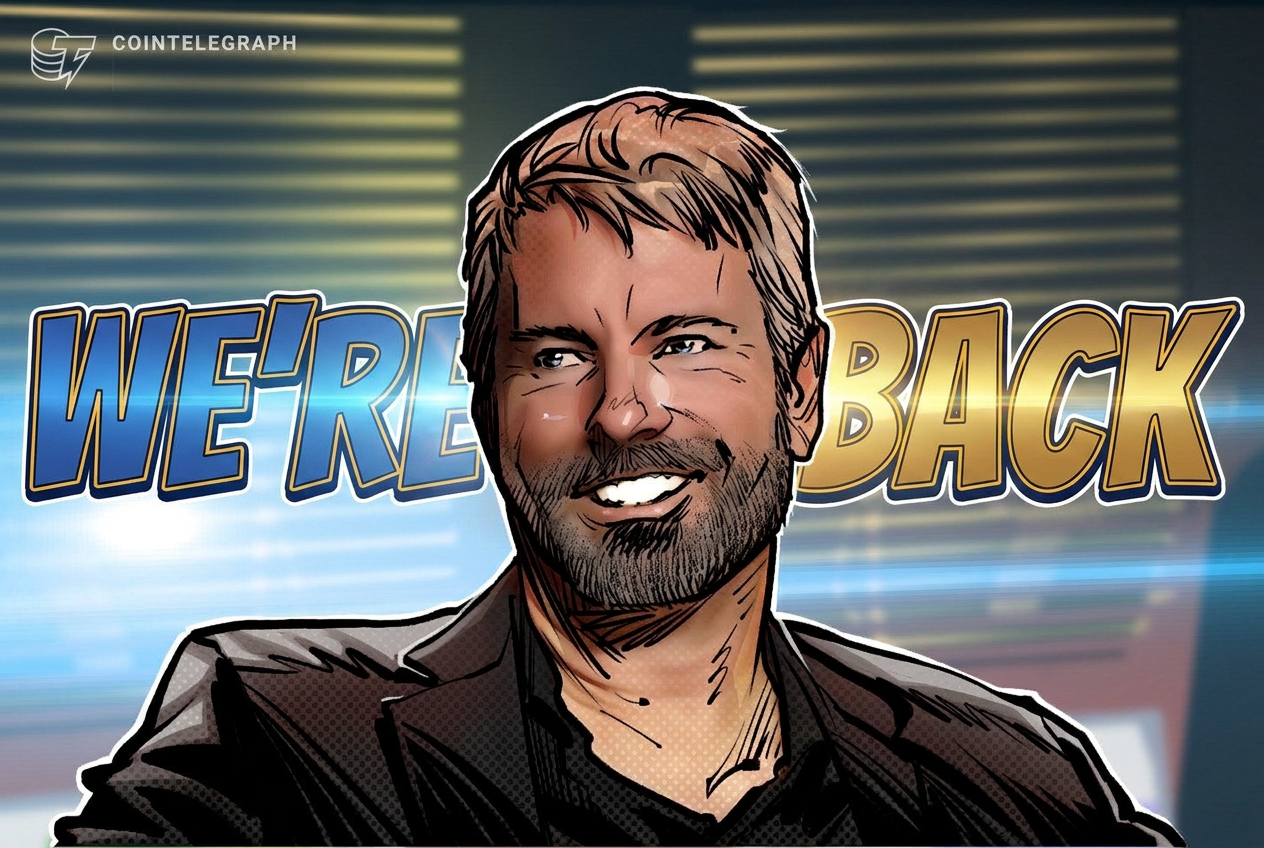
Strategy to Remain in Nasdaq 100 Index

According to a Reuters report, despite facing increasing scrutiny for hoarding large amounts of Bitcoin, Strategy (formerly MicroStrategy) will continue to remain a component stock of the Nasdaq 100 Index. The results of this year's annual index review confirmed that Strategy was not removed, and its position will be retained after the next round of adjustments takes effect.

The report noted that market focus on Strategy primarily centers on its business model, which is highly dependent on Bitcoin price fluctuations, but this did not affect its current status in the Nasdaq 100.

Michael Saylor reposted the news report about Strategy remaining in the Nasdaq 100 Index and responded: "Will continue to stack sats until the fiat printers stop." (Implied meaning: will keep accumulating Bitcoin)

Michael Saylor Again Posts Bitcoin Tracker Information, May Disclose BTC Accumulation Info Again

Strategy founder Michael Saylor again posted information related to the Bitcoin Tracker.

Based on previous patterns, Strategy always discloses Bitcoin acquisition information the day after such related messages.

Major Unlocks for ZRO, ARB, STRK, and Other Tokens This Week

According to Token Unlocks data, major unlocks for ZRO, ARB, STRK, and other tokens are scheduled for this week, including:

ZRO: Unlock of 25.71 million tokens on December 20, worth approximately $37.79 million, accounting for 6.79% of circulating supply;

ARB: Unlock of 92.65 million tokens on December 16, worth approximately $19 million, accounting for 1.90% of circulating supply;

STRK: Unlock of 127 million tokens on December 15, worth approximately $13.20 million, accounting for 5.07% of circulating supply;

SEI: Unlock of 55.56 million tokens on December 15, worth approximately $6.93 million, accounting for 1.08% of circulating supply;

LISTA: Unlock of 33.44 million tokens on December 20, worth approximately $5.34 million, accounting for 6.85% of circulating supply.

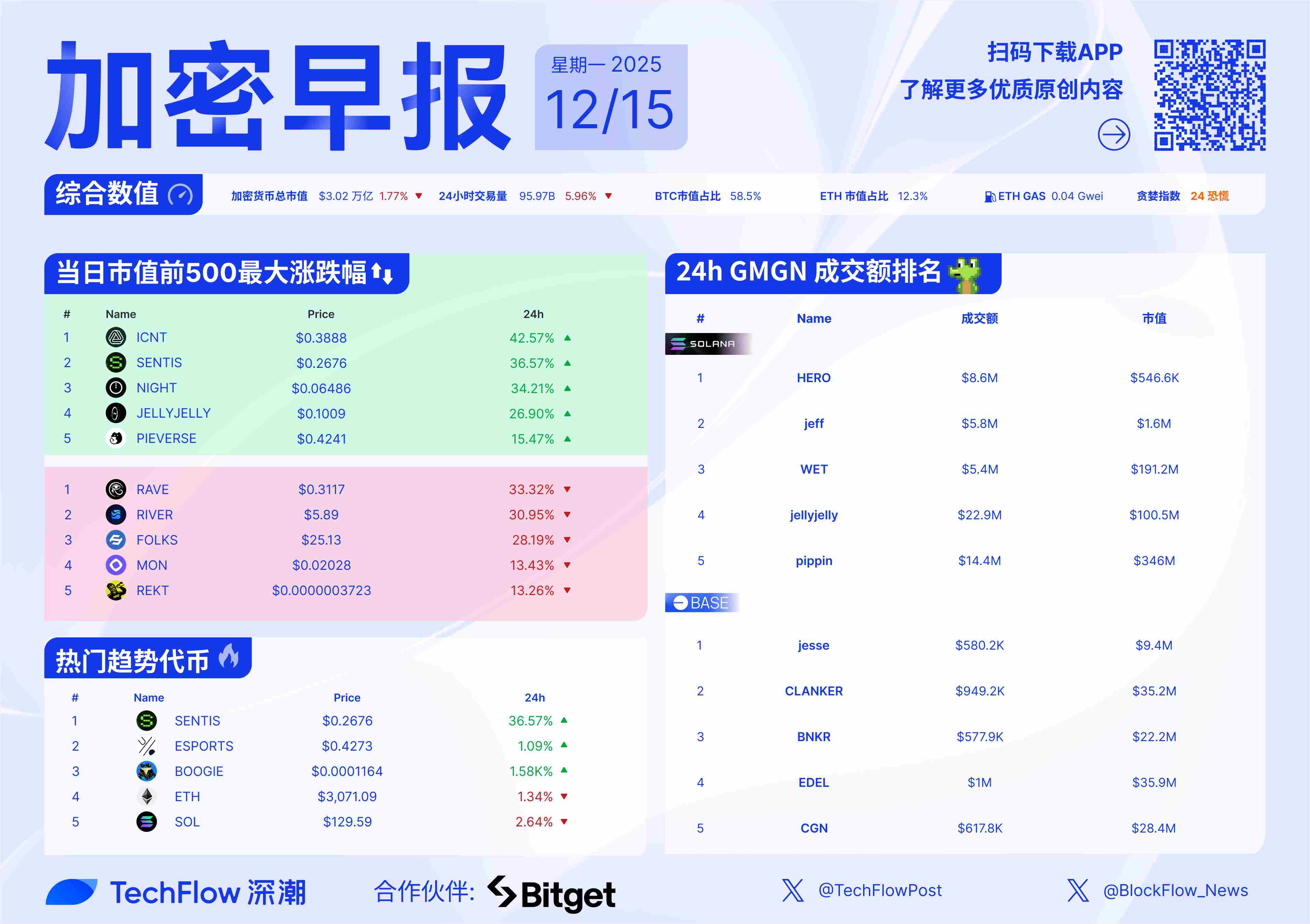
Market Dynamics
Recommended Reading

Silver Crisis: When the Paper System Begins to Fail

This article analyzes the sharp fluctuations in the silver market and the underlying reasons, revealing the crisis behind the rise in silver prices and structural issues in the market. It points out that due to the effects of financialization, trust in the silver market's "paper system" is gradually eroding, while physical demand is increasing. The article also discusses market manipulation in silver and the key role of JPMorgan in detail.

x402 V2 Launch: When AI Agents Start Having "Credit Cards", Which Projects Will Be Revalued?

This article explores the x402 V2 protocol in the crypto market and its profound impact on the financial behavior of AI Agents. The core updates of x402 V2 include delayed payments, full-chain compatibility, and hybrid payment rails, features designed to build a financial infrastructure suitable for a machine-driven commercial society. The article also analyzes related narratives and potential investment opportunities, discussing future trends in the AI economy.

a16z's View of Crypto 2026: These 17 Trends Will Reshape the Industry

This article, by several partners at a16z, summarizes 17 key trends regarding the future development of the crypto space, including insights on privacy technology, prediction markets, stablecoins, blockchain, tokenized assets, and the integration of AI and crypto technology. These trends will have a profound impact on technological progress, financial innovation, and the socio-economy of the crypto industry.

Oracle Plummets 40%, Will AI Over-Infrastructure Topple Giants?

This article discusses the significant challenges Oracle and other tech giants face in AI infrastructure construction. Although AI is considered a crucial direction for the future, giants are under pressure regarding capital investment, increasing debt, and market demand uncertainty. Whether AI infrastructure can deliver expected returns remains to be seen over time, while the market also questions the sustainability of startups and giants.

Big Short's Burry Warns: Fed's RMP Aims to Conceal Banking System Fragility, Essentially a Restart of QE

This article primarily discusses the Fed's latest Reserve Management Purchase (RMP) program and its impact on the banking system and financial markets. Michael Burry warns that this move is essentially covert quantitative easing (QE), intended to掩盖 (mask/conceal) the fragility of the banking system. The article analyzes repo market volatility, funding squeeze concerns, and the potential impact of the Fed's balance sheet expansion on markets, while also exploring the banking system's reliance on central bank liquidity.


Questions liées

QWhat is the significance of MicroStrategy remaining in the Nasdaq 100 index, and what did its founder say about it?

AMicroStrategy will remain a component of the Nasdaq 100 index, confirming its continued status despite scrutiny over its Bitcoin-heavy business model. Its founder, Michael Saylor, responded by stating, 'We will continue to accumulate Bitcoin until the market stops complaining.'

QAccording to the SEC's new guidelines, what are the key differences and risks between hot wallets and cold wallets for cryptocurrency storage?

AThe SEC's guidelines state that hot wallets are connected to the internet and face risks of hacker attacks, while cold wallets are stored offline, offering greater security but carrying the risk of permanent loss due to device failure or private key leakage.

QWhich tokens are scheduled for significant unlocks this week, and what are the approximate values and dates for ZRO and ARB?

AThis week, several tokens are scheduled for significant unlocks. Specifically, ZRO will unlock 25.71 million tokens (worth ~$37.79 million) on December 20th, and ARB will unlock 92.65 million tokens (worth ~$19 million) on December 16th.

QWhat did former U.S. President Trump say about his preferred candidates for Fed Chair and his desired interest rate level?

AFormer President Trump stated he is inclined towards Kevin Warsh or Kevin Hassett to lead the Federal Reserve. He also said that interest rates should be no higher than 1% in a year, or even lower, to help reduce the financing cost of the U.S. government's debt.

QWhat is the purpose of Coinbase's planned internal prediction market, and which company is reported to be its initial operator?

ACoinbase is planning to launch an internal prediction market as part of its strategy to expand its asset class offerings. The prediction platform Kalshi is reported to be the sole initial operator for this product, providing the supporting infrastructure.

Lectures associées

Kalshi, MTS et l'ambition de a16z

Le marché des prédictions, illustré par des plateformes comme Kalshi, connaît un regain d'intérêt en 2025, suscitant l'enthousiasme des investisseurs, des acteurs de la cryptomonnaie et des médias. Cet engouement dépasse les simples opportunités de régulation ou de revenus, touchant à une dimension philosophique plus profonde. L'article retrace l'évolution intellectuelle du concept, depuis les théories de Hayek sur la connaissance dispersée dans la société, jusqu'aux mécanismes incitatifs comme le LMSR de Robin Hanson, conçus pour révéler l'information. Cependant, c'est l'entrée en jeu du géant du capital-risque a16z, avec son investissement massif dans Kalshi, qui marque un tournant. a16z voit dans le marché des prédictions bien plus qu'un produit financier : un nouvel outil médiatique fondamental. Il répondrait au désir contemporain de "présence" et d'action face à un monde de plus en plus médiatisé et déterministe. En pariant de l'argent réel sur des événements mondiaux, l'utilisateur passerait du statut de spectateur passif à celui d'observateur actif et impliqué, recouvrant un sentiment d'agency. Cette capacité à générer de l'engagement et à définir la réalité par les prix du marché (établissant la véracité et l'importance des événements) en ferait une pièce maîtresse de l'empire des "nouveaux médias" qu'a16z cherche à construire. Cet empire, illustré par des acteurs comme MTS, se caractérise par une production et une diffusion d'information extrêmement rapides et intenses, visant à "s'approprier la timeline". La valeur ultime de Kalshi résiderait ainsi dans son puissant "champ de distorsion de la réalité" : sa capacité, via le poids de l'argent engagé par la foule, à influencer la perception collective du futur et à s'imposer comme un arbitre de la vérité, conférant à une entreprise privée une influence historique rare.

marsbitIl y a 1 h

Kalshi, MTS et l'ambition de a16z

marsbitIl y a 1 h

Changement de cap mondial chez a16z : Le capital-risque devient le « moteur » de l'alliance technologique américaine

L’annonce de Ben Horowitz marque un virage stratégique majeur dans la globalisation d’a16z. Le fonds ne se contente plus de rechercher des projets à l’étranger, mais s’inscrit dans un cadre plus large de compétition technologique et de coopération entre alliés, explicitement lié au leadership technologique des États-Unis et de leurs partenaires. Dans un contexte où l’IA, la robotique, la cybersécurité et les chaînes d’approvisionnement deviennent des enjeux de compétition nationale, le rôle des VC évolue. A16z renforce ses capacités pour aider ses startups à naviguer dans des environnements complexes, mêlant marchés, régulations et géopolitique. Les initiatives clés incluent : l’ouverture d’un bureau à Tokyo, la nomination d’Anne Neuberger (ancienne responsable gouvernementale) comme associée chargée des affaires mondiales pour conseiller sur la politique et la géopolitique, et la transformation de l’équipe relations investisseurs en une équipe « Partenaires Mondiaux » pour faciliter les connexions et le déploiement international des entreprises. L’objectif reste de soutenir les meilleures entreprises technologiques partout dans le monde (plus de 100 investissements internationaux à ce jour), mais avec une mission élargie : être un organisateur reliant les startups aux capacités nationales, aux ressources industrielles et au réseau des alliés, contribuant ainsi à la compétitivité technologique des États-Unis et de leurs alliés.

marsbitIl y a 1 h

Changement de cap mondial chez a16z : Le capital-risque devient le « moteur » de l'alliance technologique américaine

marsbitIl y a 1 h

Kalshi, MTS et les ambitions d'a16z

Les marchés prédictifs, représentés par Kalshi, émergent comme un domaine clé en 2025, attirant fonds d'investissement, acteurs de la cryptomonnaie et médias. Leur importance dépasse la simple spéculation. Leur évolution conceptuelle remonte à Hayek (l'utilisation de la connaissance dans la société) et à Robin Hanson (mécanisme LMSR pour inciter à la révélation d'informations), avec l'idée utopique d'une « futarchie ». L'intérêt de a16z, qui a investi dans Kalshi (évalué à 220 milliards de dollars), va au-delà du modèle économique. Leur thèse centrale est que les marchés prédictifs offrent un « sentiment de présence » et une forme d'« anti-cynisme » dans un monde moderne où les individus se sentent déconnectés. En pariant sur des événements mondiaux, l'utilisateur devient un « observateur superlatif », investi et influençant la perception collective. Cela s'inscrit dans la vision de « nouveaux médias » de a16z : un écosystème médiatique complet et rapide qui « s'approprie la timeline », comme le démontre MTS (Monitoring The Situation), un média en continu sur Twitter. Kalshi ajoute à ce dispositif une autorité unique car ses prix reflètent des paris en argent réel, lui conférant un pouvoir de « distorsion de la réalité » pour définir la vérité et l'importance des événements. C'est ce pouvoir, rarement détenu par une entreprise privée, qui justifierait sa valorisation faramineuse et en ferait une pièce maîtresse de l'empire médiatique de a16z.

链捕手Il y a 1 h

Kalshi, MTS et les ambitions d'a16z

链捕手Il y a 1 h

Comprendre la réalité du commerce, des paiements et des infrastructures des Agents

**Interprétation de la réalité des agents, des paiements et des infrastructures commerciales** Au cours de l'année passée, l'auteur a travaillé sur l'infrastructure de l'économie des agents, interagissant avec Stripe, Visa, Coinbase, Google et des dizaines de startups. La conclusion est claire : il n'existe pas encore de demande réelle, et les startups font face à des problèmes structurels. Stripe a enregistré peu de transactions d'agents malgré un fort intérêt. Visa impose des seuils de revenus et des processus KYC extrêmement restrictifs, accessibles uniquement aux géants comme Amazon. Les chiffres d'utilisation des agents sur la blockchain (comme via le protocole x402) sont largement gonflés par des transactions de test. **Agent vs Commerçant** : L'expérience d'achat par agent (IA) est souvent inférieure au commerce électronique traditionnel pour les achats visuels (vêtements, électronique). L'interface conversationnelle est un recul par rapport aux interfaces riches. La demande actuelle des marchands est défensive : ils veulent être "trouvables" par les agents par crainte de rater une future tendance. Les cas d'usage convaincants sont limités (commande de nourriture, navigation dans des interfaces complexes), mais nécessitent une distribution de masse détenue par les géants. **Agent vs API** : Les développeurs utilisent déjà massivement des API (calcul, données). Le problème du coût des micro-transactions est souvent résolu par du prépaiement. Le véritable obstacle est que les grands fournisseurs SaaS privilégient les contrats enterprise. Les opportunités pour les nouveaux systèmes de paiement (comme les stablecoins) se situent dans la longue traîne des services, un marché plus restreint. **Agent vs Agent** : Ce modèle est encore théorique, sans volume significatif. Il impliquerait des transactions ultra-rapides entre entités non humaines, avec des montants variables et des règlements multipartites. C'est un pari à long terme sur une infrastructure dédiée, mais ce n'est pas le marché actuel. **Agent vs Finance** : C'est la seule catégorie avec une demande existante et une volonté de payer. Intégrer l'IA dans les workflows financiers existants (gestion de portefeuille, DeFi) est une évolution naturelle et crée de nouvelles capacités. Cependant, la concurrence est rude face aux institutions établies, régulées et bien connectées. **Le véritable enjeu** : Les grandes entreprises construisent par stratégie défensive et ont les moyens d'attendre. Pour les startups, il est crucial de se concentrer sur le marché actuel. Le problème fondamental n'est pas le paiement, mais la **coordination** entre agents et humains : vérifier le travail, s'accorder sur les résultats, puis régler. Le paiement n'est qu'une partie de la solution de coordination. Ce sont les entreprises qui résoudront le problème de la coordination à grande échelle qui domineront, en intégrant le paiement, et non l'inverse. L'expérience de l'auteur l'a conduit vers un autre segment de marché, actif, en croissance et encore mal desservi, en dehors de ces quatre catégories.

marsbitIl y a 2 h

Comprendre la réalité du commerce, des paiements et des infrastructures des Agents

marsbitIl y a 2 h

Trading

Spot
Futures

Articles tendance

Comment acheter ZRO

Bienvenue sur HTX.com ! Nous vous permettons d'acheter LayerZero (ZRO) de manière simple et pratique. Suivez notre guide étape par étape pour commencer votre parcours crypto.Étape 1 : Création de votre compte HTXUtilisez votre adresse e-mail ou votre numéro de téléphone pour ouvrir un compte sur HTX gratuitement. L'inscription se fait en toute simplicité et débloque toutes les fonctionnalités.Créer mon compteÉtape 2 : Choix du mode de paiement (rubrique Acheter des cryptosCarte de crédit/débit : utilisez votre carte Visa ou Mastercard pour acheter instantanément LayerZero (ZRO).Solde :utilisez les fonds du solde de votre compte HTX pour trader en toute simplicité.Prestataire tiers :pour accroître la commodité d'utilisation, nous avons ajouté des modes de paiement populaires tels que Google Pay et Apple Pay.P2P :tradez directement avec d'autres utilisateurs sur HTX.OTC (de gré à gré) : nous offrons des services personnalisés et des taux de change compétitifs aux traders.Étape 3 : stockage de vos LayerZero (ZRO)Après avoir acheté vos LayerZero (ZRO), stockez-les sur votre compte HTX. Vous pouvez également les envoyer ailleurs via un transfert sur la blockchain ou les utiliser pour trader d'autres cryptos.Étape 4 : tradez des LayerZero (ZRO)Tradez facilement LayerZero (ZRO) sur le marché Spot de HTX. Il vous suffit d'accéder à votre compte, de sélectionner la paire de trading, d'exécuter vos trades et de les suivre en temps réel. Nous offrons une expérience conviviale aux débutants comme aux traders chevronnés.

197 vues totalesPublié le 2024.12.10Mis à jour le 2026.06.02

Comment acheter ZRO

Discussions

Bienvenue dans la Communauté HTX. Ici, vous pouvez vous tenir informé(e) des derniers développements de la plateforme et accéder à des analyses de marché professionnelles. Les opinions des utilisateurs sur le prix de ZRO (ZRO) sont présentées ci-dessous.

活动图片