Author: DingDang
Original Title: CEO Uses Humor to Respond to Crisis, AI Entrepreneurs Steal Crypto's Marketing Playbook
In most startups, if exposed for 'falsifying revenue,' it would likely lead to a PR crisis—issuing a statement, explaining the misunderstanding, correcting data metrics, apologizing, and then steering the conversation back to product or business growth.
But Cluely's CEO Roy Lee clearly had no intention of doing that.
A Company That Started with a 'Cheating Tool'
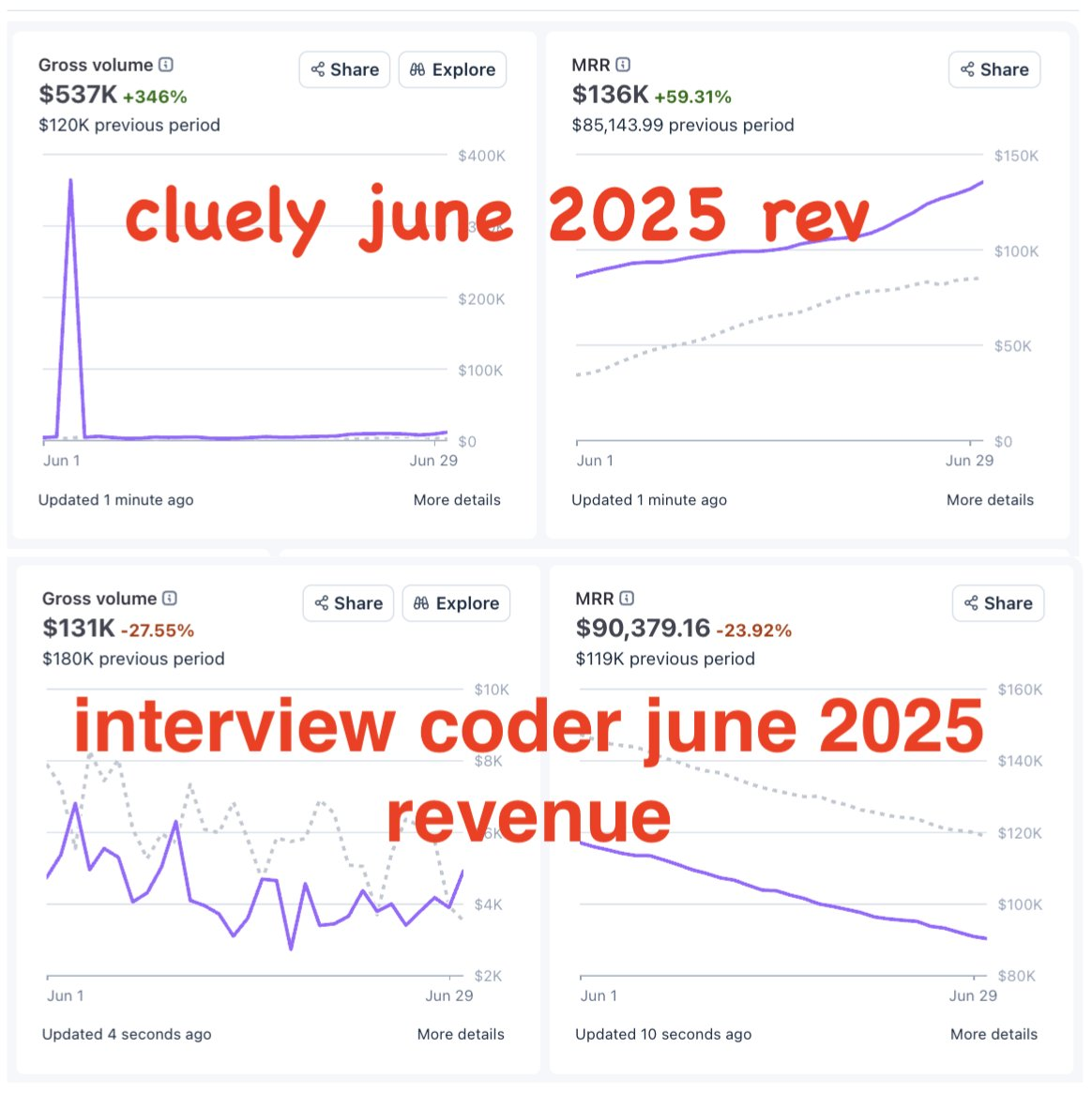
Cluely was founded in 2025, and its initial product came from a project called Interview Coder, developed by Roy Lee and his college roommate Neel. This was a tool that used AI to help users cheat in LeetCode interviews. Due to this project, both were eventually expelled from Columbia University.
For most people, being expelled from school would be a black mark to cover up. But Roy Lee turned this incident into a marketing opportunity, even a 'turning point in life.'
Cluely's initial product slogan was: 'Cheat on Everything.' It wasn't until November 2025 that Cluely began shifting its product narrative from a 'cheating tool' to an AI note-taking assistant, such as using AI to automatically organize meeting content, optimize collaboration efficiency, and even modify attendees' expressions to hide distractions. But no matter how the product evolved, the company, or rather, its CEO, never shook off a very distinct vibe: it almost grew through controversy.
And the ensuing storm, in a way, continued down this path.
A Farce Triggered by 'Falsified Revenue'
The incident began when someone dug up a July 2025 report by TechCrunch. The article mentioned that Cluely's Annual Recurring Revenue (ARR) had doubled in a week, reaching $7 million. This data was questioned as fraudulent.
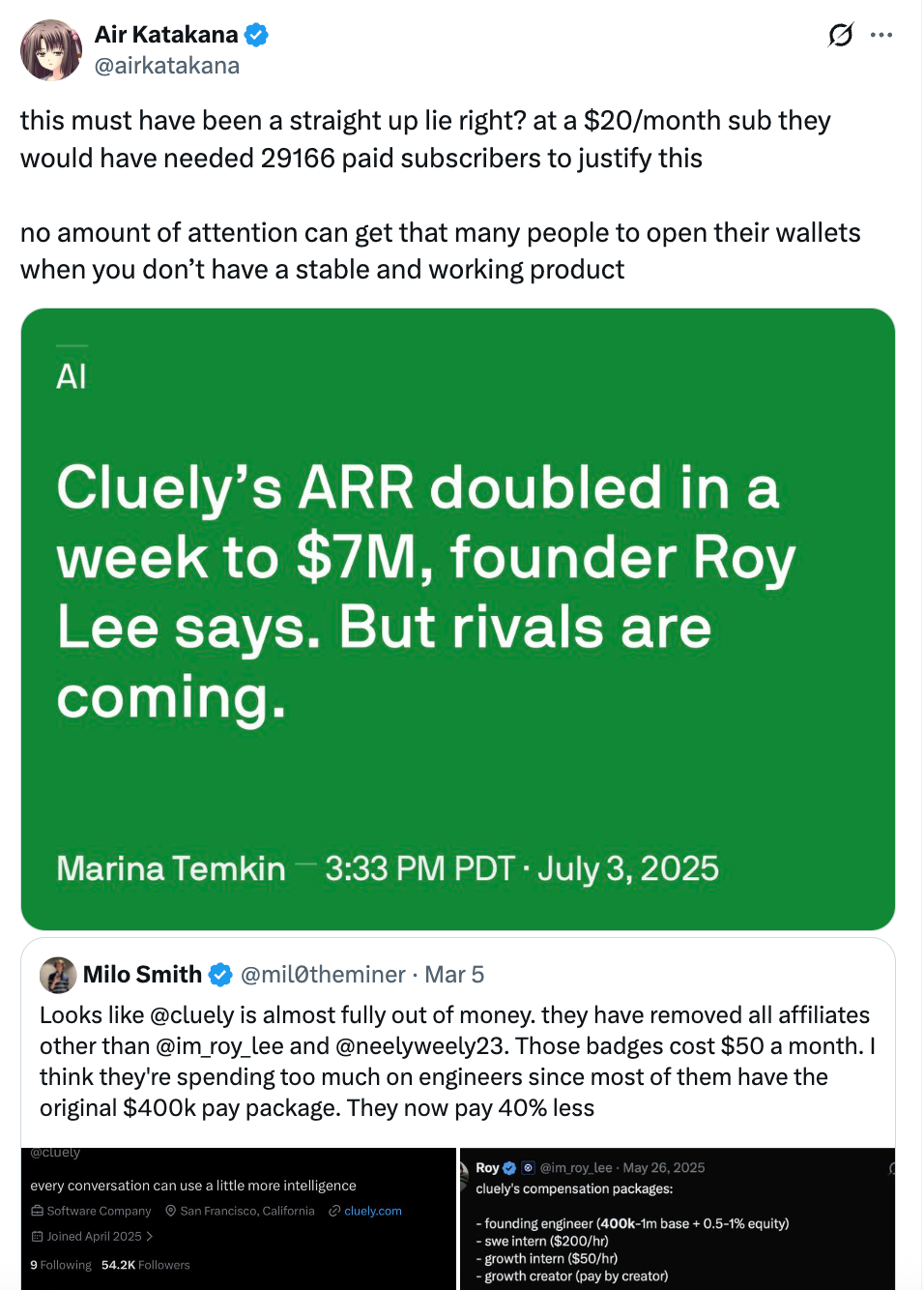
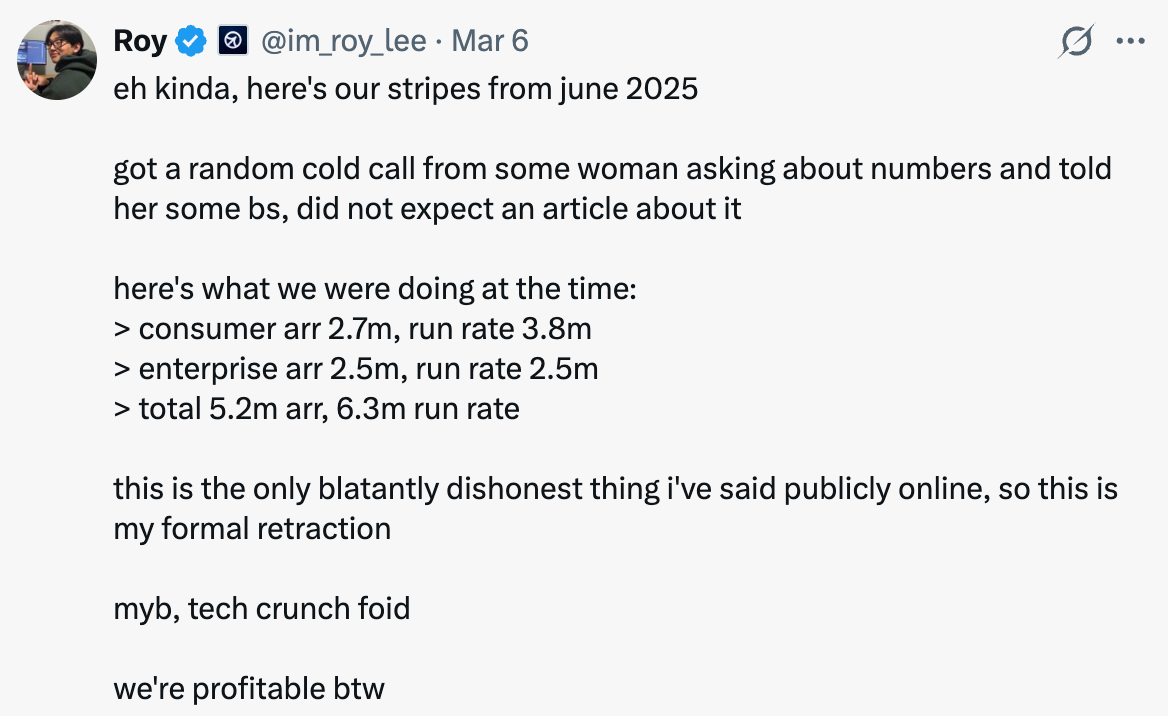
Facing the质疑, Cluely CEO Roy Lee was quite candid. He quickly posted to admit that he had casually mentioned the number when a reporter called him, not expecting it to be included in a formal article. Seemingly to prove it wasn't an intentional exaggeration, he also posted Cluely's actual data from June 2025: consumer business annual revenue of $2.7 million and enterprise business annual revenue of $2.5 million, totaling $5.2 million.
Up to this point, there was nothing sensational, and the explanation was plausible.
But on the same day, TechCrunch reporter Julie Bort published a rebuttal to Roy's claim. She stated that the interview was arranged proactively by Cluely's PR team, was documented, and was not a casual chat.
Roy Lee didn't continue with a written explanation but chose a more dramatic way to respond. He released a video with the caption, 'Breaking News: Cluely CEO Officially Responds to TechCrunch.'
In the video, he sat in front of the camera wearing sunglasses and a suit, with a microphone on the desk, looking as if he was about to make a serious statement. But the setting wasn't an office; it looked more like a living room, with an old desktop computer next to him playing Subway Surfers—a classic time-wasting game. Roy's response was also completely informal, more like a self-deprecating performance, mixed with self-mockery and bragging, his tone reminiscent of a rapper freestyling.
Even more absurdly, at the end of the video, he stood up from behind the desk, revealing that this CEO, formal from the waist up, was wearing no pants......

Thus, a crisis PR situation originally about 'falsified revenue' was handled as a traffic-grabbing, self-mocking performance.
What a16z Is Betting On Is Actually the Attention Economy
The capital market doesn't seem to mind this kind of performative founder personality either. In June 2025, Cluely announced the completion of a $15 million Series A funding round, with participating institutions including the renowned venture capital firm Andreessen Horowitz (a16z). Its partner Bryan Kim once mentioned on a podcast: In the AI era, the traditional 'artisan product + slow growth' model is no longer sufficient; viral spread itself is part of the product.
What he considers the 'new AI startup template' is that in an era where model capabilities are increasingly commoditized, attention itself is becoming a key resource. Whoever can capture user attention first may build a new moat.
From the 'cheating controversy' of Interview Coder, to the entrepreneurial story of being expelled from Columbia, to this absurd 'response video,' Roy Lee's entire personal brand has been built along this path: controversy itself is the content for propagation. This might also explain why a16z chose to invest in Cluely, to invest in Roy Lee.
When Controversy Becomes a Growth Strategy
In past entrepreneurial narratives, growth typically came from product capability, technological barriers, and business models. But in today's internet environment, another resource is becoming increasingly important—attention.
This logic has actually been proven in the crypto industry long ago. Many crypto projects capture user attention by creating topics, controversies, or even dramatic events, and then convert this traffic into product growth or commercial value, especially with the rise of Memes—pure propagation, no (traditional) product.
In a way, Roy Lee's response video is a classic case of this logic: when negative news emerges, rather than trying to suppress the controversy, repackage the controversy itself as传播 content.
Evidently, in the current internet environment, attention is often more valuable than explaining the truth.
Twitter:https://twitter.com/BitpushNewsCN
Bitpush TG Discussion Group:https://t.me/BitPushCommunity
Bitpush TG Subscription: https://t.me/bitpush







