"Crypto Retirement Plan" Heavily Criticized by Democrats: Trump Is "Harvesting" American Workers' Pensions

marsbitPublié le 2026-06-03Dernière mise à jour le 2026-06-03

Résumé

Democratic senators Bernie Sanders (I-VT) and Elizabeth Warren (D-MA), along with Representative Bobby Scott (D-VA), are urging the Labor Department to repeal a proposed rule that would open U.S. retirement savings accounts, such as 401(k)s, to investments in cryptocurrencies like Bitcoin and other alternative assets. The rule, stemming from an August executive order by President Trump, would provide a legal safe harbor for plan fiduciaries offering these volatile assets if they follow a prescribed process. The lawmakers argue in a 14-page letter that the rule dangerously weakens long-standing "prudent man" standards under the Employee Retirement Income Security Act (ERISA), potentially exposing the $14.2 trillion in 401(k) savings to high-risk, minimally regulated investments. They cite warnings from FINRA about crypto's high volatility and from the FBI about massive cryptocurrency scam losses. The letter also alleges a conflict of interest, noting that President Trump's adult children manage the family's crypto business, which has reportedly raised billions from digital token sales. They contend the rule change could enrich the Trump family at the expense of workers' retirement security. In defense, the Trump administration frames the rule as expanding worker choice. Acting Labor Secretary Keith Sonderling stated it ends the department "picking winners and losers," requiring fiduciaries to follow a prudent process. Treasury Secretary Scott Bessent supported it as a step ...

Original Author: Micah Zimmerman

Original Compilation: AididiaoJP, Foresight News

Senators Bernie Sanders (I-VT) and Elizabeth Warren (D-MA) have called on the Trump administration's Department of Labor to repeal a rule that would open U.S. retirement savings accounts to Bitcoin and other cryptocurrencies. The lawmakers argue this move would endanger workers' financial futures while allowing President Trump and his family to profit.

On Monday, the three Democrats sent a 14-page letter to Acting Labor Secretary Keith Sonderling. Sanders, Warren, and House Education and the Workforce Committee Ranking Member Bobby Scott (D-VA) strongly condemned the rule proposed by the Department of Labor in March.

The rule would provide fiduciary protections for 401(k) plan sponsors, allowing them to offer volatile assets—including cryptocurrencies, private equity, and private credit—as long as the fiduciaries can demonstrate they have weighed relevant factors before offering them.

The letter states: "The proposed rule is harmful to American workers and runs counter to the law, congressional intent, existing regulations, and case law."

What the Rule Would Do

This proposal stems from an executive order President Trump signed last August, directing the Department of Labor to reconsider the treatment of alternative assets in retirement plans. Under current law, fiduciaries managing 401(k) plans must adhere to a strict "prudence" standard—a requirement rooted in the 1974 Employee Retirement Income Security Act (ERISA) and reinforced by Supreme Court precedent.

Democratic lawmakers argue the new rule would flip this standard. Fiduciaries would no longer need to prove they conducted due diligence; instead, they would be presumed to have acted prudently as long as they followed the process outlined in the rule.

The lawmakers state this shift conflicts with decades of legal precedent and would expose roughly $14.2 trillion in U.S. 401(k) accounts to assets with extreme price volatility and limited regulation.

The Financial Industry Regulatory Authority (FINRA) has warned that crypto investments "exhibit higher volatility compared to traditional investment assets" and "pose a significantly higher risk of losing the entire investment." FBI reports indicate cryptocurrency scam losses exceeded $110 billion in 2025, one of the highest loss categories in cybercrime.

Trump Conflict of Interest Argument

The Democratic lawmakers' criticism extends beyond retirement policy, directly pointing to conflict of interest issues. Trump's adult children manage the family's crypto business, which, according to The Wall Street Journal, has raised approximately $50 billion for the Trump family since launching its digital currency last September.

The Trump family's crypto portfolio includes WLFI and USD1 tokens from World Liberty Financial, as well as the official Trump Meme Coin—which briefly surged above $75 around Trump's January 2025 inauguration before crashing to around $2.

The letter states: "The aforementioned change in the prudence standard expands opportunities for President Trump and his family to profit at the expense of taxpayers, workers, and retirees."

Consumer advocacy group Americans for Financial Reform expressed similar concerns. Its senior policy analyst, Oscar Valdés Viera, said: "Opening 401(k)s to these products could turn workers' retirement savings into a tool resembling a Ponzi scheme, providing a lifeline for an industry desperate for new funds."

The letter also cites elderly poverty data: Over 22.8% of American seniors live in poverty, compared to 5.1% in Denmark, 5.8% in France, and 12.6% in Germany—highlighting the risk retirees cannot afford to take significant losses.

The Administration's Defense

The Trump administration has described the rule as an effort to expand worker choice.

Acting Labor Secretary Sonderling said in a statement: "The days of the Department of Labor picking winners and losers are over. Our rule makes clear that managers must evaluate any potential product offering by following a prudent process."

Treasury Secretary Scott Bessent also expressed support, calling the rule "another step toward ushering in President Trump's 'Golden Age'."

Lectures associées

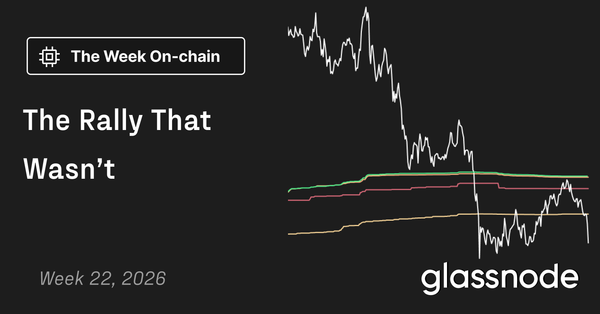
Le Rallye Qui N'a Pas Eu Lieu

Le marché du Bitcoin subit une pression significative dans un contexte macroéconomique plus strict, avec des anticipations de resserrement de la Fed et un retrait massif des ETF spot américains. Le prix, en baisse de 13% à environ 67 000$, est repassé sous la moyenne du marché (True Market Mean à 77,8k$), confirmant la persistance du régime de marché baissier. Les indicateurs on-chain se détériorent : la base de coût des détenteurs à court terme est inférieure à la moyenne clé, signe d'un marché baissier avancé. Le ratio des profits/pertes réalisés s'est effondré, montrant une dominance des ventes à perte. Les nouveaux acheteurs, notamment ceux entrés entre 78k$ et 82k$, sont sous pression. Hors-chaîne, le prix a été rejeté à la base de coût moyenne des ETF (~83k$), désormais une résistance. Les flux spot sont nettement négatifs, indiquant une domination des vendeurs. Bien qu'un événement de liquidation de positions longues ait réduit l'effet de levier, la demande spot durable reste absente. Les marchés d'options reflètent une prudence persistante, avec une demande pour une protection contre la baisse et une prime de volatilité élevée, sans pour autant signaler un point de capitulation majeur. En conclusion, le marché reste fragile, avec une faiblesse structurelle, une offre provenant d'investisseurs piégés et un manque de demande d'achat solide, le laissant vulnérable à d'autres corrections au sein de la structure baissière plus large.

insights.glassnodeIl y a 19 mins

Le Rallye Qui N'a Pas Eu Lieu

insights.glassnodeIl y a 19 mins

WLFI lance l'alerte : Les portefeuilles sous sanctions pourraient bloquer les transferts de crypto

Les sénateurs américains Elizabeth Warren et Jack Reed surveillaient déjà World Liberty Financial (WLFI) avant l'avis de conformité de mardi, ayant précédemment demandé aux autorités d'examiner si des adresses liées à la Russie, à la Corée du Nord et au mélangeur de confidentialité Tornado Cash avaient contourné les contrôles de la présale du projet. WLFI a rejeté ces allégations, affirmant appliquer des vérifications strictes contre le blanchiment d'argent et d'identité. Cependant, le projet a admis que ses contrats intelligents intègrent des pouvoirs codés pour geler, restreindre ou brûler les soldes des portefeuilles, ce qui suscite des interrogations sur son positionnement dans la finance décentralisée (DeFi). L'avertissement de conformité publié mardi sur X indique clairement que les transferts impliquant des personnes, entités ou adresses de portefeuille sous sanctions peuvent être retardés, restreints ou rejetés. WLFI justifie ces contrôles par la nécessité de respecter les obligations réglementaires. Cet avis est intervenu le même jour où le Département du Trésor américain a pris des sanctions contre plusieurs plateformes cryptographiques iraniennes, dont le plus grand échange, Nobitex, accusé d'avoir traité des transactions pour le Corps des gardiens de la révolution islamique. Le Trésor affirme que le régime iranien utilise les actifs numériques pour contourner les sanctions. WLFI exhorte ses utilisateurs à vérifier que leurs fonds et adresses n'ont aucun lien avec des activités interdites avant tout transfert, et poursuivra son examen des transactions pour les risques liés aux sanctions. Cette posture de conformité crée une tension avec l'image publique du projet, car si la couche blockchain est décentralisée, l'application doit respecter les règles fédérales.

bitcoinistIl y a 51 mins

WLFI lance l'alerte : Les portefeuilles sous sanctions pourraient bloquer les transferts de crypto

bitcoinistIl y a 51 mins

Anchorage Digital et Real Finance s'associent pour faire progresser la tokenisation institutionnelle des actifs réels

Anchorage Digital, première banque cryptographique fédéralement agréée aux États-Unis, et Real Finance, blockchain Layer 1 compatible EVM conçue pour la tokenisation d'actifs réels (RWA), annoncent un partenariat stratégique pour soutenir le cycle de vie complet des actifs tokenisés, couvrant l'émission, la garde, le règlement, la gestion et la liquidité secondaire. Leur coopération combinera l'expertise régulée d'Anchorage Digital en garde, gestion de trésorerie et sécurité institutionnelle avec les infrastructures d'émission et les outils de gestion de Real Finance. Trois axes principaux sont prévus : la garde régulée de l'écosystème Real Finance, une couche de garde fondamentale pour faciliter l'implication institutionnelle, et un soutien mutuel aux pipelines clients institutionnels. Les dirigeants des deux entreprises soulignent que la tokenisation seule est insuffisante. Les institutions ont besoin d'infrastructures régulées et sécurisées intégrant garde, règlement et gestion du cycle de vie pour faire évoluer les marchés de capitaux tokenisés au-delà de la phase expérimentale. Ce partenariat vise à résoudre la fragmentation actuelle de l'écosystème en unifiant la technologie blockchain, la garde régulée et les infrastructures de tokenisation pour des actifs comme le crédit privé, l'immobilier ou les instruments financiers.

TheNewsCryptoIl y a 1 h

Anchorage Digital et Real Finance s'associent pour faire progresser la tokenisation institutionnelle des actifs réels

TheNewsCryptoIl y a 1 h

Trading

Spot
Futures
活动图片