Market Trend (Aug 13): Nasdaq Leads Gain as CPI Meets Expectations; Coherent Beats Estimates Then Falls in After-Hours

marsbitPublié le 2026-08-13Dernière mise à jour le 2026-08-13

Résumé

U.S. stock markets were mixed on August 13th. While the S&P 500 and Nasdaq Composite rose, the Dow Jones Industrial Average was essentially flat. The catalyst was the July CPI report, which came in line with expectations across the board, keeping market pricing for a September Federal Reserve rate hike steady near 45%. The trading day's standout was a surge in AI-related sectors following the CPI release. AI cloud service providers Nebius and CoreWeave soared, while companies in the optical communications and memory chip spaces, including Coherent and SK Hynix, also posted significant gains. However, a stark reality check emerged after the closing bell. Despite reporting quarterly results that exceeded expectations, shares of optical communications leader Coherent and AI chipmaker Cerebras plunged in after-hours trading. Cerebras was hit by an unexpected drop in hardware revenue. Similarly, Cisco Systems shares initially rose on strong earnings and news of $4 billion in AI-related orders, only to reverse sharply lower later, highlighting increased investor scrutiny on valuations and growth sustainability in the crowded AI space. In other markets, gold extended its rally, oil prices rose, and Bitcoin rebounded from pre-CPI declines. Market focus now shifts to digesting the latest corporate earnings and upcoming U.S. retail sales data.

Author: Trend Research

The July CPI data was fully in line with expectations, tamping down expectations for a Fed rate hike, with the three major U.S. stock indices posting mixed results. The S&P 500 rose 0.26% to 7748.5 points, approaching a record high; the Nasdaq gained 0.54% to 26588.49 points; the Dow Jones edged down 0.04% to 53770.27 points. The VIX closed at 14.94, essentially flat. Year-on-year CPI growth narrowed to 3.4%, while core CPI slowed to 2.5% year-on-year. Market bets on a September rate hike remained around 45%. However, the real focus of the market wasn't the indices, but the internal dynamics of the AI sector. The optical communications, AI cloud services, and memory chip sectors all surged, with Coherent posting a significant gain, Nebius soaring 34%, and SK Hynix rising over 9%. Yet, the post-market earnings season told a different story. Coherent beat earnings estimates but later fell 8% in after-hours trading. Cerebras saw an unexpected decline in hardware revenue, falling over 17% after hours. Cisco reported AI order commitments reaching $4 billion, initially rising 8% after hours before falling over 6%. The AI track is undergoing a brutal "earnings verification."

CPI Meets Expectations, September Rate Hike Probability Holds at 45%

U.S. July CPI grew 3.4% year-on-year and 0.1% month-on-month. Core CPI increased 2.5% year-on-year and 0.2% month-on-month. All four figures met market expectations. This marks the second consecutive month of moderate CPI readings, with inflation pressures not worsening further, but also not showing significant improvement.

Following the data release, traders maintained their 45% probability bet on a Fed rate hike in September. The U.S. Dollar Index first fell then rose, gaining 0.22% on the day. The Japanese yen weakened to 159.48, approaching the key psychological level of 160. The yield on the 10-year U.S. Treasury auction hit its highest since the 2007 financial crisis. The 10-year Treasury yield fell 1.57 basis points to 4.6729%, while the 2-year yield rose 0.53 basis points to 4.2267%.

The Philadelphia Semiconductor Index rose 0.53%, ranking among the top performers among major indices.

AI Sector Rallies Across the Board as Funds Flow In Post-CPI

After the CPI data was released, funds concentrated heavily into the AI sector. AI cloud services and memory were among the biggest gainers.

AI Cloud Services Lead the Gains. Nebius saw Q2 revenue grow 454% year-on-year, with AI cloud sales surging 514%, driving its stock price to soar 34%. CoreWeave rose over 19%. The gains in these two companies indicate that market demand for AI compute power rental remains in explosive growth, with earnings figures strong enough to support valuations.

Optical Communications Maintain Strength. Lumentum rose over 13%, and Coherent posted a significant gain. The optical communications sector had already accumulated substantial gains over the past few weeks. Continued buying after the CPI data suggests market confidence in the sustainability of demand for optical components.

Memory Chips Also Strengthen. SK Hynix gained over 9%, and Seagate rose over 7%. Korean media reported that Samsung and SK Hynix are considering "epic" dividend and buyback plans, potentially totaling over $140 billion. If realized, this would directly boost valuations for the memory sector.

AI Chip Company Cerebras Rose Significantly During the Day. However, these gains were completely erased following its post-market earnings report.

The Brutal Reality of Earnings Season: Beating Estimates Is No Longer Enough

The post-market earnings reports from Coherent, Cerebras, and Cisco turned the tables on the optical communications and AI chip sectors that had surged during the day.

Coherent Beats Estimates, Still Falls Over 8% After Hours. Coherent's fiscal Q4 revenue was $2.05 billion, up 34% year-on-year, surpassing market expectations of $1.99 billion. Adjusted EPS was $1.74, up 74% year-on-year, beating expectations of $1.62. Both performance and guidance exceeded expectations across the board, yet the stock fell over 8% after hours. Market expectations for optical communications have escalated from "growth" to "sustained above-expectation growth."

Cerebras Sees Unexpected Hardware Revenue Drop, Plummets Over 17% After Hours. Cerebras's Q2 revenue missed expectations, with hardware sales unexpectedly declining, causing the stock to plunge over 18% after hours. Cerebras's intraday gain of over 11% was completely wiped out. Not all players in the AI chip space are getting a slice of the pie, and the volatility in hardware demand is being repriced by the market.

Cisco Reports AI Order Surge, Rises 8% Then Falls Over 6% After Hours. Cisco's fiscal Q4 revenue hit a record $17.3 billion, with AI order commitments reaching $4 billion. After the report, Cisco, which had closed up nearly 2.9%, initially jumped nearly 8% after hours, then reversed to fall over 6%. The AI trade is crowded, valuations are high (Cisco's P/E is near 30x vs. 22x for the S&P 500), and investors are demanding increasingly strict proof of order sustainability.

Gold Extends Gains, Bitcoin Rebounds Amid Volatility

Gold rose for a third consecutive trading day. Spot gold gained over 1% to $4,412.40 per ounce, holding above $4,400. Spot silver pared gains after a surge, closing up 1.02% at $65.322 per ounce. With inflation moderate and rate hike expectations cooling, gold continues to attract funds as a hedge.

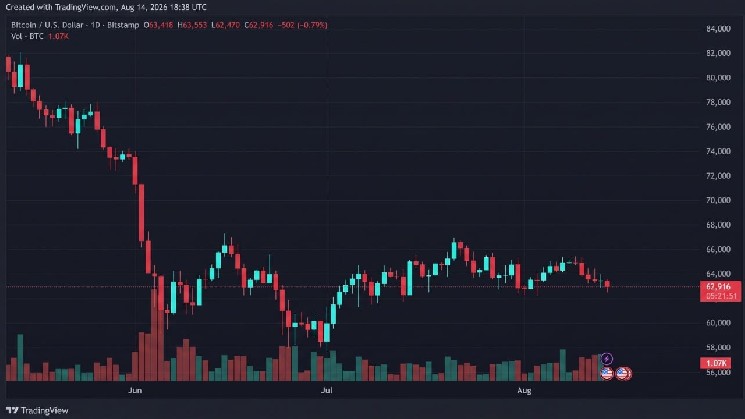
Bitcoin rebounded from around $63,200, reclaiming the $64,250 level. Ethereum opened at $1,894. Digital assets experienced a round of leveraged position liquidations ahead of the CPI data release, with total long-short positions reduced by approximately $174 million, before rebounding post-data.

WTI crude settled up 1.3% at $83.20 per barrel, and Brent crude rose 1.36% to settle at $88.91 per barrel. U.S.-Iran negotiations remain deadlocked, supporting higher oil prices.

Today's Focus: Digesting Earnings and Retail Data

The core task for Thursday's market is digesting the flood of post-market earnings.

Whether Coherent and Cerebras can stabilize their post-market losses during Thursday's regular trading session will set the tone for the optical communications and AI chip sectors. Coherent's performance wasn't poor itself; the market is nitpicking that the "beat wasn't strong enough." Cerebras, however, has a substantive issue with hardware demand. The nature of the two situations differs.

Cisco's movement is also worth watching. The surge in AI orders is a fact, but the post-market reversal suggests declining market tolerance for its valuation. If Cisco continues to weaken in Thursday's regular trading, it could drag down the entire enterprise networking equipment sector.

Retail sales data is also a key macroeconomic variable on Thursday. Strong consumer data would boost confidence in a "soft landing"; weakness could reignite concerns about a cooling labor market.


Cryptos en tendance

Questions liées

QBased on the article, what was the overall market reaction to the July CPI data meeting expectations, and how did it impact major U.S. stock indices?

AThe overall market reaction was mixed but leaned positive. The July CPI data fully met market expectations, temporarily suppressing fears of imminent Federal Reserve rate hikes. Consequently, the S&P 500 rose 0.26%, nearing a record high. The Nasdaq Composite gained 0.54%, leading the gains. The Dow Jones Industrial Average was essentially flat, declining slightly by 0.04%.

QAccording to the article, which specific sectors within the AI theme saw significant gains following the CPI data release?

AFollowing the CPI data release, significant gains were concentrated in three AI-related sectors. AI cloud services like Nebius and CoreWeave led the gains. The optical communications sector, including Lumentum and Coherent, continued its strong performance. Additionally, memory chip companies such as SK Hynix and Seagate also showed considerable strength.

QDespite reporting earnings that beat expectations, why did Coherent's stock price fall in after-hours trading?

ACoherent's stock price fell in after-hours trading, dropping over 8%, because market expectations have escalated. The company's performance, while exceeding analyst forecasts, was deemed insufficient in terms of the magnitude of the beat. Investors in the optical communications sector are no longer satisfied with mere growth or beating expectations; they now demand consistently stronger-than-expected growth.

QWhat contrasting fortunes did Cerebras' stock experience during the regular trading session and after-hours trading based on its earnings report?

ACerebras' stock experienced a stark contrast. During the regular trading session, its stock price rose over 11%. However, after-hours trading following its earnings report saw the stock plunge more than 17%. This drastic reversal was due to the company's Q2 revenue missing expectations, with a particular unexpected decline in hardware sales, which caused the market to re-evaluate the volatility of demand for AI chips.

QWhat two key factors will the article suggests investors should monitor on Thursday (August 14th, implied)?

AThe article suggests investors should monitor two key factors on Thursday. First, the market's digestion of the significant after-hours earnings reports, particularly whether stocks like Coherent and Cerebras stabilize during regular trading. Second, the release of U.S. retail sales data, as its strength or weakness will influence market confidence in a potential economic 'soft landing.'

Lectures associées

Grayscale : « Si les propositions sont adoptées, les prix de ces deux altcoins pourraient augmenter »

Zach Pandl, responsable de la recherche chez Grayscale, estime que des modifications envisagées de la tokenomique d'Ethereum (ETH) et de Solana (SOL) pourraient ralentir considérablement la croissance de leur offre, exerçant ainsi une pression haussière sur leurs prix. Ces propositions visent à réduire le taux d'inflation annuel des jetons ETH et SOL. Un ralentissement de la création de nouveaux jetons augmenterait la rareté des actifs existants. Grayscale prévoit que, si elles sont adoptées, l'inflation annuelle de l'offre d'Ethereum pourrait tomber à environ 0,4% d'ici fin 2031, se rapprochant ainsi du Bitcoin, tandis que celle de Solana pourrait atteindre environ 1,1%. En comparaison, l'offre d'or croît d'environ 1,8% par an et l'inflation (IPC) aux États-Unis est d'environ 3,3%. Pandl note que les propositions pour Solana semblent rencontrer un soutien plus large et ont donc une probabilité de mise en œuvre plus élevée. Cependant, il souligne un compromis potentiel : une inflation réduite pourrait diminuer les récompenses pour les investisseurs pratiquant le staking, une partie importante de leurs revenus provenant de l'émission de nouveaux jetons. En conclusion, un ralentissement de l'offre pourrait profiter aux prix des deux actifs, les détenteurs de jetons sans staking étant particulièrement bien placés pour en bénéficier. Ces changements restent à l'étude et ne sont pas encore approuvés.

cryptonews.ruIl y a 3 h

Grayscale : « Si les propositions sont adoptées, les prix de ces deux altcoins pourraient augmenter »

cryptonews.ruIl y a 3 h

Les experts ont nommé les raisons de la chute du bitcoin après la baisse de l'inflation aux États-Unis

Les données favorables sur l’inflation aux États‑Unis n’ont pas réussi à soutenir le bitcoin. Selon les analystes de CryptoQuant, la principale raison est la faible demande sur le marché au comptant. Le bitcoin n’a pas réagi aux chiffres de l’inflation de juillet, publiés le 12 août, et a même légèrement baissé, passant d’environ 64 500 $ à près de 63 000 $. Pourtant, l’indice des prix à la production (PPI) était meilleur que prévu. Alors que les rendements des obligations du Trésor américain ont reculé et que les marchés actions ont progressé, le bitcoin est resté dans une fourchette de 63 000 à 64 000 $. Cette absence de réaction s’explique notamment par la faible demande au comptant : les entrées de capitaux dans les ETF américains spot de bitcoin restent limitées, et l’indice Coinbase Premium (reflétant l’écart de prix entre Coinbase et les autres grandes plateformes) est négatif depuis mai, indiquant une pression d’achat modérée de la part des investisseurs américains. Dans le même temps, le positionnement des traders sur le marché à terme reste élevé, créant un déséquilibre entre une faible liquidité, une demande spot atone et un volume important de positions à effet de levier. Les analystes estiment que dans ces conditions, même des nouvelles macroéconomiques positives pourraient ne pas déclencher de hausse. Si le prix n’évolue pas malgré un contexte favorable, les traders pourraient commencer à clôturer leurs positions longues à effet de levier, ce qui exercerait une pression supplémentaire à la baisse. Un niveau de résistance clé se situe autour de 68 700 $, coût moyen approximatif pour les détenteurs à court terme, au‑delà duquel une prise de bénéfices est possible. Pour CryptoQuant, une reprise soutenue nécessiterait : une reprise des entrées dans les ETF américains, un retour de l’indice Coinbase Premium en territoire positif, une hausse des volumes de trading au comptant et un franchissement stable des 68 700 $.

cryptonews.ruIl y a 4 h

Les experts ont nommé les raisons de la chute du bitcoin après la baisse de l'inflation aux États-Unis

cryptonews.ruIl y a 4 h

Trading

Spot

Articles tendance

Comment acheter GAIN

Bienvenue sur HTX.com ! Nous vous permettons d'acheter GriffinAI (GAIN) de manière simple et pratique. Suivez notre guide étape par étape pour commencer votre parcours crypto.Étape 1 : Création de votre compte HTXUtilisez votre adresse e-mail ou votre numéro de téléphone pour ouvrir un compte sur HTX gratuitement. L'inscription se fait en toute simplicité et débloque toutes les fonctionnalités.Créer mon compteÉtape 2 : Choix du mode de paiement (rubrique Acheter des cryptosCarte de crédit/débit : utilisez votre carte Visa ou Mastercard pour acheter instantanément GriffinAI (GAIN).Solde :utilisez les fonds du solde de votre compte HTX pour trader en toute simplicité.Prestataire tiers :pour accroître la commodité d'utilisation, nous avons ajouté des modes de paiement populaires tels que Google Pay et Apple Pay.P2P :tradez directement avec d'autres utilisateurs sur HTX.OTC (de gré à gré) : nous offrons des services personnalisés et des taux de change compétitifs aux traders.Étape 3 : stockage de vos GriffinAI (GAIN)Après avoir acheté vos GriffinAI (GAIN), stockez-les sur votre compte HTX. Vous pouvez également les envoyer ailleurs via un transfert sur la blockchain ou les utiliser pour trader d'autres cryptos.Étape 4 : tradez des GriffinAI (GAIN)Tradez facilement GriffinAI (GAIN) sur le marché Spot de HTX. Il vous suffit d'accéder à votre compte, de sélectionner la paire de trading, d'exécuter vos trades et de les suivre en temps réel. Nous offrons une expérience conviviale aux débutants comme aux traders chevronnés.

629 vues totalesPublié le 2025.09.24Mis à jour le 2026.06.02

Comment acheter GAIN

Discussions

Bienvenue dans la Communauté HTX. Ici, vous pouvez vous tenir informé(e) des derniers développements de la plateforme et accéder à des analyses de marché professionnelles. Les opinions des utilisateurs sur le prix de GAIN (GAIN) sont présentées ci-dessous.

活动图片