When Meme Traffic Meets RWA: The Financial Ambitions of Hyperliquid and Robinhood

marsbitPublié le 2026-08-11Dernière mise à jour le 2026-08-11

Résumé

When Meme traffic meets RWA: Hyperliquid and Robinhood's Financial Ambitions This article explores the transformative role of speculation in financial market evolution, arguing it can provide the liquidity and capital foundation for mature, compliant businesses. The analysis draws parallels to historical examples, like 19th-century Chicago grain markets, where speculators provided necessary counterparty liquidity for farmers, eventually establishing a global pricing infrastructure. The author examines contemporary cases in crypto. The launch of Uniswap's Pools meme token platform on Robinhood Chain—originally built for tokenized stock trading—demonstrates how speculative meme trading can drive significant user adoption and liquidity. Despite initial volatility, this traffic can seed future, more substantial financial activities. Similarly, Hyperliquid, which began with high-leverage crypto trading, has successfully migrated its speculative model to real-world assets (RWAs) like equities, commodities, and indices. By July, RWA perpetual contract volumes on Hyperliquid surpassed its crypto trading for the first time, showcasing how speculation can build new, all-weather pricing layers. The core thesis is that speculation itself is neutral. Its long-term value and sustainability are determined by the underlying assets it engages with. While pure bubbles collapse, speculation anchored to valuable assets—be it wheat, gold, or equities—can evolve into foundational market infrast...

Author: Prathik Desai, Token Dispatch

Compiled by: Saoirse, Foresight News

"When the capital development of a country becomes a by-product of the activities of a casino, the job is likely to be ill-done." – John Maynard Keynes, 1936

The crypto industry is often criticized, with the common perception that it is entirely driven by speculation, and many label it as a casino with no fundamental support. But many fail to realize that speculation is often a leading signal of market evolution. A group of speculators, scorned by the mainstream, gather together to form liquidity, and the mature, compliant businesses of the future are built upon this very liquidity.

In this article, I will analyze this evolutionary path in light of recent phenomena in the crypto market: a public chain originally intended for stock trading launches a Meme coin issuance platform; a perpetual futures trading platform transforms into infrastructure for bulk commodity trading; and a brokerage firm, relying on funds from frog-themed tokens, supports the construction of its on-chain stock trading system.

The story unfolds......

In the crypto space, speculation has many names: market noise, bubbles, casinos. But one point is almost never acknowledged: in the industry's march towards maturity, speculation can become the foundation upon which upper-layer business models grow.

However, it must be clarified: not all bubbles can transform into foundations. Bubbles that remain purely speculative for too long will eventually burst quickly. But if a bubble can combine with a sustainable trading scenario and continuously generate trading activity, it can become the foundation, supporting the landing of more businesses.

This is not a new phenomenon; it has been repeated throughout the long history of finance.

Consider the Chicago grain market in the 1840s. The Chicago Board of Trade introduced futures markets with the original intention of helping farmers, whose harvests were highly uncertain, lock in selling prices in advance to minimize losses. But for every farmer wanting to sell grain forward, there needed to be a counterparty willing to take on the long side of the forward contract and bear the price risk. Speculators filled this gap. The essence of a functional risk transfer market is speculative capital voluntarily taking on the price risk that farmers wanted to shed.

The key to the birth of the futures market was the decoupling of "physical grain" and "grain as a traded commodity." American historian William Cronon termed this process the abstraction of grain. Once grain trading was simplified into warehouse receipt notes, ownership could be freely transferred, allowing speculators to participate in trading on a large scale. Massive speculative trading created sufficient liquidity, enabling farmers to always find counterparties. This ample liquidity ultimately allowed Chicago to grow into the global pricing center for wheat.

Interestingly, at the time, a large number of people resisted and despised this type of trading. The Grange Movement openly criticized exchange speculators, accusing them of profiting from farmers' labor. Yet this mechanism eventually evolved into indispensable price discovery infrastructure for the global agricultural economy. If there had been no speculators acting as counterparties in the 1870s, the global wheat market today would not have a mature pricing system.

Economist John Maynard Keynes's remarks on speculation are well-known, but his complete view more clearly reveals the dual role of speculation. Keynes divided market activities into two categories: enterprise investment, which forecasts the earnings an asset will produce over its full lifetime; and speculation, which forecasts the psychology of the market. He feared that in markets with ample liquidity, speculation would cannibalize enterprise investment.

A closer reading of his discourse shows speculation's dual nature.

"Speculators may do no harm as bubbles on a steady stream of enterprise. But the position is serious when enterprise becomes the bubble on a whirlpool of speculation. When the capital development of a country becomes a by-product of the activities of a casino, the job is likely to be ill-done."

Speculation that exists independently of underlying assets is highly risky; but if speculation is anchored to valuable underlying assets, it can play a positive role.

As early as the first known book on securities markets – Joseph de la Vega's "Confusion of Confusions" written in 1688 – the author noted that the Amsterdam Exchange attracted both investors and gamblers. Most existing exchanges started this way. But over time, this history faded, and a stereotype formed: that serious investment needs were the original purpose of exchanges. This is not the case.

Looking at the Present

On August 5th, the crypto industry's largest decentralized exchange, Uniswap, launched the Pools issuance platform, allowing users to issue and trade Meme coins on Robinhood Chain. This blockchain was built by the eponymous brokerage firm, initially aiming to serve its 30 million funded accounts for tokenized stock trading.

The story goes much further. Before the Pools platform officially launched, traders unearthed the yet-to-be-public smart contract, conducting over $150 million in trades through it. This forced Uniswap to simultaneously support both the test and official contract versions and delay the launch plan. The platform's top token, FRONG, named after the frog video filename used in Uniswap's pre-launch promotional material, was minted six days early via the same contract; on the day the platform officially opened, the token had 12,141 holders.

Interpret this as you will: approximately $150 million in capital traded a frog-themed token on infrastructure not yet officially operational, built on a public chain originally designed for securities trading. FRONG has now become the unofficial mascot of the Pools platform. It's hard not to suspect this was a deliberately orchestrated move to drive traffic to Uniswap's latest V4 version chain. Even if not planned, on-chain Uniswap V4 daily trading volume surged from $86.2 million to $228.3 million, nearly tripling.

But as stated at the article's outset, not all bubbles and speculation can foster sustainable business models. Whether a speculative activity can last long-term depends fundamentally on *what* it is speculating on. We can look at shturl.c.

For years, shturl.c has made speculation its core product and is now one of the largest Meme coin issuance platforms. Seventy percent of Meme coins on the platform have a lifespan of less than a day, with only a tiny fraction surviving over a month.
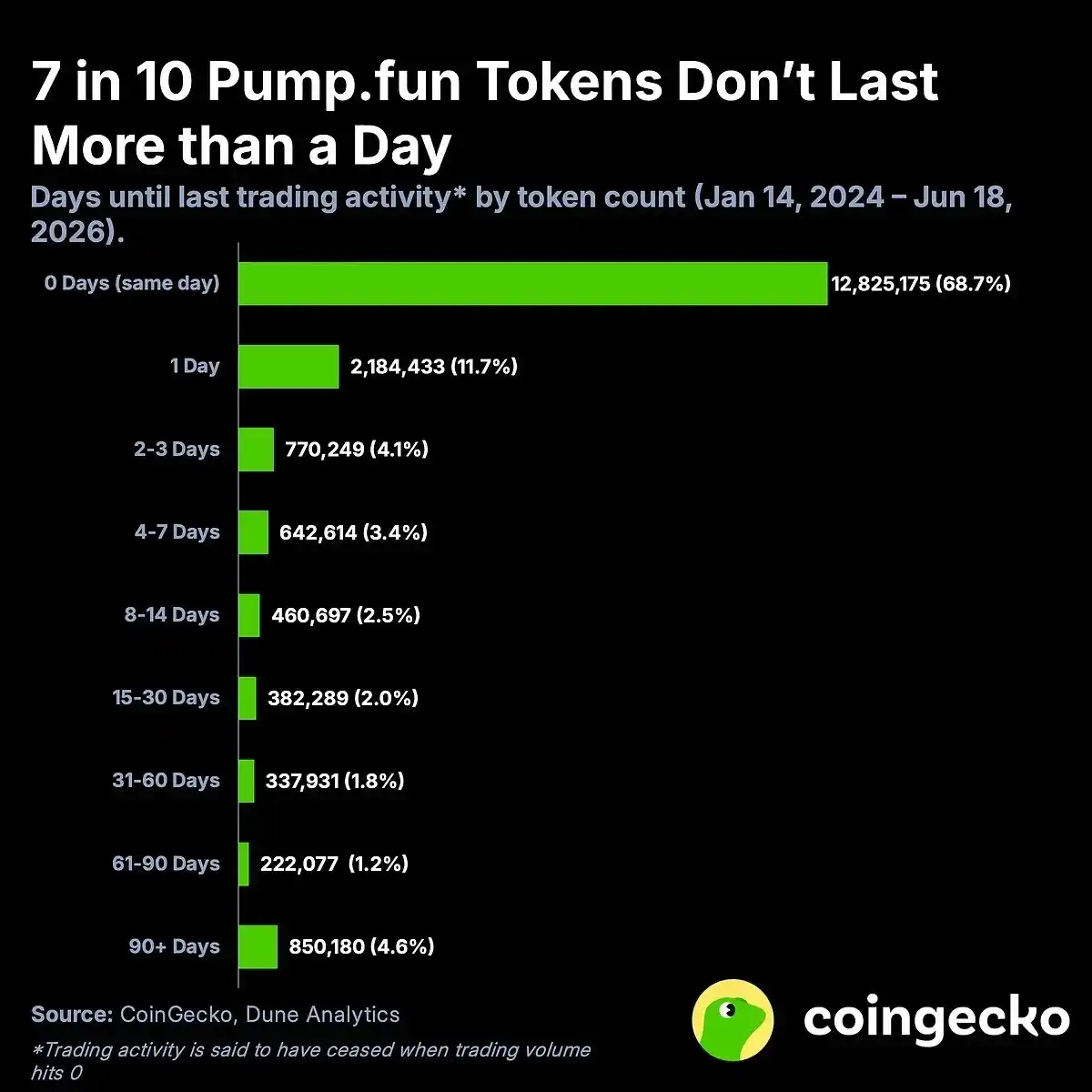
@Coingecko

From January–July 2026, the protocol's fee revenue nearly halved compared to the same period last year, reaching only $420 million. Despite this, it remains one of the crypto industry's most revenue-generating protocols, with annual revenue of $620 million and a net profit of $584 million last year.

Hyperliquid is another platform of this type. It initially focused on high-leverage cryptocurrency trading, catering to traders' directional bets. Later, it extended the leveraged trading model to various assets for round-the-clock trading, unrelated to crypto. Under the HIP-3 governance framework, the platform has now launched perpetual contracts for Nvidia, Tesla, Nasdaq tracking products, gold, crude oil, silver, stock indices, and more. When oil-related news breaks on a Sunday, traders can immediately take positions, while traditional markets wait until Monday to open.

In early July, the platform's real-world asset perpetual contract volume historically surpassed cryptocurrency trading for the first time, accounting for 52% of total volume.

Although Hyperliquid's overall trading volume has shrunk by nearly half from its 2025 peak, growth in real-world asset trading has offset the decline in crypto trading pairs. This is precisely the value speculation can create: Hyperliquid migrated the leverage trading model that attracts native crypto users to assets like gold, pre-IPO company equity, and stock indices, building a new round-the-clock pricing layer. Many traditional trading platforms are now emulating this model.

Robinhood Chain is replicating this development path in real-time.

Although the team positions this public chain as underlying infrastructure for on-chain stock trading, CEO Vlad Tenev is happy with the traffic brought by Meme coin traders.

"We built Robinhood Chain with the goal of being the best public chain for real-world asset trading... but it's also excellent for trading Meme coins."

Riding the wave of Meme coin trading, the chain surpassed Base chain in daily active users within three weeks of launch. The traffic and capital from Meme coin trading serve as the seed capital for the future development of the on-chain stock trading system.

Of course, this doesn't guarantee that speculation will inevitably upgrade into a mature business. Whether this transformation can be completed depends on the platform's own choices.

Robinhood, with 30 million funded users and multiple business lines, has strong distribution capabilities that could potentially convert the traffic from Meme coin trading into a user base for on-chain securities trading. We can see that its Q2 prediction market revenue skyrocketed over tenfold year-over-year to $156 million, accounting for 20% of the platform's total trading revenue.

The Nature of Speculation

Many still fail to understand speculation. Speculation itself is neither absolutely good nor bad. Stripped of all labels, speculation is simply one of humanity's oldest instincts.

When people convert their views into financial bets, speculation is naturally born.

In its most primitive form, speculation is the search for liquidity to price an asset; wherever liquidity flows, it prices that asset. The asset can be a sack of wheat, Nvidia stock, a frog video named frong.mp4, the outcome of a football match, or the probability of a presidential candidate winning.

The attributes of the underlying asset itself determine the direction and boundaries of speculation. Once speculation loses the support of a valuable underlying asset, the hype generated by the same capital ultimately struggles to precipitate long-term, valuable outcomes. This rule runs through the history of finance, and the crypto industry is treading the same path.

Hyperliquid tied leverage trading to assets like gold, building a new pricing system in just two years; Robinhood leverages the unexpected traffic from Meme coin speculation to simultaneously build the underlying channels for on-chain securities trading.

What kind of system speculation ultimately constructs depends on how much value the underlying asset can bear.


Cryptos en tendance

Questions liées

QAccording to the article, how does the author view the role of speculation in the evolution of financial markets?

AThe author argues that speculation can serve as a foundational layer for future, more mature financial infrastructure. While often criticized, speculation aggregates liquidity, which can later be leveraged to build sustainable and compliant business models, such as price discovery systems or asset trading platforms.

QWhat historical example does the author use to illustrate the positive function of speculation?

AThe author cites the 19th-century Chicago grain market. Speculators provided the necessary liquidity and counterparty risk-taking in the newly created futures market, which allowed farmers to hedge their price risks. This speculative activity was crucial in establishing Chicago as a global wheat pricing center.

QHow does the Hyperliquid platform demonstrate the transition from pure speculation to a valuable financial infrastructure?

AHyperliquid started as a high-leverage crypto trading platform. By extending its perpetual contract model to non-crypto assets like stocks (Nvidia, Tesla), indices, and commodities (gold, oil), it created a 24/7 pricing layer. The article notes that trading volume for these real-world assets now surpasses its crypto volume, showing how speculative crypto capital helped build a broader asset pricing system.

QWhat is the connection between Meme coin trading and Robinhood Chain's long-term ambitions?

ARobinhood Chain was initially built to facilitate tokenized stock trading for its users. However, the massive influx of users and liquidity from Meme coin trading (e.g., via the Uniswap Pools launch) provided unexpected seed capital and user traffic. Robinhood aims to channel this speculative activity to support the development of its core infrastructure for on-chain securities trading.

QWhat key factor determines whether speculative activity can lead to sustainable business development, according to the article's conclusion?

AThe decisive factor is the underlying asset or subject of the speculation. Speculation must be anchored to a valuable underlying asset to have a positive, lasting impact. The nature and value-carrying capacity of the underlying asset define the direction and boundaries of what the speculative activity can eventually build (e.g., gold vs. a fleeting meme).

Lectures associées

Grayscale : « Si les propositions sont adoptées, les prix de ces deux altcoins pourraient augmenter »

Zach Pandl, responsable de la recherche chez Grayscale, estime que des modifications envisagées de la tokenomique d'Ethereum (ETH) et de Solana (SOL) pourraient ralentir considérablement la croissance de leur offre, exerçant ainsi une pression haussière sur leurs prix. Ces propositions visent à réduire le taux d'inflation annuel des jetons ETH et SOL. Un ralentissement de la création de nouveaux jetons augmenterait la rareté des actifs existants. Grayscale prévoit que, si elles sont adoptées, l'inflation annuelle de l'offre d'Ethereum pourrait tomber à environ 0,4% d'ici fin 2031, se rapprochant ainsi du Bitcoin, tandis que celle de Solana pourrait atteindre environ 1,1%. En comparaison, l'offre d'or croît d'environ 1,8% par an et l'inflation (IPC) aux États-Unis est d'environ 3,3%. Pandl note que les propositions pour Solana semblent rencontrer un soutien plus large et ont donc une probabilité de mise en œuvre plus élevée. Cependant, il souligne un compromis potentiel : une inflation réduite pourrait diminuer les récompenses pour les investisseurs pratiquant le staking, une partie importante de leurs revenus provenant de l'émission de nouveaux jetons. En conclusion, un ralentissement de l'offre pourrait profiter aux prix des deux actifs, les détenteurs de jetons sans staking étant particulièrement bien placés pour en bénéficier. Ces changements restent à l'étude et ne sont pas encore approuvés.

cryptonews.ruIl y a 34 mins

Grayscale : « Si les propositions sont adoptées, les prix de ces deux altcoins pourraient augmenter »

cryptonews.ruIl y a 34 mins

Les experts ont nommé les raisons de la chute du bitcoin après la baisse de l'inflation aux États-Unis

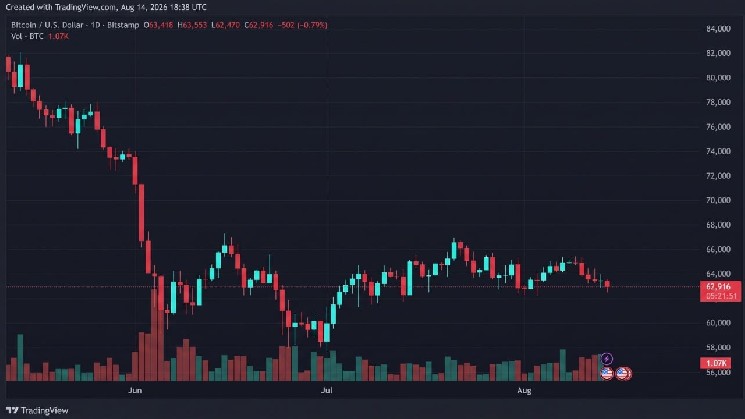
Les données favorables sur l’inflation aux États‑Unis n’ont pas réussi à soutenir le bitcoin. Selon les analystes de CryptoQuant, la principale raison est la faible demande sur le marché au comptant. Le bitcoin n’a pas réagi aux chiffres de l’inflation de juillet, publiés le 12 août, et a même légèrement baissé, passant d’environ 64 500 $ à près de 63 000 $. Pourtant, l’indice des prix à la production (PPI) était meilleur que prévu. Alors que les rendements des obligations du Trésor américain ont reculé et que les marchés actions ont progressé, le bitcoin est resté dans une fourchette de 63 000 à 64 000 $. Cette absence de réaction s’explique notamment par la faible demande au comptant : les entrées de capitaux dans les ETF américains spot de bitcoin restent limitées, et l’indice Coinbase Premium (reflétant l’écart de prix entre Coinbase et les autres grandes plateformes) est négatif depuis mai, indiquant une pression d’achat modérée de la part des investisseurs américains. Dans le même temps, le positionnement des traders sur le marché à terme reste élevé, créant un déséquilibre entre une faible liquidité, une demande spot atone et un volume important de positions à effet de levier. Les analystes estiment que dans ces conditions, même des nouvelles macroéconomiques positives pourraient ne pas déclencher de hausse. Si le prix n’évolue pas malgré un contexte favorable, les traders pourraient commencer à clôturer leurs positions longues à effet de levier, ce qui exercerait une pression supplémentaire à la baisse. Un niveau de résistance clé se situe autour de 68 700 $, coût moyen approximatif pour les détenteurs à court terme, au‑delà duquel une prise de bénéfices est possible. Pour CryptoQuant, une reprise soutenue nécessiterait : une reprise des entrées dans les ETF américains, un retour de l’indice Coinbase Premium en territoire positif, une hausse des volumes de trading au comptant et un franchissement stable des 68 700 $.

cryptonews.ruIl y a 1 h

Les experts ont nommé les raisons de la chute du bitcoin après la baisse de l'inflation aux États-Unis

cryptonews.ruIl y a 1 h

Trading

Spot

Articles tendance

Qu'est ce que MEME 2.0

Memecoin 2.0 : L'Ascension de $MEME 2.0 dans le Monde de la Cryptomonnaie Introduction Dans le paysage en constante évolution de la cryptomonnaie, un nouveau concurrent a émergé. Memecoin 2.0, symbolisé par $MEME 2.0, porte le concept des meme coins à un niveau excitant. En tant que produit dérivé du Memecoin original, ce projet a captivé l'attention de la communauté crypto en déplaçant l'accent des incitations financières typiques vers une expérience engageante et divertissante. Fonctionnant sur la blockchain Ethereum, Memecoin 2.0 redéfinit audacieusement l'engagement communautaire dans la sphère crypto. Qu'est-ce que Memecoin 2.0, $MEME 2.0 ? Au cœur de Memecoin 2.0 se trouve un projet de cryptomonnaie qui privilégie l'esprit communautaire et le plaisir associé à la culture des memes. Contrairement aux cryptomonnaies conventionnelles, qui se concentrent sur des cas d'utilisation pratiques et des avantages tangibles, Memecoin 2.0 se distingue en adoptant le côté léger de la monnaie numérique. Le projet existe sans promesses d'utilité, de feuille de route structurée ou de rendements financiers, se concentrant plutôt sur le développement d'une communauté dynamique centrée sur les memes et le plaisir partagé. Ce faisant, il s'inscrit dans la tendance croissante de la culture meme dans l'espace en ligne, en faisant un acteur unique dans le monde des actifs numériques. Créateur de Memecoin 2.0, $MEME 2.0 Malgré des recherches approfondies sur les origines de Memecoin 2.0, l'identité explicite de son créateur demeure inconnue. Cette anonymat n'est pas rare dans la communauté crypto, où de nombreux projets sont dirigés par des individus ou des groupes qui préfèrent rester dans l'ombre. Le manque d'informations accessibles au public sur le créateur pourrait être perçu comme un mouvement stratégique, mettant l'accent sur l'engagement communautaire plutôt que sur la notoriété individuelle dans l'espace. Investisseurs de Memecoin 2.0, $MEME 2.0 Les informations concernant les investisseurs ou le soutien financier de Memecoin 2.0 sont rares. Cette absence de détails peut suggérer que le projet est soit autofinancé, soit que son accent sur la communauté plutôt que sur les structures d'investissement traditionnelles a attiré un type de soutien différent. Étant donné que le monde des meme coins implique généralement un engagement plus de base plutôt que des investissements institutionnels, cette approche s'aligne sur l'éthique des projets dirigés par la communauté. Comment fonctionne Memecoin 2.0, $MEME 2.0 ? Memecoin 2.0 fonctionne entièrement sur la blockchain Ethereum, capitalisant sur ses caractéristiques de sécurité robustes et sa scalabilité. En tirant parti des forces d'Ethereum, Memecoin 2.0 peut offrir un environnement sécurisé pour les interactions des utilisateurs tout en garantissant que les transactions sont à la fois efficaces et rentables. Un des attributs uniques de Memecoin 2.0 réside dans sa structure axée sur la communauté. La valeur et la popularité du jeton $MEME 2.0 découlent de la participation active de ses utilisateurs, plutôt que d'une utilité inhérente. Ce design renforce l'accent mis par le projet sur l'aspect divertissant de la cryptomonnaie, impliquant que le rire et l'engagement communautaire sont les véritables devises qui guident son succès. De plus, le projet s'inscrit dans l'écosystème plus large des meme coins, où la valeur de chaque meme coin oscille en fonction de la culture, des tendances et de l'implication de la communauté plutôt que sur des principes économiques traditionnels. Chronologie de Memecoin 2.0, $MEME 2.0 Pour mieux comprendre l'évolution et les étapes marquantes de Memecoin 2.0, voici une chronologie mettant en évidence des événements significatifs de son histoire : 2024 : La création de Memecoin 2.0 est reconnue comme un découlement du Memecoin original, s'établissant dans le contexte florissant des meme coins tout en opérant sur la blockchain Ethereum. 13 Juillet 2024 : Memecoin 2.0 se positionne officiellement comme un meme coin centré sur la communauté sur le réseau Ethereum, soulignant son approche axée sur le divertissement qui invite les utilisateurs à s'engager et à participer à sa croissance. Points Clés sur Memecoin 2.0, $MEME 2.0 Plusieurs caractéristiques critiques définissent Memecoin 2.0 : Approche Axée sur la Communauté : La mission principale de Memecoin 2.0 est de créer une expérience communautaire amusante et engageante, capitalisant sur le plaisir collectif dérivé de la culture mémétique. Bâti sur Ethereum : Opérer sur la blockchain Ethereum procure au projet une infrastructure essentielle qui assure sécurité et scalabilité. Absence d'Utilité ou de Feuille de Route : Dans un départ frappant par rapport aux cryptomonnaies traditionnelles, Memecoin 2.0 ne promet aucune caractéristique utilitaire ou rendement financier, réaffirmant son engagement envers l'implication communautaire et l'engagement social. Accent sur la Culture Mémétique : En embrassant les aspects humoristiques et culturels du phénomène meme, Memecoin 2.0 fournit une plateforme permettant aux utilisateurs de s'engager avec la crypto hors ligne et en ligne. Contexte Supplémentaire : La Signification des Meme Coins Les meme coins ont émergé comme une classe distincte de cryptomonnaie, souvent motivée par l'humour et une approche légère du trading. Ces coins manquent généralement d'une utilité significative ou de feuilles de route de développement, attirant les utilisateurs avec la promesse de fun, d'interaction communautaire et de pertinence culturelle. Dans le paysage de l'écosystème crypto plus large, les meme coins ravivent l'importance de l'engagement communautaire, faisant barrage à des approches uniquement motivées par le profit. Des projets comme Memecoin 2.0 annoncent une ère où le divertissement peut s'harmoniser avec les aspirations financières, transformant la blockchain en un terrain de jeu créatif et d'interaction sociale. Conclusion Memecoin 2.0, ou $MEME 2.0, incarne une nouvelle vague de cryptomonnaie qui privilégie l'engagement communautaire au détriment de structures financières rigides. Avec un accent sur l'humour et l'interaction sociale, il capitalise sur la fascination entourant la culture meme. En opérant sur la blockchain Ethereum, Memecoin 2.0 exploite les capacités de la technologie tout en restant ferme dans son engagement envers la valeur de divertissement de la monnaie numérique. Alors que l'espace autour des cryptomonnaies continue d'évoluer, Memecoin 2.0 témoigne de l'idée que l'avenir des actifs numériques pourrait très bien dépendre d'expériences partagées, de rires et de liens communautaires solides. Dans le monde imprévisible des cryptos, peut-être que la joie peut être tout aussi précieuse que le gain financier traditionnel.

254 vues totalesPublié le 2024.04.04Mis à jour le 2024.12.03

Qu'est ce que MEME 2.0

Comment acheter MEME

Bienvenue sur HTX.com ! Nous vous permettons d'acheter Memeland (MEME) de manière simple et pratique. Suivez notre guide étape par étape pour commencer votre parcours crypto.Étape 1 : Création de votre compte HTXUtilisez votre adresse e-mail ou votre numéro de téléphone pour ouvrir un compte sur HTX gratuitement. L'inscription se fait en toute simplicité et débloque toutes les fonctionnalités.Créer mon compteÉtape 2 : Choix du mode de paiement (rubrique Acheter des cryptosCarte de crédit/débit : utilisez votre carte Visa ou Mastercard pour acheter instantanément Memeland (MEME).Solde :utilisez les fonds du solde de votre compte HTX pour trader en toute simplicité.Prestataire tiers :pour accroître la commodité d'utilisation, nous avons ajouté des modes de paiement populaires tels que Google Pay et Apple Pay.P2P :tradez directement avec d'autres utilisateurs sur HTX.OTC (de gré à gré) : nous offrons des services personnalisés et des taux de change compétitifs aux traders.Étape 3 : stockage de vos Memeland (MEME)Après avoir acheté vos Memeland (MEME), stockez-les sur votre compte HTX. Vous pouvez également les envoyer ailleurs via un transfert sur la blockchain ou les utiliser pour trader d'autres cryptos.Étape 4 : tradez des Memeland (MEME)Tradez facilement Memeland (MEME) sur le marché Spot de HTX. Il vous suffit d'accéder à votre compte, de sélectionner la paire de trading, d'exécuter vos trades et de les suivre en temps réel. Nous offrons une expérience conviviale aux débutants comme aux traders chevronnés.

586 vues totalesPublié le 2024.12.12Mis à jour le 2026.06.02

Comment acheter MEME

Discussions

Bienvenue dans la Communauté HTX. Ici, vous pouvez vous tenir informé(e) des derniers développements de la plateforme et accéder à des analyses de marché professionnelles. Les opinions des utilisateurs sur le prix de MEME (MEME) sont présentées ci-dessous.

活动图片