Coldcard Company Abandons Data Deletion Policy Following $116 Million Wallet Hack

cryptonews.ruPublié le 2026-08-07Dernière mise à jour le 2026-08-07

Résumé

Coldcard wallet maker Coinkite is changing its customer data retention policy following a major July 2026 security breach that resulted in the theft of over $116 million in Bitcoin. The company will no longer automatically delete customer records, a reversal of its prior privacy-focused stance, citing preparation for potential legal obligations arising from the hack. The breach exploited a firmware vulnerability (version 4.0.1) present since March 2021. Security firm TRM Labs warned that any seed phrase created on a vulnerable device before patching should be considered compromised. The attack occurred in several waves, ultimately draining over 1,816 BTC from more than 5,200 addresses, making it the third-largest crypto hack of 2026. Canada was reportedly the hardest-hit region. Coinkite has publicly denied long-standing allegations that it knew about the critical flaw beforehand, pointing to its public incident history log. The hack has shaken trust in self-custody solutions within the Bitcoin community.

Coinkite, the developer of the Coldcard wallet which was hacked in July in a major security incident causing $116 million in damages, has informed its users of significant changes to how their data will be stored ahead of potential legal obligations.

A notice, redistributed on the Coldcard X account early Friday morning, detailed that Coinkite will cease automatically deleting customer records. This statement is a reversal of the company's position, directly linked to a firmware vulnerability that led to the theft of over $100 million in Bitcoin from the company's hardware wallets starting July 30, 2026.

How does Coinkite handle user records?

Coinkite confirmed it will alter its processing of client data "in connection with the security incident made known on July 30, 2026." However, prior to this statement, the company regularly deleted customer records, except for their email addresses and countries of residence.

The change in the standard payment processing procedures for the Coldcard Wallet is part of what the company called preparation for "legal obligations" arising from the theft.

In its statement, the company did not specify exactly what information it plans to store or for how long it will be stored going forward.

Nevertheless, this marks the latest major departure from the principle of prioritizing privacy and self-custody of assets, a mantra for Bitcoin Maxis for decades.

What happened with Coldcard?

The revision of Coinkite's data retention policy came after one of the most serious security incidents this year, which exploited a vulnerability in firmware version 4.0.1 released by the company in March 2021.

As company TRM Labs warned, given the severity of the security vulnerability, installing the patched firmware only protects future wallets. Any seed phrase created on a vulnerable Coldcard card between March 2021 and the time of installing the patch should be considered unsafe.

To date, Cryptopolitan has reported four waves of attacks starting July 30, when the vulnerability was first discovered.

The first attack wave drained about 594 $BTC, worth nearly $38 million at the time, from approximately 500 wallets within 25 minutes. Galaxy Research company tracanother three waves over the next four days. As of this report, the stolen assets amount to 1816 $BTC from over 5200 addresses.

TRM calls this the third-largest crypto hack of 2026, a year in which the industry has already lost over $1.2 billion from 276 incidents.

Coinkite refutes claims that "they knew"

As losses mounted, so did accusations that Coinkite had concealed the defect for years. The company is publicly correcting this situation.

In response to a comment by Jack Mallers on August 7, COLDCARD wrote that "there was no weak entropy fallback," arguing that the weak pseudorandom number generator, called Yasmarang, was a built-in universal MicroPython generator featured in the source code, not a Coinkite fallback.

Separately, on August 5, reports emerged that a 2021 "Rabbit Hole Recap" episode, often cited as evidence of prior knowledge of the issue, discussed a different bug, not the random number generator problem. On Coinkite's own incident history page, 23 security-related events dating back to 2019 are listed, a point the company has repeatedly made to critics.

Canada hardest hit

Geographic factors influenced the scale of the damage. Cryptopolitan reported that about 25% of attributed losses trac to wallet owners in Canada, with the United States and Thailand also significantly affected, according to Chainalysis data linking wallet address databases to likely regions.

Chainalysis explained Bitcoin's spread in Canada by early adoption and influencer campaigns that promoted Coldcard in the local market.

The ripple effects are felt everywhere. A CoinMarketCap weekly analysis review states that the hack has undermined trust in self-custody and pushed some towards exploring AI-assisted Bitcoin custody solutions, having scanned 150 repositories to date.

end-content

Cryptos en tendance

Questions liées

QWhat significant policy change did Coinkite announce regarding user data, and what prompted this change?

ACoinkite announced it will stop automatically deleting customer records, a reversal of its previous data retention policy. This change is directly linked to the July 2026 security breach where over $116 million in Bitcoin was stolen due to a firmware vulnerability, and is part of the company's preparation for potential legal obligations stemming from the hack.

QWhat was the technical root cause of the Coldcard wallet hack, and what makes the vulnerability particularly severe?

AThe hack exploited a vulnerability in the version 4.0.1 firmware released by Coinkite in March 2021. The severity lies in the fact that installing a patched firmware only protects future wallets. Any seed phrase generated on a vulnerable Coldcard device between March 2021 and the moment of patching is considered compromised and unsafe.

QWhat has been the total reported impact of the Coldcard hack in terms of stolen Bitcoin and the number of affected wallets?

AAccording to the article, the stolen funds amount to 1,816 BTC from over 5,200 wallet addresses, making it the third-largest crypto hack of 2026 at the time of reporting.

QHow did Coinkite respond to allegations that the company had known about the security flaw for years?

ACoinkite publicly refuted these claims. The company stated that the weak pseudo-random number generator (Yasmarang) was a built-in universal generator from MicroPython present in the source code, not a Coinkite backdoor. It also pointed to its public incident history page listing 23 security events since 2019, arguing that a 2021 episode cited by critics referred to a different bug, not this random number generator issue.

QWhich country was reported to be the most affected by the hack, and what were the cited reasons for this?

ACanada was reportedly the most affected country, with about 25% of the attributed losses traced to wallet owners there. Chainalysis explained this prevalence by Canada's early adoption of Bitcoin technology and influencer campaigns that promoted Coldcard in the local market.

Lectures associées

Les experts ont nommé les raisons de la chute du bitcoin après la baisse de l'inflation aux États-Unis

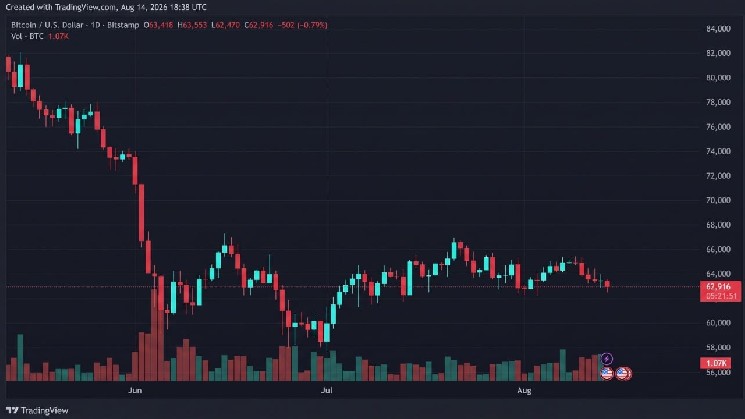
Les données favorables sur l’inflation aux États‑Unis n’ont pas réussi à soutenir le bitcoin. Selon les analystes de CryptoQuant, la principale raison est la faible demande sur le marché au comptant. Le bitcoin n’a pas réagi aux chiffres de l’inflation de juillet, publiés le 12 août, et a même légèrement baissé, passant d’environ 64 500 $ à près de 63 000 $. Pourtant, l’indice des prix à la production (PPI) était meilleur que prévu. Alors que les rendements des obligations du Trésor américain ont reculé et que les marchés actions ont progressé, le bitcoin est resté dans une fourchette de 63 000 à 64 000 $. Cette absence de réaction s’explique notamment par la faible demande au comptant : les entrées de capitaux dans les ETF américains spot de bitcoin restent limitées, et l’indice Coinbase Premium (reflétant l’écart de prix entre Coinbase et les autres grandes plateformes) est négatif depuis mai, indiquant une pression d’achat modérée de la part des investisseurs américains. Dans le même temps, le positionnement des traders sur le marché à terme reste élevé, créant un déséquilibre entre une faible liquidité, une demande spot atone et un volume important de positions à effet de levier. Les analystes estiment que dans ces conditions, même des nouvelles macroéconomiques positives pourraient ne pas déclencher de hausse. Si le prix n’évolue pas malgré un contexte favorable, les traders pourraient commencer à clôturer leurs positions longues à effet de levier, ce qui exercerait une pression supplémentaire à la baisse. Un niveau de résistance clé se situe autour de 68 700 $, coût moyen approximatif pour les détenteurs à court terme, au‑delà duquel une prise de bénéfices est possible. Pour CryptoQuant, une reprise soutenue nécessiterait : une reprise des entrées dans les ETF américains, un retour de l’indice Coinbase Premium en territoire positif, une hausse des volumes de trading au comptant et un franchissement stable des 68 700 $.

cryptonews.ruIl y a 23 mins

Les experts ont nommé les raisons de la chute du bitcoin après la baisse de l'inflation aux États-Unis

cryptonews.ruIl y a 23 mins

Trading

Spot

Articles tendance

Comment acheter DATA

Bienvenue sur HTX.com ! Nous vous permettons d'acheter DATA Network (DATA) de manière simple et pratique. Suivez notre guide étape par étape pour commencer votre parcours crypto.Étape 1 : Création de votre compte HTXUtilisez votre adresse e-mail ou votre numéro de téléphone pour ouvrir un compte sur HTX gratuitement. L'inscription se fait en toute simplicité et débloque toutes les fonctionnalités.Créer mon compteÉtape 2 : Choix du mode de paiement (rubrique Acheter des cryptosCarte de crédit/débit : utilisez votre carte Visa ou Mastercard pour acheter instantanément DATA Network (DATA).Solde :utilisez les fonds du solde de votre compte HTX pour trader en toute simplicité.Prestataire tiers :pour accroître la commodité d'utilisation, nous avons ajouté des modes de paiement populaires tels que Google Pay et Apple Pay.P2P :tradez directement avec d'autres utilisateurs sur HTX.OTC (de gré à gré) : nous offrons des services personnalisés et des taux de change compétitifs aux traders.Étape 3 : stockage de vos DATA Network (DATA)Après avoir acheté vos DATA Network (DATA), stockez-les sur votre compte HTX. Vous pouvez également les envoyer ailleurs via un transfert sur la blockchain ou les utiliser pour trader d'autres cryptos.Étape 4 : tradez des DATA Network (DATA)Tradez facilement DATA Network (DATA) sur le marché Spot de HTX. Il vous suffit d'accéder à votre compte, de sélectionner la paire de trading, d'exécuter vos trades et de les suivre en temps réel. Nous offrons une expérience conviviale aux débutants comme aux traders chevronnés.

525 vues totalesPublié le 2026.07.01Mis à jour le 2026.07.01

Comment acheter DATA

Discussions

Bienvenue dans la Communauté HTX. Ici, vous pouvez vous tenir informé(e) des derniers développements de la plateforme et accéder à des analyses de marché professionnelles. Les opinions des utilisateurs sur le prix de DATA (DATA) sont présentées ci-dessous.

活动图片