Debate: Korean Workers Fear Unemployment, While Musk Envisions a Society 'Without Work'?

marsbitPublié le 2026-08-03Dernière mise à jour le 2026-08-03

Résumé

While South Korean auto workers fear job losses from robotics, Elon Musk envisions a future where AI and robots render most work optional. This article explores the growing tension between immediate anxieties over automation and long-term visions of a post-work society. The piece begins with recent strikes at Hyundai's Korean plants, where unions, amid standard wage negotiations, also sought job guarantees against advancing robotics—specifically mentioning Boston Dynamics' Atlas. This reflects how anxiety about technological displacement is emerging even before robots are fully capable of replacing skilled labor on assembly lines. The author argues that while current robotics still struggle with the nuanced, experiential knowledge of veteran workers, the *perception* of imminent replacement is fueling social conflict prematurely. This modern "Luddite" sentiment is compared to the 19th-century English textile workers who smashed machines. Historically, Luddites weren't simply anti-technology; they were protesting the rapid devaluation of their skills and the unequal distribution of productivity gains. Similarly, today's workers ask who will bear the cost of transition and share in the new wealth created by machines. In contrast, figures like Elon Musk propose an optimistic endpoint: with AI and robotics driving extreme abundance, the link between work and survival could break. He suggests concepts like "Universal High Income" could allow society to share the technological b...

Over 200 years ago, British textile workers took up hammers to smash machines. More than two centuries later, similar sentiments have emerged in a South Korean automobile factory.

In July of this year, the union at Hyundai Motor's South Korean operations launched a series of partial strikes. On the surface, this appears to be a familiar labor-management negotiation: wage increases, performance bonuses, and retirement age were all among the union's demands. However, this year, an issue with a distinctly contemporary feel was added—job security in the age of AI and robotics. As early as the strike vote stage in June, the Hyundai Motor union proposed seeking employment guarantees concerning advanced robotics technology. Korean media subsequently linked this demand to Hyundai Motor Group's planned introduction of Boston Dynamics' Atlas humanoid robots. Ultimately, over 86% of the approximately 40,000 union members voted in favor of striking.

Therefore, simply summarizing this incident as "Hyundai workers protesting robots taking their jobs" is not entirely accurate. The actual strikes in July were primarily triggered by the breakdown of negotiations over wages and other labor-management issues; robots were not the sole or even the most direct catalyst for this round of strikes. However, another fact is equally noteworthy: robots have officially entered the union's negotiation purview. Even before they have been deployed on a large scale on Hyundai's production lines, they have already prompted tens of thousands of industrial workers to start contemplating a question that once seemed quite distant—what happens to people?

This scene easily evokes the "Luddite movement" during the British Industrial Revolution two centuries ago. But what is truly worth discussing today may no longer be "whether humans are about to start smashing machines again," but rather a more subtle misalignment: robots may still be a long way from truly replacing large numbers of skilled industrial workers, yet social conflicts surrounding robot replacement have already emerged prematurely.

And just as this anxiety appears early, a recent interview with Elon Musk coincidentally presents an almost diametrically opposite vision of the future. In a latest interview published by The Economist, Musk once again discussed the long-term outcome of AI and robotics: digital AI will take on an increasing amount of cognitive labor, while robots become the physical-world execution end for AI. Following this trajectory, eventually, almost all necessary work could potentially be performed by machines.

While Hyundai Motor workers worry about Atlas taking away some jobs on the production line, Musk imagines a day when the vast majority of work no longer requires human completion.

The real point of divergence thus becomes clear: the issue may not only be whether robots will replace labor, but also how humanity understands "losing work." Today's society is still built on a solid chain—work generates income, income supports consumption and life, therefore losing work inherently means losing economic security.

What Musk describes is a different scenario: when AI and robots push the productive capacity for goods and services to a sufficiently high level, society enters a state of "extreme abundance," where the cost of supplying food, housing, transportation, healthcare, and a multitude of services continuously declines. People no longer necessarily have to sell their labor to obtain means of subsistence, and work gradually transforms from a means of survival into a personal choice.

This is also the context for his repeated proposals in recent years for "Universal High Income." AI and robots create immense productivity, with the technological dividend ultimately translating into universal prosperity. Robots "taking jobs" might even become a prerequisite for humanity to break free from the necessity of "having to work to live."
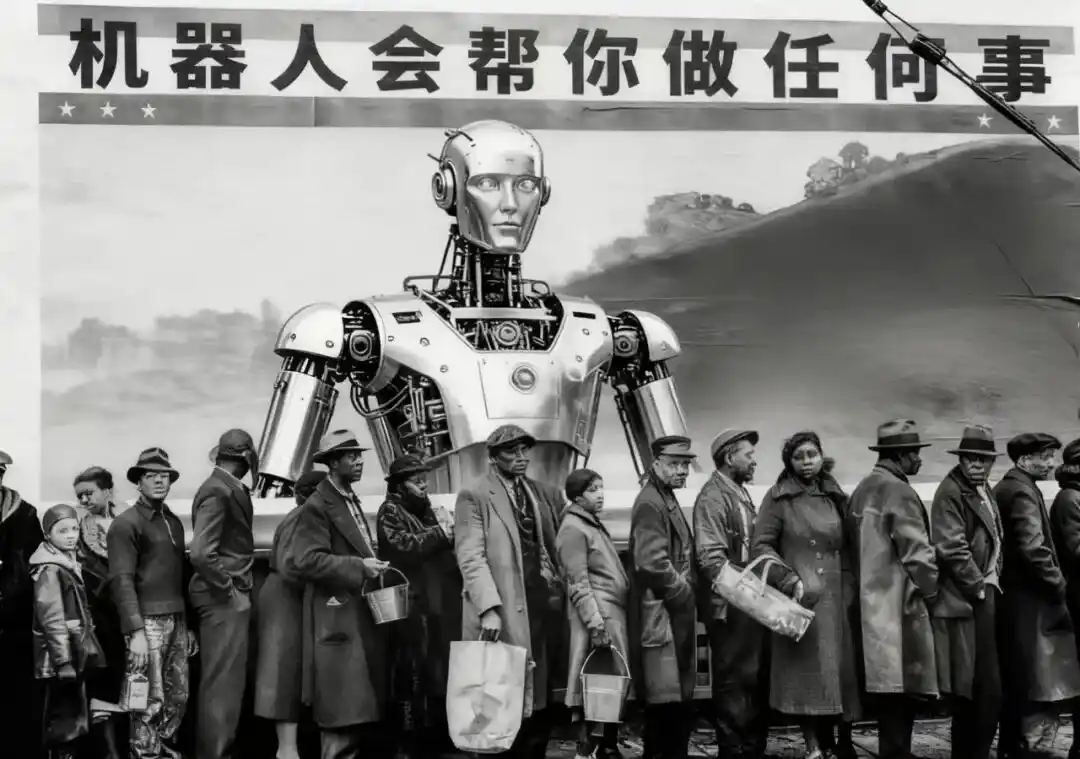
Thus, Luddism sees the unemployment risk behind machines, while Musk sees the potential for freedom behind machines; Hyundai Motor workers hope to protect their jobs before robots enter the factory, while Musk anticipates robots ultimately eliminating the very necessity of "having to work." These two seemingly contradictory logics also sharpen the same question: as machines create increasing wealth, who ultimately shares in this wealth?

Robots Aren't Skilled Workers Yet, But Unemployment Anxiety Has Arrived First

The concerns of Hyundai Motor workers are not hard to understand. The Hyundai Motor Group has publicly displayed an aggressive robotics strategy, and Boston Dynamics' Atlas is also continuously progressing from lab demonstrations towards industrial operations. Against this industrial backdrop, an automobile worker seeing Atlas lifting, walking, and handling components, and then seeing companies continuously emphasize AI, smart manufacturing, and automation, will naturally ask: five years from now, will the person standing next to this production line still be me?

Social media has further compressed this anxiety into a highly transmissible logical chain: companies buy robots, robots enter factories, human workers are laid off. An advance in a robot's capability, a procurement plan, or an experimental video can quickly be combined into a story of "a certain profession's countdown." Long-term technological trends are folded into an imminent reality, so the imagination of robot replacement outpaces the robots themselves.

The problem is, real industrial production is far from that simple. Automobile manufacturing is already one of the most automated industries globally. Highly standardized processes like welding, painting, stamping, and material handling have been covered by industrial robots for decades. What humanoid robots today truly need to conquer are precisely the areas traditional automation has never fully resolved: flexible assembly, harness operation, cross-station mobility, temporary anomaly handling, and the vast array of subtle and complex variations between different parts and working conditions.

The most valuable aspect of a skilled industrial worker is far from merely having two arms. How to install a part when it has slight dimensional variation, what a change in feel during tightening signifies, where to check first when a machine makes a certain sound, how to compensate in the next step after a slight deviation in the previous process—these experiences formed over years constitute the immense tacit knowledge in industrial production. They are rarely fully written into SOPs, yet they determine whether a production line can truly operate stably.

This is precisely one of the hardest barriers for current robots to cross. Being able to pick up a part in a demo environment is a completely different engineering problem from being able to perform the same action stably thousands of times over eight consecutive hours; being able to complete an assembly once does not mean being able to meet the yield rate, cycle time, safety requirements, and costly downtime risks demanded by a real production line. For many robotics companies, the journey from "can do" to "can do stably long-term" remains a lengthy path to industrialization.

Therefore, from the perspective of current technological reality, the notion that "tens of thousands of automobile workers will immediately be replaced by humanoid robots" is clearly an oversimplification. A more realistic situation today might be this: the long-term possibilities of technology are being prematurely realized in public discourse, and people are beginning to feel uneasy about that future even before robots truly possess comprehensive replacement capabilities.

But this does not mean the anxieties of the Hyundai Motor workers in South Korea are meaningless. On the contrary, when a technology has the potential to redefine production relations, the fermentation of social sentiment often precedes the technology's large-scale maturity. This prematurely emerging anxiety may not be accurately predicting tomorrow, but it likely already poses a question that will eventually need to be answered seriously.

Re-understanding Luddism: What They Feared Was Never Just a Machine

"Luddism" is often used as a slightly pejorative term today. People who reject new technology are labeled Luddites; those who express concerns about AI or robots are also easily categorized as conservative or anti-technology. Over time, Luddism has almost become synonymous with "technological backlash."

But the historical Luddite movement was far more complex than this label suggests. During the rapid mechanization of the British textile industry in the early 19th century, many participants in the Luddite movement were themselves skilled artisans with years of training. Machines did not bring only higher production efficiency; they simultaneously disrupted existing skill systems, wage structures, and labor relations. Once-scarce craftsmanship could rapidly depreciate, low-skilled laborers could enter production with the help of machines, the bargaining power of skilled workers declined, and the livelihoods of some were directly impacted. Machines ultimately became the most tangible object of their anger.
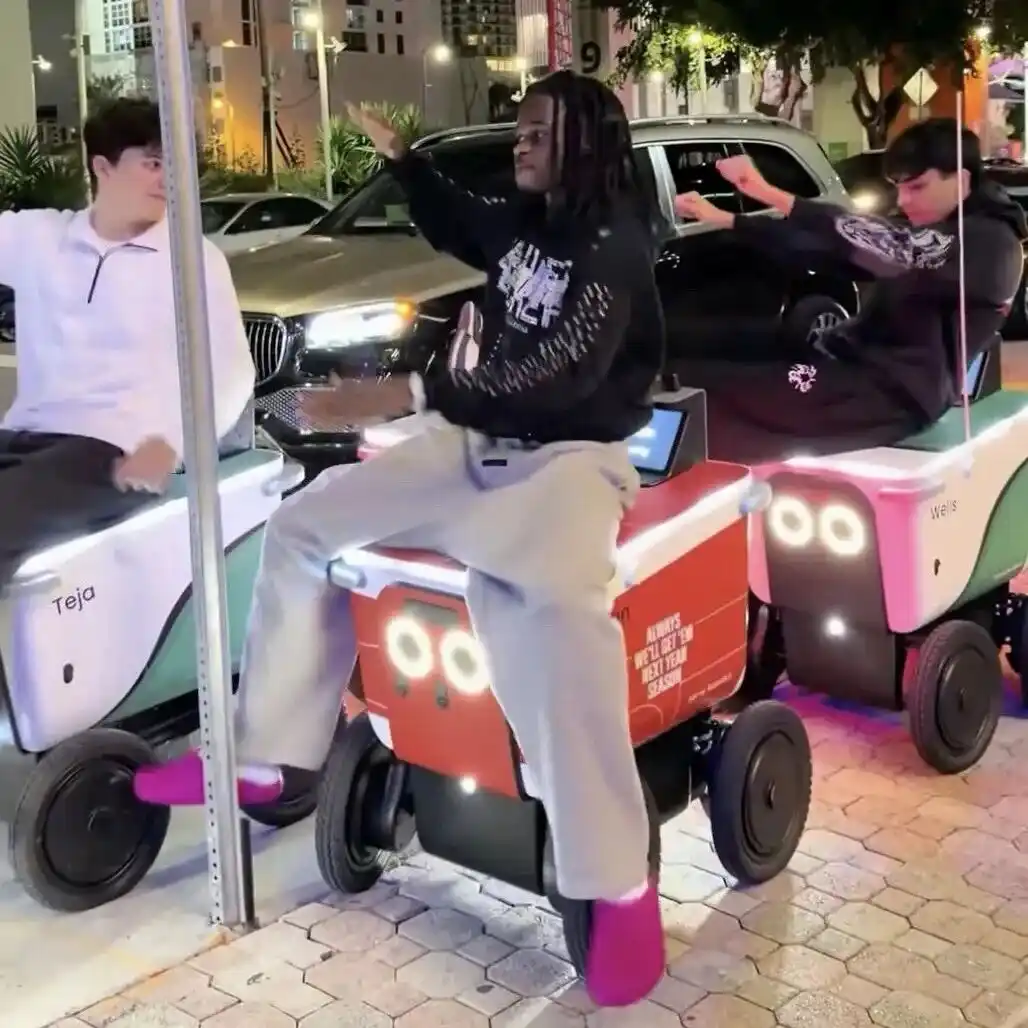
Looking back more than 200 years later, we of course know that machines did not destroy human society. The Industrial Revolution ultimately created an economic scale far larger than the handicraft era and gave rise to many professions that did not exist before. Therefore, judging the Luddites from today's perspective seems easy: they overestimated the threat posed by machines and underestimated the capacity of technological progress to create new opportunities.

Yet this "hindsight correctness" overlooks a very important issue. Standing before a worker in 1811, he did not know how much the global economy would grow in 100 or even 200 years, nor did he know when new occupations would emerge. What he could feel was that his wages were falling, his skills were depreciating, and his next job was uncertain. The overall benefits brought by technological progress typically take a long time to diffuse, but the costs incurred by technological substitution can be concentrated on a specific group of people in a very short time.

Today's Hyundai Motor workers facing Atlas are essentially in a similar position. Robotics companies might tell them automation can improve efficiency, economists might explain that new technologies ultimately create new jobs, tech companies might depict a future where humans are freed from repetitive labor—these assertions may all hold true. But the questions workers truly care about are more concrete: when will my position disappear? How much will the skills I've accumulated over 20 years be worth in five years? Will part of the productivity gains the company achieves through robots become benefits for employees? If industrial transformation indeed incurs costs, why should those costs first fall upon those being replaced?

Therefore, understanding the re-emergence of Luddite sentiment in the robotics era as some people fearing new technology again is an overly simplistic and labeled view. Textile workers 200 years ago and automobile workers today are essentially asking the same question: after machines create greater efficiency, who ultimately shares in that efficiency?

The Hardest Part Is Never the Endgame, But How to Get There

What Musk describes is a society where "work becomes optional." According to his estimation, by around 2036, the productivity brought by AI and robots may already be so high that "money" itself becomes less important than it is today, and people will no longer necessarily have to work for survival; labor will become more of a choice.

Such an endgame is certainly attractive enough, but it carries an extremely important implicit condition: the immense productivity created by robots and the resulting material abundance it brings must ultimately be shareable by the entire society.

Some do not believe in this viewpoint. As the renowned scholar Zhang Xiaoyu states in "Technology and Civilization: Our Era and Future," "If slave laborers benefited from technological progress, it was only because the development of productivity brought about by technological progress turned past luxuries into today's mass consumer goods."

If machines belong to a few companies, computing power is concentrated in a few enterprises, data and capital are likewise concentrated in a few entities, and the goods and services created by robots are still distributed entirely dependent on the existing income system, then continuously increasing production efficiency will not automatically grant each individual more wealth.

After all, during the last wave of the internet boom, the term "techno-elite" had already become a label for Silicon Valley entrepreneurs.

This is also why Musk ultimately had to propose "Universal High Income." In a sense, he appears to stand at the other extreme of Luddism, yet still needs to answer the question posed by the Luddite movement two centuries ago—how should the wealth created by machines be distributed.

What is truly complex may not be the distant endgame Musk depicts. If one day robots can indeed perform the vast majority of necessary labor, society might already have formed new income systems, security frameworks, and social contracts matching that reality. The stage most prone to conflict is actually the intermediate phase leading to that future—the "painful transition period" many foresee—which is happening today.
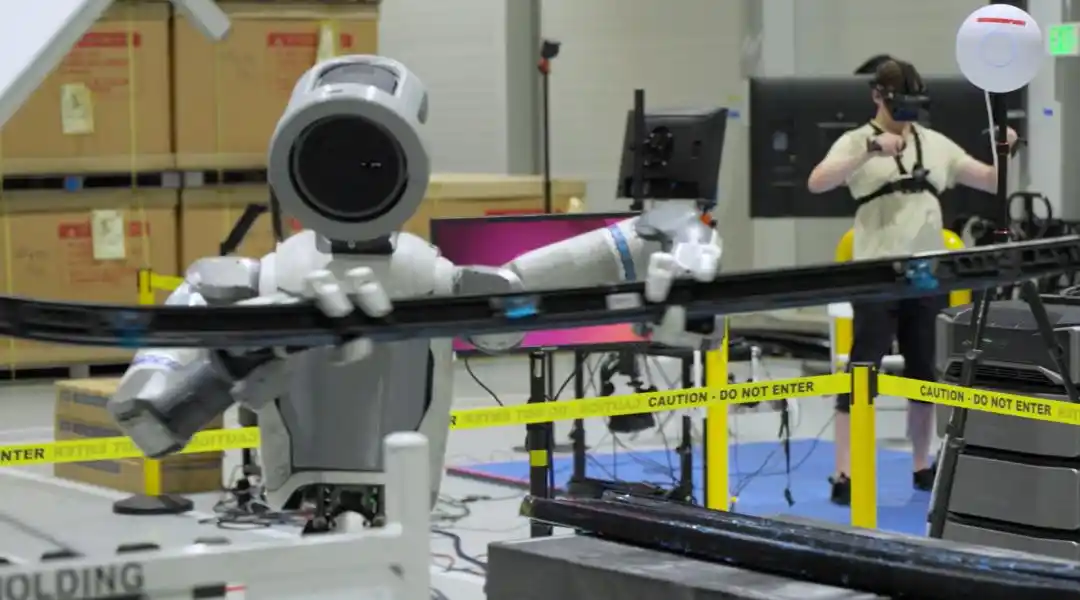
Robots won't suddenly jump from replacing 0% of jobs to replacing 100% in a single day. A more likely scenario is that they first replace 5%, then 10%; some highly standardized positions diminish first, certain skills begin to depreciate, some people become direct beneficiaries of the productivity红利 (dividend) through AI and robots, while others bear the costs of transition first. The worst-case scenario is that companies achieve higher profits, but retraining systems for workers are not yet mature; new jobs are emerging, but not necessarily in the places where people lost their old jobs.

Technological capabilities usually improve along a continuous curve, but social institutions do not automatically upgrade in sync with technology. This is why Michael Burry, the investor原型 (prototype) for "The Big Short," in response to Musk's views on AI, robots, and Universal High Income, left that impactful statement: "Before that happens, there will be a revolution."

Whether this statement is overly pessimistic is certainly debatable, but it at least accurately points out the process most easily glossed over in Musk-style futurism: how exactly do we navigate the several decades from today's society, which relies on labor for income, to that future society where work is optional?

The anxiety of Hyundai Motor workers occurs precisely at the very beginning of this long transitional path.

Wood Straightened by the Ink Line: Technology Also Needs Its Own "Rules and Frameworks"

Therefore, the "Luddism" reappearing in the robotics era need not be simply mocked. Smashing machines certainly cannot halt the industrial revolution; history has long proven that when a technology can continuously improve production efficiency and reduce costs, it is ultimately difficult to exclude from society through resistance. The same holds for today's humanoid robots; as long as costs continue to fall, reliability improves, and return on investment gradually becomes viable, their entry into factories, warehouses, commercial services, and even household life will become a long-term industrial trend.

But acknowledging the irreversibility of the trend does not mean society can only sit back and let technology determine everything. The industrial civilization of the past two centuries has never consisted solely of advancements in engines, electricity, computers, and robots. The eight-hour workday, minimum wage, occupational safety, labor contracts, social insurance, product liability, and various industrial standards are also part of the institutional legacy created by the Industrial Revolution. Many rules were initially seen as restrictions on efficiency but ultimately formed the foundation upon which technology could enter society on a large scale.
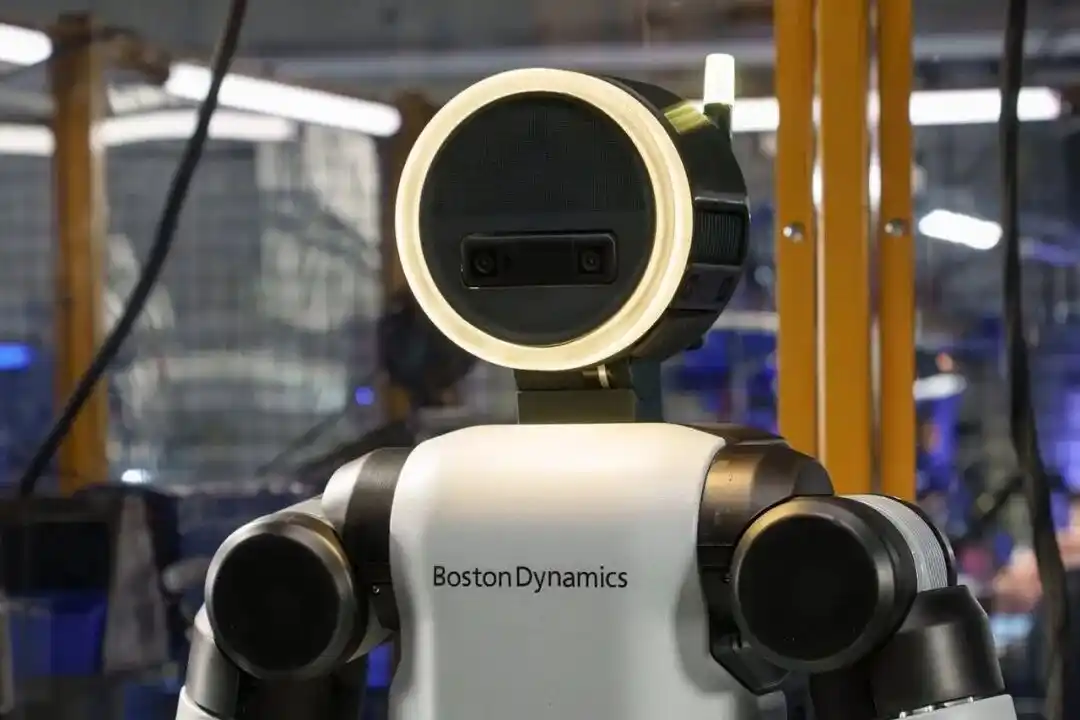
The development measures, management measures, and industry guidelines increasingly emerging today around artificial intelligence, robotics, data, security, and ethics are precisely part of the process of rediscovering boundaries in this new round of technological revolution. As robots truly enter production and daily life, these rules will become increasingly concrete: what kind of labor-management consultation should precede robots entering production lines, how should productivity gains from automation be distributed, who bears the retraining costs for those displaced by technological substitution, how is liability determined after a robot causes a safety incident, which high-risk scenarios must retain human-in-the-loop—these questions will ultimately become part of robot industrialization.

They may not seem as exciting as robots running, doing backflips, or completing a complex operation, but they are likely to determine whether robots can truly pass through the final gate between technological demonstration and industrial application.

"Wood is straightened by the ink line; metal is sharpened on the whetstone." The ink line may seem to restrict the direction of the wood, yet it also allows it to ultimately become a pillar. Norms are similar for technology. Genuinely mature technological optimism does not require pretending that technology creates no problems. The more a society believes robots can ultimately create immense productivity, the more it should place discussions about benefit distribution, employment transition, safety liability, and human dignity on the table for early debate, before that productivity is released on a massive scale.

So perhaps the anxiety of the Hyundai Motor workers in South Korea has indeed arrived somewhat early. Today's humanoid robots are still a considerable engineering distance away from becoming a truly reliable automobile worker capable of long-term substitution for a skilled human worker. But discussions about how society should face them once they truly enter factories are not early at all.

They should perhaps start even earlier.

This article is from the WeChat public account "AI Wu Zao," author: Peng Kunfang

Cryptos en tendance

Questions liées

QWhat is the main conflict highlighted in the article between Korean auto workers and Elon Musk's vision?

AThe article highlights a fundamental conflict between immediate anxiety and long-term optimism regarding technological disruption. Korean auto workers at Hyundai are anxious about robots potentially taking their jobs in the near future, seeking employment guarantees. In contrast, Elon Musk envisions a distant future where AI and robots create such material abundance that work becomes optional, necessitating concepts like 'Universal High Income.'

QWhy does the article argue that comparing the Hyundai workers' concerns to 'Luddism' is an oversimplification?

AThe article argues it's an oversimplification because the original Luddites and modern workers are not merely 'anti-technology.' Their core concern is the same: who benefits from the increased productivity created by machines? They fear that the costs of technological transition (job loss, skill devaluation) will be borne by workers, while the profits and efficiency gains are captured by capital owners, without a fair redistribution mechanism.

QWhat key technical challenge does the article identify for humanoid robots like Boston Dynamics' Atlas to fully replace skilled auto workers?

AThe key challenge is mastering the vast amount of 'tacit knowledge' possessed by skilled workers. This includes handling part tolerances, interpreting sensory feedback (sound, touch) during assembly, compensating for variations, and managing unforeseen anomalies. Moving from a one-time demonstration to performing these complex, judgment-based tasks reliably for thousands of cycles under real production pressure and safety constraints remains a significant engineering hurdle.

QAccording to the article, what is the 'most difficult' part of reaching Elon Musk's vision of a post-work society?

AThe most difficult part is the transitional period or 'growing pains.' The article states that the hardest phase is not the distant endpoint where work is optional, but the decades-long middle stage where robots incrementally replace 5%, then 10% of jobs. Conflict may arise if social institutions (retraining, income support, new labor contracts) fail to evolve synchronously with technological capabilities, leaving displaced workers to bear the costs while benefits are concentrated.

QWhat historical parallel does the article draw to suggest that regulations and social frameworks are necessary for the robotics revolution?

AThe article draws a parallel to the Industrial Revolution, which produced not just engines and machines but also crucial social and institutional frameworks like the eight-hour workday, minimum wage, workplace safety standards, and social insurance. Similarly, for robots to be widely integrated, society needs to proactively establish rules for fair benefit sharing, retraining responsibilities, safety liability, and ethical deployment, forming the necessary 'guardrails' for sustainable technological adoption.

Lectures associées

Grayscale : « Si les propositions sont adoptées, les prix de ces deux altcoins pourraient augmenter »

Zach Pandl, responsable de la recherche chez Grayscale, estime que des modifications envisagées de la tokenomique d'Ethereum (ETH) et de Solana (SOL) pourraient ralentir considérablement la croissance de leur offre, exerçant ainsi une pression haussière sur leurs prix. Ces propositions visent à réduire le taux d'inflation annuel des jetons ETH et SOL. Un ralentissement de la création de nouveaux jetons augmenterait la rareté des actifs existants. Grayscale prévoit que, si elles sont adoptées, l'inflation annuelle de l'offre d'Ethereum pourrait tomber à environ 0,4% d'ici fin 2031, se rapprochant ainsi du Bitcoin, tandis que celle de Solana pourrait atteindre environ 1,1%. En comparaison, l'offre d'or croît d'environ 1,8% par an et l'inflation (IPC) aux États-Unis est d'environ 3,3%. Pandl note que les propositions pour Solana semblent rencontrer un soutien plus large et ont donc une probabilité de mise en œuvre plus élevée. Cependant, il souligne un compromis potentiel : une inflation réduite pourrait diminuer les récompenses pour les investisseurs pratiquant le staking, une partie importante de leurs revenus provenant de l'émission de nouveaux jetons. En conclusion, un ralentissement de l'offre pourrait profiter aux prix des deux actifs, les détenteurs de jetons sans staking étant particulièrement bien placés pour en bénéficier. Ces changements restent à l'étude et ne sont pas encore approuvés.

cryptonews.ruIl y a 34 mins

Grayscale : « Si les propositions sont adoptées, les prix de ces deux altcoins pourraient augmenter »

cryptonews.ruIl y a 34 mins

Les experts ont nommé les raisons de la chute du bitcoin après la baisse de l'inflation aux États-Unis

Les données favorables sur l’inflation aux États‑Unis n’ont pas réussi à soutenir le bitcoin. Selon les analystes de CryptoQuant, la principale raison est la faible demande sur le marché au comptant. Le bitcoin n’a pas réagi aux chiffres de l’inflation de juillet, publiés le 12 août, et a même légèrement baissé, passant d’environ 64 500 $ à près de 63 000 $. Pourtant, l’indice des prix à la production (PPI) était meilleur que prévu. Alors que les rendements des obligations du Trésor américain ont reculé et que les marchés actions ont progressé, le bitcoin est resté dans une fourchette de 63 000 à 64 000 $. Cette absence de réaction s’explique notamment par la faible demande au comptant : les entrées de capitaux dans les ETF américains spot de bitcoin restent limitées, et l’indice Coinbase Premium (reflétant l’écart de prix entre Coinbase et les autres grandes plateformes) est négatif depuis mai, indiquant une pression d’achat modérée de la part des investisseurs américains. Dans le même temps, le positionnement des traders sur le marché à terme reste élevé, créant un déséquilibre entre une faible liquidité, une demande spot atone et un volume important de positions à effet de levier. Les analystes estiment que dans ces conditions, même des nouvelles macroéconomiques positives pourraient ne pas déclencher de hausse. Si le prix n’évolue pas malgré un contexte favorable, les traders pourraient commencer à clôturer leurs positions longues à effet de levier, ce qui exercerait une pression supplémentaire à la baisse. Un niveau de résistance clé se situe autour de 68 700 $, coût moyen approximatif pour les détenteurs à court terme, au‑delà duquel une prise de bénéfices est possible. Pour CryptoQuant, une reprise soutenue nécessiterait : une reprise des entrées dans les ETF américains, un retour de l’indice Coinbase Premium en territoire positif, une hausse des volumes de trading au comptant et un franchissement stable des 68 700 $.

cryptonews.ruIl y a 1 h

Les experts ont nommé les raisons de la chute du bitcoin après la baisse de l'inflation aux États-Unis

cryptonews.ruIl y a 1 h

Trading

Spot

Articles tendance

Qu'est ce que DOGE M

Doge Matrix ($doge m) : La Nouvelle Génération de Cryptomonnaie Axée sur la Communauté Introduction Dans le paysage en constante évolution des cryptomonnaies, de nouveaux projets émergent constamment, chacun visant à capturer l'intérêt des investisseurs et des passionnés. L'un des derniers entrants dans ce domaine est Doge Matrix, représenté par le symbole boursier $doge m. Ce projet a attiré l'attention grâce à ses racines dans la culture des mèmes populaire entourant Dogecoin, établissant sa place dans l'espace web3. Cet article vise à fournir une analyse complète de Doge Matrix, couvrant son aperçu, son créateur, ses investisseurs, sa fonctionnalité, sa chronologie et ses aspects notables. Qu'est-ce que Doge Matrix ($doge m) ? Doge Matrix est un projet de cryptomonnaie axé sur la communauté qui semble s'appuyer sur l'attrait généralisé de Dogecoin, une monnaie numérique connue pour sa mascotte Shiba Inu et ses origines de mème. Bien que les objectifs globaux de Doge Matrix ne soient pas largement définis, il se caractérise par un engagement à exploiter l'implication et le soutien de la communauté. Contrairement aux cryptomonnaies traditionnelles qui mettent souvent l'accent sur l'utilité ou la valeur intrinsèque à travers des technologies sous-jacentes, Doge Matrix se positionne dans un espace qui embrasse le phénomène culturel des cryptomonnaies, attirant particulièrement ceux qui résonnent avec l'éthique des actifs basés sur des mèmes. S'appuyant sur les forces de la communauté Dogecoin, Doge Matrix opère comme partie d'un écosystème plus large, invitant à la participation et à l'engagement des utilisateurs qui partagent un intérêt pour la cryptomonnaie et le paysage numérique. Qui est le Créateur de Doge Matrix ($doge m) ? L'identité du créateur de Doge Matrix reste inconnue. Ce manque de transparence n'est pas un phénomène rare dans l'espace des cryptomonnaies, où certains projets sont lancés sans révéler l'identité de leurs fondateurs. L'absence d'informations concernant l'équipe fondatrice peut soulever des questions parmi les investisseurs potentiels sur la responsabilité et la direction du projet. Qui sont les Investisseurs de Doge Matrix ($doge m) ? À l'heure actuelle, il n'existe pas d'informations publiques détaillant les investisseurs ou les fondations d'investissement qui soutiennent Doge Matrix. Le projet semble s'appuyer principalement sur le soutien de la communauté plutôt que sur des investissements institutionnels. Ce modèle s'aligne avec la nature axée sur la communauté de l'initiative, favorisant un environnement où la direction du projet est façonnée par ses participants plutôt que dictée par quelques investisseurs financiers. Comment Fonctionne Doge Matrix ($doge m) ? Les spécificités concernant les mécanismes opérationnels de Doge Matrix sont quelque peu vagues, reflétant une tendance plus large des projets dans l'espace des mèmes où les fonctionnalités innovantes ne sont pas toujours clairement articulées. Néanmoins, Doge Matrix semble conçu pour s'intégrer dans l'écosystème de cryptomonnaie existant en encourageant la participation des utilisateurs tout en s'appuyant sur les références culturelles familières associées à Dogecoin. Ses caractéristiques potentiellement uniques dérivent des interactions communautaires plutôt que des avancées technologiques, mettant l'accent sur les expériences partagées et la collaboration entre les détenteurs de jetons. Bien que les innovations exactes n'aient pas été explicitement décrites, le projet semble créer un espace où les membres de la communauté peuvent s'engager, partager des idées et propulser le potentiel du projet en avant. Chronologie de Doge Matrix ($doge m) Réfléchir à la chronologie du projet révèle des événements notables qui ont défini son parcours jusqu'à présent : 25 novembre 2024 : Doge Matrix a atteint sa valeur la plus élevée de tous les temps, marquant une étape significative dans son histoire précoce. 1er janvier 2025 : À l'inverse, Doge Matrix a atteint sa valeur la plus basse de tous les temps, illustrant la volatilité souvent associée aux cryptomonnaies, en particulier dans les premières étapes du cycle de vie d'un projet. En cours : Le projet continue d'être activement échangé et soutenu par sa communauté, bien que des jalons ou objectifs futurs spécifiques n'aient pas encore été divulgués. Points Clés sur Doge Matrix ($doge m) Focalisation sur la Communauté Au cœur de Doge Matrix se trouve un engagement envers l'engagement communautaire. Le projet prospère sur le principe de collaboration et d'objectifs partagés parmi ses membres, soulignant l'importance de l'effort collectif. Contrairement aux projets centralisés qui ont souvent une structure de leadership définie, Doge Matrix présente actuellement une approche plus fluide de la gouvernance, où la voix de chaque membre de la communauté compte. Volatilité Le marché des cryptomonnaies est notoire pour sa volatilité, et Doge Matrix ne fait pas exception. Son historique de prix reflète des fluctuations significatives entre des valeurs élevées et basses, ce qui est typique de nombreuses nouvelles cryptomonnaies mais souligne les risques associés à l'investissement dans des jetons émergents. Manque d'Informations Détailées L'une des caractéristiques les plus frappantes de Doge Matrix est la rareté d'informations détaillées concernant ses fondements technologiques et ses mécanismes opérationnels. Cette ambiguïté nécessite que les investisseurs potentiels effectuent une diligence raisonnable approfondie avant de s'engager avec le projet. Conclusion En résumé, Doge Matrix ($doge m) illustre une nouvelle vague de projets de cryptomonnaie qui s'appuient fortement sur l'engagement communautaire et la pertinence culturelle. Bien qu'il manque certains détails—tels qu'un leadership clair, des objectifs définis et une fonctionnalité détaillée—le projet a réussi à susciter l'intérêt au sein de la communauté crypto, tirant parti de l'attrait établi de la culture des mèmes. Comme pour tout investissement dans l'espace des cryptomonnaies, comprendre les risques inhérents et mener des recherches approfondies est essentiel pour les participants potentiels. Doge Matrix se dresse comme un rappel de la nature dynamique, parfois imprévisible de l'industrie crypto, marquée par une évolution constante et un enthousiasme pour les initiatives axées sur la communauté.

536 vues totalesPublié le 2025.02.03Mis à jour le 2025.02.03

Qu'est ce que DOGE M

Qu'est ce que $M

Comprendre Mantis ($M) : Une nouvelle ère dans l'interopérabilité inter-chaînes Dans le paysage en constante évolution du Web3 et des cryptomonnaies, de nouveaux projets s'efforcent d'offrir des solutions innovantes visant à améliorer l'expérience utilisateur et à élargir les possibilités fonctionnelles au sein de l'écosystème financier décentralisé. Un tel projet qui attire l'attention est Mantis ($M), un protocole pionnier fondé sur les principes de l'interopérabilité inter-chaînes et des règlements basés sur l'intention. Cet article explore les aspects essentiels de Mantis, y compris sa fonctionnalité de base, ses créateurs, son soutien à l'investissement, ses caractéristiques innovantes et ses jalons critiques. Qu'est-ce que Mantis ($M) ? Mantis est décrit comme un protocole de règlement d'intention multi-domaines qui simplifie les interactions inter-chaînes, permettant aux utilisateurs d'exécuter des transactions financières complexes sur diverses plateformes blockchain de manière transparente. Le protocole fonctionne à travers trois couches principales : Expression de l'intention : Les utilisateurs peuvent exprimer leurs objectifs de transaction en utilisant un langage naturel facilité par le DISE LLM, un modèle de langage AI avancé. Par exemple, un utilisateur pourrait exprimer le souhait d'échanger de l'Ethereum (ETH) contre du Solana (SOL) avec une tolérance de glissement spécifique de 1 %. Exécution : Cette couche utilise un réseau de solveurs qui rivalisent pour satisfaire les intentions des utilisateurs. Les transactions sont exécutées à l'aide de mécanismes tels que la Coïncidence des Désirs (CoWs) et les Enchères de Flux de Commandes (OFAs), qui garantissent que les demandes des utilisateurs sont satisfaites de manière optimale. Règlement : Tirant parti du protocole de Communication Inter-Blockchain (IBC), Mantis permet des transactions inter-chaînes atomiques, permettant aux utilisateurs d'opérer sur diverses chaînes prises en charge, y compris Ethereum, Solana et Cosmos. Mantis est conçu pour introduire une génération de rendement native pour les actifs inactifs, utilisant des preuves cryptographiques pour maintenir l'intégrité des transactions tout au long du processus. Créateurs et Équipe de Développement Mantis a été conçu par la Composable Foundation, une organisation axée sur la recherche, reconnue pour son accent sur les solutions d'interopérabilité blockchain. Cette fondation collabore avec des institutions académiques de renom, y compris l'Université de Harvard et l'Université de Lisbonne, contribuant à des efforts de recherche et développement approfondis qui informent l'architecture et la fonctionnalité de Mantis. L'engagement de la Composable Foundation à favoriser l'innovation dans l'espace blockchain positionne Mantis comme une solution robuste pour la demande croissante d'interopérabilité entre plusieurs réseaux blockchain. Investisseurs et Soutien Bien que les détails spécifiques concernant les investisseurs individuels n'aient pas été divulgués publiquement, Mantis bénéficie d'un soutien substantiel de diverses entités, y compris : Subventions écosystémiques des chaînes activées par l'IBC, qui soutiennent la croissance et l'intégration du protocole au sein des écosystèmes de finance décentralisée. Partenariats stratégiques avec des fournisseurs d'infrastructure qui améliorent les capacités réseau de Mantis et ses stratégies de déploiement. Financement via le trésor de la Composable Foundation, garantissant un soutien financier durable pour le développement continu et les coûts opérationnels. Ces efforts collaboratifs reflètent un consensus parmi les parties prenantes sur l'importance d'améliorer la fonctionnalité inter-chaînes et le potentiel d'utilité des innovations infrastructurelles de Mantis. Innovations Clés Mantis se distingue par plusieurs innovations pionnières qui améliorent sa fonctionnalité et son utilité : Intentions Agnostiques aux Chaînes : Les utilisateurs peuvent initier des transactions depuis n'importe quelle chaîne prise en charge tout en se réglant sur une autre. Cette flexibilité donne du pouvoir aux utilisateurs, favorisant une interaction accrue entre différentes plateformes. Interface Alimentée par l'IA : L'intégration du DISE LLM permet aux utilisateurs de réaliser des opérations DeFi complexes en utilisant un langage naturel, simplifiant ainsi les interactions et rendant la technologie blockchain accessible à un public plus large. Capture de MEV Inter-Domaines : Mantis crée un marché interne pour la valeur extractible maximale (MEV) à travers des compétitions entre solveurs. Cette approche innovante permet une plus grande efficacité et extraction de valeur dans des transactions complexes. Couche de Règlement Modulaire : Le protocole prend en charge diverses méthodes de vérification, y compris les preuves à connaissance nulle et les rollups optimistes, fournissant un cadre polyvalent qui peut s'adapter aux technologies blockchain émergentes. Chronologie Historique Le développement de Mantis est marqué par plusieurs jalons critiques qui tracent sa trajectoire et sa croissance : | Année | Jalons | |————|————————————————————————-| | 2022 | Développement du concept initial au sein de la division de recherche de la Composable Foundation. | | T3 2024 | Lancement du testnet avec des capacités de pontage entre Solana et Ethereum. | | T1 2025 | Événement de Génération de Token (TGE) anticipé en parallèle du lancement du mainnet. | | T2 2025 | Intégration attendue du DISE LLM et expansion des capacités inter-chaînes. | | H2 2025 | Soutien prévu pour plus de 15 chaînes grâce à de nouvelles mises à niveau de l'IBC. | Cette chronologie décrit l'évolution de Mantis, des discussions conceptuelles à la mise en œuvre active et aux phases de croissance futures. Stratégie de Croissance de l'Écosystème La stratégie de Mantis pour la croissance de l'écosystème comprend plusieurs initiatives conçues pour encourager la participation des utilisateurs et l'engagement des développeurs : Système de Crédits : Les utilisateurs peuvent gagner des crédits de protocole en fournissant de la liquidité et en participant à des programmes de parrainage. Ces crédits sont échangeables contre des incitations à l'avenir, favorisant une communauté d'utilisateurs robuste. Kit de Développement Logiciel Modulaire (SDK) : Cet ensemble d'outils permet aux développeurs de créer des applications basées sur des modèles axés sur l'intention utilisant l'infrastructure de Mantis, promouvant ainsi l'innovation au sein de son écosystème. Modèle de Gouvernance : À mesure que le protocole mûrit, les détenteurs de tokens $M auront une voix dans la gouvernance du protocole, leur permettant de voter sur les mises à niveau et les changements proposés, renforçant ainsi l'engagement communautaire et la décentralisation. Mantis représente une avancée significative dans le domaine de l'architecture inter-chaînes. En intégrant de manière transparente des algorithmes AI avancés avec un cadre de règlement robuste, Mantis cherche à s'attaquer aux problèmes de fragmentation au sein des écosystèmes multi-chaînes. Son approche innovante privilégie l'amélioration des expériences utilisateur tout en respectant les principes fondamentaux de décentralisation et de sécurité, établissant une nouvelle norme pour l'interopérabilité future des technologies blockchain. Alors que Mantis continue son parcours de croissance et de mise en œuvre, il promet d'être un projet à surveiller de près dans le paysage compétitif du Web3 et de la finance décentralisée. Avec son accent sur le franchissement des frontières et l'élévation de l'engagement des utilisateurs, Mantis est prêt à devenir une partie intégrante des développements futurs dans l'espace des cryptomonnaies.

171 vues totalesPublié le 2025.03.18Mis à jour le 2025.03.18

Qu'est ce que $M

Comment acheter M

Bienvenue sur HTX.com ! Nous vous permettons d'acheter MemeCore (M) de manière simple et pratique. Suivez notre guide étape par étape pour commencer votre parcours crypto.Étape 1 : Création de votre compte HTXUtilisez votre adresse e-mail ou votre numéro de téléphone pour ouvrir un compte sur HTX gratuitement. L'inscription se fait en toute simplicité et débloque toutes les fonctionnalités.Créer mon compteÉtape 2 : Choix du mode de paiement (rubrique Acheter des cryptosCarte de crédit/débit : utilisez votre carte Visa ou Mastercard pour acheter instantanément MemeCore (M).Solde :utilisez les fonds du solde de votre compte HTX pour trader en toute simplicité.Prestataire tiers :pour accroître la commodité d'utilisation, nous avons ajouté des modes de paiement populaires tels que Google Pay et Apple Pay.P2P :tradez directement avec d'autres utilisateurs sur HTX.OTC (de gré à gré) : nous offrons des services personnalisés et des taux de change compétitifs aux traders.Étape 3 : stockage de vos MemeCore (M)Après avoir acheté vos MemeCore (M), stockez-les sur votre compte HTX. Vous pouvez également les envoyer ailleurs via un transfert sur la blockchain ou les utiliser pour trader d'autres cryptos.Étape 4 : tradez des MemeCore (M)Tradez facilement MemeCore (M) sur le marché Spot de HTX. Il vous suffit d'accéder à votre compte, de sélectionner la paire de trading, d'exécuter vos trades et de les suivre en temps réel. Nous offrons une expérience conviviale aux débutants comme aux traders chevronnés.

1.1k vues totalesPublié le 2025.07.02Mis à jour le 2026.06.02

Comment acheter M

Discussions

Bienvenue dans la Communauté HTX. Ici, vous pouvez vous tenir informé(e) des derniers développements de la plateforme et accéder à des analyses de marché professionnelles. Les opinions des utilisateurs sur le prix de M (M) sont présentées ci-dessous.

活动图片