The Heart of the 'Artificial Sun': China Builds Largest Magnet for Fusion Reactor

cryptonews.ruPublié le 2026-07-28Dernière mise à jour le 2026-07-28

Résumé

On June 27, 2026, China's Institute of Plasma Physics announced the successful development and comprehensive testing of two key superconducting magnets for its "artificial sun" fusion reactor project. These magnets are crucial for containing plasma exceeding 100 million degrees Celsius within a vacuum chamber using powerful magnetic fields. The first is a D-shaped toroidal field magnet, claimed to be the world's largest for a fusion reactor. Measuring 21m long and weighing 582 tons, it has 1.3 times the volume and triple the stored energy of its counterpart in the international ITER project. Key parameters include a 98 kA operating current and 120 GJ of stored energy. Sixteen such magnets will eventually form a ring generating a central field of 6.5 Tesla to confine the plasma. Concurrently tested was a high-temperature superconducting central solenoid. It stably carries 60 kA of current and plays a critical role in inducing and sustaining the plasma current, essentially "igniting" the fusion reaction. All key technologies and materials are domestically developed, with 47 patents filed. The magnets are destined for the BEST (Burning Plasma Experimental Superconducting Tokamak) device, with assembly planned by 2027 and a demonstration of power generation targeted for around 2030. Fusion is pursued as a potential source of vast, clean energy without long-lived radioactive waste. While this marks a significant technical achievement, the article's concluding AI perspective not...

On June 27, 2026, the Institute of Plasma Physics of the Chinese Academy of Sciences (ASIPP) in Hefei, Anhui province, completed the development and full parametric testing of two key superconducting magnets for a fusion reactor as part of the 'Artificial Sun' project. The institute itself announced this news.

Put simply: for nuclear fusion to work, you need to confine plasma at temperatures exceeding 100 million degrees Celsius so that it doesn't touch the walls of the chamber. No material can withstand such heat, so the plasma is 'levitated' in a vacuum using a powerful magnetic field. Superconducting magnets are precisely what's needed to create this field – the more powerful they are, the more stably and for longer the reaction can be sustained.

Toroidal Magnet: A Record-Holder in Volume and Energy

The first of the tested components is a Toroidal Field (TF) superconducting magnet. It has a D-shape, measures 21 meters in length, 12 meters in width, and 3.3 meters in height, and weighs 582 tons. The developers call it the world's largest superconducting magnet for a fusion reactor: its volume is 1.3 times larger and its stored energy is 3 times higher than that of a similar magnet for the International Thermonuclear Experimental Reactor (ITER) in France – the world's most famous and expensive fusion project.

The parameters of a single such magnet are impressive:

  • Operating current – 98 kiloamperes;
  • Stored energy – 120 gigajoules;
  • Maximum field on the magnet itself – 14.5 tesla;
  • Design lifespan for stable operation – 60 years under conditions of ultra-low temperatures, high currents, strong radiation, and mechanical loads.

In the future, 16 such magnets will be assembled into a ring – it will create a magnetic field with a strength of 6.5 tesla at the center of the plasma. It is this field that is meant to hold the superheated matter inside the vacuum chamber, preventing it from destroying the reactor walls.

The Solenoid That Ignites and Sustains the Plasma

In parallel with the toroidal magnet, full testing was completed on a high-temperature superconducting central solenoid. This component stably conducts a current of 60 kiloamperes, its stored energy is 6.03 megajoules, its maximum field ramp rate reaches 5.1 tesla per second, and the resistance of its joints is only 0.87 nano-ohms.

If the toroidal magnet confines the plasma in the shape of a ring, the central solenoid is responsible for another task: it induces and sustains the plasma current itself, and also regulates its shape. Without this element, there would simply be nothing to 'ignite' the reaction with.

Fully Chinese Technologies and Patents

The developers emphasize that all key technologies, materials – including superconducting tapes, special steel, and insulation – and production processes are entirely domestic. The development took six years, during which 47 patents were obtained and 14 standards were developed.

Both magnets will become part of the Comprehensive Research Facility for Fusion Technology (CRAFT) and are intended for the Burning Plasma Experimental Superconducting Tokamak (BEST). The assembly of BEST is planned to be completed by the end of 2027, with a demonstration of electricity generation from nuclear fusion expected around 2030.

Why All This Is Needed

Nuclear fusion is the same reaction that powers the Sun and stars: light atomic nuclei fuse into heavier ones, releasing enormous energy. Unlike nuclear fission power plants, which use the decay of heavy nuclei, a fusion reaction does not produce long-lived radioactive waste and is considered a source of practically inexhaustible clean energy.

The magnets tested in Hefei are not a ready-made power plant, but a key technical element on the path to one. The Institute of Plasma Physics of the Chinese Academy of Sciences has demonstrated its ability to build superconducting components that surpass even the international ITER project in scale, entirely on its own technological base.

AI Opinion

From the perspective of macroeconomic comparisons, the fusion race appears not only as a 'race of magnets' but also a race of financing models. While the Chinese project is scaling up with state funding, the American company Commonwealth Fusion Systems already tested a compact high-temperature superconducting magnet reaching 20 tesla in 2021 and later raised $1.8 billion in private investment based on this result. The difference in approaches is fundamental: betting on scale and low-temperature superconductivity versus betting on compactness and ReBCO materials that reduce cooling costs. The historical experience of fusion programs, from the first tokamaks in the 1960s to budget freezes in the 1980s, suggests that the decisive factor has more often been not the power of the magnet, but the sustainability of funding over a timescale of decades. Which model – state-led or venture-backed – will bring fusion power to the electrical grid faster?

end-content
Cryptos en tendance

Questions liées

QWhat is the main purpose of the toroidal magnetic field (TF) magnet developed by the Chinese Academy of Sciences?

AIts main purpose is to create a powerful magnetic field to confine super-hot plasma, preventing it from contacting and damaging the walls of the reactor's vacuum chamber during fusion.

QHow do the key parameters of China's new toroidal field (TF) magnet compare to those of the ITER project's similar magnet?

AChina's TF magnet has a volume 1.3 times larger and stores three times more energy than the comparable magnet used in the International Thermonuclear Experimental Reactor (ITER) project in France.

QWhat specific roles do the toroidal field (TF) magnet and the central solenoid play in a fusion reactor like the planned BEST?

AThe toroidal field magnet is responsible for shaping and confining the plasma ring. The central solenoid induces and maintains the plasma current, essentially 'igniting' and stabilizing the fusion reaction.

QWhat key technological achievement does the article highlight about the development of these magnets?

AThe article highlights that all key technologies, materials (including superconducting tapes, special steel, and insulation), and manufacturing processes are fully domestic Chinese developments, supported by 47 patents and 14 standards.

QAccording to the AI opinion section, what are the two contrasting approaches in the 'fusion race' mentioned, and what is the critical factor for success according to historical experience?

AThe two approaches are China's state-funded model focusing on scale and low-temperature superconductivity versus the US venture-backed model (like Commonwealth Fusion Systems) focusing on compactness and high-temperature superconducting materials (ReBCO). The historical experience suggests that sustained, long-term funding over decades is more critical than just magnet power for ultimate success.

Lectures associées

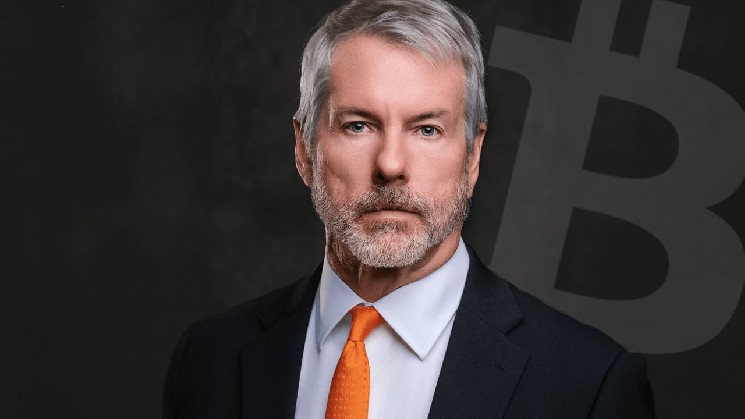
Michael Saylor affirme que le Bitcoin pourrait augmenter de 100 fois et avertit que les changements législatifs pourraient menacer son avenir

Michael Saylor, président exécutif de MicroStrategy, met en garde contre les principaux défis internes auxquels le Bitcoin est confronté, notamment les débats sur la gouvernance de son protocole. Alors que le Bitcoin évolue d'un actif numérique vers une base potentielle pour les marchés financiers mondiaux, Saylor estime que le risque provient désormais de possibles modifications des règles fondamentales du réseau, qu'il compare à une "constitution". Il craint que des groupes spécifiques, en influençant le processus de gouvernance, ne modifient les incitations économiques et ne compromettent les droits des participants. Saylor souligne le potentiel de croissance du Bitcoin, pouvant selon lui être multiplié par 100, mais associe cette perspective aux dangers d'altérer ses règles. Des propositions techniques comme le BIP-110 ou l'augmentation de la taille des blocs pourraient, selon lui, introduire des coûts, des vulnérabilités et affaiblir la sécurité du réseau à long terme. Il relie la santé économique du minage, avec la diminution programmée des récompenses par bloc, à la nécessité de préserver un système de frais de transaction stable et prévisible. Enfin, Saylor alerte sur les risques d'une "capture" du système de gouvernance par des intérêts politiques, ce qui pourrait déclencher des conflits permanents pour le contrôle du protocole. De tels conflits menaceraient d'effrayer les investisseurs institutionnels, de ralentir l'innovation et d'empêcher le Bitcoin d'atteindre son plein potentiel en tant que pilier de l'infrastructure financière mondiale.

cryptonews.ruIl y a 11 mins

Michael Saylor affirme que le Bitcoin pourrait augmenter de 100 fois et avertit que les changements législatifs pourraient menacer son avenir

cryptonews.ruIl y a 11 mins

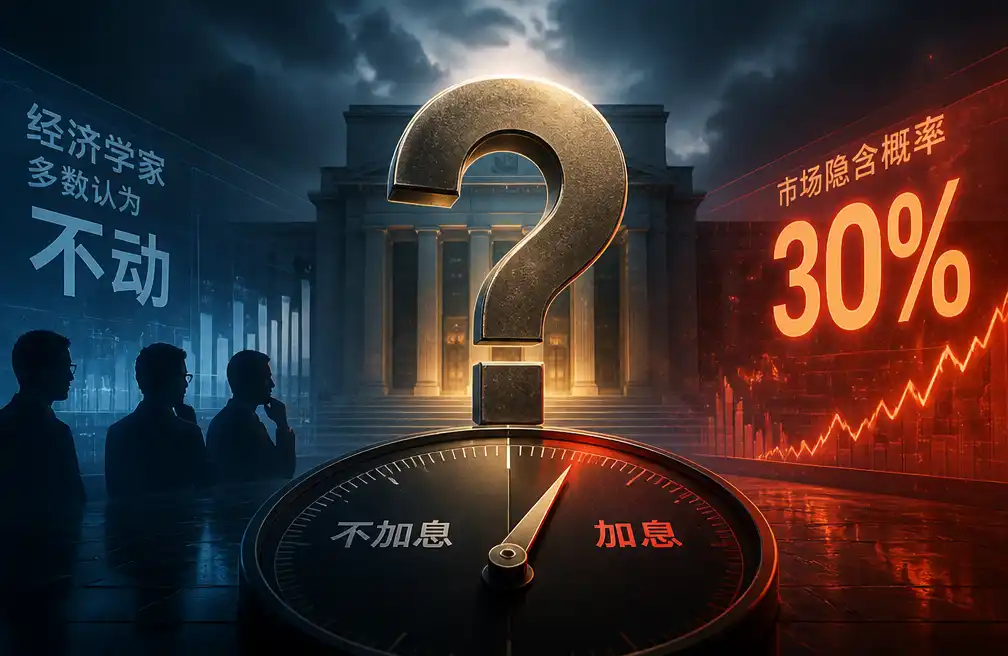
Ce soir, une hausse des taux ou non ? Les économistes sont catégoriques, les marchés donnent une probabilité de 30 %

Les contrats à terme sur les fonds fédéraux se repriçent avant la décision de juillet du FOMC, les traders payant un prix plus élevé pour se couvrir contre une hausse inattendue des taux ou un signal plus hawkish de la Fed. Ce mouvement contraste avec le consensus des économistes, qui anticipent unanimement un statu quo en juillet. Le marché évalue à environ 30 % la probabilité d'une hausse de 25 points de base, reflétant une prime pour le risque de queue hawkish plutôt qu'une conviction ferme. La divergence porte sur l'interprétation du choc pétrolier. Les institutions hawkish, comme BofA, soulignent le risque pour la crédibilité anti-inflation de la Fed si elle minimise la pression des prix. Les positions plus dovish, comme celle de Citi, considèrent la hausse du pétrole comme un choc d'offre temporaire, où une réaction excessive pourrait nuire à la croissance. La nomination du nouveau président de la Fed, Kevin Warsh, amplifie l'incertitude. L'absence de références sur son style de communication élargit la distribution perçue des taux futurs, poussant les marchés à couvrir davantage leurs risques. Même sans hausse en juillet, une déclaration ou une conférence de presse mettant fortement l'accent sur les risques inflationnistes pourrait maintenir la pression sur les actifs. Ainsi, l'enjeu immédiat n'est pas tant la décision de juillet, mais la façon dont Warsh qualifiera le choc pétrolier et la probabilité qu'il laisse ouverte la fenêtre de hausse en septembre. Cela déterminera la trajectoire du dollar, la pression sur le yen et l'ajustement des valorisations des actifs à risque.

marsbitIl y a 1 h

Ce soir, une hausse des taux ou non ? Les économistes sont catégoriques, les marchés donnent une probabilité de 30 %

marsbitIl y a 1 h

Trading

Spot

Articles tendance

Comment acheter SUN

Bienvenue sur HTX.com ! Nous vous permettons d'acheter SUN (SUN) de manière simple et pratique. Suivez notre guide étape par étape pour commencer votre parcours crypto.Étape 1 : Création de votre compte HTXUtilisez votre adresse e-mail ou votre numéro de téléphone pour ouvrir un compte sur HTX gratuitement. L'inscription se fait en toute simplicité et débloque toutes les fonctionnalités.Créer mon compteÉtape 2 : Choix du mode de paiement (rubrique Acheter des cryptosCarte de crédit/débit : utilisez votre carte Visa ou Mastercard pour acheter instantanément SUN (SUN).Solde :utilisez les fonds du solde de votre compte HTX pour trader en toute simplicité.Prestataire tiers :pour accroître la commodité d'utilisation, nous avons ajouté des modes de paiement populaires tels que Google Pay et Apple Pay.P2P :tradez directement avec d'autres utilisateurs sur HTX.OTC (de gré à gré) : nous offrons des services personnalisés et des taux de change compétitifs aux traders.Étape 3 : stockage de vos SUN (SUN)Après avoir acheté vos SUN (SUN), stockez-les sur votre compte HTX. Vous pouvez également les envoyer ailleurs via un transfert sur la blockchain ou les utiliser pour trader d'autres cryptos.Étape 4 : tradez des SUN (SUN)Tradez facilement SUN (SUN) sur le marché Spot de HTX. Il vous suffit d'accéder à votre compte, de sélectionner la paire de trading, d'exécuter vos trades et de les suivre en temps réel. Nous offrons une expérience conviviale aux débutants comme aux traders chevronnés.

816 vues totalesPublié le 2024.12.12Mis à jour le 2025.03.21

Comment acheter SUN

Discussions

Bienvenue dans la Communauté HTX. Ici, vous pouvez vous tenir informé(e) des derniers développements de la plateforme et accéder à des analyses de marché professionnelles. Les opinions des utilisateurs sur le prix de SUN (SUN) sont présentées ci-dessous.

活动图片