Li Shanyou: The World Is Getting More Competitive, But We Can Choose to Be Slower, Go Deeper, and Turn Inward

marsbitPublié le 2026-07-17Dernière mise à jour le 2026-07-17

Résumé

**Title:** Li Shanyou: The World Is Moving Faster and More Chaotically; We Can Choose to Be Slower, Deeper, and More Inward **Summary:** In an era where AI evolves weekly and past experiences often fail, the article argues for returning to First Principles. It shifts focus from "cognition" (knowledge/content), which AI has disrupted, to "consciousness" or "the capacity to know"—the foundational ability that enables cognition and determines its scope and depth. The piece uses Zhang Yiming (founder of ByteDance) as a case study for the "second-order consciousness" of the mobile internet era: success through rational logic, modeling, and deduction, which allowed him to surpass earlier "first-order" entrepreneurs reliant on copying experiences. However, the author suggests that the AI era demands a further leap to "third-order consciousness"—operating from a place of inner inspiration, vision, or "ideas," beyond pure rationality. Figures like Elon Musk and Steve Jobs are cited as examples, with DeepSeek's Liang Wenfeng presented as a potential representative of this new, AI-native wave of entrepreneurs driven by curiosity and innovation rather than just commercial logic. For the majority who may not become such visionary leaders, the author proposes an alternative path: the "Path of Quality" or "Work as Art." This involves turning inward, focusing on the immediate task at hand, and imbuing one's work with care and dedication—creating a "quality" product not as a means to an e...

The "one" behind civilization is not a cognitive revolution, but a leap in 'capacity to know'.

As AI updates weekly and past experience frequently fails, we must emphasize: return to first principles.

At Hundun, we pursue inquiries with first-principles thinking.

In the past, when we talked about cognition, we referred to the known—knowledge, content. We believed knowledge is power. But now cognition has been pierced by AI. We must lower the foundation of first principles to 'capacity to know'.

In the 2026 Shan You Grand Lecture, the professor said: For the first decade of Hundun, our core keyword was always "cognition"; starting from this lecture, I quietly upgrade this term to "capacity to know".

Knowledge itself has no power; the capacity to know has power. Capacity to know is not the content of cognition, but the capability that makes cognition possible. It is "what you can perceive and to what degree"—an a priori stipulation, this is called capacity to know.

Applying this framework to entrepreneurship makes the issue acute.

Mentioning entrepreneurship, the representative entrepreneurs a decade ago were Ma Yun and Ma Huateng; today it's Zhang Yiming.

"Zhang Yiming" has become synonymous with entrepreneurship today, especially in the internet field. Thus, we can't help but ask:

How will entrepreneurs evolve in the AI era?

Will this era produce a new "Zhang Yiming"?

Or will it continue to be led by today's already dominant entrepreneurs?

Zhang Yiming's Cognitive Leap: From Experience to Logical Modeling

To clarify the future, let's trace the past.

There are three keywords associated with Zhang Yiming:

In 2017, Wang Xing said he thought Yiming's characteristic was rationality.

In 2016, Zhang Yiming himself mentioned a keyword: cognition.

He said, "Actually, cognition about things is most critical. Theoretically, all other production factors can be built—how much money to raise, whose money to take, what kind of people to recruit, where these people are, how the right people should collaborate. Ultimately, the more profound your cognition about the matter, the more competitive you are."

Furthermore, Zhang Yiming's way of doing things is modeling.

I asked a founder of a company he acquired, "Why did you sell your company to Zhang Yiming?" He said, "I talked with him for two hours and realized I wasn't on his level. Beyond his existing world, he could see two layers further. Zhang Yiming insists that anything can be modeled. If you can't model it, it's actually because your computational power is insufficient."

So, why could Zhang Yiming emerge in the mobile internet era? Toutiao changed content distribution, Douyin e-commerce strongly impacted traditional e-commerce, TikTok became a globally influential short-video platform, and in the AI large model arena, ByteDance has produced Doubao...... My guess, or hypothesis, is: behind this lies a difference in the level of capacity to know.
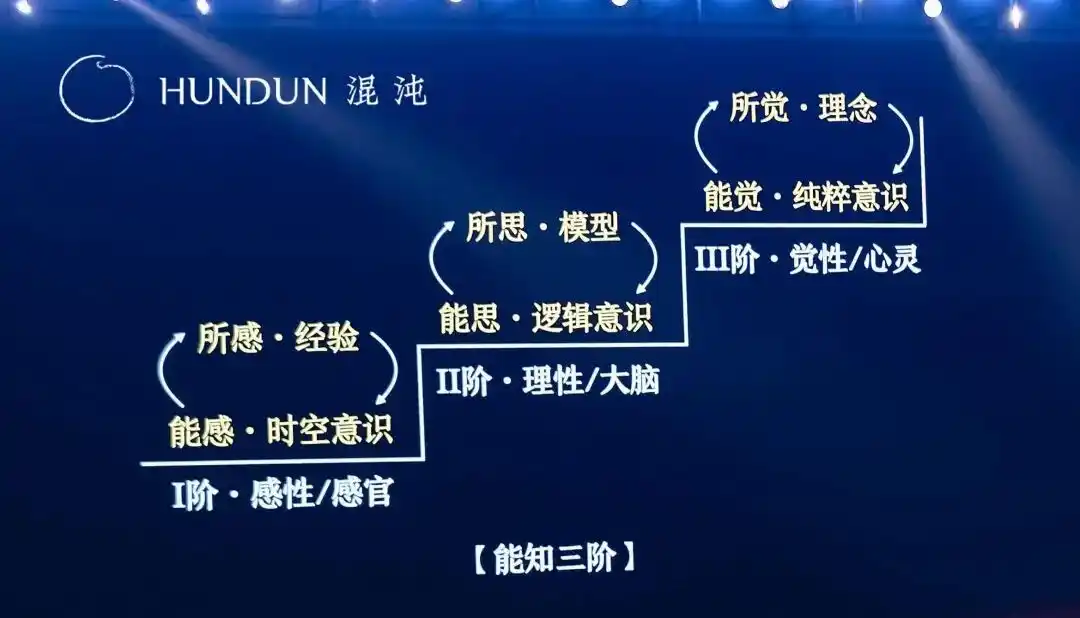
China's PC internet generation of entrepreneurs were heroes, but essentially most of them operated at the first-order capacity to know.

Because the keyword for this generation was "Copy to China," replicating successful experiences from one time and space to another. This is inductive reasoning, innovation living in experience—action innovation, execution innovation, not essential model innovation.

In contrast, the generation of entrepreneurs born in the 1980s, especially Huang Zheng and Zhang Yiming. You'll find this is a generation that completely believes in logic. Their success rests on the second-order capacity to know.

This can also explain why ByteDance and Pinduoduo could internationalize, achieving genuine overseas success. Because the mainstream of today's world is industrial civilization, at the second order. And ByteDance stands at the second order, so it can look the world in the eye and flow over.

Of course, you might say entrepreneurial success has many factors—resources, technology, opportunity, investment... But if we look for the core "one" factor, it's capacity to know. Ten years ago, Zhang Yiming made a leap in capacity to know, triumphing over the PC internet.

So Zhang Yiming's power is not just diligence, focus, correct strategy, nor merely seizing the mobile internet dividend. What he truly represents is the victory of second-order capacity to know: viewing the world with models, compressing information with logic, using modeling ability to form a dimensional reduction attack on experience-based entrepreneurs.

Zhang Yiming once said: "Anything that is logically possible will eventually happen." I think this aptly illustrates that he belongs to the second-order capacity to know.

But, what one succeeds by, one is also constrained by. ByteDance's boundary is rationality. If your capacity to know is built on rationality, you might not ascend further. For ByteDance as a whole, the concrete word embodying rationality is algorithm.

Zhang Yiming's belief in algorithms reached the point of training himself like an algorithm. But do you think this algorithm is pure and sincere?

So back to the initial question, will there be a new "Zhang Yiming" in the AI era? I think there definitely will be. Each era's discontinuity is not a single entrepreneur defeating a giant, but new entrepreneurs gathering within a new era's value network. The new value network grows, becoming the new giant.

DeepSeek's Liang Wenfeng: The Absolute Confidence of an Ideal-Driven Entrepreneur

If our footing remains on thinking capacity, on logic, we cannot surpass AI, nor can we surpass Zhang Yiming. Because AI lives directly in the rational world of logic, almost infinitely close to the peak of rationality.

Therefore, the very few who wish to become the new era's "Zhang Yiming" must leap, just as Zhang Yiming and Ma Yun did a decade ago, to the third-order capacity to know. Your way of viewing the world is no longer rational models, but a deep-seated idea within the heart. It is neither inductive nor deductive reasoning; it might be flow state, inspiration, the feeling of resonating with the great Way.

If I must give an example, I think it's DeepSeek's Liang Wenfeng. You'll find he is different from Zhang Yiming. I'm not saying he will definitely be the new era's "Zhang Yiming," but I think he carries some shadow, representing a certain zeitgeist we're discussing.

Liang Wenfeng said in a previous interview: "In the past 30 years, we've been more focused on making money than on innovation. But innovation isn't solely driven by business; it requires curiosity and creative ambition. We've been constrained by past habits, but this is just a phase." You can sense a kind of noble spirit, expressed in a humble yet powerful way. I believe he's not speaking just for himself, but representing a tide of the era. We truly need to sense a certain change.

He also said something I think is remarkable. "All established patterns are products of the previous generation; they may not hold in the future. Using the commercial logic of the internet era to discuss AI's future profit models is likely like marking the boat to find the sword."

Today we think OpenAI's ChatGPT is correct, but it might just be AI-enhanced innovation from the internet era. Perhaps DeepSeek's technical large model is a native innovation! How likely is that possibility? I think slightly more than zero, and that's the difference between innovation and entrepreneurship.

Entrepreneurship requires a high probability of success before you act, but innovation is doing something originally unlikely to succeed. I think this is the underlying color of Hundun; we are not cheering for entrepreneurial success, but for the courage to innovate.

Today's native AI-era entrepreneurs, if they can undergo a new leap in consciousness, might become the new figure of the AI era. This is also why the word "consciousness" isn't just philosophy; it has very concrete entrepreneurial significance. Musk and Jobs are references on this path.

Musk's business success is a byproduct of his pursuit of ideals. Many of SpaceX's decisions aren't based on commerce, but are inspired by the scene of "one day reaching Mars" to motivate all current decisions.

Jobs set enlightenment as his Y-axis, with tools, especially tools of thought, as the X-axis to achieve that enlightenment. He said he spent his life seeking self-enlightenment and hoped to enlighten more people through tools.

But this path is extremely difficult. I call it the path of ideals. It is glorious, but indeed it is a path only a few can walk, standing precisely on the point of the era's tide.

But what about the majority?

Crafting Your Work: The Ordinary Person's Path is to Do the Work at Hand Wholeheartedly

Not everyone has the chance to stand on the peak of the era's tide; many don't have such grand ideals or great vows. Now I want to talk about a second path, which is also the path I've chosen—the path of Quality, or the path of the Work.

I believe many students here feel this way: wanting to compete fiercely but unable to; wanting to give up but unable to rest easy, unwilling to settle. Does life lose meaning if you can't enter the tide? Many don't hold grand ideals; are personal small sentiments, small tastes, meaningless?

Not everyone can become a "Zhang Yiming." However, I can become a better version of myself.

I suspect that raising the frequency of consciousness doesn't necessarily require great endeavors; even in small matters, doing them with full attention can achieve incremental evolution of consciousness.

We often reify the things we do—for money, for a high salary. When you reify what you do, you are actually reifying your own heart. This reflects back; how you treat your work is how the world treats you. When you unify with what you do, the doing itself becomes the purpose; it is not a result or a means. At that point, what you do becomes a Work.

So the second path is not about comparison, not about competition, not about proving oneself, but turning inward. From the perspective of first principles, from the foundational color of consciousness, create a beautiful Work that belongs to me, express my heart through a Work. When person and work are unified, it's less about me polishing the work and more about me polishing my own heart.

This path originates from "Zen and the Art of Motorcycle Maintenance," which mentions a word called "Quality." I'll share my favorite passage: "One must listen to the guidance of Quality, follow it quietly, single-mindedly, so that the work in hand becomes an art."

I suspect Quality is also a word about essence. While it doesn't possess the extremely high consciousness frequency of "Ideas," it refers to finding the feeling of quality in whatever you do. The work in your hands having Quality gives those who use it a different feeling. Those who feel it might find it good and continue to spread it to others. Quality, like frequency, can ripple outward. I feel this is how the world becomes beautiful.

This path is backed by the faint light of ordinary people. You do the work at hand well, do it with heart, that's all. This era's frequency holders aren't necessarily the wealthy or famous. No matter how small your task, if your frequency is high enough, it will ripple outward, becoming a frequency holder of this era. So when the world gets more competitive and faster, perhaps we can make the opposite choice: be a little slower, go a little deeper, turn a little more inward.

Frankly, entrepreneurship is already difficult today. When the era lacks a great tide, we return to ourselves. People don't serve tasks; tasks serve people. People are the subject. Whether big or small, tasks are techniques, tools, carriers—all to cultivate my heart. This is returning to first principles.

This article is from WeChat public account "Hundun University" (ID: hundun-university), author: Hundun Academy


Cryptos en tendance

Questions liées

QWhat is the fundamental shift in perspective proposed by the author regarding knowledge and power?

AThe author proposes a shift from 'cognition' (suo zhi, or acquired knowledge) to 'capability of knowing' (neng zhi, or the innate capacity to perceive and understand). The key argument is that knowledge itself is not power; the true power lies in the underlying ability and framework that allows one to acquire and process knowledge.

QAccording to the article, what was Zhang Yiming's key advantage over previous generations of entrepreneurs?

AZhang Yiming's key advantage was operating from a 'second-order neng zhi' (capability of knowing). Unlike the experience-based, 'copy to China' approach of the PC internet generation, he viewed the world through logical models, enabling a more abstract and fundamental understanding that allowed for modeling, predicting, and executing complex projects, giving him a dimensional advantage over experience-driven entrepreneurs.

QWhy does the author suggest that some entrepreneurs must leap to a 'third-order neng zhi' in the AI era?

AThe author argues that because AI excels in and even dominates the realm of logic and rational modeling (second-order neng zhi), human entrepreneurs seeking to lead in the AI era must transcend it. They must leap to a 'third-order neng zhi' based on ideas, insights, vision, and a deeper connection to fundamental principles, which is less about pure logic and more about inspiration, consciousness, and alignment with a greater purpose.

QWhat path does the article suggest for most people who are not at the forefront of major innovation?

AThe article suggests the path of 'Quality' or 'Work as Art.' This involves turning inward and focusing on infusing the tasks at hand—no matter how small—with care, integrity, and a sense of craftsmanship. It emphasizes creating 'works' that are expressions of one's heart, aiming for personal growth and consciousness elevation through the dedication to quality in daily endeavors, rather than competition or proving oneself on a grand scale.

QWhat is the ultimate message of the article regarding how individuals should respond to a rapidly accelerating and competitive world?

AThe ultimate message is to adopt a counter-intuitive approach: to go slower, deeper, and more inward. Instead of succumbing to external pressure ('juan'), individuals should focus on refining their inner being through their work, treating tasks as vehicles for personal cultivation. The goal is to become a 'frequency holder' by elevating one's own consciousness and the quality of one's actions, thereby contributing to a better world in a more sustainable and meaningful way.

Lectures associées

Après trois trimestres consécutifs de baisse, le marché des cryptomonnaies pourra-t-il connaître une fenêtre de stabilisation au troisième trimestre ?

Le marché des cryptomonnaies a enregistré son pire trimestre depuis 2022, avec une capitalisation totale chutant de 12,6% à 2 100 milliards de dollars. Tous les indicateurs clés (volume des échanges, valeur des stablecoins) montrent une sortie nette de capitaux. Le Bitcoin a perdu 14,2% et l'Ethereum 25,4% sur le trimestre, rompant sa corrélation antérieure avec les actions technologiques. Les ETF spot américains sur le Bitcoin ont subi des rachats massifs, avec une sortie nette de 4,67 milliards de dollars au Q2, indiquant une pression de vente continue. Le resserrement de la politique de la Fed et les ventes d'entreprises comme Strategy ont accentué la déleveragisation du secteur. L'attention du marché se porte désormais presque exclusivement sur la réunion de la Fed fin juillet. Une position accommodante pourrait stabiliser le Bitcoin entre 68 000 et 84 000 dollars, tandis qu'un ton hawkish pourrait le faire osciller autour de 50 000-56 000 dollars. Parallèlement, la progression du *CLARITY Act*, une loi cruciale pour la clarté réglementaire, est au point mort au Sénat, réduisant les chances d'adoption en 2026 et maintenant une prime de risque élevée sur l'ensemble du secteur. Malgré ce contexte difficile, quelques secteurs résistent : les marchés de prédiction ont vu leur volume nominal augmenter de 48,7% et les biens collectionnables tokenisés ont progressé d'environ 143%. La tokenisation d'actifs du monde réel (RWA) continue également sa croissance régulière, portée par des fondamentaux indépendants du cycle crypto. Les bases d'un effondrement extrême semblent absentes, mais le marché est désormais guidé par les politiques monétaires, les prix et les attentes de taux, plutôt que par le simple récit haussier. La fin des sorties massives des ETF et le retour des achats des détenteurs à long terme pourraient indiquer une phase de stabilisation potentielle.

marsbitIl y a 15 h

Après trois trimestres consécutifs de baisse, le marché des cryptomonnaies pourra-t-il connaître une fenêtre de stabilisation au troisième trimestre ?

marsbitIl y a 15 h

The SpaceX Trade, Unlocked: SPCXON Débarque sur WEEX

En juin 2026, SpaceX a réalisé la plus grande introduction en bourse de l'histoire, mais l'accès à l'action a été limité pour de nombreux investisseurs en raison de restrictions régionales et de frictions liées aux courtiers. La plateforme WEEX propose désormais une solution via SPCXON/USDT, un instrument tokenisé sur le marché au comptant qui permet d'obtenir une exposition au cours de SpaceX en utilisant l'USDT, sans nécessiter de compte de courtage américain. SPCXON est un produit tokenisé construit sur l'infrastructure d'Ondo, conçu pour refléter l'économie de la détention d'actions SpaceX pour les traders éligibles en dehors des États-Unis, avec des dividendes réinvestis. Le cas d'investissement repose sur la croissance des revenus de Starlink et les progrès de Starship, malgré un valorisation déjà élevée et des risques liés à un flottant public réduit et à des déblocages d'actions internes à venir. Il est important de noter que SPCXON offre une exposition, et non la propriété directe d'actions ou de droits de vote. Son prix peut évoluer avec une prime ou une décote par rapport à la valeur liquidative. WEEX propose également d'autres produits tokenisés comme MSTRON et MUON dans un compte unifié, permettant une rotation entre crypto-monnaies et actions traditionnelles sans transfert de fonds. La plateforme souligne ainsi comment les barrières entre la finance traditionnelle et les actifs numériques s'estompent.

TheNewsCryptoIl y a 15 h

The SpaceX Trade, Unlocked: SPCXON Débarque sur WEEX

TheNewsCryptoIl y a 15 h

BIT Trading Moment : Le BTC reste sous la pression de l'EMA 200 hebdomadaire, un rejet pourrait relancer la baisse, les actions de stockage et de semi-conducteurs qui ont bondi cette nuit ont baissé en séance de nuit

**Résumé des marchés : Bitcoin sous pression, actions technologiques en réajustement** Le marché crypto poursuit son rebond, avec Bitcoin évoluant autour de 66 000 $. Il fait face à une résistance clé vers 68 000 $, niveau correspondant au coût moyen des investisseurs sur cinq mois. Les traders surveillent les moyennes mobiles clés (200 MA à ~63 333 $ et 200 EMA à ~68 328 $ en hebdomadaire). Une rupture au-dessus de 68 000 $ ouvrirait la voie à une hausse, tandis qu'un échec pourrait entraîner un retest des 63 000 $. L'analyse suggère que la dynamique actuelle ressemble à un rebond estival à faible liquidité plutôt qu'au début d'un véritable marché haussier. Sur le marché actions américain, après une forte séance mardi portée par les semi-conducteurs et les titres du stockage (Micron, AMD, Intel...), les contrats à terme indiquent une ouverture en baisse. Les secteurs ayant récemment bondi, comme les semi-conducteurs et le stockage, reculent en séance de nuit. Certaines valeurs se démarquent néanmoins, comme Super Micro Computer (SMCI), en hausse après des résultats et des perspectives robustes liées à la demande de serveurs IA. Des vents contraires persistent : les prix du pétrole (Brent >91$) et les rendements des obligations d'État américaines grimpent, ravivant les craintes inflationnistes. En Asie, les marchés ont suivi le rebond technologique américain, mais de manière hésitante. La tension reste forte sur le yen japonais, qui atteint son plus bas niveau depuis des décennies. **Points clés à surveiller :** * **Crypto :** Niveaux techniques de Bitcoin (68k$/63k$), flux des ETF spot. * **Actions :** Saison des résultats (Tesla, Alphabet, Intel...), activité d'AMD sur l'IA. * **Économie :** Données américaines sur l'emploi, décision de la BCE, tensions géopolitiques et prix de l'énergie.

marsbitIl y a 15 h

BIT Trading Moment : Le BTC reste sous la pression de l'EMA 200 hebdomadaire, un rejet pourrait relancer la baisse, les actions de stockage et de semi-conducteurs qui ont bondi cette nuit ont baissé en séance de nuit

marsbitIl y a 15 h

Gate Research Institute : La vague de « Wall Streetisation » des produits financiers cryptographiques, concurrence ou fusion ?

Le titre de l'article est : "Gate Institute : La vague de 'Wall Street-isation' des produits financiers cryptos, est-ce une compétition ou une fusion ?" Résumé en français (environ 1400 caractères) : Il y a dix-sept ans, Bitcoin fut créé avec une vision décentralisée et anti-establishment financier. Aujourd'hui, paradoxalement, son adoption massive passe souvent par des ETF émis par des géants comme BlackRock. Cet article analyse cette "Wall Street-isation" apparente des actifs cryptos : les institutions traditionnelles s'emparent-elles du pouvoir d'émission, de tarification, de garde et de distribution ? La réalité est plus nuancée. C'est une convergence à double sens. D'un côté, les plateformes cryptos comme Gate.io étendent leurs services aux actions traditionnelles (états-uniennes, hongkongaises, sud-coréennes), aux CFD et aux produits tokenisés, offrant un compte unifié. De l'autre, des courtiers traditionnels comme Robinhood intègrent les cryptomonnaies et explorent la tokenisation d'actions sur blockchain. Cette fusion vise à créer le "super-compte" financier de demain, où actions, cryptos, ETF et obligations tokenisées (RWA) coexistent dans une même interface, comblant les faiblesses de chaque écosystème. Les RWA, notamment les obligations d'État tokenisées, agissent comme une couche intermédiaire unificatrice. En conclusion, Wall Street n'a pas conquis la crypto, et la crypto n'a pas contourné Wall Street. Ils construisent ensemble une nouvelle forme de marché des capitaux, plus efficace et mondial, où l'idéal décentralisé persiste dans les protocoles, tandis qu'une expérience utilisateur unifiée émerge à l'interface.

marsbitIl y a 15 h

Gate Research Institute : La vague de « Wall Streetisation » des produits financiers cryptographiques, concurrence ou fusion ?

marsbitIl y a 15 h

Trading

Spot

Articles tendance

Comment acheter CAP

Bienvenue sur HTX.com ! Nous vous permettons d'acheter Cap (CAP) de manière simple et pratique. Suivez notre guide étape par étape pour commencer votre parcours crypto.Étape 1 : Création de votre compte HTXUtilisez votre adresse e-mail ou votre numéro de téléphone pour ouvrir un compte sur HTX gratuitement. L'inscription se fait en toute simplicité et débloque toutes les fonctionnalités.Créer mon compteÉtape 2 : Choix du mode de paiement (rubrique Acheter des cryptosCarte de crédit/débit : utilisez votre carte Visa ou Mastercard pour acheter instantanément Cap (CAP).Solde :utilisez les fonds du solde de votre compte HTX pour trader en toute simplicité.Prestataire tiers :pour accroître la commodité d'utilisation, nous avons ajouté des modes de paiement populaires tels que Google Pay et Apple Pay.P2P :tradez directement avec d'autres utilisateurs sur HTX.OTC (de gré à gré) : nous offrons des services personnalisés et des taux de change compétitifs aux traders.Étape 3 : stockage de vos Cap (CAP)Après avoir acheté vos Cap (CAP), stockez-les sur votre compte HTX. Vous pouvez également les envoyer ailleurs via un transfert sur la blockchain ou les utiliser pour trader d'autres cryptos.Étape 4 : tradez des Cap (CAP)Tradez facilement Cap (CAP) sur le marché Spot de HTX. Il vous suffit d'accéder à votre compte, de sélectionner la paire de trading, d'exécuter vos trades et de les suivre en temps réel. Nous offrons une expérience conviviale aux débutants comme aux traders chevronnés.

90 vues totalesPublié le 2026.06.26Mis à jour le 2026.06.26

Comment acheter CAP

Discussions

Bienvenue dans la Communauté HTX. Ici, vous pouvez vous tenir informé(e) des derniers développements de la plateforme et accéder à des analyses de marché professionnelles. Les opinions des utilisateurs sur le prix de CAP (CAP) sont présentées ci-dessous.

活动图片