Is OUSD's 'List of Over a Hundred Companies' Actually Just an 'Expression of Interest'? Name-Borrowing Marketing Sparks Trust Crisis

marsbitPublié le 2026-07-06Dernière mise à jour le 2026-07-06

Résumé

A new stablecoin, Open USD (OUSD), was announced by Open Standard on June 30th, promising fee-free minting/redemption, shared reserve yield, and multi-party governance. Its launch was accompanied by a list of over 140 purported partners, including major names like Western Union, Ripple, and MetaMask, causing a significant drop in competitor Circle's stock price. However, the announcement quickly faced backlash. Several listed companies, including Samsung Electronics and South Korean financial firms, stated they had never formally agreed to participate, with some claiming they were merely contacted for exploratory discussions. Critics, including Circle's CEO, Jeremy Allaire,质疑了 OUSD's business model sustainability and governance, calling the partner list misleading "legitimacy-borrowing" for marketing. Despite the controversy, some firms like Stripe and Coinbase confirmed support and integration plans. The incident has sparked a trust crisis for OUSD before its official launch, highlighting the challenges of entering the established stablecoin market.

Original Author: Eric, Foresight News

On the evening of June 30th, Beijing Time, the emergence of a new stablecoin once again stirred the stablecoin landscape.

A company named Open Standard announced it would launch the stablecoin Open USD. Features like free minting and redemption, shared revenue from reserve assets, and co-governance by partners directly address pain points in stablecoin distribution, making it seem very attractive.

What most surprised the market was that Open Standard had already "secured" over 140 partners before the stablecoin's launch.
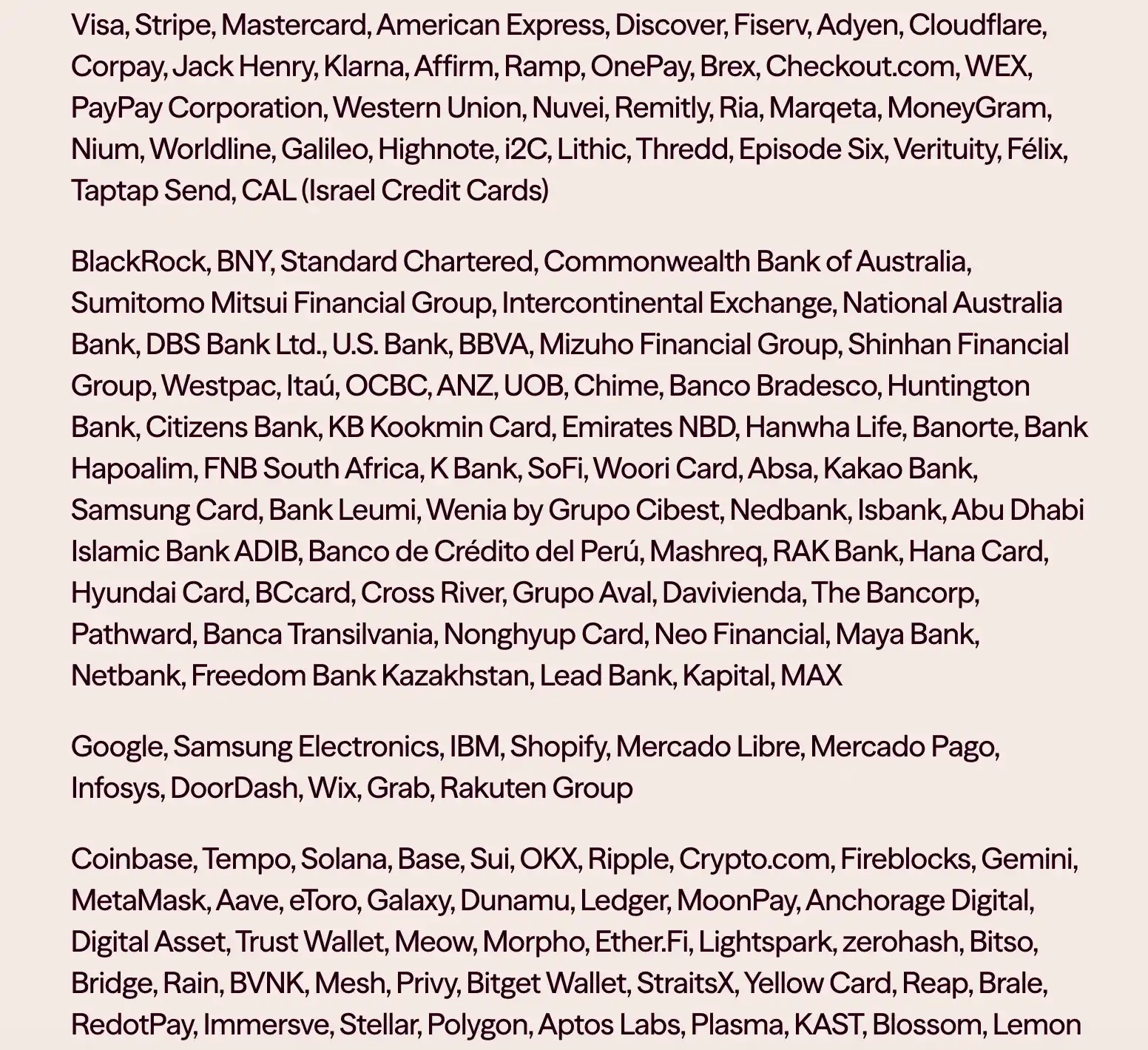
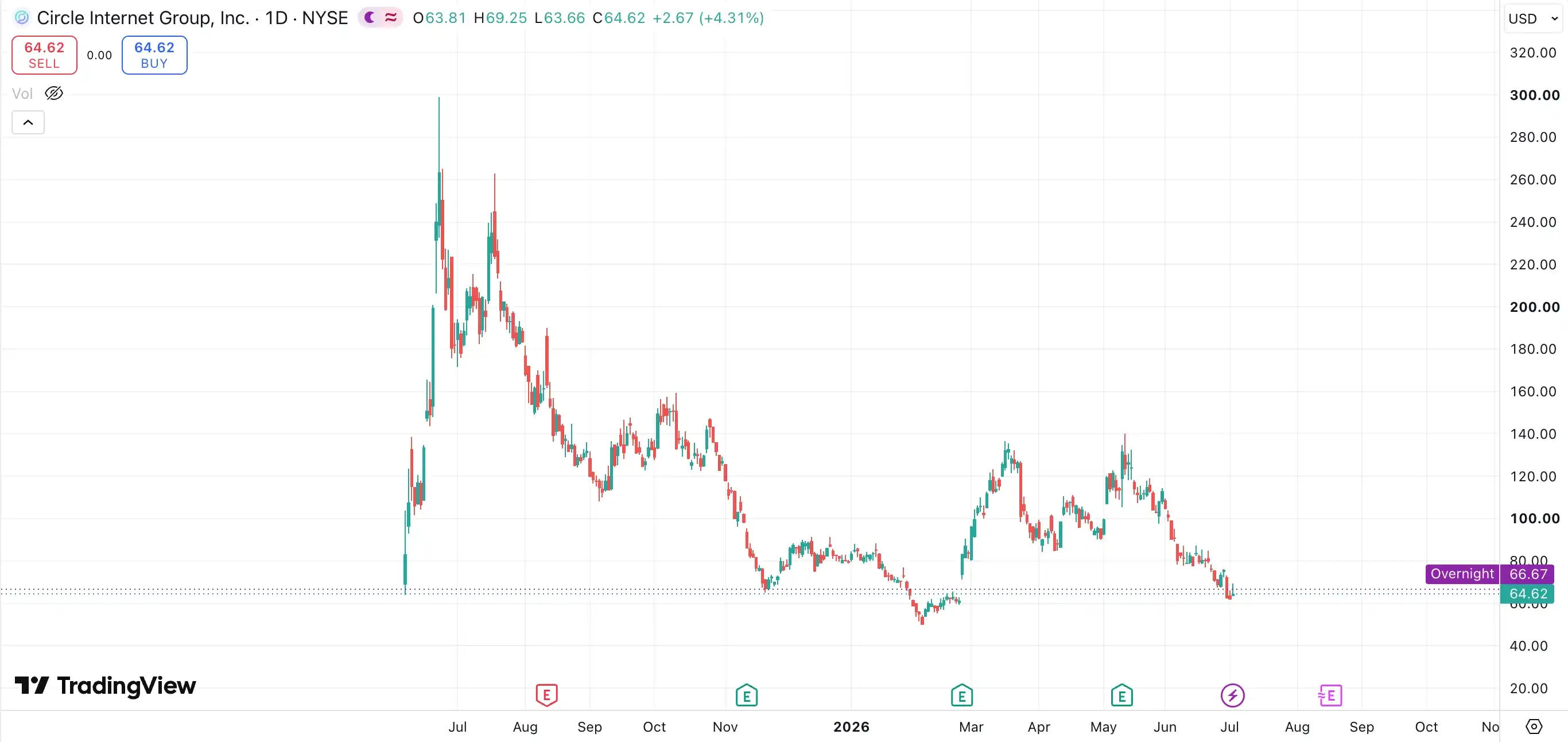
The list included major companies that have already issued stablecoins, such as Western Union, Ripple, MetaMask, Aave, and others. The fact that it could gather signatures from so many giants in both Web3 and traditional finance before launch amazed the market and filled it with high expectations for Open USD's future. The most telling manifestation of this expectation was that Circle, the leading stablecoin company, saw its stock price plunge 17.55% that day, hovering just under 20% above a new low.
However, this explosive announcement was quickly debunked.

On July 3rd, according to a report by The Chosun Ilbo, companies including Samsung Electronics, Dunamu (parent company of Upbit), Shinhan Financial Group, and K Bank stated they had never held negotiations regarding Open USD (OUSD). A Samsung Electronics representative said, "There has been no formal negotiation, and we don't know what role (we are supposed to play) in the alliance." Shinhan Financial Holdings, Dunamu, and K Bank also said that Open Standard had inquired about their willingness to participate in OUSD, and they merely stated they "would consider it briefly," yet their names were listed as alliance members.

Tony Chung, BD Head at the Korean Web3 media Blockmedia, further stated that a representative from one of the Korean companies said they learned about being included on the list from Korean media reports and were "very perplexed" because they had only casually replied, "If feasible, we will consider it."

OpenAssets founder and CEO Gabor Gurbacs reposted Tony Chung's tweet, adding that it wasn't just Korean companies being misled. After contacting some OpenAssets clients on the list, Gabor Gurbacs received responses stating: "They indicated they never signed or agreed to any deals. Either the media severely misrepresented the facts, or the participant list is misleading."
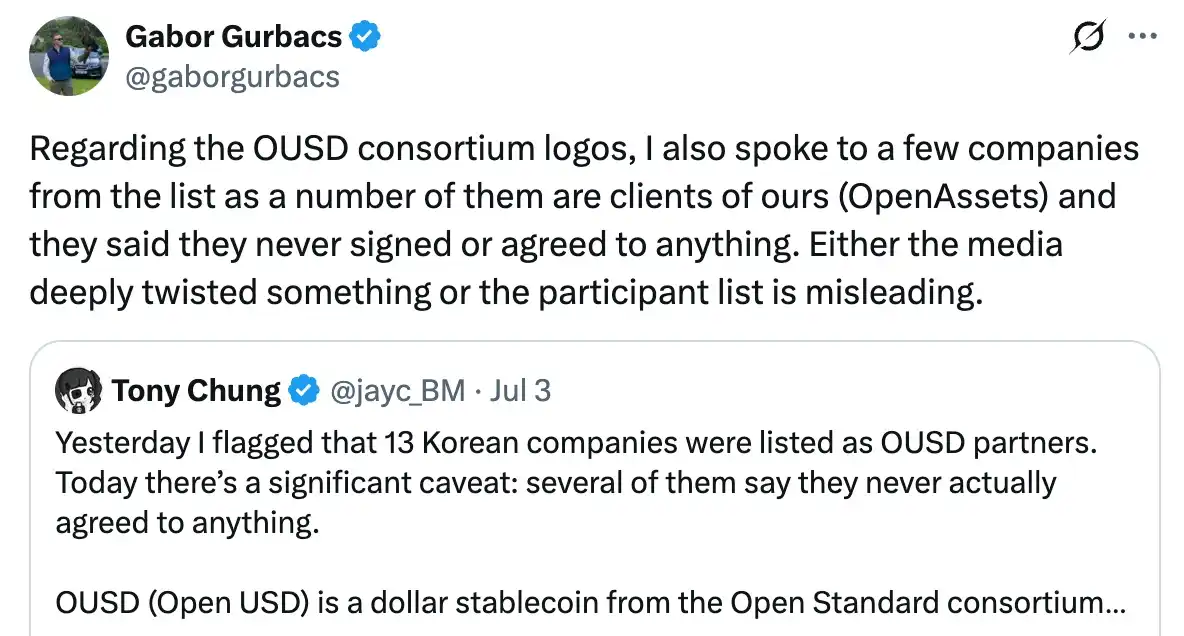
It appears that Open Standard's "list of over a hundred companies" may have included some firms that were merely contacted. In the original announcement, Open Standard stated: "Businesses across industries have signed up to use Open USD." Perhaps in Open Standard's view, not explicitly refusing equals "agreeing" to use Open USD. But agreeing to use doesn't necessarily mean "committing to using" it.

This is a very typical marketing tactic of trading controversy for attention, which indeed produced some effect, albeit one that seems to trample business ethics underfoot.

Faced with such fierce competition and a "dishonorable" opponent, Circle co-founder and CEO Jeremy Allaire published a lengthy post on X questioning the "three key features" of Open USD:

Free minting and burning: Attractive in the short term, but likely unsustainable at scale, potentially leading to insufficient funds to maintain banking relationships, regulatory licenses, and tech infrastructure. Circle already offers preferential terms via contracts for large partners, not blanket free services.

Sharing nearly all revenue with partners: Could "starve" the infrastructure, leading to systemic underinvestment and limiting platform scale. Circle already shares most revenue with distribution partners.

Alliance / multi-company governance: Circle previously co-founded the Centre Consortium with Coinbase, which was later integrated for Circle's solo issuance. He stated the historical track record for scaling multi-company products is "very poor" (slow coordination, difficult decision-making).

Jeremy expressed a welcoming attitude towards OUSD joining the "stablecoin family," but his writing between the lines conveyed one viewpoint: stablecoin is a business where a winner-takes-all situation forms over time through accumulation; simply tweaking a few mechanisms isn't enough to "get a seat at the table."

Despite these negative controversies, some companies on the list have explicitly stated they will support Open USD's development. Stripe said it will set OUSD as the default stablecoin for businesses using stablecoins on Stripe; Coinbase also stated it will integrate OUSD into Base and other chains, planning to launch in late 2026 for expanding on-chain transactions, payments, and DeFi scenarios.

Payment network giants like Visa, Mastercard, financial institutions like BlackRock, BNY Mellon, and crypto-native projects like Aave, Solana, Ripple have also expressed support, but have not clarified specific cooperation methods yet.

According to the announcement, the founding CEO of Open Standard is the CEO of Bridge. This Bridge is the fiat on-ramp/off-ramp solution provider that had previously cooperated with multiple contenders in the battle for the issuance rights of Hyperliquid's native stablecoin USDH, but whose acquisition by Stripe, which is developing the stablecoin chain Tempo, sparked controversy. Stripe was also among the first to clarify its partnership after Open Standard's announcement, indicating a relatively close connection between the two.

A user named Bojan on X stated that Open Standard's promotion is a typical "legitimacy-borrowing" behavior—quickly enhancing its own legitimacy and credibility by borrowing the reputation or endorsement of other well-known, reliable entities, without actually having obtained their deep recognition or formal authorization. For the stablecoin track, which requires trust as its foundation, OUSD seems to have left a somewhat negative first impression even before its debut.

On the evening of June 30th, Beijing Time, the emergence of a new stablecoin once again stirred the stablecoin landscape.

A company named Open Standard announced it would launch the stablecoin Open USD. Features like free minting and redemption, shared revenue from reserve assets, and co-governance by partners directly address pain points in stablecoin distribution, making it seem very attractive.

What most surprised the market was that Open Standard had already "secured" over 140 partners before the stablecoin's launch.
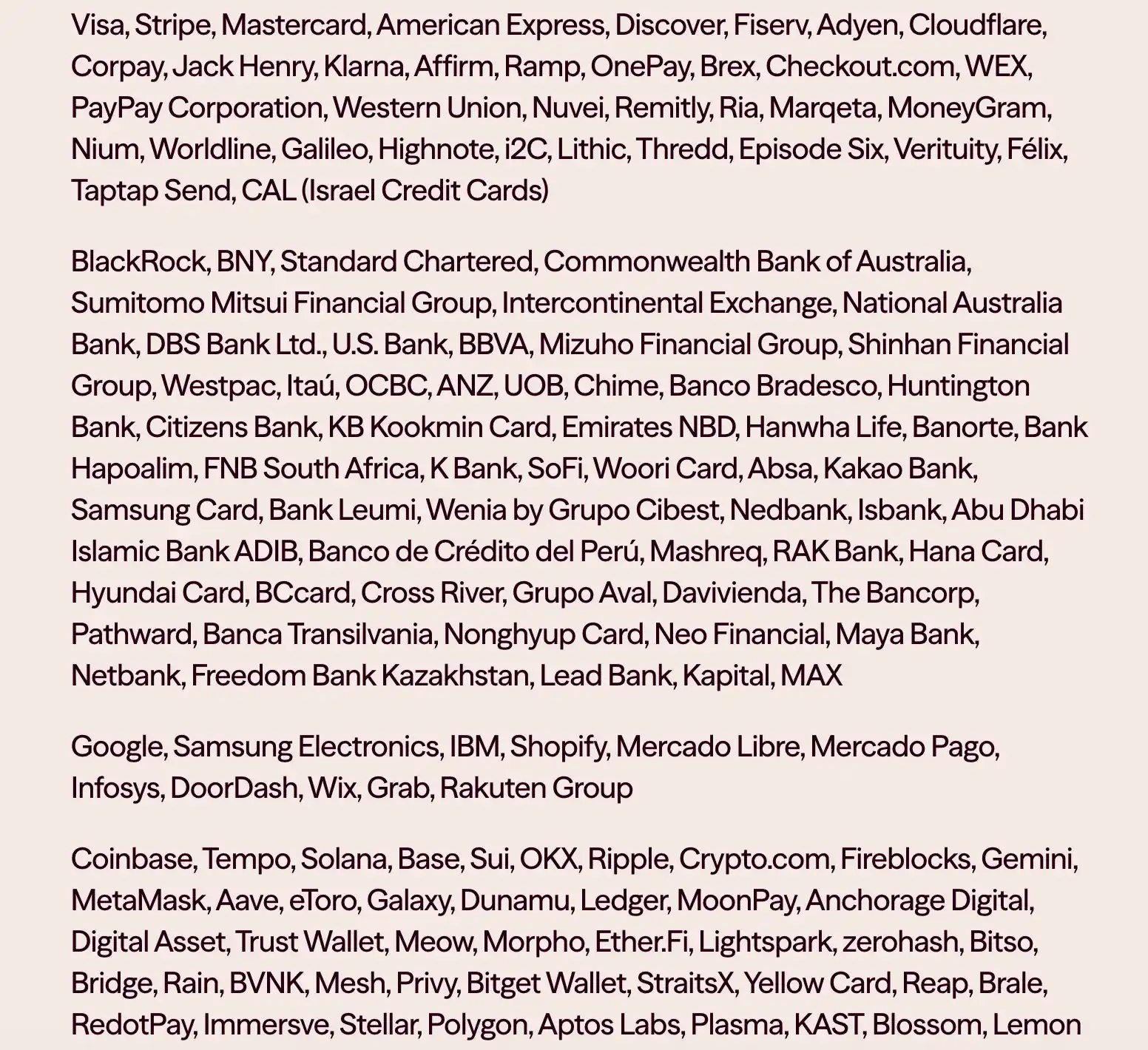
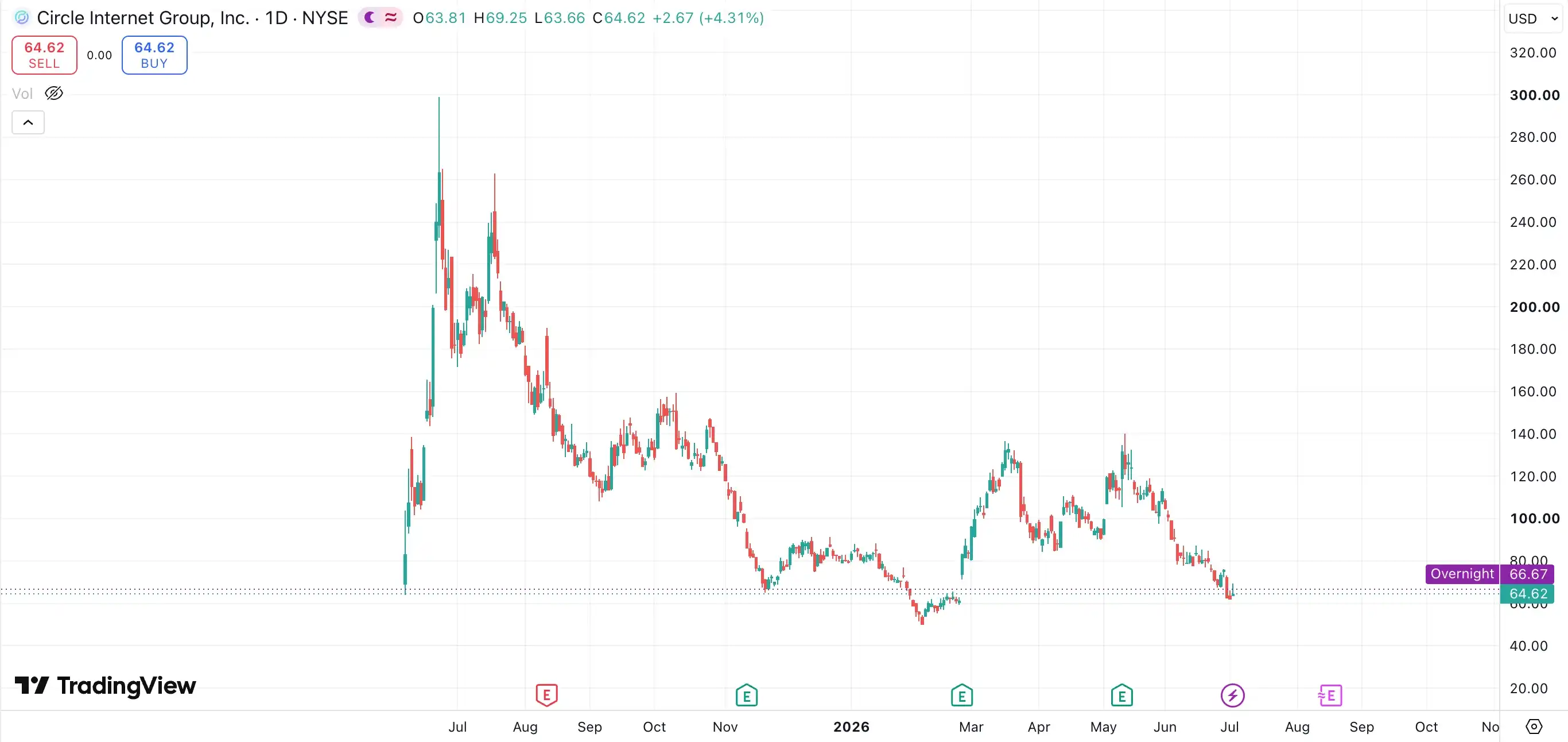
The list included major companies that have already issued stablecoins, such as Western Union, Ripple, MetaMask, Aave, and others. The fact that it could gather signatures from so many giants in both Web3 and traditional finance before launch amazed the market and filled it with high expectations for Open USD's future. The most telling manifestation of this expectation was that Circle, the leading stablecoin company, saw its stock price plunge 17.55% that day, hovering just under 20% above a new low.
However, this explosive announcement was quickly debunked.

On July 3rd, according to a report by The Chosun Ilbo, companies including Samsung Electronics, Dunamu (parent company of Upbit), Shinhan Financial Group, and K Bank stated they had never held negotiations regarding Open USD (OUSD). A Samsung Electronics representative said, "There has been no formal negotiation, and we don't know what role (we are supposed to play) in the alliance." Shinhan Financial Holdings, Dunamu, and K Bank also said that Open Standard had inquired about their willingness to participate in OUSD, and they merely stated they "would consider it briefly," yet their names were listed as alliance members.

Tony Chung, BD Head at the Korean Web3 media Blockmedia, further stated that a representative from one of the Korean companies said they learned about being included on the list from Korean media reports and were "very perplexed" because they had only casually replied, "If feasible, we will consider it."

OpenAssets founder and CEO Gabor Gurbacs reposted Tony Chung's tweet, adding that it wasn't just Korean companies being misled. After contacting some OpenAssets clients on the list, Gabor Gurbacs received responses stating: "They indicated they never signed or agreed to any deals. Either the media severely misrepresented the facts, or the participant list is misleading."
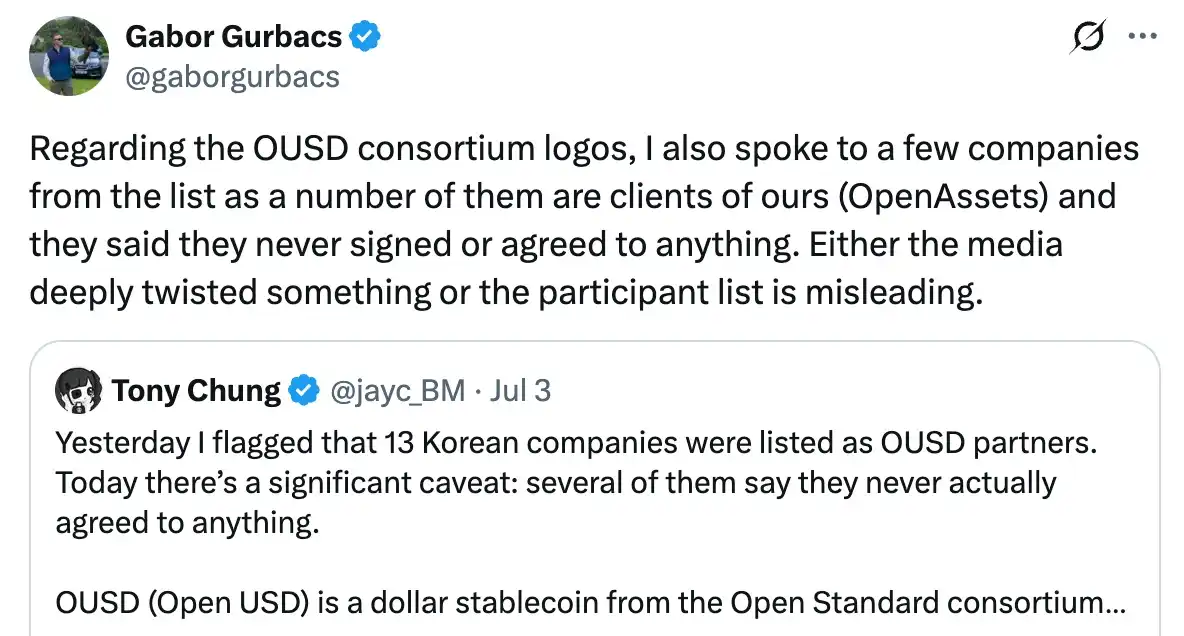
It appears that Open Standard's "list of over a hundred companies" may have included some firms that were merely contacted. In the original announcement, Open Standard stated: "Businesses across industries have signed up to use Open USD." Perhaps in Open Standard's view, not explicitly refusing equals "agreeing" to use Open USD. But agreeing to use doesn't necessarily mean "committing to using" it.

This is a very typical marketing tactic of trading controversy for attention, which indeed produced some effect, albeit one that seems to trample business ethics underfoot.

Faced with such fierce competition and a "dishonorable" opponent, Circle co-founder and CEO Jeremy Allaire published a lengthy post on X questioning the "three key features" of Open USD:

Free minting and burning: Attractive in the short term, but likely unsustainable at scale, potentially leading to insufficient funds to maintain banking relationships, regulatory licenses, and tech infrastructure. Circle already offers preferential terms via contracts for large partners, not blanket free services.

Sharing nearly all revenue with partners: Could "starve" the infrastructure, leading to systemic underinvestment and limiting platform scale. Circle already shares most revenue with distribution partners.

Alliance / multi-company governance: Circle previously co-founded the Centre Consortium with Coinbase, which was later integrated for Circle's solo issuance. He stated the historical track record for scaling multi-company products is "very poor" (slow coordination, difficult decision-making).

Jeremy expressed a welcoming attitude towards OUSD joining the "stablecoin family," but his writing between the lines conveyed one viewpoint: stablecoin is a business where a winner-takes-all situation forms over time through accumulation; simply tweaking a few mechanisms isn't enough to "get a seat at the table."

Despite these negative controversies, some companies on the list have explicitly stated they will support Open USD's development. Stripe said it will set OUSD as the default stablecoin for businesses using stablecoins on Stripe; Coinbase also stated it will integrate OUSD into Base and other chains, planning to launch in late 2026 for expanding on-chain transactions, payments, and DeFi scenarios.

Payment network giants like Visa, Mastercard, financial institutions like BlackRock, BNY Mellon, and crypto-native projects like Aave, Solana, Ripple have also expressed support, but have not clarified specific cooperation methods yet.

According to the announcement, the founding CEO of Open Standard is the CEO of Bridge. This Bridge is the fiat on-ramp/off-ramp solution provider that had previously cooperated with multiple contenders in the battle for the issuance rights of Hyperliquid's native stablecoin USDH, but whose acquisition by Stripe, which is developing the stablecoin chain Tempo, sparked controversy. Stripe was also among the first to clarify its partnership after Open Standard's announcement, indicating a relatively close connection between the two.

A user named Bojan on X stated that Open Standard's promotion is a typical "legitimacy-borrowing" behavior—quickly enhancing its own legitimacy and credibility by borrowing the reputation or endorsement of other well-known, reliable entities, without actually having obtained their deep recognition or formal authorization. For the stablecoin track, which requires trust as its foundation, OUSD seems to have left a somewhat negative first impression even before its debut.


Questions liées

QWhat was the main controversy surrounding the launch announcement of Open USD (OUSD)?

AThe main controversy was that Open Standard's announcement claimed over 140 partner companies had 'signed up' for OUSD. However, several high-profile companies like Samsung Electronics, Dunamu, Shinhan Financial Group, and K Bank later stated they had not engaged in formal negotiations or agreed to participate, and some were only approached informally or had given non-committal responses. This was seen as a misleading marketing tactic that borrowed legitimacy from these firms.

QWhat were Jeremy Allaire's (Circle CEO) main criticisms of OUSD's proposed features?

AJeremy Allaire criticized three main features of OUSD: 1) Free minting and burning: unsustainable at scale, potentially starving the project of funds for vital infrastructure. 2) Sharing nearly all revenue with partners: could lead to underinvestment in the core platform. 3) Multi-company governance: argued that such consortium models have a poor track record for scaling due to slow coordination and difficult decision-making.

QWhich companies have explicitly confirmed support for Open USD (OUSD)?

AStripe confirmed it would set OUSD as the default stablecoin for businesses using its platform. Coinbase stated it would integrate OUSD into Base and other chains in late 2026. Other companies like Visa, Mastercard, BlackRock, BNY Mellon, Aave, Solana, and Ripple have expressed general support, but without specifying concrete cooperation methods at the time of the article.

QWhat does the term 'legitimacy-borrowing' refer to in the context of this article?

AIn this context, 'legitimacy-borrowing' refers to Open Standard's marketing strategy of listing numerous well-known companies as partners to quickly boost its own perceived credibility and legitimacy. The article suggests the company did this without securing deep, formal authorization from many of these entities, thereby borrowing their reputable status for its own promotional gain.

QWhat was the market reaction to the initial announcement of Open USD?

AThe initial announcement caused significant market excitement and had a negative impact on Circle's stock price. On the day of the announcement, the stock price of Circle (a major stablecoin issuer) dropped by 17.55%, bringing it close to a new low, reflecting investor concerns about new competition.

Lectures associées

Le premier philosophe IA au monde, ses 9 ans chez Google DeepMind : Se battre pour la sécurité de l'AGI

Le premier philosophe de l’IA mondiale a passé neuf ans chez Google DeepMind, où il a œuvré pour la sécurité de l’AGI. Iason Gabriel a rejoint DeepMind en 2017, alors seul philosophe dans un laboratoire d’IA de pointe, avec pour mission de réfléchir à l’éthique de l’intelligence artificielle. Son cadre d’« alignement à quatre parties » – conciliant les intérêts du système d’IA, de l’utilisateur, du développeur et de la société – est devenu un outil opérationnel pour définir le comportement de Gemini. Ses travaux sur les risques de l’anthropomorphisme ont directement influencé les principes de conception des modèles de langage de Google, les entraînant à ne pas se faire passer pour des humains. Pourtant, la course financière (6700 milliards de dollars investis par les géants tech) et les impératifs commerciaux accélèrent le déploiement plus vite que les garde-fous éthiques. Un cas tragique en 2025 a montré les limites des protections, un utilisateur ayant contourné les interventions de sécurité de Gemini. De plus, la décision de Google en 2026 d’autoriser les applications militaires de son IA marque un recul par rapport aux principes initiaux de DeepMind. Aujourd’hui, les recherches de Gabriel se tournent vers l’impact systémique de l’AGI sur l’économie et la société, anticipant une transformation comparable à la révolution industrielle. Après neuf ans à se demander ce qu’est l’IA, la question fondamentale qui émerge est désormais : qui sommes-nous ?

marsbitIl y a 41 mins

Le premier philosophe IA au monde, ses 9 ans chez Google DeepMind : Se battre pour la sécurité de l'AGI

marsbitIl y a 41 mins

Gemini 3.5 Pro fuité en secret, rattrapant Fable 5 en développement front-end

**Gemini 3.5 Pro : La fuite révèle une avancée majeure en génération de code front-end** Des informations fuient concernant Gemini 3.5 Pro, la future version « haut de gamme » de Google, dont le lancement est anticipé pour le 17 juillet. La révélation la plus frappante porte sur ses performances exceptionnelles dans la génération de code visuel et d'interfaces utilisateur (UI). Selon les premiers retours de développeurs ayant testé une version divulguée, Gemini 3.5 Pro montre un saut de qualité remarquable dans ce domaine précis. Il génère des interfaces au design plus raffiné, avec une meilleure gestion des couleurs et de l'espace. Sa capacité à produire du code front-end « prêt à l'emploi » et des graphiques SVG complexes de haute fidélité en une seule itération est particulièrement saluée. Certains comparent même ses résultats, en termes d'esthétique et d'atmosphère, favorablement à ceux de Fable 5, un modèle concurrent réputé. Cependant, cette fuite nuance également cet enthousiasme. Dans les tâches de raisonnement complexe, d'ingénierie logicielle à grande échelle ou d'exécution de tâches longues et multi-étapes (comme celles des benchmarks SWE-Bench Pro), Gemini 3.5 Pro serait toujours à la traîne derrière des modèles comme Fable 5 ou GPT-5.6. Sa force semble donc ciblée. La raison du retard de sa sortie serait liée à un processus de ré-entraînement complet (« préformation ») sur une nouvelle architecture de base, plus performante que celle de son homologue léger, Gemini 3.5 Flash. Cette même base servirait également à développer un futur modèle de génération d'images, nommé « Nano Banana Pro », destiné à concurrencer GPT-Image 2 d'OpenAI. Ainsi, Google miserait sur cette refonte pour regagner du terrain sur deux fronts : le code front-end et la génération d'images. Si les affirmations de la fuite se confirment le 17 juillet, Gemini 3.5 Pro pourrait redistribuer les cartes dans un secteur de l'IA en perpétuelle accélération.

marsbitIl y a 43 mins

Gemini 3.5 Pro fuité en secret, rattrapant Fable 5 en développement front-end

marsbitIl y a 43 mins

Ethereum allège-t-il son fardeau ? Que pensent les 'Gardes de l'E' de l'upgrade Lean Ethereum et de ses perspectives ?

L'Ethereum s'efforce-t-il de voyager léger ? Comment les partisans d'ETH (E-soldiers) perçoivent-ils l'annonce de Lean Ethereum et ses perspectives pour l'avenir du cours ? Après une période de baisse en juin, le prix de l'ETH remonte avec le retour des anticipations de baisse des taux d'intérêt. Sur ce fond, Vitalik Buterin a présenté la feuille de route "Lean Ethereum", qualifiée de troisième mise à jour majeure du réseau. L'objectif est une refonte des couches de consensus, de données et d'exécution pour rendre Ethereum **plus simple, plus sûr (résistance quantique), plus vérifiable et plus évolutif**. Cette annonce s'inscrit dans un contexte de réorganisation, avec une réduction des effectifs de l'Ethereum Foundation et l'émergence de nouvelles entités comme EthLabs. Les partisans optimistes y voient un recentrage crucial : * **Sassal.eth** estime que cela réduira radicalement les besoins des nœuds, renforçant la décentralisation, et représente l'état final idéal de la blockchain. * **Ryan Sean Adams** considère cela comme un retour aux fondamentaux du protocole (sécurité, évolutivité) après une phase d'expansion narrative. * **BITWU** et **蓝狐 (Lanhu)** y voient une phase de simplification et de durcissement du protocole pour en faire une base durable pour la prochaine décennie. * **gigi发财猪 (gigiz_eth)** et **Xiyu** interprètent cela comme une réorganisation stratégique pour une exécution plus agile et un nouveau récit porteur pour le marché. Les voix prudentes saluent la direction mais pointent des défis : * **Ignas** souligne que les délais de livraison de l'Ethereum Foundation sont cruciaux et que la question de la capture de valeur par l'ETH (tokenomics) n'est pas abordée, face à la concurrence d'autres projets. * **Dankrad Feist** (ancien chercheur de l'Ethereum Foundation) approuve la vision mais juge le calendrier de 3-4 ans trop lent pour le marché actuel. En résumé, les optimistes voient dans Lean Ethereum une refonte essentielle pour la crédibilité à long terme, tandis que les prudents craignent que le rythme de développement ne réponde pas aux attentes immédiates du marché. Malgré les critiques habituelles sur sa complexité, Ethereum tente de reprendre l'initiative narrative avec cette nouvelle orientation.

marsbitIl y a 2 h

Ethereum allège-t-il son fardeau ? Que pensent les 'Gardes de l'E' de l'upgrade Lean Ethereum et de ses perspectives ?

marsbitIl y a 2 h

AI, Fable 5 et GPT-5.6 deviennent le privilège d'une minorité

**L'IA en voie de « pliage » : comment GPT-5.6 et Fable 5 deviennent des privilèges pour une élite** Le monde de l'IA est de plus en plus divisé. D'un côté, une infime minorité (environ 0,3% de la population) a accès à des modèles de pointe et coûteux comme Fable 5 ou le futur GPT-5.6. De l'autre, le grand public se contente de versions gratuites et limitées (ChatGPT basique, Copilot), perçues comme des « jouets » ou des produits « castrés ». Cette fracture crée un véritable fossé d'expérience. Les élites technologiques utilisent ces IA avancées comme de véritables systèmes de travail autonomes, capables de concevoir des architectures complexes, d'exécuter du code sophistiqué en minutes (tâches qui prendraient des semaines à un humain) ou de fournir des conseils médicaux fiables. Pour elles, l'IA est un outil de productivité révolutionnaire. À l'inverse, pour la majorité, l'IA reste un simple chatbot, déconnecté des besoins quotidiens (gestion des courses, des factures, des rendez-vous) et trop peu fiable pour des domaines critiques comme la santé. Un problème majeur est le coût exorbitant de l'utilisation des modèles de pointe, pouvant atteindre 1000 dollars par jour, rendant cet accès impossible au commun des mortels. Certains estiment cependant que pour 90% des tâches de bureau, des modèles comme GPT-5.5, plus abordables, suffisent amplement. Le vrai défi serait moins la puissance brute de l'IA que son intégration dans les flux de travail et l'accès aux données contextuelles. La conclusion est sans appel : une nouvelle forme d'inégalité, silencieuse mais profonde, est en train de naître. Les bénéfices les plus transformateurs de l'IA risquent de devenir l'apanage d'une minorité, laissant le reste de la société dans un univers parallèle de démonstrations futuristes et d'outils grand public aux capacités limitées.

marsbitIl y a 2 h

AI, Fable 5 et GPT-5.6 deviennent le privilège d'une minorité

marsbitIl y a 2 h

Trading

Spot
活动图片