On June 12, the day SpaceX was officially listed, Musk chose to go to the Starship base in Texas and, together with hundreds of employees, remotely rang the opening bell of the Nasdaq.
On site, he said with his familiar self-deprecating tone: 'If someone had told me back then that there would be a day like today, I probably would have thought that person was high. Because at the time, I myself thought this company would fail.'
On this day, SpaceX officially went public on the Nasdaq, with an IPO price of $135, raising about $75 billion; it rose immediately at the opening, once surging past $176 during the session, with its market cap briefly exceeding $2 trillion.
From being forced to start a business in 2002 because he couldn't buy a rocket, to completing the largest IPO in human commercial history today, there are numerous counter-intuitive, counter-consensus stories in this 24-year journey.
This company nominally builds rockets, but the rocket business is not profitable; its most famous achievement is rocket recovery, but what supports the valuation are two other stories—Starlink and the 'space computing' just written into the IPO prospectus.
We have compiled 15 of the most representative small stories, hoping to help you build a more comprehensive understanding of SpaceX.
1. SpaceX's Origin Came from a 'PR Move' by a Commercial Newcomer
In 2001, Musk, having just cashed out from PayPal, wanted to fund a public relations project called 'Mars Oasis' out of his own pocket: spending one or twenty million dollars to send a mini-greenhouse to Mars and take pictures of green plants growing on red soil, thereby pressuring Congress to increase NASA's budget.
But he was stuck on shipping costs. European rockets were too expensive, and three trips to Moscow to buy retired intercontinental missiles resulted in him being dismissed as an amateur.
In later public speeches and media interviews, Musk stated that after these setbacks, he believed what was holding humanity back from reaching Mars was neither public will nor congressional budgets, but the price of rockets itself. So, 'helping NASA fundraise' turned into 'making rockets cheaper myself.'
In 2002, SpaceX was officially founded.
2. For the First Six Years, This Company Was Always 'Failing'
From 2002 to 2008, the first three launches of Falcon 1 all failed.
In those days, all the know-how of building rockets was locked within national space agencies. SpaceX could neither buy blueprints nor hire people. Musk later joked in self-description: he became the company's chief engineer because 'excellent people were unwilling to come.'
Even more brutal was the physical nature of rockets: they cannot be fully tested on the ground; the only way to learn is to launch, blow up, and try again. The 'three consecutive failures' were the tuition a company paid to learn aerospace with live ammunition—except this tuition was priced in tens of millions of dollars, and Musk only had enough money for four payments.
3. The Fourth Launch Success Opened the 'Commercial Space' Era
On September 28, 2008, the fourth launch of Falcon 1 succeeded—the first privately-funded liquid-fuel rocket to reach Earth orbit.
Before this, 'space' was by default a state game: the spender was the government, the worker was the system.
Three months later, NASA awarded the $1.6 billion International Space Station cargo resupply contract (CRS) to this company that had just survived a near-death experience. 'Commercial space' as an industry was truly born on this day.
4. The New Playbook of Commercial Space
Traditional space procurement is 'cost-plus': contractors report whatever they spend, and the government adds a profit margin on top—the more spent, the more earned, with no incentive to save money.
For the commercial cargo program (COTS/CRS), NASA gave SpaceX a fixed-price contract: a flat rate, any savings are yours, any overruns are your burden. This seemingly dry procurement clause is the true institutional starting point of commercial space; it made 'making rockets cheaper' a profitable business for the first time.
The cost obsession that later ran through SpaceX was half nature, half forced by this contract.
5. Reusable Technology: Making the Client Willingly Pay for 'Unproven Tech'
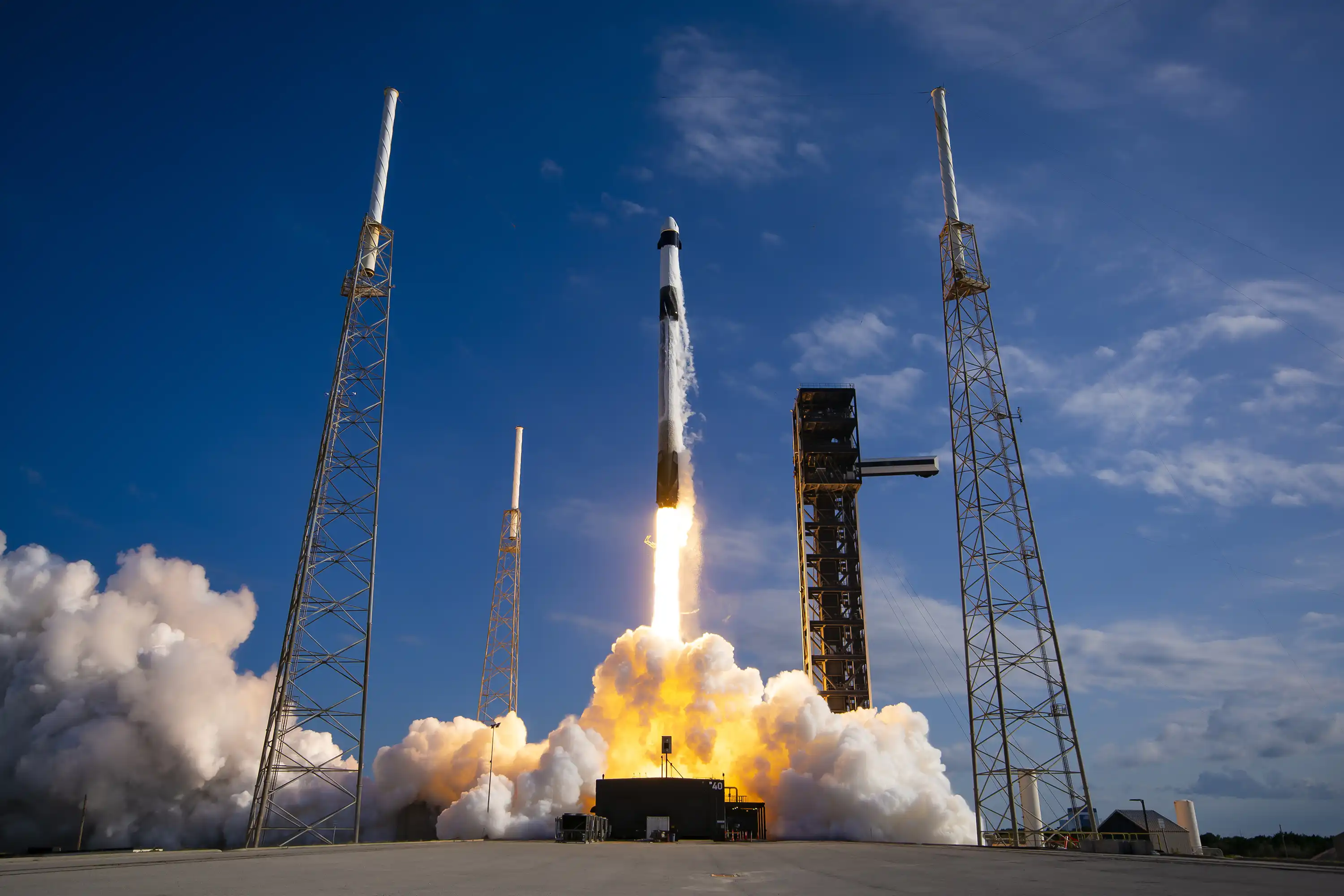
On December 21, 2015, the Falcon 9 first-stage rocket landed successfully back on the ground for the first time—exactly 13 years after the company's founding.
Before this, SpaceX's obsession with recovery went through long trials and failures: as early as the first two Falcon 9 flights in 2010, attempts were made to recover the first stage using parachutes—the rocket disintegrated during re-entry before the parachutes could even deploy. Starting in 2013, they switched to a powered descent scheme. Over the next two-plus years, nearly ten attempts followed: some crashed hard into the ocean, others exploded or toppled over on drone ships, not a single one came back intact.
But almost none of these tests were self-funded specialized trials; they were piggybacked on customers' paid launches—the same rocket both performing the mission and conducting the experiment. The customer's payload was delivered to orbit in the first half, payment settled; the first-stage rocket, which by industry practice was trash to be thrown into the ocean, was used by SpaceX to practice landing on the side.
Musk's 'calculation' was: if it blows up, it's trash blowing up; if it succeeds, space history is rewritten. So, in essence, SpaceX used NASA's contracts as scholarships to get a free degree in 'reusability.' Today, Falcon 9 mission success rate is about 99.4%, with only 3 recovery failures out of 165 launches in 2025.
6. Today's SpaceX: Starlink Makes Money to Feed AI
The prospectus shows that in 2025, SpaceX's total revenue was $18.7 billion, with a net loss of $4.9 billion.
But broken down by segment, the story is completely different: the Connectivity business, which includes Starlink, contributed about $4.4 billion in operating profit for the year, the only profitable segment in the entire company; the Space business, which includes rockets, had a small loss of about $660 million—mainly because about $3 billion was poured into Starship R&D.
The real big hole is xAI, which was consolidated: annual operating loss of about $6.4 billion, one unit alone consuming all of Starlink's profits and more.
In other words, if you only look at 'old SpaceX' (rockets + Starlink), it's already a profitable company; what makes it 'loss-making' again is precisely the AI it bought for the next story.
7. Starlink Was the 'Internal Customer' Musk Pre-Arranged for Reusable Rockets
In January 2015, Musk publicly announced the Starlink plan, a 'broadband network in the sky' composed of tens of thousands of low-orbit small satellites by SpaceX, selling internet service to ground users—especially in places unreachable by fiber and cell towers like the sea, wilderness, and remote areas.
In December of the same year, Falcon 9 successfully landed for the first time. That is, before 'cheap rockets' were proven, the 'customer for cheap rockets' had already been internally greenlit.
This is no coincidence; it's two halves of the same arithmetic problem: the global rocket launch market is only about $5-6 billion a year and hasn't changed much in the past decade. So, cheap launch capacity placed in this market simply wouldn't be saturated; conversely, to deploy a global network of thousands of satellites, the numbers wouldn't work without cheap launch capacity.
8. Starship Hasn't Succeeded Yet, But Its 'Customer Market' Has Already Changed Hands Once
The same story of placing bets early happened with the next-generation heavy-lift rocket Starship.
In 2014, SpaceX broke ground on the Starship base in Boca Chica, Texas—that year, Falcon 9 hadn't even achieved a single successful recovery. The previous generation hadn't landed, and the next generation was already under construction.
More notably is the change in the customer: Starship's initial narrative was 'people'—Mars colonization, space tourism, something Musk talked about for many years; after the space computing concept emerged, Starship's primary customer quietly became 'data centers.'
The logic remains the same: Falcon 9 matched with ~20-ton class Low Earth Orbit (LEO) capacity, its customer is Starlink; Starship's planned capacity is 100–150 tons (LEO, planned value), tourists can't consume that much capacity, but the equipment needed for space data centers perhaps can.
Every time the rocket gets bigger, Musk has to 'create' a commercially larger customer for it.
9. 'Chopsticks Catching the Rocket'
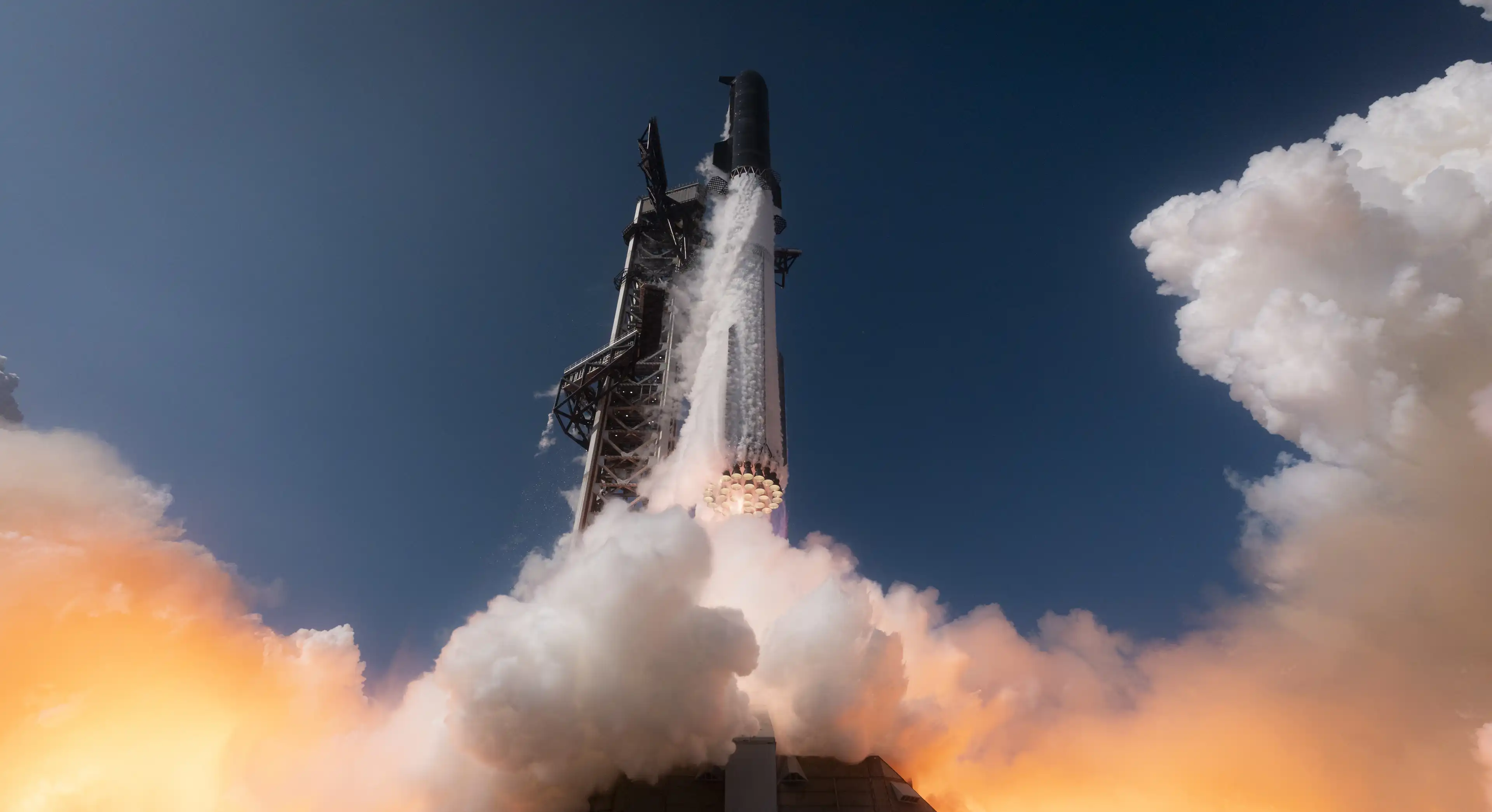
On October 13, 2024, during the fifth test flight of Starship, two robotic arms on the launch tower caught the slowly descending booster in mid-air, a moment that went viral online.
Previously, Falcon 9 proved rockets could be 'brought back' and 're-flown'—but each return required sea recovery, factory refurbishment, with a turnaround time measured in weeks, essentially still 'repair and reuse.' What Starship aims for is something else: like an airplane, land, inspect, refuel, and take off again.
Landing legs are dead weight, consuming payload capacity; landing far away requires transportation. Having the booster return directly into the launch tower's embrace means the place it lands is the place it will take off from again—intermediate steps are minimized, targeting turnaround times from 'weeks' to 'hours.'
So-called 'chopsticks catching the rocket' actually points to the ultimate form of rockets in SpaceX's eyes: from being reusable, to 'airline-style operation.'
10. A 'Domestic Starlink' Might Not Be Necessary, But 'Domestic Launch Capacity' Definitely Is
'China's version of Starlink' is a popular narrative, but a fact often overlooked: Starlink solves the problem of 'where ground towers can't reach'—the sea, wilderness, sparsely populated areas; China, on the other hand, arguably has the world's strongest ground-based communication network coverage, making the perceived need for Starlink-type services naturally limited domestically.
The real proposition lies on another level: satellites have uses beyond just communication—remote sensing, navigation, future space computing, each requiring sending a lot of things into space cheaply and frequently.
In other words, China may not need to replicate Starlink the 'product,' but cannot bypass the 'launch capacity' behind Starlink. For China's commercial space sector, 'whether to have a network in the sky' is not the core question; 'having the hands to weave the net' is.
11. Breaking the 'Never IPO' Pledge
SpaceX was once the most staunchly 'never IPO' company in Silicon Valley. Musk's public reason was that the short-termism of capital markets is incompatible with ultra-long-term goals like Mars.
The turning point occurred in the fourth quarter of last year: Starlink's user growth and average revenue per user were hitting visible ceilings, and the capital expenditure required for the new 'space computing' story was so large that only the public markets could handle it.
The prospectus disclosed that in Q1 2026 alone, the capital expenditure for the AI business exceeded the sum of the Space and Connectivity segments.
Therefore, the IPO is not a celebratory endpoint, but a fundraising move for the next big gamble.
12. Space Computing Is a 'Consensus,' But the Details Are Still Unknown
Although the concept of space computing is new, it has indeed become a super-consensus rapidly reached by the tech industry in the past half year, with almost no one publicly opposing it anymore.
But ask one level deeper, all technical details seem to have no common answer:
What does a space data center look like? No public product definition exists. What data does it compute, where does the data come from? No one knows either.
Using the classic three elements of the AI industry—algorithms are sprinting ahead on the ground, but both 'data' and 'compute deployment' in the space context are still blank slates. Pre-training or inference? The two have completely different requirements for power, cooling, and networking, leading to completely different satellite designs. A direction priced by trillions in capital hasn't even converged on a product form.
Of course, from another perspective, this precisely means there are still plenty of empty seats at the table.
13. Silicon Valley Is Putting Real Money on 'Space Computing'
Silicon Valley's tech giants' support for space computing hasn't stopped at words.
· Musk completed a corporate reorganization involving trillions in assets, merging SpaceX and xAI. The prospectus states in-orbit data center deployment is planned as early as 2028.
· Google initiated 'Project Suncatcher': published technical papers, plans to launch two prototype satellites equipped with its own TPUs, and is negotiating launch contracts with SpaceX.
· Bezos's Blue Origin filed an application with the FCC in March 2026 for its 'Sunrise Project' involving 51,600 data center satellites.
· Former Google CEO Schmidt acquired rocket company Relativity Space in 2025, with the stated goal of sending data centers into orbit.
· Starcloud, backed by Nvidia, sent an H100 chip into orbit in November 2025 and completed in-orbit model training.
Buying companies, merging assets, filing licenses, launching satellites—the infrastructure race is already underway.
14. The Cold, Hard Cost Math
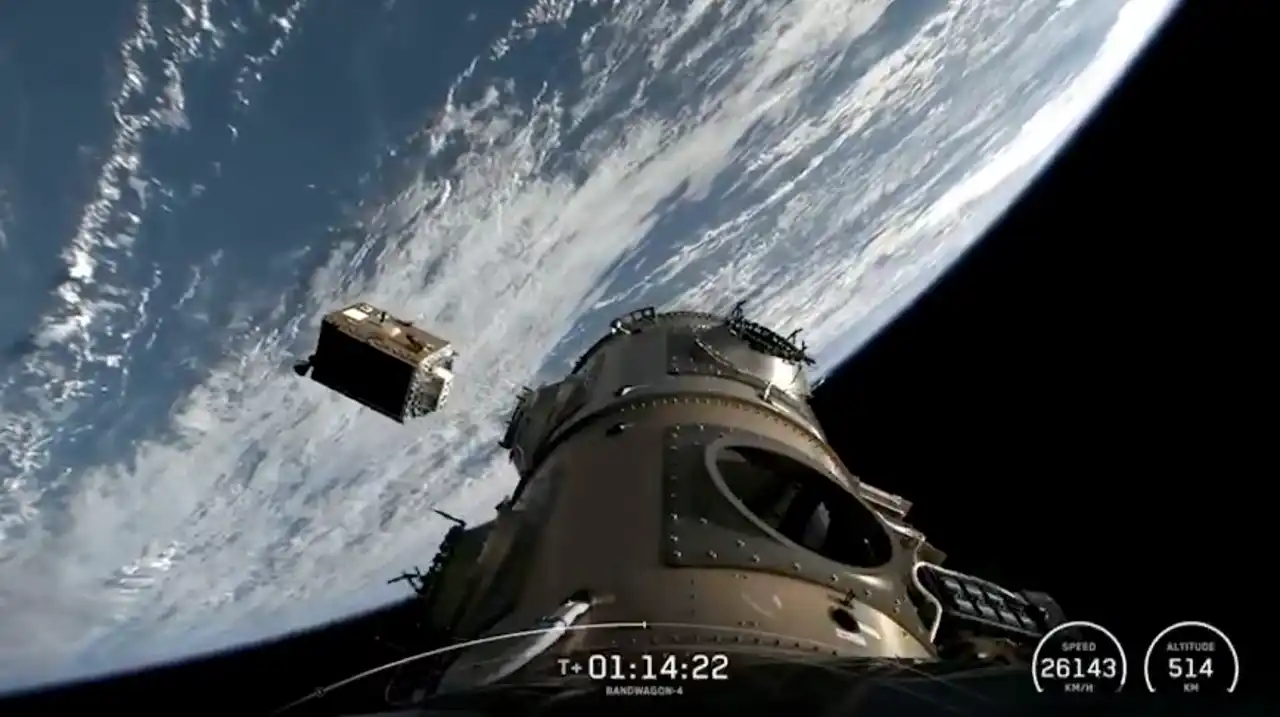
Aerospace engineers have done public calculations: building a 1-gigawatt orbital data center (approx. 4,300 satellites, including five years of operations) would cost over $50 billion—roughly three times the cost of a ground-based facility of equivalent scale.
To turn this equation around, industry calculations generally suggest the cost to orbit needs to be reduced to around $200 per kilogram or less, while today's launch cost corresponding to Falcon 9 (note: 'launch cost' and 'cost to orbit' are not exactly the same) is around $2,000–$3,000 per kilogram. The difference is at least an order of magnitude.
Bridging this order of magnitude requires a fully reusable heavy-lift rocket like Starship to close the cost gap. Therefore, the timeline for space computing is deeply tied to Starship's progress. The truth of the story will ultimately be tested with welding torches and launch pads.
15. The Bigger Story
Looking back at SpaceX's growth history, it became a supplier because it was a customer who couldn't buy cheap rockets; then it created its own customer (Starlink); now it's reserving an even larger customer (space computing) for its next-generation rocket.
Over the past 24 years, it turned the two previously unbelievable stories of rocket reusability and Starlink into reality. Today, this yet-to-be-realized promise of space computing appears on the public market with a target valuation of about $1.75 trillion.
This story is bigger than before, and the ticket price is more expensive.